REVIEW · LANZAROTE
Whale & Dolphin Observation on Silent Catamaran with Hydrophone
Book on Viator →Operated by WeWhale · Bookable on Viator
Whales have a way of making your whole day better. This 4-hour silent catamaran from Puerto Calero pairs calm, low-impact sailing with a hydrophone you can listen through. What I love most is the 100% silent, emission-free setup and the fact the boat stays small, so the experience feels less like a cattle call.
I also like that you’re not just staring for animals—you’re getting extra context from the crew and learning how to view wildlife responsibly at a distance. One drawback to factor in: the hydrophone is not guaranteed to be used the whole trip, and dolphin sightings are never assured.
If you’re expecting non-stop whale-and-dolphin audio the moment you step aboard, you might leave a bit frustrated. If you’re okay with nature’s timing and you want a quieter, more thoughtful way to look for cetaceans, this one makes sense.
In This Review
- Key Points to Know Before You Sail
- Silent Catamaran Meets Hydrophone Listening in Puerto Calero
- Before You Go: The 9:00 AM Schedule and Where to Meet
- A Small 14-Meter Catamaran With Max 12 People
- Onboard Style: Silent, Emission-Free, and Calm by Design
- How Whale and Dolphin Spotting Works on This Route
- The Hydrophone Expectation: When You Might Hear More
- Snaks, Drinks, and What to Wear When the Wind Changes
- Responsible Viewing: Why Staying Back Can Still Feel Worth It
- Conservation Impact: Where Your Ticket Price Can Go
- Price and Value: Is $114.65 a Fair Deal?
- Who This Tour Fits Best (and Who Might Skip It)
- Should You Book This Whale and Dolphin Hydrophone Catamaran Tour?
- FAQ
- What time does the tour start in Puerto Calero?
- How long is the whale and dolphin observation cruise?
- Where do I meet the tour operator?
- What language is the tour offered in?
- Is this tour limited to small groups?
- Do you provide snacks and drinks?
- Is the boat truly silent and emission-free?
- Will the hydrophone be used during the entire trip?
- What should I wear for a 3 to 4 hour catamaran ride?
- What’s the cancellation policy if weather is bad?
- Is service animal access allowed?
Key Points to Know Before You Sail
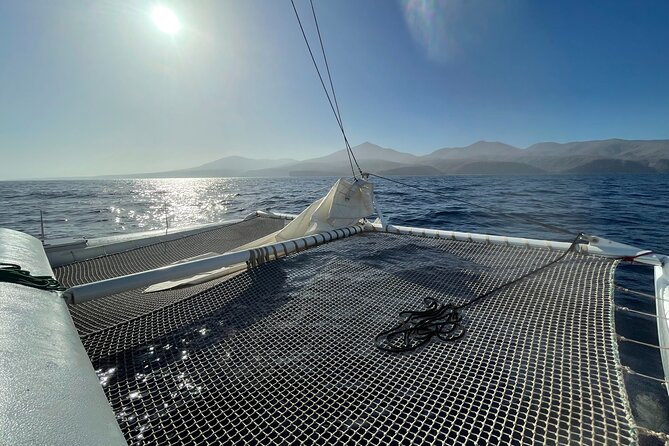
- Silent, emission-free catamaran on open sea: less noise, more respectful wildlife viewing.
- Small group size (max 12): more elbow room on a 14-meter boat.
- Hydrophone timing depends on vocalizing animals: it’s used when it can actually pick up sounds.
- Snacks and drinks aboard: you’re not out there freezing on an empty stomach.
- Binoculars can help: ask the crew if you want assistance seeing from farther out.
- Your ticket supports marine conservation: via the WeWhale Association.
Silent Catamaran Meets Hydrophone Listening in Puerto Calero
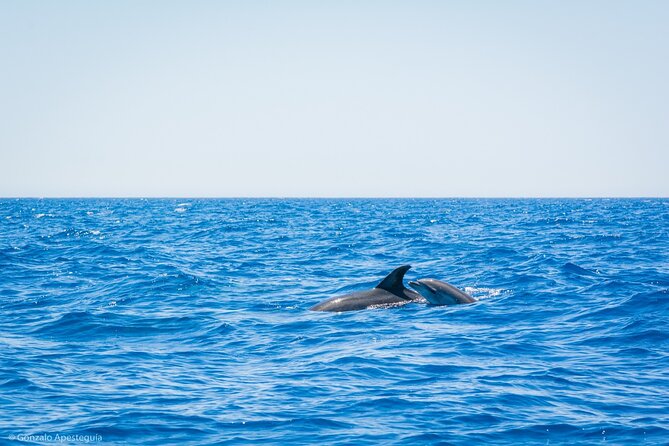
This is a whale-and-dolphin trip designed around one big idea: quieter water. The boat is 100% silent and emission-free, so you’re not blasting sound into the ocean while you search. You leave from Puerto Calero and head out to the open sea for around 3 to 4 hours, then sail back to the same meeting point.
What makes it more than a standard spotting cruise is the onboard hydrophone. Instead of only relying on sight, you also get the chance to hear cetacean calls through the hydrophone when conditions line up. It’s the kind of experience where the ocean does most of the work, and you just show up ready to notice.
You’ll start at 9:00 am, which is a sweet time for the coast to feel awake but not fully sizzling. The early start also helps you catch a better weather window, since this trip depends on good conditions.
You can also read our reviews of more tours and experiences in Lanzarote.



Before You Go: The 9:00 AM Schedule and Where to Meet
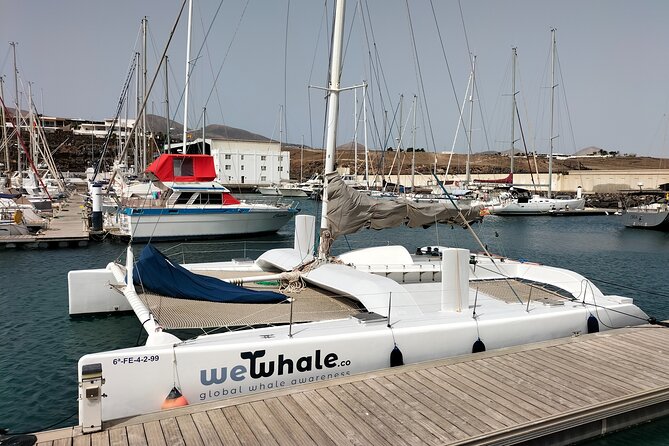
You’ll meet at WeWhale Lanzarote, C. Pantalanes, 35571 Puerto Calero, Las Palmas, Spain. The experience runs once you’ve checked in and boarded the catamaran, and it ends back at that same spot after the cruise.
Because the duration is listed as about 4 hours, plan your day with a little buffer before and after. You’ll be on the water long enough to feel the wind, especially if you hit clouds or a breeze picks up.
Also, come with the right mindset for timing: whales and dolphins don’t follow schedules. The crew will look and reposition as needed, and the hydrophone moment (if it happens) depends on animal behavior.
A Small 14-Meter Catamaran With Max 12 People
This boat is a 14-meter catamaran, and the group limit is 12 travelers max. That matters more than you’d think. With fewer people onboard, it’s easier to hear explanations, spot movement, and actually enjoy the ride instead of constantly craning your neck around strangers.
The catamaran setup also helps you feel stable and comfortable compared to rougher boats. And since the tour is silent by design, you’ll likely notice how much the atmosphere changes when the ocean is the main sound in the background.
Language is English, and you’ll also use a mobile ticket. Service animals are allowed, and the activity notes say most travelers can participate, so it’s not pitched as a hardcore adventure requiring special gear.
Onboard Style: Silent, Emission-Free, and Calm by Design
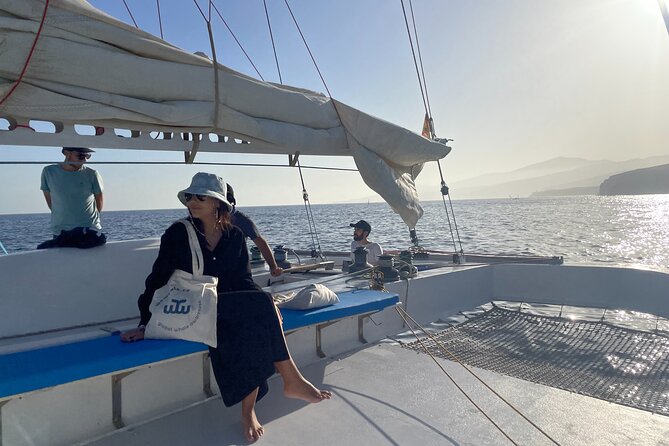
What I like about a silent catamaran is the vibe shift. There’s no engine noise dominating the trip, so you feel like you’re really coexisting with the animals rather than forcing the issue.
This approach is also practical for your viewing. The idea isn’t that silence guarantees sightings, but that it supports more natural behavior. When you watch wildlife without added disturbance, you’re more likely to see animals responding to the environment instead of reacting to the boat.
Crew roles matter here too. You get friendly, informative guidance, and that helps you understand what you’re seeing. Even if you’re not a marine biologist, you can still learn the basic cues that tell you whether you might have a real chance at a sighting.
How Whale and Dolphin Spotting Works on This Route
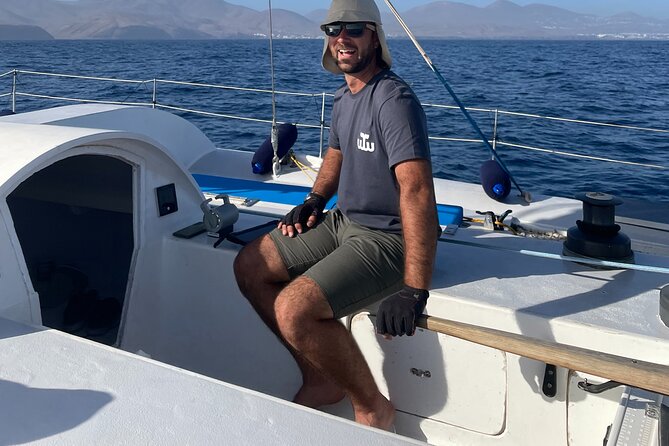
You set out from Puerto Calero toward the open sea, and then you hunt for cetaceans in the waters around Lanzarote. The goal is sightings, but it’s also about doing it the right way—at a respectful distance and without chasing.
That responsible approach is a key part of the value. Yes, it can mean you see animals farther away than you’d like. One trip experience included a Bryde’s whale spout spotted on the way back, but it was hard to see well from distance. That’s not a guarantee problem, it’s a viewing-distance trade-off.
The smart move for you: treat spotting like a team sport. Scan for surfaces, watch for blows, and be ready to look where the crew points. If you’re not sure you’re seeing details, ask about binoculars, since they can help when animals stay farther out.



The Hydrophone Expectation: When You Might Hear More
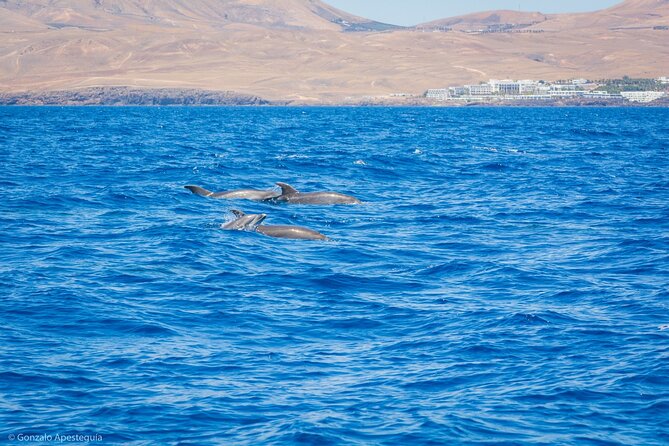
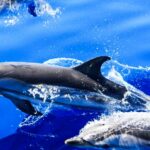
Here’s the biggest “know before you go” point: the hydrophone experience is not meant to run continuously in open water. It’s used when the animals are actively vocalizing—especially when there’s a group of dolphins that are producing sounds the hydrophone can pick up.
If your personal expectation is hydrophone audio at all times, you could be disappointed. A past experience included the hydrophone not being deployed during the trip, and the explanation given was that it’s reserved for moments when it will actually capture relevant sounds. That makes sense technically: quiet open water means fewer meaningful signals.
So how should you think about it as a traveler? You’re paying for the chance to hear animals in the moments when the ocean is “speaking back.” When that happens, it can feel like you’re turning your head and your ears at the same time—sight and sound working together.
If you want to maximize your odds, pay attention to crew instructions once you’re out there. If they start positioning or telling you to get ready, it could be a sign that the hydrophone moment might be near.
Snaks, Drinks, and What to Wear When the Wind Changes
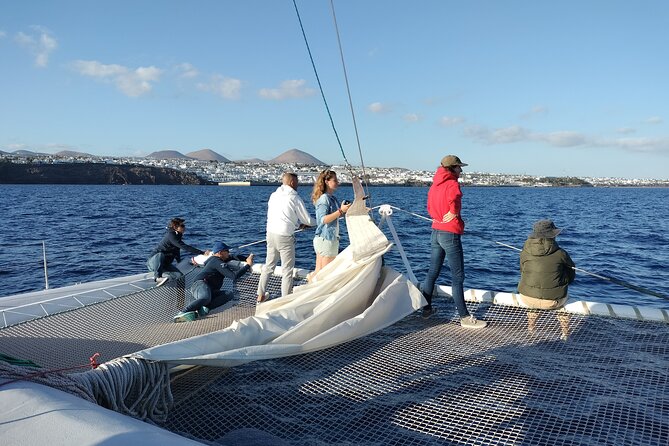
A simple but important detail: you’ll be on the water long enough to feel temperature swings. One experience described the trip getting nippy as the sea breeze picked up and sunlight disappeared behind clouds. The practical fix is easy—pack layers, even if Lanzarote looks warm when you leave the dock.
The good news is you don’t just freeze and suffer. Snacks and drinks are offered during the cruise. That keeps your energy up while you watch for movement, and it also makes the time feel more relaxed instead of purely “wait and hope.”
If you tend to get cold, bring something that you can put on fast. A light wind layer is often the difference between enjoying the ride and spending half the cruise thinking about your jacket.
Responsible Viewing: Why Staying Back Can Still Feel Worth It
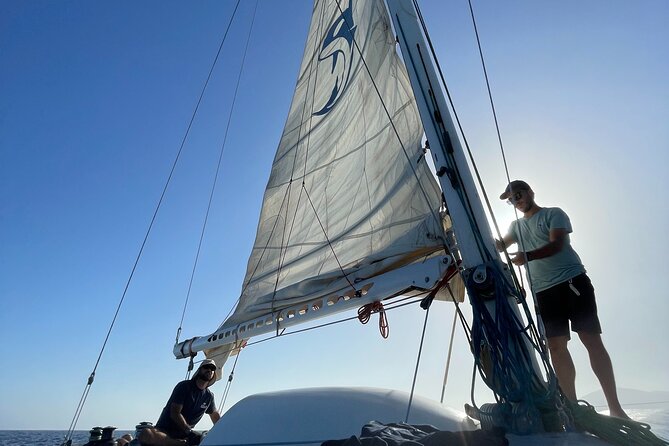
Responsible wildlife viewing is part of how this operator frames the experience. The guiding idea is that they won’t chase animals just to satisfy a sighting request. If cetaceans don’t approach, the boat doesn’t force the issue.
That can be bittersweet if you’re hoping for close-up viewing. You might see a whale spout briefly, or dolphins could stay out of reach. But when you accept the distance, the experience becomes more about spotting skill, patience, and the thrill of detecting wildlife in the wild rather than guaranteeing perfect moments.
Think of it like birdwatching from a boat: the best encounters aren’t always the ones closest to you. They’re the ones where you notice what the animal is doing—surface patterns, movement direction, and timing.
Conservation Impact: Where Your Ticket Price Can Go
This tour is linked to the WeWhale Association, and part of the ticket price supports marine conservation campaigns. One specific campaign named is Save The Iberian Orca.
That matters because you’re not just paying for a ride. You’re supporting work tied to protecting cetaceans. Is it a huge amount of impact you can measure during your 3 to 4 hours? You can’t know that from the boat. But knowing your money is connected to conservation gives the trip a deeper purpose.
It also helps you feel good about choosing a company that treats wildlife like more than entertainment. In a world where “just getting footage” can drive bad behavior, supporting conservation-focused operators is a real plus.
Price and Value: Is $114.65 a Fair Deal?
At $114.65 per person, you’re in the mid-range of whale tours in popular destinations. The best way to judge value here is not only the boat and the search, but the extras you get with this specific operator: small group size, a silent catamaran, onboard hydrophone capacity, and conservation support.
If you end up seeing whales and dolphins with good conditions, the value feels solid. The onboard snacks and drinks also help justify the cost. The silent, emission-free approach is another value factor that’s hard to replicate on noisy boats.
The caution: if you mainly want a hydrophone show on demand and you don’t see dolphins, the experience might feel pricey. The hydrophone is tied to animal vocalization, not a promise that it will be used every trip.
My take: this is best value if you’re flexible and you like the idea of quieter, more respectful wildlife watching. If you need constant audio or guarantee-level dolphin sightings, you might want a different type of tour.
Who This Tour Fits Best (and Who Might Skip It)
You’ll likely love this if you:
- prefer a small-group cruise over crowded boats
- care about low-impact wildlife viewing
- enjoy listening and learning, not just scanning for movement
- bring layers and are okay with weather-based changes
You might skip this if you:
- expect the hydrophone to be active the whole trip
- get frustrated by wildlife staying at distance
- are counting on dolphin sightings as a must-have, every time
It’s also a nice choice for people who want a calmer outing on the water. The silent catamaran vibe makes the whole experience feel more intentional, even on a day when the ocean is moody.
Should You Book This Whale and Dolphin Hydrophone Catamaran Tour?
If your goal is a thoughtful, quiet whale-and-dolphin outing with a chance to hear cetaceans through a hydrophone, then yes, it’s a good booking. The small group limit, silent sailing, and conservation tie-in are real strengths, and the snacks and drinks keep it comfortable.
Just go in with the right expectations: sightings are never guaranteed, and the hydrophone depends on vocalizing animals. If you can accept that nature sets the schedule, you’ll get far more out of the experience.
FAQ
What time does the tour start in Puerto Calero?
The start time is 9:00 am, and the activity ends back at the meeting point.
How long is the whale and dolphin observation cruise?
The duration is about 4 hours (approximately), and the itinerary is described as leaving toward the open sea and returning after about three to four hours.
Where do I meet the tour operator?
The meeting point is WeWhale Lanzarote, C. Pantalanes, 35571 Puerto Calero, Las Palmas, Spain.
What language is the tour offered in?
The tour is offered in English.
Is this tour limited to small groups?
Yes. There is a maximum of 12 travelers per tour.
Do you provide snacks and drinks?
Yes. Snacks and drinks are offered during the trip.
Is the boat truly silent and emission-free?
Yes. The catamaran is described as 100% silent and emission-free.
Will the hydrophone be used during the entire trip?
The hydrophone is described as being carried on board, but it’s used in moments when it will capture the animals’ sounds. It may not be deployed the whole cruise.
What should I wear for a 3 to 4 hour catamaran ride?
Bring layers. The sea breeze and changing cloud cover can make it feel chilly on the water.
What’s the cancellation policy if weather is bad?
The experience requires good weather. If it’s canceled due to poor weather, you’ll be offered a different date or a full refund. You can also cancel up to 24 hours in advance for a full refund.
Is service animal access allowed?
Yes. Service animals are allowed, and most travelers can participate.