REVIEW · SANTORINI
Santorini Windsurfing lessons
Book on Viator →Operated by nemely windsurf-sup center · Bookable on Viator
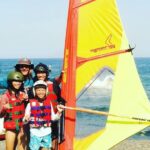
The wind does half the teaching here. A Santorini windsurfing lesson at Nemely Windsurf & SUP Center pairs VDWS-certified coaching with all the gear and a small group of up to four. I like how quickly you’re pushed from basic theory into real board control, and I like the practical, hands-on instruction style (including radio helmet coordination mentioned by past students). One watch-out: your session depends on good weather and wind, so they may reschedule if conditions aren’t right.
You’ll meet at Avis Street in Santorini (the session starts there and ends back there), and it runs about 2 hours. Instruction is offered in English, and the vibe is beginner-friendly, with helmet use included and the group kept small enough for real feedback. If you’re traveling with family, you may also appreciate that there’s seating for people who want to watch rather than suit up.
This is a solid choice if you want a new water sport without spending days figuring everything out on your own. You’ll be close to the action in crystal-clear water, and you’ll get enough time on the water to connect the pieces. Just keep in mind that food and drinks aren’t included, though you can buy drinks on site.
In This Review
- Key highlights at a glance
- Getting Ready at Nemely: What Happens Before You Sail
- The Lesson Flow: From First Moves to Real Board Control
- Wind, Safety, and Communication on the Water
- Santorini’s Crystal-Clear Water: Why It Helps Your First Lesson
- Small-Group Coaching Up to 4: The Real Value
- Price and What You’re Actually Getting for $144.18
- Who This Windsurfing Lesson in Santorini Fits Best
- Practical Booking Tips (So Your Wind Lesson Doesn’t Turn Into Waiting)
- Should You Book This Santorini Windsurf Lesson?
- FAQ
- How long is the windsurfing lesson in Santorini?
- Where does the lesson start and end?
- What location is used for the activity?
- Is the lesson offered in English?
- How many people are in each group?
- Do I get windsurfing equipment and a helmet?
- Is a VDWS-certified instructor provided?
- Is food included?
- Do they sell drinks on site?
- What happens if weather conditions are poor?
Key highlights at a glance
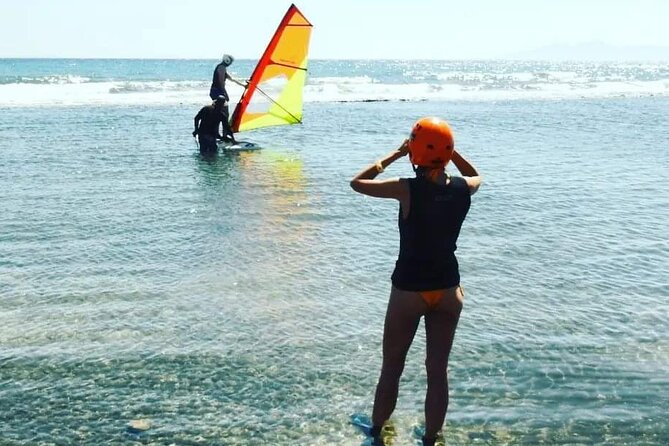
- Small group size (max 4) means you’re not waiting your turn for tips
- VDWS-certificated instructor and step-by-step learning help you progress fast
- All windsurf equipment and a helmet are provided, so you travel lighter
- On-water communication is supported with radio helmets for clearer coaching
- Spectator-friendly setup includes seating for people who just want to watch
- Weather-dependent experience so plan for wind and sea conditions to matter
Getting Ready at Nemely: What Happens Before You Sail
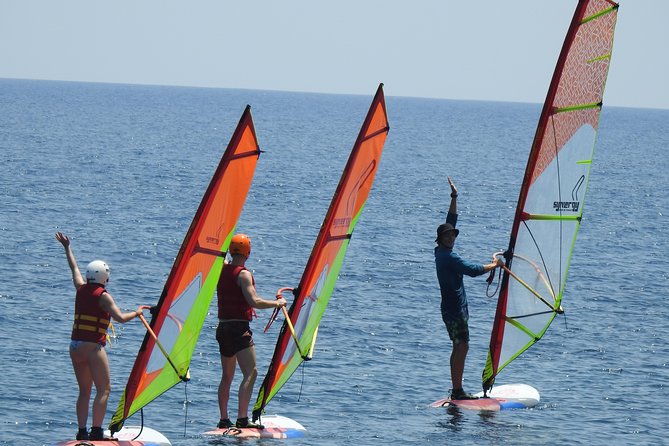
Your lesson starts and ends at Avis Street in Santorini, with the action taking place at Nemely Windsurf & SUP Center. That matters because it keeps things simple: you’re not shuttled across the island for gear pickup or a long drive to the water. The whole session is about 2 hours, so the organizers keep the pre-sail steps efficient.
You’ll be looked after by a VDWS-certified instructor. You also get the right equipment for windsurfing and a helmet included. That’s a big part of the value here. For a lot of first-timers, the biggest barrier isn’t ability, it’s logistics. When gear is included, you don’t have to guess which board you should rent, what size will work, or whether you’re missing a safety item.
One more helpful detail: this is offered in English and uses a mobile ticket. If you’re the type who likes knowing exactly what’s happening before you arrive, you’ll likely find that comforting. And because the group is capped at four people, you should expect more direct interaction right from the start, not a generic “good luck out there” handoff.
You can also read our reviews of more tours and experiences in Santorini.

The Lesson Flow: From First Moves to Real Board Control
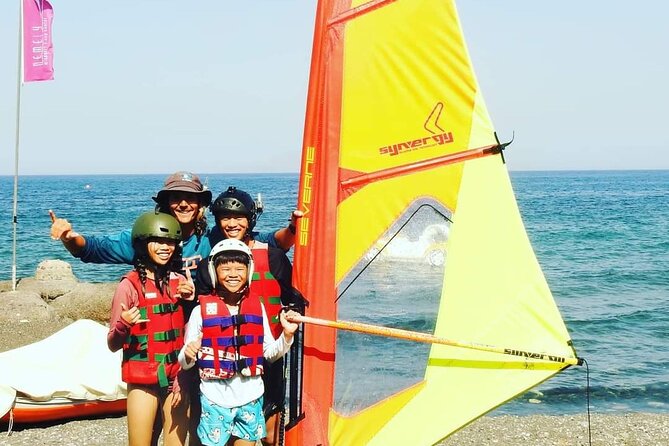
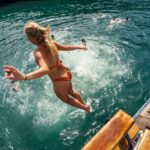
The coaching is built around a simple idea: learn the basics, then practice them quickly enough that they start to click. The format is designed to work for both true beginners and people who’ve had some sailing experience. If you already know how wind and sail shape affect movement, that prior understanding can help you transfer faster. If you don’t, they still aim to get you progressing during your first session.
Here’s what the flow feels like in practice: you get step-by-step instruction, then you’re taken onto the water to try those steps. That hands-on part is where progress happens. Past students specifically highlighted how the instructor explains clearly and demonstrates practical technique, then lets you put it into your own body movement right away.
Even the falls tend to be part of the learning curve. One of the most common “you’ll be fine” moments is that initial fall into the water. It sounds dramatic, but in a beginner lesson, it usually serves a purpose: once you’ve experienced it once, you start connecting the safety routine with the technique you’re trying to learn. After that, you typically get more confident, faster.
Also, your instructor can give tips while you’re sailing. One reviewer described using radio helmets so the coach can talk to them while out on the water and provide real-time corrections over longer stretches. That’s a smart setup for windsurfing because small adjustments can make a big difference.
Wind, Safety, and Communication on the Water
Windsurfing is physical. It’s also coordination-heavy. The experience is designed to keep you safer and more teachable by pairing helmet use with communication tools and close coaching.
The helmet isn’t just a box to tick. In windsurfing lessons, having protective headgear is practical because you’re learning balance and sail control, and you may get knocked around while you’re building confidence. On top of that, the instruction style supports ongoing guidance. Past participants mentioned radio helmets that help instructors coordinate and talk to students without needing to swim over or shout over the wind.
You should also know that things can go a little sideways even in a beginner lesson. One student described an incident where they drifted downwind and needed rescue. The key takeaway isn’t “something will happen,” it’s that a rescue response is part of how a guided lesson works. When you learn with an instructor team present, you’re not out there alone trying to solve problems mid-wind.
Finally, remember the weather requirement. The activity requires good weather, and if they cancel due to poor conditions, you’ll be offered a different date or a full refund. That flexibility is important on islands where the sea state can change. If you’re planning around a tight schedule, it’s still worth booking early so you have backup dates.
Santorini’s Crystal-Clear Water: Why It Helps Your First Lesson
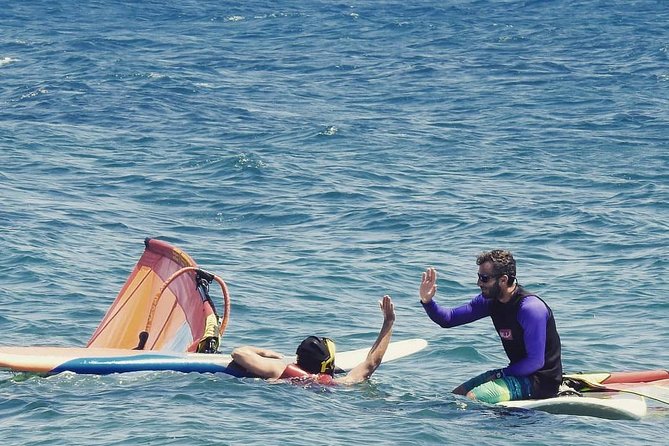
The experience is framed around Santorini’s crystal-clear waters. That’s not just a pretty marketing line. Clear visibility helps you spot what’s happening to your board and sail as you learn. You can better judge your position, see how the sail is catching wind, and get a more immediate sense of whether you’re moving in the right direction.
Santorini is also a place people come for iconic scenery, so it’s nice to combine that with an activity you can’t really replicate elsewhere at the same scale. You’re not just doing a sport; you’re doing it in the same setting most visitors spend their time photographing from the shore.
One smart detail from the teaching approach is that they don’t treat scenery like a distraction. They keep the focus on building your skills while still letting you enjoy the environment. For first-timers, that balance helps: you’re energized by the location, but you’re also guided through technique rather than left to guess.
If you want the experience to feel less stressful, choose to treat the first session as skill-building, not perfection. Clear water means you can learn faster because you can actually see what’s going on, but windsurfing still has a learning curve.
Small-Group Coaching Up to 4: The Real Value
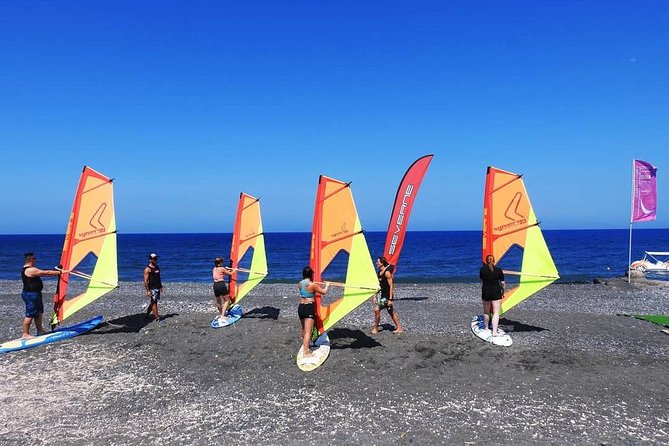
This lesson keeps the group small—up to four travelers. That’s the single biggest quality-of-experience lever you can control when booking a beginner activity.
With a tiny group, you’re more likely to get:
- more individualized corrections
- quicker feedback after each attempt
- less waiting around while someone else gets attention
And because windsurfing involves repeated trials, those small advantages add up fast. A larger group might mean you spend more time on the sidelines and less time practicing. Here, you should expect more time on the water trying what your instructor just explained.
Past students also called out an instructor who was patient and methodical, especially for first-timers. One person described theory being covered carefully before practice, then practical demonstrations that helped them connect the pieces. Another noted rapid progress thanks to clear explanations and a coaching style that matched their prior sailing experience.
If you’re the kind of traveler who hates feeling rushed or embarrassed, small-group instruction usually feels like a relief. You’re not competing for instructor time. You’re learning in a controlled, social setting where the focus stays on you.





Price and What You’re Actually Getting for $144.18
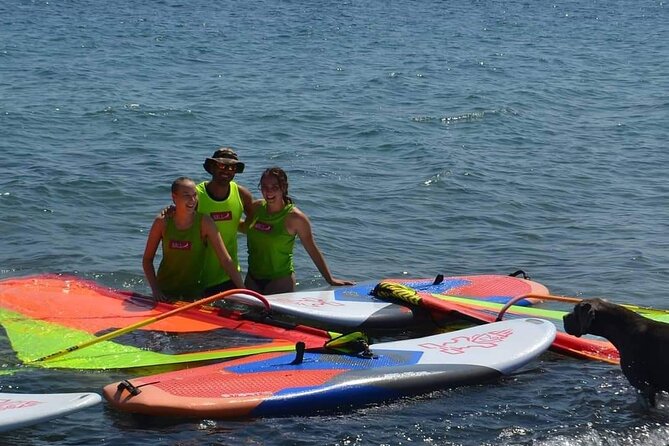
At $144.18 per person for about two hours, this lesson sits in a reasonable band for an instructor-led, gear-included beginner activity. The value comes from three things being included: a VDWS-certified instructor, windsurfing equipment, and a helmet.
If you tried to do this yourself, you’d still need safety equipment and the right board setup. Buying or renting gear without coaching can easily turn into wasted time and frustration. Here, you’re paying for skilled time on the water: someone helps you make sense of the technique, and you get to try it immediately.
What isn’t included matters too. Food and drinks aren’t part of the price. Alcoholic drinks are available to purchase on site, but you should plan on bringing water if you know you get thirsty fast. One review mentioned a drinks fridge and a place where you can buy beverages, which is handy after you’re done. It’s just not included in the lesson cost.
Also, consider who you’re traveling with. Because there are seats for spectators, families can watch without paying for another full lesson. That can make the trip feel more balanced if not everyone wants to go in the water.
Who This Windsurfing Lesson in Santorini Fits Best
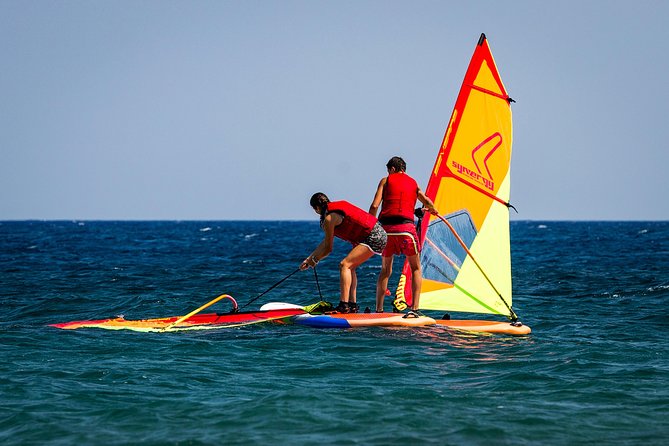
This is a strong fit for:
- first-time windsurfers who want step-by-step help
- people with a little sailing experience who want to transfer those skills
- travelers who want a new activity that still feels structured and safe
- anyone traveling in a small group (since max is four)
If you’re bringing family members, the setup can work well because you may have seating for people who want to watch. That means your lesson doesn’t have to be the entire group’s focus in the same way a purely adult activity can.
It’s also a good option if you prefer English instruction and clear communication. In windsurfing, being able to understand cues matters a lot because you’re learning fast while moving in wind and water.
What I’d avoid is booking this if you’re dealing with serious mobility limitations or you’re expecting a purely relaxed float. This is learning a physically demanding sport, and the learning process includes falling and trying again.
Practical Booking Tips (So Your Wind Lesson Doesn’t Turn Into Waiting)
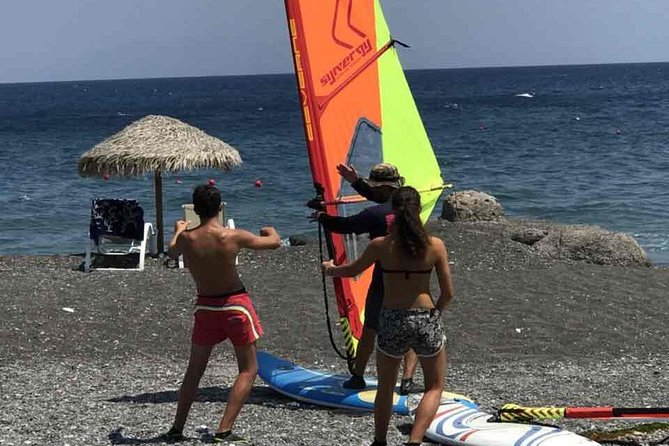
Average booking happens about 82 days in advance, which tells me this is a popular slot for people planning their Santorini trip. If you’re going in peak season or have fixed travel dates, booking ahead gives you more choice in timing.
You’ll also want to pay attention to the operating window. The experience runs from early April through mid-October (04/05/2026 to 10/15/2026), with typical opening hours listed as 10:00 AM to 5:00 PM daily. That doesn’t mean you’ll always start at exactly those times, but it helps you understand when the center is in motion.
Because the activity requires good weather, you should plan your day with a little buffer. If wind or conditions are poor, rescheduling is possible, and that’s easiest when you’re not juggling ten other “must do” reservations at the same hour.
Finally, use the mobile ticket and confirmation information you get at booking. Keeping those details handy saves time when you arrive at Avis Street.
Should You Book This Santorini Windsurf Lesson?
Yes, if you want a beginner-friendly windsurfing experience with real instruction time, included equipment, and a small-group setup that keeps feedback coming. The best reason to book is simple: windsurfing is hard to learn alone, and this format helps you connect technique to actual movement quickly.
I’d especially recommend it if you value patient teaching and clear explanations, the kind that include practical demonstrations and even radio helmet guidance for ongoing tips. It’s also a smart pick if you’re traveling with family, because seating for watchers is available.
I’d think twice if you’re traveling during a stretch when weather uncertainty could derail your plans. The activity depends on good conditions, and that’s not something you can fully control. If your schedule can flex, that becomes a non-issue.
If you want a new skill plus the thrill of Santorini’s water, this is a confident way to do it in about two hours.
FAQ
How long is the windsurfing lesson in Santorini?
The lesson is about 2 hours.
Where does the lesson start and end?
It starts at Avis Street, Santorini 847 00, Greece, and it ends back at the meeting point.
What location is used for the activity?
The activity takes place at Nemely Windsurf & SUP Center.
Is the lesson offered in English?
Yes, instruction is offered in English.
How many people are in each group?
The maximum group size is 4 travelers.
Do I get windsurfing equipment and a helmet?
Yes. Windsurf equipment and a helmet are included.
Is a VDWS-certified instructor provided?
Yes. The instructor is VDWS certificated.
Is food included?
No. Food and drinks are not included.
Do they sell drinks on site?
Alcoholic drinks are available to purchase, but they are not included in the price.
What happens if weather conditions are poor?
The experience requires good weather. If it’s canceled due to poor weather, you’ll be offered a different date or a full refund.