REVIEW · SICILY
Volcanological excursion of the wild and less touristy side of the Etna volcano
Book on Viator →Operated by Guide Vulcanologiche Etna Nord · Bookable on Viator
Etna’s north side feels like another planet. This 4.5-hour, volcanology-focused outing is built around the less-touristy slopes, with licensed guides and a route that mixes dense forest with stark lava flows from the October 27, 2002 eruption. I especially like that the guides teach you what you’re seeing in plain language, and that you’re provided with real hiking gear (yes, including shoes and a helmet). The main drawback to plan for is physical: the walking is about 7 km on volcanic ground, with crater-edge spots that can cause dizziness for some people.
You’ll start at Piano Provenzana (1,800 m), switch to authorized 4×4 driving on the north road, and then work your way up through crater terrain toward the Etna Nord Volcanological Observatory area. It’s not a casual stroll, but it is a smart, organized way to see Etna’s wild side without the crowds that often swarm the easier viewpoints.
In This Review
- Key highlights worth knowing before you go
- Why Etna’s north side feels wilder than the south
- Piano Provenzana at 1,800 m: where the day actually begins
- Stop 2: Crateri Sommitali and the drive toward Piano delle Concazze
- Stop 3: the guided crater walk on Etna’s wild north flank
- Stop 4: returning to Piano Provenzana for food, water, and reset time
- Equipment, fitness, and safety on volcanic ground
- Price and value: what you pay, what you still pay extra
- Who this Etna Nord excursion is best for
- Should you book this tour?
- FAQ
- What time does the excursion start?
- How long is the tour?
- Is the tour offered in English?
- How many people are in the group?
- What’s included in the price?
- What extra costs should I expect on the day?
- Where do I meet the guide?
- What physical fitness level do I need?
- Do I need to bring a windbreaker or avoid anything specific?
- Can I cancel and get a full refund?
Key highlights worth knowing before you go
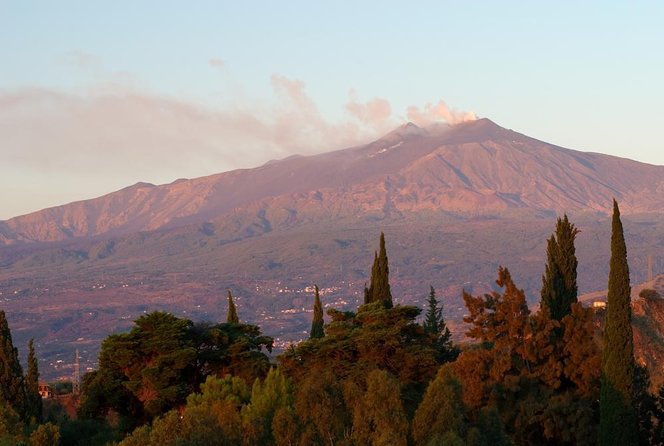
- Wild north side, not the usual crowds on Etna’s quieter flank
- Crater and lava variety including sites tied to historic eruptions
- Certified volcanological guidance with science explained during the walk and drive
- Controlled access and licensed 4×4 routes for safety and protection of the terrain
- Spectacular high-altitude views on clear days reaching far across Sicily and beyond
- Small group size (max 20) for a more personal experience
Why Etna’s north side feels wilder than the south
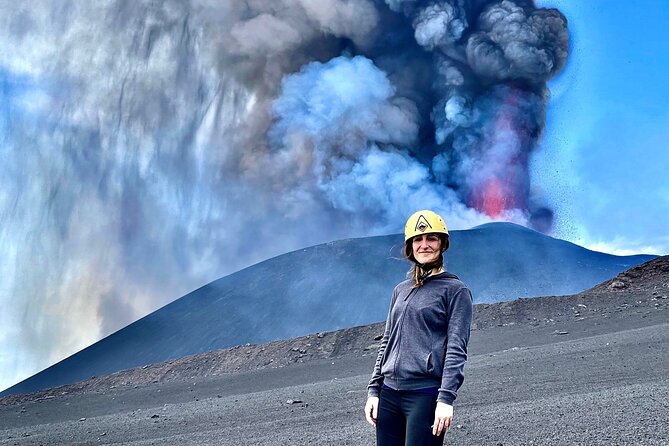
Most Etna trips concentrate on the most convenient viewpoints. This one leans the other way: toward Piano Provenzana and the north flank, where the terrain is greener at the edges (pine forest) and then turns sharply harsh once you hit the lava fields.
That contrast matters because it helps you understand Etna as a living system, not a single photo spot. You’re seeing how fresh volcanic material meets older, colonized ground. You’ll also notice INGV monitoring stations placed across the stark terrain, which is a useful reminder that Etna is actively studied, not just admired.
And there’s a practical bonus. Because the north side route is harder to access without licensed vehicles and guides, it tends to feel calmer. One review called out the near-emptiness on their day, and that matches the basic logic of the north-side approach.
You can also read our reviews of more tours and experiences in Sicily.
Piano Provenzana at 1,800 m: where the day actually begins
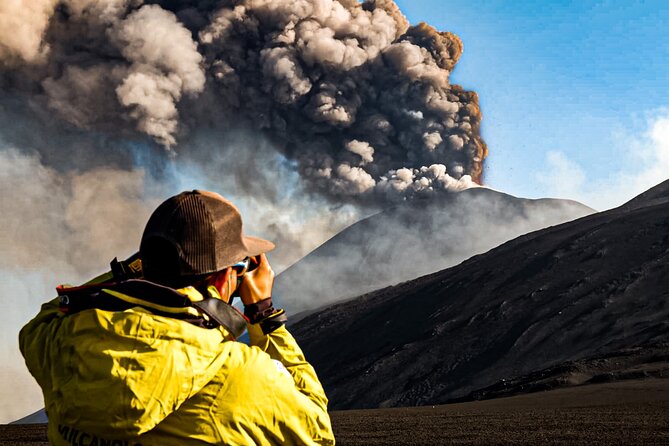
Piano Provenzana is your base at 1,800 meters, reached by paved roads you can drive to on your own. It’s also a winter ski station, so the area has basics covered: small souvenir shops, cafés, restrooms, and a proper meeting area for your group.
Parking runs on blue-striped spaces, and it’s not free. Expect to pay around €5 on weekdays and €8 on Sundays and public holidays for the day. If you’re coming by car, this is the easiest “hidden” cost to forget, so I’d just budget it early.
More importantly, once you’re at Piano Provenzana, you don’t just wander onto the volcano on your own. The route beyond that point requires park- and municipality-approved vehicles and licensed guides. Your plan is simple: meet at the on-site point near the CHIOSCO BAR MARENEVE DI FERRAROEtna nord-Piano Provenzana, Via Provenzana, 95015 Linguaglossa CT, Italy, and then follow your guide’s briefing before any off-road driving.
Piano Provenzana also carries a very specific scar in its story: it lies within the lava field of the October 27, 2002 eruption. Earlier tourist facilities were destroyed there, including restaurants, hotels, ski lifts, and trails. When you drive the north roads, that history becomes visible as ruins and remnants you can still pick out from the road.
Stop 2: Crateri Sommitali and the drive toward Piano delle Concazze
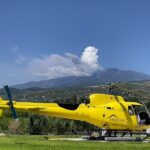
After a short orientation at Piano Provenzana, you start up a panoramic road climbing toward the upper volcano. This part is all about controlled access: your vehicle is authorized to travel where the public can’t.
As you drive, you cross through a mix of Etna’s woods and wide lava fields tied to the October 27, 2002 eruption. You might spot eerie, half-remembered structures, including the remains of an old tourist station. One semi-buried hotel roof is mentioned as a recognizable landmark on the approach.
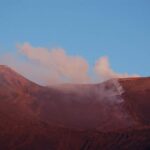
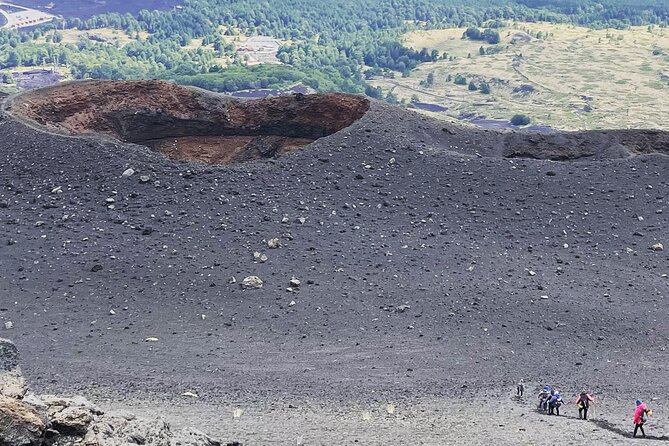
Then comes the science-and-terrain lesson ride. Along the route you’ll pass craters estimated to be over 40 meters deep, eruptive fractures, and broad summit lava flows. The guide explains how Etna works, and you’ll see INGV monitoring stations placed on what looks almost lunar.
The stop ends at Piano delle Concazze (2,860 m), near the Etna Nord Volcanological Observatory. On a clear day, the viewpoint can be astonishing, with views stretching from Catania toward Syracuse. The geography roll call is big: Nebrodi and Peloritani Mountains, the Madonie range, the Aeolian Islands, and even Calabria can be visible in the right conditions. That’s useful because it lets you place Etna in the wider Sicilian landscape rather than treating it as an isolated peak.
This is a roughly 1-hour segment, and it sets up the real work: walking later on the higher, more crater-heavy terrain.
Stop 3: the guided crater walk on Etna’s wild north flank
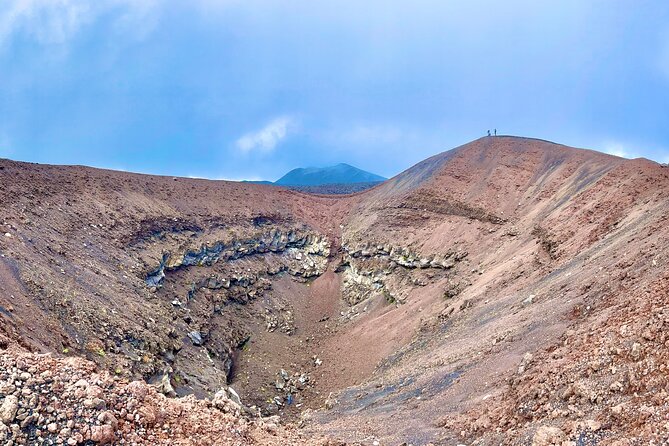
The main hike portion takes you through the less-touristy north flank of Europe’s highest active volcano. Here, you’re not just walking on a path. You’re working along crater edges and across volcanic ground where the soil can be inconsistent.
You board authorized 4×4 vehicles from Piano Provenzana (1,800 m) and climb on the panoramic north road. Expect more forest-to-lava transitions, plus ruins tied to the 2002 eruption again (including that semi-buried roof detail mentioned earlier). Vehicles can climb to about 3,000 meters, and the exact highest point depends on conditions. If the summit is closed, your highest allowed point may be around that 3,000 m level instead.
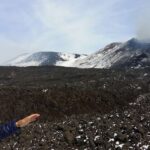
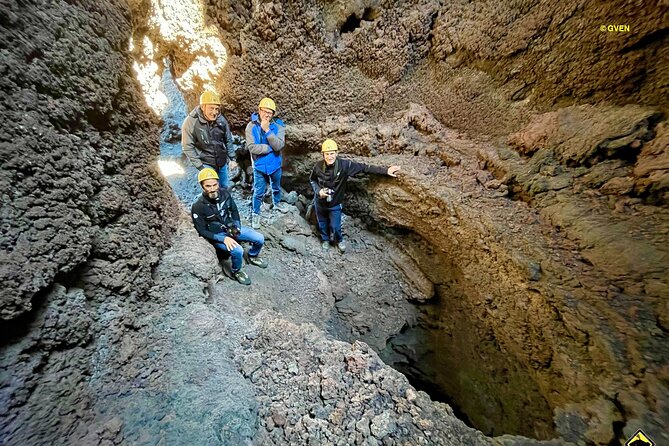
From there, the hike itself is about 7 km. The terrain is described as a stark plateau of fresh lava and ash, and you’ll visit crater areas connected to multiple eruption periods: 2002, 1911, 1923, 1874, 1879, 1809, 1646, 1614, and 1624. You also pass the dramatic north-flank fault and ancient lava tubes, plus pioneer plants that start colonizing fresh rock over time.
If you want a practical way to think about this walk: it’s less about speed and more about staying steady on uneven, volcanic ground while learning what each crater feature represents. The guide’s job is to keep it understandable and connected to your footing and safety.
You’ll also get the viewpoint payoff again. From high points, you can see a wide arc of islands and mountains on clear days, plus Sicily’s east coast from Catania to Syracuse. Then the descent shifts to a sandy-channel and forest return back to Piano Provenzana.
One important note from the tour information: the crater-edge walking can cause dizziness for susceptible individuals. If you’re sensitive to heights, it’s worth taking that warning seriously and asking your guide how to pace yourself.
Stop 4: returning to Piano Provenzana for food, water, and reset time
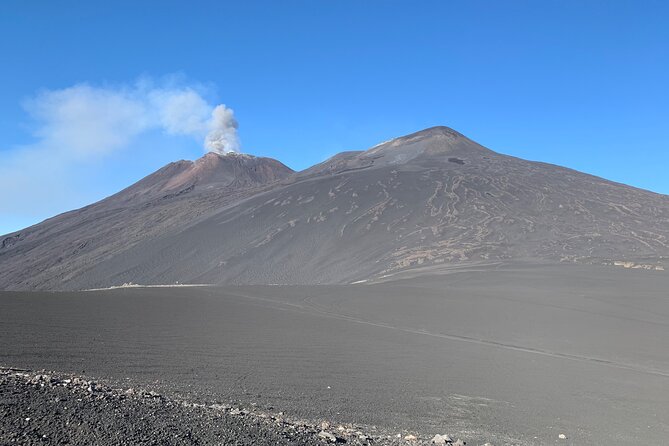
At the end of the hike, you come back down to Piano Provenzana. This matters more than it sounds. After hours in volcanic terrain, you need somewhere simple to regroup.
Because Piano Provenzana has cafés and bars, you can grab breakfast, coffee, or something more filling right after. There are also spots to refill water bottles, which is a big deal on a volcanic day where ash and gases can irritate eyes and airways. In winter, this area becomes a ski hub again, but in warmer months it acts as a staging point for guided excursions.
It’s also one of the quieter places to re-check your day’s gear and photos without feeling rushed. The tour ends back at the meeting point, so you’re not forced into extra transportation immediately afterward.

Equipment, fitness, and safety on volcanic ground
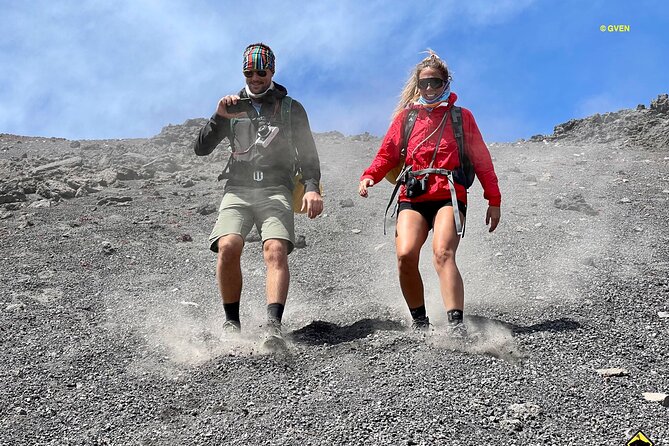
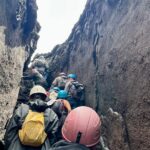
This is where the tour earns trust. The package doesn’t just sell an itinerary. It comes with gear: trekking poles, trekking shoes, helmets, a warm jacket, extra socks, and an extra backpack, plus insurance in case of accidents. That’s a real value, especially if you don’t already own hiking boots suited to ash-heavy volcanic dust.
Still, I’d plan to bring the right “comfort upgrades” that aren’t included. A windbreaker is listed as not included, and it’s the kind of item that can make a windy, high-altitude Etna moment more pleasant.
Fitness-wise, the tour specifically calls for moderate fitness and good preparation. You should be comfortable walking and managing uneven footing. It also strongly discourages people with cardio-vascular problems, breathing problems, or hypertension, and it advises not to use contact lenses because of volcanic gases and ash.
If you’re the type who gets tired quickly uphill, this is not the day to wing it. One review story described the walk as challenging in volcanic dust, and that matches the reality of stepping across fresh lava and ash where footing can feel unstable. A hat is also recommended in hot conditions because there’s no shade available on Etna during some seasons, so sun protection is not optional.
On top of that, use common-sense precautions: listen to your guide, move slow on unstable volcanic soil, and keep your eyes on the ground as much as you keep them on the view. The views are the reward, but the footing is the job.
Price and value: what you pay, what you still pay extra
The headline price is $71.20 per person, but value on Etna comes down to what’s included and how much access costs once you’re there.
In your paid price, you get:
- a licensed volcanological guide
- admission entry to Mount Etna
- key gear (shoes, helmet, poles, jacket, extra socks, backpack)
- trekking insurance for accidents
What’s not included:
- windbreaker
- parking fees (about €5 weekdays, €8 Sundays/holidays)
- an additional €50 per person paid on the spot for 4×4 vehicles at specific elevation segments (listed as 1800 m to 2800 m, and other elevation transitions)
So is it worth it? For me, it usually comes down to one question: are you willing to pay for proper guided, licensed access? If you are, then the guide + equipment + admission bundle makes the base price look reasonable. If you’re counting every euro and you’d rather DIY from a public road, then the north-side model will feel expensive because the vehicle access is built into the system.
Also note: the tour group has a maximum of 20 travelers. Smaller groups plus volcanology instruction plus provided gear is where this starts to feel like more than a standard “see Etna” tour.
Who this Etna Nord excursion is best for
This works best for you if you:
- want the wild north flank rather than the usual crowded viewpoints
- enjoy science explanations while walking (crater features, eruption history, monitoring stations)
- can handle moderate hiking (about 7 km) on uneven volcanic terrain
- want a small-group experience with certified guide oversight
It may not fit as well if you:
- get motion sickness or dizziness at crater edges
- have breathing issues or cardio-vascular concerns (the tour discourages these)
- plan to wear contact lenses
- prefer a short, easy walk with lots of shade and frequent stops
Children over 6 are listed as suitable, but only if the child can handle the physical demands and crater-edge caution.
Should you book this tour?
Book it if you want Etna the way it feels on the ground: driven access, small-group pacing, volcanic features tied to real eruption periods, and a guide who keeps the science readable while you’re still earning every view. I’d especially recommend it for first-time Etna visitors who already know you’re chasing something beyond the standard photo stops.
Skip it or choose a different option if you don’t hike regularly, have any of the health conditions the tour flags, or you know you’re sensitive to heights and crater-edge dizziness. For everyone else, this is one of the smarter ways to experience the quiet, less-touristy side of Europe’s most active volcano without turning your day into logistics chaos.
FAQ
What time does the excursion start?
It starts at 7:45 am.
How long is the tour?
The duration is about 4 hours 30 minutes (approx.).
Is the tour offered in English?
Yes, it’s offered in English.
How many people are in the group?
The group size has a maximum of 20 travelers.
What’s included in the price?
You get a licensed volcanological guide, trekking poles, trekking shoes, helmets, warm jacket, extra socks, extra backpack, insurance for accidents, and entry/admission to Mount Etna.
What extra costs should I expect on the day?
Parking costs apply (about €5 on weekdays and €8 on Sundays/public holidays). There’s also a €50 per person fee paid on the spot for the 4×4 vehicle segments at elevations starting from 1800 m and other listed transitions.
Where do I meet the guide?
The meeting point is CHIOSCO BAR MARENEVE DI FERRARO Etna nord – Piano Provenzana, Via Provenzana, 95015 Linguaglossa CT, Italy.
What physical fitness level do I need?
The tour asks for moderate physical fitness. It’s not recommended for people who don’t do physical activity regularly, and it discourages those with cardio-vascular problems, breathing problems, or hypertension.
Do I need to bring a windbreaker or avoid anything specific?
A windbreaker is not included. Contact lenses are strongly discouraged because of volcanic gases and ash.
Can I cancel and get a full refund?
Yes. You can cancel for a full refund up to 24 hours before the experience starts. If you cancel less than 24 hours before, the amount paid is not refunded.