REVIEW · SICILY
Summit Etna North 3380mt: 4×4 and trekking
Book on Viator →Operated by Guide Vulcanologiche Etna Nord · Bookable on Viator
Etna doesn’t do quiet, but the north side does feel calmer. You’ll use a mix of authorized 4×4 driving and a guided hike to the summit zone around 3380m. The focus is safety first, with a volcanologist guide adjusting the route as conditions change.
I love that you get the full day’s “workout plus payoff” with a real summit walk, not a quick stop-and-go. I also like the smaller group size and the way guides keep the pace manageable, as seen when guides like Francesco, Vincenzo, Andreo, and Nikos adjust for the group. The big consideration is that the hike is genuinely demanding at altitude, so you need solid fitness and to dress for cold, wind, and gas.
In This Review
- Key things I’d lock in before you go
- Why Etna’s north side feels more like the real deal
- Piano Provenzana: your early start, coffee stop, and the right mindset
- The 4×4 panoramic climb: where the views start and the altitude creeps in
- Trekking from ~2960m to the rim: the crux of the whole experience
- What you’ll actually see at the summit
- The descent on scoria and why timing feels tight
- Gear and what to bring so Etna doesn’t win
- Price and value: how the $78.61 fits with the on-site fee
- Who this tour suits best (and who should skip it)
- Should you book Summit Etna North 3380mt?
- FAQ
- How long is the Summit Etna North 3380mt experience?
- Where does the tour start and end?
- What time does the morning tour start?
- Is there an afternoon departure?
- What’s included in the price?
- What is not included?
- Do I need trekking poles or helmets?
- What altitude do you reach?
- Is this tour suitable for kids?
- What should I wear for the summit?
- What happens if weather is bad?
Key things I’d lock in before you go
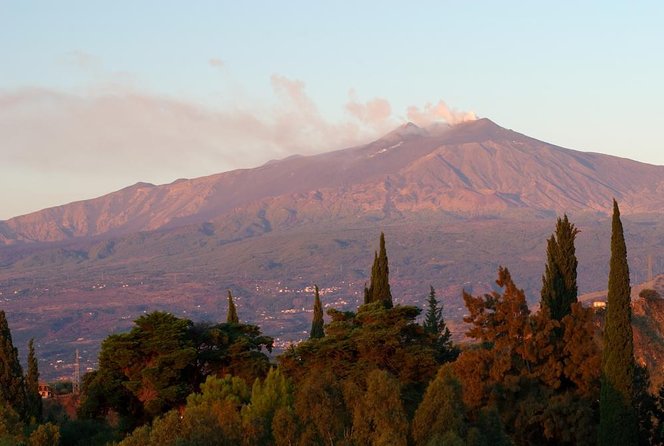
- Piano Provenzana as your base: a less crowded Etna Nord area shaped by the 2002 eruption
- Authorized north-side 4×4 track: panoramic driving over lava terrain to roughly 2960m
- A real summit trek: about 5 km with around 550 m of climb, reaching the crater rim area
- Crater routes change daily: guides pick the safest path toward the most active yet secure crater
- Big altitude reality check: 2960m up to 3380m means fatigue and cold can hit fast
- What’s included vs not: guided service, helmets, poles, and trekking gear are covered, but the off-road vehicle fee is paid on site
Why Etna’s north side feels more like the real deal
Most people rush Etna from the more famous southern side. This tour flips the script by starting on the north flank, where you’re on a route that stays connected to volcanic terrain instead of circling the same tourist loop.
Piano Provenzana is a key reason. The area was destroyed in the October 27, 2002 eruption, and what’s left is a volcanic zone with fewer crowds and more “you’re here for the volcano” energy. You’re also likely to get better variety in geology: forest edges, lava fields, then higher and more barren high-altitude ground as you climb.
The other win is the smaller-group feel. You’re on authorized vehicle tracks and in a guided trek where decisions get made in real time based on heat, gas, and fractures.
You can also read our reviews of more tours and experiences in Sicily.
Piano Provenzana: your early start, coffee stop, and the right mindset
Your meeting point is at Chiosco Bar Mareneve di Ferraro, Etna Nord – Piano Provenzana (Via Provenzana, 95015 Linguaglossa). The tour is scheduled with a morning departure around 7:45 a.m. meeting and 8:00–8:15 a.m. departure. There’s also an afternoon start around 1:00 p.m. from May to October.
Before you move, you’ll be able to use restrooms and grab something to drink or eat at the nearby café area. That matters because once you’re in volcanic terrain, you’re on the guide’s timeline: walking, pauses, and then back down.
One smart planning detail: Piano Provenzana is easy to reach by regular roads, and the access road is fully drivable. If you’re coming in winter, you’ll want snow chains or winter tires. Even if someone else is driving you, it’s still worth knowing so you’re not surprised by road conditions.
The 4×4 panoramic climb: where the views start and the altitude creeps in
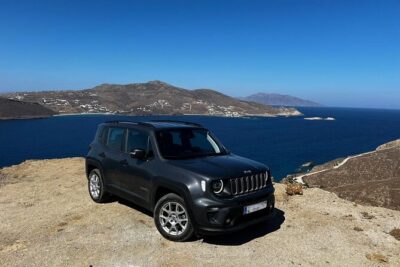
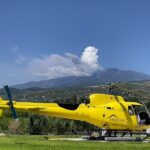
You start with a guide briefing and gear distribution, then you board the authorized 4×4. This is not a “theme park” ride. The vehicle route travels along a rough, unpaved panoramic track on Etna’s less crowded north slope, crossing lava terrain and volcanic features.
The driving section climbs from roughly 1800 m up toward 2960 m, and the track is about 9.5 km on the climb. Along the way, you’ll pass through areas like eruptive fractures, lateral craters, and even a deeper ravine-like feature (listed as craters over 40 m deep). That’s one reason the tour feels longer than the total time on paper: the terrain is complex, and the route has to be negotiated carefully.
This section is also when you get the first big payoffs: wide views across northern Sicily and—on rare clear days—toward places like the Aeolian Islands, the Strait of Messina, Calabria, and even the Madonie range. You might not catch everything every time, but the view scale is part of the whole point.
If you’re sensitive to motion or bumpy roads, plan for it. Several people talk about the ride feeling like a bouncing ride up the mountain. It’s part of the deal on a volcanic track.
Trekking from ~2960m to the rim: the crux of the whole experience
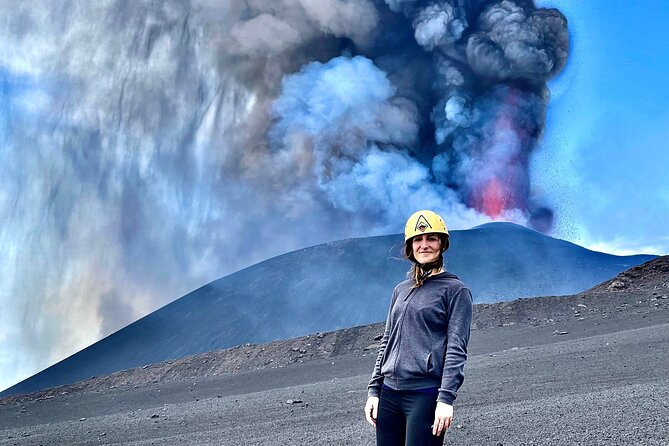
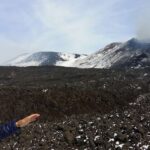
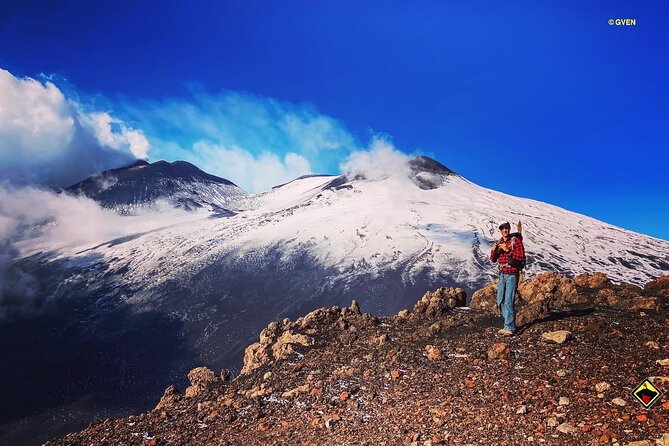
From about 2960 m, the guided summit trek begins. This hike is about 5 km with roughly 550 m of ascent. You’ll be moving along volcanic ground that can feel unstable, so walking technique matters more than speed.
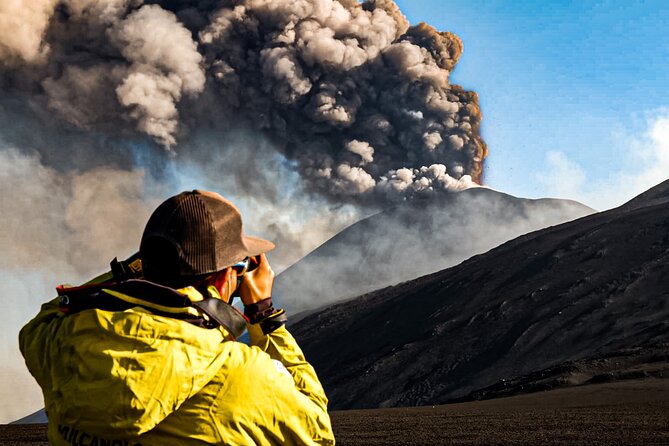
The summit-area plan is designed around crater activity that changes day to day. Instead of a fixed path, guides pick the safest route toward the most active yet secure crater. You may hear about gases and fumaroles, and you may also see heat and fractures that affect where you can safely step.
You’re also at altitude—2960 m up to around 3380 m. Mild altitude effects are possible, and the tour data is clear that you should report any health issues. That’s not just legal language. It’s because you’re dealing with thinner air plus cold plus volcanic fumes.
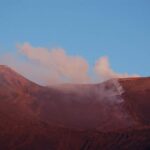
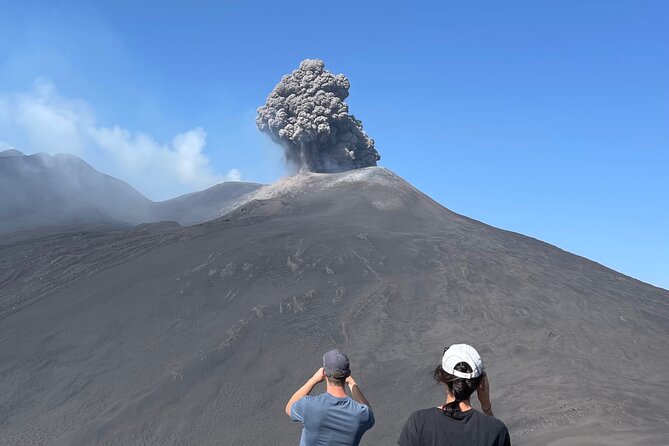
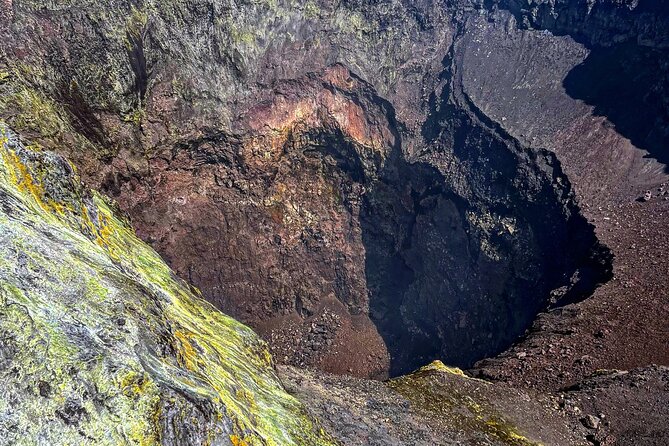
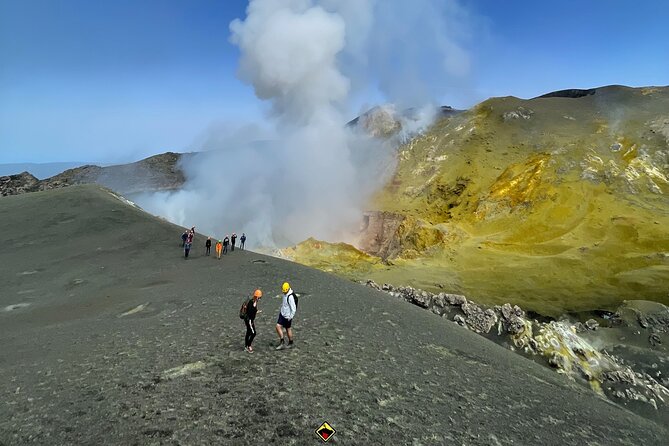
At the summit zone, there are four main craters associated with the route: North-East, Voragine, Bocca Nuova, and South-East. Depending on conditions, the guide will position you to experience the active features safely. People often remember seeing gas release and vivid mineral colors from the crater rims.
What you’ll actually see at the summit
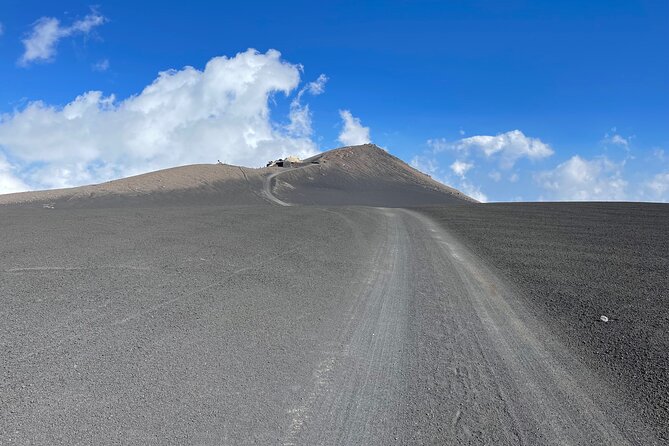
This is the moment most people book Etna for: standing on or near active crater rims with fumarolic gas and mineral-stained rock in front of you. The guide’s job isn’t only safety—it’s also interpretation: where you’re standing and what you’re seeing changes as the day’s volcanic behavior changes.
If conditions are clear, the views can be jaw-dropping across islands and coastlines. You may also spot recent lava formations near the highest terrain you’re allowed to walk.
One practical note: wind and cold can make you feel “behind” your schedule. A reviewer tied to late September mentioned it was around 2°C at the top, and that cold was strong enough to matter. Even when the lower trail feels fine, the summit zone can change fast.
And because volcanic activity changes daily, you should expect route shifts. That’s not a failure. It’s how you keep the experience both real and safe.


The descent on scoria and why timing feels tight
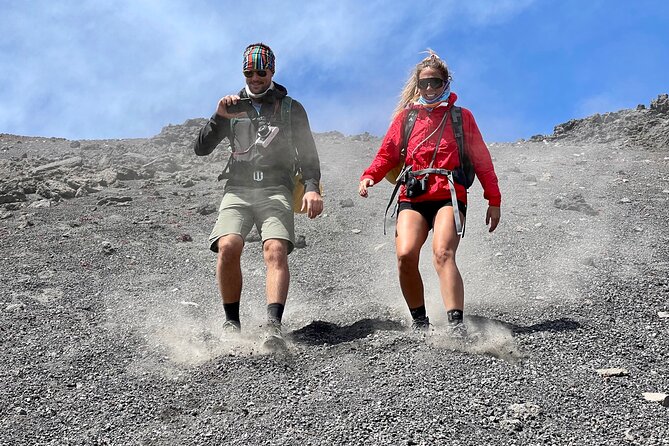
After the summit area, you’ll descend along soft scoria channels for about 4 km with around 600 m of drop. In total, the full trek can add up to roughly 8–9 km, and the walking portion plus summit time usually fits into an overall about 5 hours experience window, with additional time for the return 4×4 ride (around 25–30 minutes).
Descent can feel tricky because scoria is loose and uneven. It’s the kind of ground that punishes rushing. Good boots help, trekking poles help more, and your guide’s pace matters.
Some people loved the calm pacing and rests that guides build in. Others found the trek had fewer breaks and less time for photos. My advice: don’t plan on long photo stops at every viewpoint. Enjoy photos when you can, but treat the walk like a guided mission to the rim, not a sightseeing stroll.
Gear and what to bring so Etna doesn’t win
A lot is included, which is a huge value in this kind of altitude terrain. You’ll receive trekking shoes, trekking poles, socks, protective helmets, a backpack, and jackets as part of the tour gear. You also get accident insurance, plus a volcanological guide throughout the driving and hiking.
What’s not included is still important:
- A K-way / rain jacket, plus a hat and gloves (recommended for autumn, winter, and spring)
- Parking ticket (weekday and Sunday/public holiday rates vary, and parking is not included)
- Lunch
I’d also bring a few personal upgrades:
- Sunglasses (bright light at altitude plus volcanic glare is no joke)
- Sunscreen (thin-air exposure adds up)
- Contact lenses: avoid. The tour info explicitly warns that volcanic gases and ash can cause issues.
- Water and snack strategy: lunch isn’t included, and you may not have a long sit-down break.
Layering beats one big coat. Even if you start warm, you’ll likely cool down as you gain elevation and as wind hits near the crater rims.
Price and value: how the $78.61 fits with the on-site fee
The listed price is $78.61 per person for the experience. But there’s an important split in what’s covered:
- Included: volcanological guide, accident insurance, and your trekking gear
- Not included: the off-road vehicle fee for the round trip from about 1800 m to 2825 m, listed as €60 per person paid on the spot
That vehicle fee is the part that often surprises people, so think of the $78.61 as the guided trekking component and the €60 as the authorized north-side driving component. Add in parking (weekday vs Sunday rates) and you’ll have the full day cost picture.
Is it worth it? For me, yes, because you’re buying a guide-led route to the crater rim area that changes based on real volcanic conditions. You’re not just going for a short summit viewpoint. You’re doing the walking, and you’re being equipped and protected for the terrain.
Who this tour suits best (and who should skip it)
This is for people with moderate physical fitness who can handle altitude and sustained uphill walking. The trek to about 3380 m is not a casual hike, and the tour info discourages it for anyone who doesn’t do physical activity regularly.
It’s strongly discouraged for people with:
- cardio-vascular problems
- breathing problems
- hypertension
Children under 12 are not suited for this excursion. The tour also allows service animals, which is a nice practical detail if you need support.
If you’re the type who enjoys moving through real volcanic zones and you like guided interpretation, this fits. If you want an easy day with lots of time sitting, this is likely going to feel too active.
Should you book Summit Etna North 3380mt?
Book it if you want the north side of Etna—less crowded, more connected to volcanic terrain—and you’re ready for a guided trek that ends at the crater rim zone around 3380 m. You’ll likely appreciate the way guides like Francesco and Vincenzo adjust pace for the group, plus the way routes can shift safely if gases, heat, or fractures make a fixed plan unsafe.
Skip it (or pick a different Etna option) if you don’t want altitude and don’t feel comfortable with a demanding hike. Cold at the top and loose scoria on the descent are not things you can shrug off, and the tour is explicit about health restrictions.
If you’re unsure, the tour’s own fitness warnings are your friend. Treat them seriously, and you’ll enjoy the day much more.
FAQ
How long is the Summit Etna North 3380mt experience?
It runs about 5 hours on average.
Where does the tour start and end?
It starts at Chiosco Bar Mareneve di Ferraro, Etna Nord – Piano Provenzana and ends back at the same meeting point.
What time does the morning tour start?
You meet around 7:45 a.m. at Piano Provenzana, with departure around 8:00–8:15 a.m..
Is there an afternoon departure?
Yes. An afternoon start at 1:00 p.m. runs from May to October.
What’s included in the price?
You get an authorized volcanological guide, accident insurance, and trekking gear such as shoes, trekking poles, socks, protective helmets, a backpack, and jackets.
What is not included?
The off-road vehicle fee is not included (€60 per person paid on the spot). Also not included: parking ticket, lunch, and certain clothing items like a rain jacket, hat, and gloves.
Do I need trekking poles or helmets?
No need to bring your own. They are included: trekking poles and protective helmets are provided.
What altitude do you reach?
You climb to about 2960 m before the summit hike, and the summit zone is around 3380 m.
Is this tour suitable for kids?
No. It’s not suited for children under 12.
What should I wear for the summit?
Dress in layers. The cold at the top can be significant (example: around 2°C reported in late September). Sunglasses and sunscreen are also smart, and avoid contact lenses due to volcanic gases and ash.
What happens if weather is bad?
If it’s canceled due to poor weather, you’ll be offered a different date or a full refund.