REVIEW · SICILY
Summer Special: late afternoon tour by Palermo Wonders
Book on Viator →Operated by Palermo Wonders · Bookable on Viator
Palermo at 5pm is a great way to get your bearings fast. This late-afternoon Summer Special from Palermo Wonders helps you cover the main old-town highlights without juggling maps, and you’ll get the kind of local storytelling that turns stone and mosaics into something you can actually picture. I especially like the tiny group size (about six) for real conversation, and the mix of big A-list stops (the cathedral and Martorana area, plus Teatro Massimo) with hands-on street life at La Vucciria. The one drawback to plan around: entrance tickets aren’t included, so a couple of stops may cost extra if you want to go inside.
If you’re the type who likes architecture but also wants a real taste of the city, this format works. You’ll move from Quattro Canti and Piazza Pretoria’s fountain energy into the Arab-Norman and Baroque layers you’ll spot around the red-domed church area, then finish with market atmosphere and street-food watching. I also like that the tour includes the Santa Caterina experience with a guided visit, including time in the cloister, not just a quick photo stop. The consideration: the route is outdoors for most of the 2 hours 45 minutes, so you’ll want decent weather and comfortable shoes.
In This Review
- Key points worth knowing before you go
- Late Afternoon in Palermo: why 5pm is the sweet spot
- Meeting at Via Maqueda and the walk pace for up to six
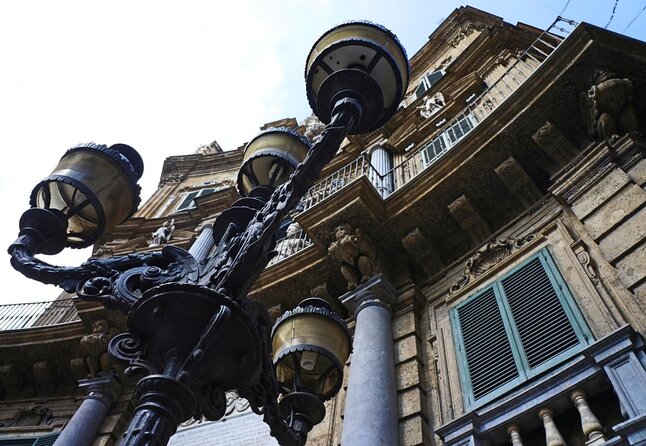
- Quattro Canti and Piazza Pretoria: Baroque drama in two quick hits
- The square of the three churches and the Arab-Norman blend
- Santa Caterina cloister: the calm pause in the middle of the city
- Via Vittorio Emanuele: Palermo’s oldest street in walking form
- Oratorio di San Lorenzo, Teatro Massimo, and Piazza Marina
- Palazzo Butera: when Palermo gets modern-smart (for a change)
- La Vucciria market: street food culture you can watch, not just buy
- Price and value: what $98 gets you, and what it doesn’t
- Who should book Palermo Wonders for this late-afternoon loop
- Should you book this Palermo Wonders Summer Special?
- FAQ
- What time does the tour start, and how long is it?
- How many people are in the group?
- What’s included in the tour price?
- Are entrance tickets included for churches and special stops?
- Where do we meet, and where does the tour end?
- What happens if the weather is poor?
Key points worth knowing before you go
- Small group, plenty of attention: about six participants, so your guide can slow down when you want details
- Late-afternoon timing: a 5:00pm start keeps you out of the hottest hours and gives good street-scene light
- Top Palermo sights in one walk: Quattro Canti, Piazza Pretoria, the three-domed church area, and viewpoints tied to the cathedral/Martorana and Teatro Massimo
- Santa Caterina cloister time: you get guided time in one of the most peaceful corners in the middle of the city
- La Vucciria market stop: you’re not just looking at buildings; you’re watching food culture in action
- Local guide with personality: reviews mention Mauro’s professional, engaging approach and even family-style storytelling
Late Afternoon in Palermo: why 5pm is the sweet spot
I like a late-afternoon tour in Palermo because it fits how the city actually moves. Streets feel livelier as the day cools down, and you can enjoy the old-town architecture without melting under full sun. With a 5:00pm start, you’re also more likely to catch the market energy at a time when people are out, not just passing through.
This tour is built for a focused walking loop through central Palermo, roughly 2 hours 45 minutes long. That’s long enough to feel like you covered real ground, but not so long that it becomes a blur. If you’re doing other things that morning—catacombs, beaches, or just coffee hopping—this afternoon slot gives you a clean, organized way to connect the dots across the city center.
And the “Summer Special” label matters in practice: the route is designed to be doable when days are longer and you want time for dinner afterward. You’ll still want a light layer, though—Palermo weather can be unpredictable, and the tour requires good weather to run.
You can also read our reviews of more tours and experiences in Sicily.
Meeting at Via Maqueda and the walk pace for up to six
You meet at Via Maqueda, 199, Palermo, and the tour ends at Porta Felice / Foro Italico Umberto I. That end point is useful: it sets you up to keep exploring on your own instead of being stuck retracing steps back to your first stop.
The biggest comfort factor here is the group size. The tour is described as a small group—only about six participants—which changes everything about a walking tour. You can ask questions, pause for a better view, and actually follow the story without the guide feeling rushed. It also helps if your group includes mixed ages or different interests, because the pace can stay flexible.
Also, this is listed as a private tour/activity with only your group participating. That means you’re not dodging other groups at every corner, and your guide can keep the flow tight. You’ll still be walking, with several short stops—think 10 to 30 minutes each—so wear shoes you trust on uneven sidewalks. (Palermo loves its surprises.)
Quattro Canti and Piazza Pretoria: Baroque drama in two quick hits
Your first real “wow” comes fast with Quattro Canti, a Baroque square that works like a stage set. This is one of those Palermo landmarks that makes you understand why the city looks the way it does. You’ll get the chance to take in the layout and details without having to decode it from a distance.
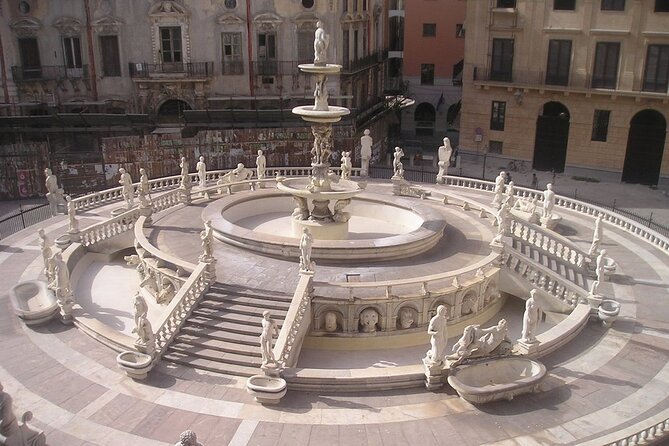
A few steps further is Piazza Pretoria, known for its big Renaissance fountain in front of the city hall area. Even if you’re not a fountain person, this is worth seeing because it’s visually bold and easy to read: water, angles, and sculptural drama, all right in the open. Expect this stop to feel like a reset point—something you can frame in photos and also use to orient yourself for what comes next.
These two stops also do something smart for your brain: they give you major style markers early. Quattro Canti and Piazza Pretoria are strong examples of how Palermo blends grand design with street-level life. It’s not a museum vibe. It’s the city in full view.
The square of the three churches and the Arab-Norman blend
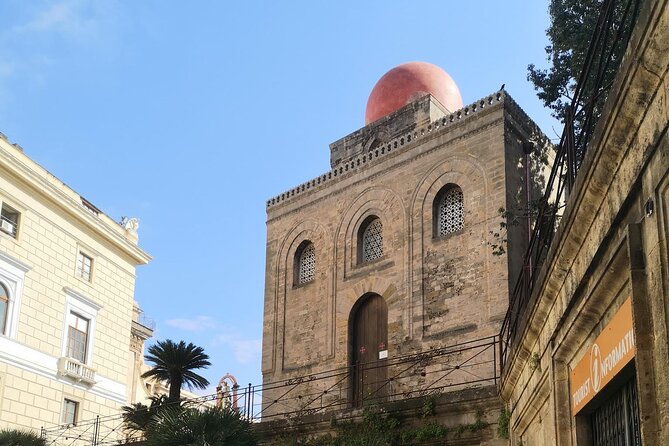
One highlight is the area often described around the square of the three churches, with the famous three red domes. This is where Palermo’s layers show up in a way that’s easy to spot. You’ll also hear about the Arab-Norman architecture connection, and the stop references Santa Maria dell’Ammiraglio as the landmark tied to that style.
This part matters because Palermo’s identity isn’t one single chapter. It’s a layered book. The tour’s approach helps you understand how these periods overlap rather than treating them like separate “sight categories.” You’re not just ticking boxes—you’re learning what to look for while you walk.
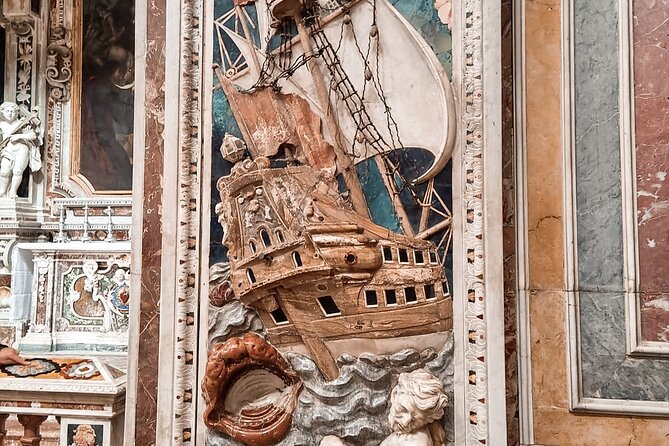
The guide also connects the dots visually: the gold Byzantine mosaics are described as the meeting point where Arab-Norman period elements and Baroque fresco atmosphere live side by side. If you’ve ever looked at a church from the outside and thought, That’s cool, but what exactly am I seeing—this is the section that gives you a framework.
Practical tip: plan to slow down here and actually look up. The architectural cues are part of the story, and you’ll get more from this stop if you spend a couple of extra seconds with each façade detail.
Santa Caterina cloister: the calm pause in the middle of the city
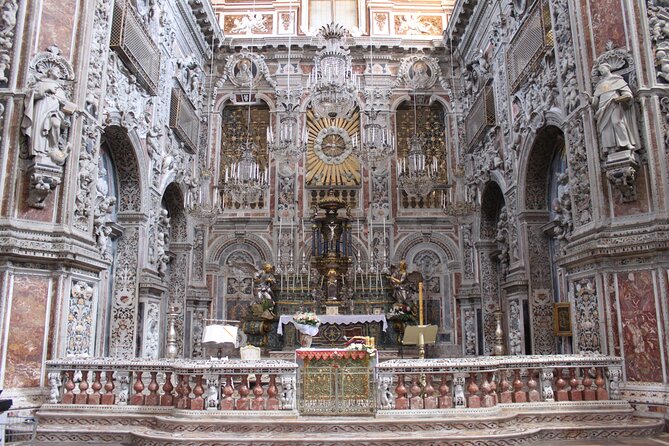
Then the tour shifts gears with Church and Monastery of Santa Caterina d’Alessandria, where you’ll visit the cloister—described as a kind of paradise in the city center. This is a powerful contrast after busy street corners. Even when you’re not sure what’s inside a given church, cloisters have a way of pulling your attention inward fast.
The guided element is included here: the guided visit of the church Santa Caterina is part of the tour offering. That means you’re not just walking past; you’re getting help understanding what you’re looking at and why it matters. The itinerary mentions cloister time around 10 minutes, and it’s marked as an admission ticket not included—so if you want full access, expect you may need to pay an extra entrance fee on the day.
Why I like this stop for most people: it gives you a breath without breaking the tour’s momentum. In a 2 hours 45 minutes schedule, you don’t want “just one quiet place” that turns into a long detour. This one stays focused and useful.


Via Vittorio Emanuele: Palermo’s oldest street in walking form
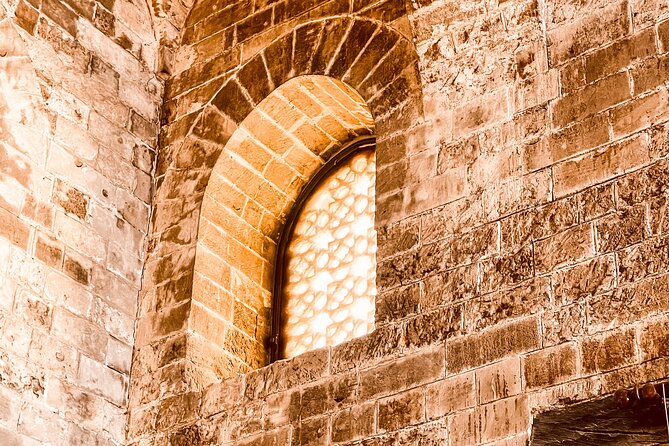
Next is Via Vittorio Emanuele, described as the oldest street of the city. This is a stop that can feel simple—until you realize why guides like it. Long roads like this are where you notice how neighborhoods connect, where old architecture shapes movement, and how daily life still uses historic routes.
You’ll get about 30 minutes here, which is generous for a walking tour schedule. That longer window suggests the guide wants you to actually experience the street rather than zip through it. The route also references a picturesque square in Palermo connected to this stretch.
This is a good moment to slow down your photo habit and focus on reading the space: storefront rhythms, building heights, and the way people use the sidewalks. If you’re the type who usually skips streets because they’re “not an attraction,” this is the opposite. This is the attraction.
Oratorio di San Lorenzo, Teatro Massimo, and Piazza Marina
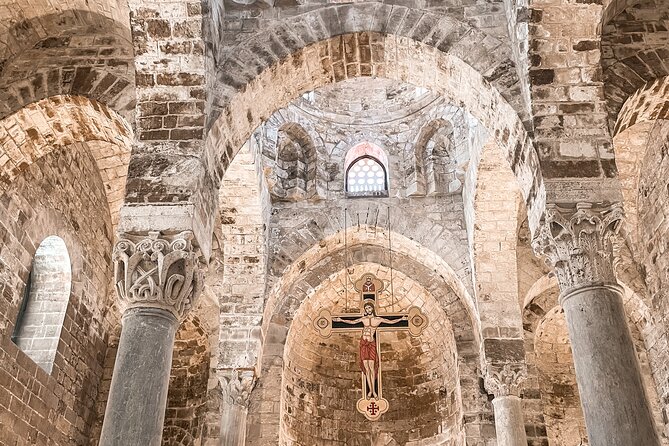
The tour keeps stacking meaningful stops. Oratorio di San Lorenzo is included with a mention of the stolen Caravaggio—a detail that’s instantly memorable and gives you a hook for what to listen for. The itinerary notes admission isn’t included, and the stop is short (about 10 minutes), so treat it as a guided introduction to the story rather than a full-on deep museum experience.
Along the way, the tour is also said to cover major A-list sights like Teatro Massimo and the cathedral and Martorana area. Even if you’re seeing these as part of walking-route viewpoints, it’s still valuable. Teatro Massimo in particular is one of those places that changes how you understand Palermo’s scale. It’s city pride in stone and space.
Then you head to Piazza Marina, linked with the Garden Garibaldi. This is a softer, open-area moment that helps you reset before the market. The stop is around 10 minutes, which is long enough to feel the vibe but short enough that you won’t lose time.
Palazzo Butera: when Palermo gets modern-smart (for a change)
A standout in the schedule is Palazzo Butera, listed as the most innovative place in Palermo with about 1 hour allocated. That’s a big chunk of time compared with other stops, which signals this isn’t just a pass-by.
What makes this stop interesting for readers is the balance it offers. You get the old-world architecture earlier, then Palazzo Butera adds a different angle—how Palermo thinks and creates beyond the Baroque and cathedral scenes.
Because the itinerary marks admission as not included, you’ll want to decide on the day whether you’ll pay for entry to fully enjoy it. If you like places that mix culture with a modern way of presenting it, you’ll probably find this hour worth it. If you’re running on limited energy, you can at least enjoy the guided orientation and then see whether you want to spend the extra time inside.
La Vucciria market: street food culture you can watch, not just buy
Finally, you land at La Vucciria, one of Palermo’s historical street markets, with about 15 minutes allocated. This is where the tour becomes more than architecture. You’re watching street sellers at work and seeing how Palermo eats—up close, not described from a distance.
The itinerary flags street-market and street-food vendors, and the value here is timing. Ending in the market zone makes it easy to continue for dinner after your guided walk, using your guide’s context as a filter for what you want next.
One practical thought: 15 minutes can go quickly in a market full of smells and activity. Use the first part to observe and ask questions. The second part is where you can decide whether to buy something or just keep exploring on your own.
Price and value: what $98 gets you, and what it doesn’t
At $98 for a roughly 2 hours 45 minutes late-afternoon walk, I think this is priced for the experience you actually want: a small-group guide, a real route through major sights, and included guided time for the historical center and Santa Caterina.
What’s included is important: you get a guided visit of the historical city center with an official local guide born and raised in Palermo, plus guided time at Santa Caterina. That’s the core value. In a city where sights are close but meaning isn’t obvious from a map, your guide helps you see why each stop is there.
What’s not included is equally practical: entrance tickets. Many of the religious and special-entry spots in the route—like Santa Caterina, Oratorio di San Lorenzo, and potentially Palazzo Butera—may require extra payment if you want full access. So your real out-of-pocket cost depends on how many places you decide to enter.
Also, there’s a mobile ticket feature. That’s one less thing to manage when you’re navigating a dense old-town area.
Who should book Palermo Wonders for this late-afternoon loop
This tour fits best if you want structure without feeling locked to a guidebook. It’s ideal for:
- First-timers who need the big Palermo landmarks in a single walk
- People who love architecture but also want street-market energy at the end
- Anyone who prefers a guide with personality, since reviews highlight Mauro’s professional, engaging style and the way his stories and gentle delivery make the sights feel connected
It’s also a good choice if you’re traveling with someone who gets impatient with long museum lectures. This route keeps moving, but it still gives context.
If you’re the type who hates walking, you might find the schedule too dense. If you can handle a longish stroll with short breaks at each stop, you’ll probably enjoy how the city layers unfold.
Should you book this Palermo Wonders Summer Special?
Yes, if you want a small-group, late-day introduction to Palermo that mixes the headline sights with a real market finish. The included guided time—especially around Santa Caterina—helps you get more out of your stops than a self-guided wander. And the strong guide feedback, including Mauro’s engaging and professional approach, is a big reason this one feels worth the money.
I’d only hesitate if you strongly prefer fully ticket-included attractions, or if you know you’ll struggle with outdoor time in uncertain weather. Otherwise, this is a smart way to see Palermo’s old town without turning your trip into a map-reading contest.
FAQ
What time does the tour start, and how long is it?
It starts at 5:00 pm and lasts about 2 hours 45 minutes.
How many people are in the group?
The tour is described as a small group of just six participants, and it’s also listed as private for your group.
What’s included in the tour price?
You get a guided visit of the historical city center with an official local guide born and raised in Palermo, plus a guided visit of Santa Caterina.
Are entrance tickets included for churches and special stops?
No. Entrance tickets are listed as not included, so some stops may require you to pay on site if you want to enter.
Where do we meet, and where does the tour end?
You start at Via Maqueda, 199, 90133 Palermo PA, and the tour ends at Porta Felice / Foro Italico Umberto I, 90133 Palermo PA.
What happens if the weather is poor?
The experience requires good weather. If it’s canceled due to poor weather, you’ll be offered a different date or a full refund. You can also cancel up to 24 hours in advance for a full refund.