REVIEW · FUERTEVENTURA
Stargazing from Dunes of Corralejo, Starlight Guide
Book on Viator →Operated by Stars by Night · Bookable on Viator
The dunes turn into your planetarium. From the Corralejo sand, you’ll stargaze with an accredited starlight guide using telescopes and laser pointers, while the ocean keeps a steady background rhythm.
I love the Canary Islands Astrophysics Institute-accredited guidance and how the basics of astronomy are explained in clear, non-technical terms. I also love the rug-and-blanket setup, which makes a cool night feel genuinely comfortable.
One consideration: the experience includes a short walk over loose dune sand (about 5 minutes), and of course the sky depends on decent conditions.
In This Review
- Key things I’d circle in your notes
- Corralejo Dunes After Sunset: The Setting That Makes Stars Feel Close
- The Accredited Starlight Guide: What You’re Paying For
- Binoculars, Telescopes, and Laser Pointers: What You Can Expect to Spot
- A 1.5–2 Hour Evening: How the Night Usually Flows
- Comfort Details That Actually Improve Your Odds
- Pickup and Meeting Points: Simple, but Know the Limits
- Timing, Full Moon Dates, and Weather: How Clear Skies Are Managed
- Who This Trip Fits Best (and Who Might Prefer the Easier Viewing Sites)
- Is the $64.10 Price Tag Good Value?
- Should You Book Stargazing from Dunes of Corralejo?
- FAQ
- How long is the stargazing experience?
- Where is the meeting point in Corralejo?
- Do you offer pickup?
- What time does pickup usually happen?
- Is the tour in English?
- What stargazing equipment is included?
- What can we see during the tour?
- What if the weather is cloudy?
- Is it suitable for people with mobility issues?
Key things I’d circle in your notes
- Accredited starlight guidance from the Canary Islands Astrophysics Institute
- Rug and blanket for each person, so you can relax instead of hovering around
- Binoculars and professional telescopes plus laser pointers to find objects fast
- Small group size (max 13) for a more personal feel
- You get a photo link from the session (including the sky moments)
- Mobility options: Los Molinos or Pozo Negro can avoid the dune walk
Corralejo Dunes After Sunset: The Setting That Makes Stars Feel Close
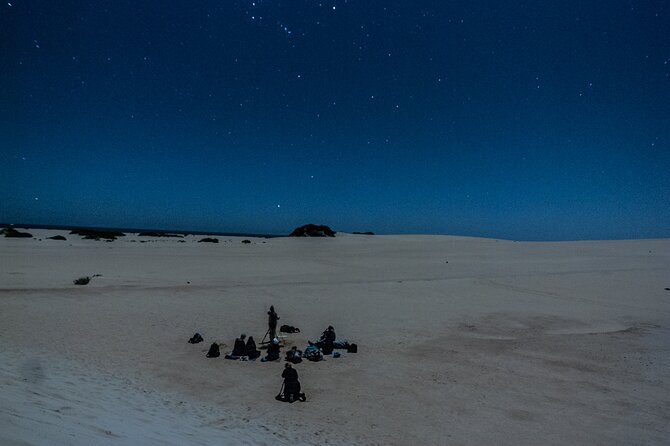
Corralejo’s dunes are made for night-sky viewing. You’re not stuck in a city glow or watching through a fence line. Out here, the air feels open, and the ocean sound helps you slow down and actually look up.
The meet-up area is close, but the actual viewing spot is reached via about a 5-minute walk over loose sand. That detail matters, because it’s the only real “work” part of the evening. If you’re comfortable walking on uneven ground, it’s quick. If you’re not, plan ahead.
This is also a great “do something different” activity when you want the romantic vibe without turning it into a stuffy dinner. It works for couples, and it’s also a solid family option because you can follow along even if you’ve never cared about constellations before.
You can also read our reviews of more tours and experiences in Fuerteventura.
The Accredited Starlight Guide: What You’re Paying For
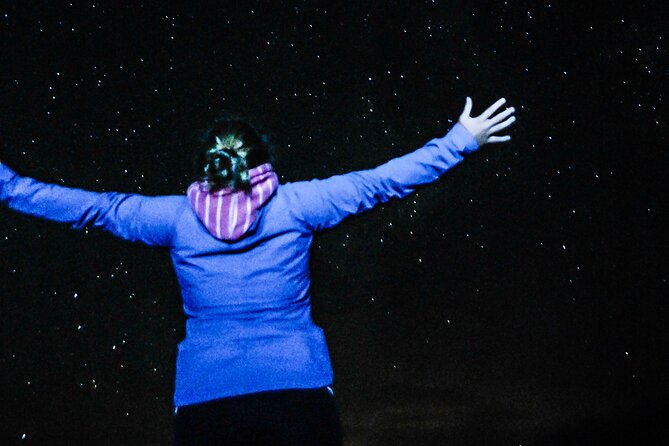
This isn’t just a person pointing out a few bright dots. The guide is a Starlight Guide accredited by the Canary Islands Astrophysics Institute, and that accreditation shows up in how the session is run.
I like that the evening includes basic astronomy lessons. You’re not expected to already know your way around the sky. You’ll be guided through what you’re seeing, which makes the night feel less like random staring and more like learning a skill you can use again later.
In the real-world experience, Karen is repeatedly mentioned as the kind of guide who brings warmth and energy, then backs it up with solid explanations. One of the easiest ways to tell you’re in good hands is that you leave with names you can remember, like constellations such as Taurus and Cancer, not just a vague memory of stars.
And yes, the sky hunt is enhanced with laser pointers and telescopes. That combo helps you go from “I think that’s a star” to “I know what I’m looking at,” without turning the night into homework.
Binoculars, Telescopes, and Laser Pointers: What You Can Expect to Spot
You’ll get binoculars and professional telescopes, plus the guide’s pointing tools. That means you’re not limited to only what your eyes can catch. You get a two-layer experience: first the big picture, then the “wait, how is that possible” details.
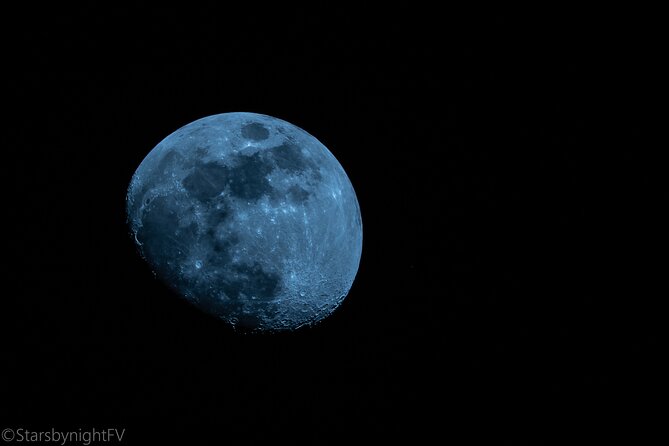
On clearer nights, you can expect chances to see the Milky Way with your naked eye. If the moon is out, it can wash out faint stars, so sessions are usually not run on full-moon dates. When conditions line up, that bright, cloudy-looking band across the sky is the kind of sight that makes everyone go quiet.
The viewing can include major landmarks in the sky, like Venus, Polaris, and Mars, plus the moon rising if the timing works. The planets are where telescopes earn their keep. On suitable nights, you may catch Jupiter and its moons, and you may even get a look at Saturn and its rings through the telescope.
There’s also room for the fun surprises. Shooting stars have been part of at least some evenings, and that’s always a nice bonus when the sky decides to cooperate.
Important reality check: the exact objects you see depend on the night. That’s normal for stargazing, not a marketing trick. The value is that you’ll be shown what’s available that evening, not just a fixed script.
A 1.5–2 Hour Evening: How the Night Usually Flows
Plan for about 1.5 to 2 hours. That’s long enough to learn your way around the sky, but short enough that you’re not left freezing for hours.
The session timing is seasonal. Meeting times are listed as roughly 1 hour after sunset, with examples like 18:00 or 21:00 in schedules. Your actual pickup time is confirmed by message the night before, and it falls within these windows:
- Summer: pickup between 20:30 and 22:00
- Winter: pickup between 17:00 and 20:00
Once you’re at the dunes, the guide typically starts by helping you get oriented. That’s where the laser pointer matters. It speeds up the process of matching bright points in the sky to what you’ve learned on the ground.
After the basics, you’ll move into “look now” moments: constellations first, then telescope time for the bigger targets like planets. People often enjoy that the session isn’t rushed, so there’s time to settle, re-check where you are in the sky, and enjoy the view instead of racing through it.
You’ll also get photographed during the experience, and the photo is delivered later via a link. That’s a simple but smart touch for stargazing, because phone photos don’t always capture the Milky Way the way your eyes saw it.
Comfort Details That Actually Improve Your Odds
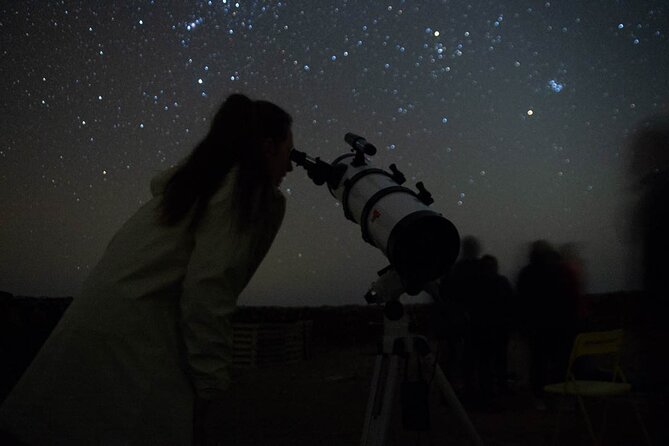
Stargazing is one part astronomy and one part comfort management. This experience does the comfort part well.
First, you get a rug and blanket for each person. That sounds small until you’re sitting on sand with the night air rising. Blankets make it realistic to stay seated and keep looking up, which is the whole point of stargazing.
Second, the group size is capped at 13 travelers. Smaller groups usually mean better attention from the guide and less crowding around telescopes. You’re also less likely to miss out on a moment because someone blocked your view.
Third, it’s held in a place that feels like a break from routine. Corralejo’s dunes are quiet, open, and atmospheric. Add the ocean waves in the background and you get an evening that feels more like a nighttime experience than a standard tour.
One practical tip from the vibe of the evening: nights can get chilly. Bring warm layers you can sit in. If you’ve ever underestimated how cold you get when you’re still and staring at the sky, this will remind you.




Pickup and Meeting Points: Simple, but Know the Limits
Pickup is offered, but only within a 5 km radius of Corralejo. If your address isn’t listed, you’re told to add it manually. Also note that this observation has pickup limits: there is no collection from several areas including the south side (like Costa Calma, Jandía, Sotavento), and no pickup from certain Corralejo-adjacent locations (like Caleta areas, Puerto Rosario, and specific west-side areas such as El Cotillo, Lajares, or Majanicho).
That can feel picky until you realize it’s about keeping the schedule smooth for a night activity. When you only have a few dark-hour windows, long pickup routes can ruin the timing.
The tour starts at P565+F3, 35660 Corralejo and ends back at the meeting point. So even with pickup, you’re not trekking across the island—you’re working within Corralejo’s orbit.
If you’re staying outside the pickup zone, you may need to meet on-site instead of getting collected.
Timing, Full Moon Dates, and Weather: How Clear Skies Are Managed
Stargazing is weather-dependent by nature, and this one is explicit about that. If the sky won’t cooperate, you’ll either be offered a different date or a full refund.
There’s also a schedule pattern you can use: the Corralejo Dunes observations are usually Monday and Friday, except on full moon. Sometimes extra dates are added. If you can’t book your first choice, it’s worth checking other nearby dates, since the operation is set up to run more often than just a single fixed night.
One thing I appreciate is that cloud cover doesn’t just become a shrug. Clear-sky evenings can still happen when conditions improve, and the session can be adjusted when the sky gives you a usable window. That means you’re not just paying for a “time slot,” you’re paying for a guide and equipment, with the operator working to maximize your chance of seeing the sky at its best.
Who This Trip Fits Best (and Who Might Prefer the Easier Viewing Sites)
This stargazing trip is designed so most people can join in. It’s offered in English, and it allows service animals.
It’s also a good match if you want:
- guided learning of the night sky, not solo wandering
- a cozy seated setup
- a small-group experience
- something that feels special for couples without being a hard-to-follow activity
The one real mismatch is mobility. The dunes viewing includes that about 5 minutes walk on loose sands, and it’s specifically noted as not recommended for people with mobility issues.
If you do have mobility concerns, the experience suggests alternatives:
- Los Molinos Observation for easier access (and no walking involved)
- Pozo Negro if you are south of Fuerteventura (also no walking involved)
If you’re unsure which site applies to you, message before booking so you’re not stuck on the day with the wrong plan.
Is the $64.10 Price Tag Good Value?
At $64.10 per person for roughly 2 hours, you’re paying for three things you’d otherwise have to DIY:
1) An accredited guide who helps you find and understand objects quickly
2) Equipment (binoculars and telescopes), which is the real difference between seeing stars and actually seeing planets
3) A comfort setup (rug and blanket) plus a photo link afterward
If you’ve ever tried to stargaze from a random spot, you know how easy it is to waste the night. You don’t know what to look for, you don’t know what’s visible, and a telescope without guidance can feel like mystery equipment. This experience removes that frustration.
It’s also a small-group evening (max 13), which generally improves the quality of attention you get. And when the session lands on a moonless or darker-night window, seeing things like the Milky Way, plus planets through telescopes, is the kind of payoff that feels way bigger than the ticket price.
The only reason you wouldn’t call it good value is if you strongly dislike cold nights or can’t manage uneven sand. If that’s you, choose the easier mobility option if available—or consider a different type of evening program.
Should You Book Stargazing from Dunes of Corralejo?
If you want an evening that mixes comfort, guided astronomy, and a real chance at seeing the Milky Way and planets, I’d book it. The accredited guide, the telescopes plus laser pointers, and the rug-and-blanket setup make it feel like money well spent rather than a basic sightseeing stop.
Book with flexibility in mind. Weather and moonlight matter, and the experience runs with that reality. If you can swing a second night or have a date that’s flexible, you improve your odds.
And if you have mobility concerns, don’t treat this as a one-size-fits-all event. Plan for Los Molinos or Pozo Negro if the dune walk is a problem.
If you want a night you’ll remember for the sky itself, this is one of the better ways to do it in Fuerteventura.
FAQ
How long is the stargazing experience?
It runs for about 1.5 to 2 hours.
Where is the meeting point in Corralejo?
The start point is listed at P565+F3, 35660 Corralejo, Las Palmas, Spain, and the activity ends back at the meeting point.
Do you offer pickup?
Yes, pickup is offered within a 5 km radius of Corralejo. Pickup details are confirmed by message the night before.
What time does pickup usually happen?
Pickup is typically about 1 hour after sunset, with seasonal windows of 20:30 to 22:00 in summer and 17:00 to 20:00 in winter.
Is the tour in English?
Yes, it is offered in English.
What stargazing equipment is included?
You get binoculars and professional telescopes, and the guide uses telescopes and laser pointers to show you what to look at.
What can we see during the tour?
You’ll learn basic astronomy and use the equipment to look at stars, planets, and celestial wonders. On clear nights, it may include views like the Milky Way, planets such as Venus or Mars, and telescope views of planets like Jupiter and Saturn.
What if the weather is cloudy?
This experience requires good weather. If it’s canceled due to poor weather, you’ll be offered a different date or a full refund.
Is it suitable for people with mobility issues?
It’s not recommended if mobility is a concern because there’s a short walk over loose dune sand (about 5 minutes). The experience suggests Los Molinos Observation for easier access, or Pozo Negro if you are south of Fuerteventura, with no walking involved.