REVIEW · RHODES
Small Group Hiking on Mount Akramitis in Rhodes
Book on Viator →Operated by Hiking rhodes · Bookable on Viator
Caves, pines, and a summit view. This Mount Akramitis hike strings together Limeri Cave and the island’s second mountain top with a 10 km route and about 500 m of altitude gain. I love the way the trail blends nature and storytelling, especially at the cave, where partisan groups used it as an espionage base with a radio station.
If you’re looking for a photo-worthy finale, the summit delivers that green-against-the-sky feeling described as meeting the Aegean blue. The main catch is physical: it’s a proper hike, with a mainly stony descent and a climb that demands strong fitness.
In This Review
- Key highlights you’ll actually feel on the hike
- The route in plain terms: 10 km, 500 m, and three big moments
- Entering Limeri Cave: wartime espionage under Rhodes pines
- Ag.Ioannis church: a small pause with good rhythm
- Reaching Mount Akramitis: where the forest opens into Aegean panorama
- The stony descent: the part that decides how you feel later
- What a small group of up to 8 really changes
- Pickup and the Ataviros meeting point: making the day simpler
- Price and value: is $57.67 worth it?
- Fitness reality check: what good preparation looks like
- Who should book this hike, and who might rethink it
- Should you book Mount Akramitis with this small-group hiking tour?
- FAQ
- How long is the Mount Akramitis hike?
- How far is the hike, and how much altitude do you gain?
- What are the main stops on the route?
- Is pickup included?
- What group size should I expect?
- What fitness level do I need?
- Is the tour offered in English?
- What if the weather is bad?
- Can I cancel for free?
Key highlights you’ll actually feel on the hike
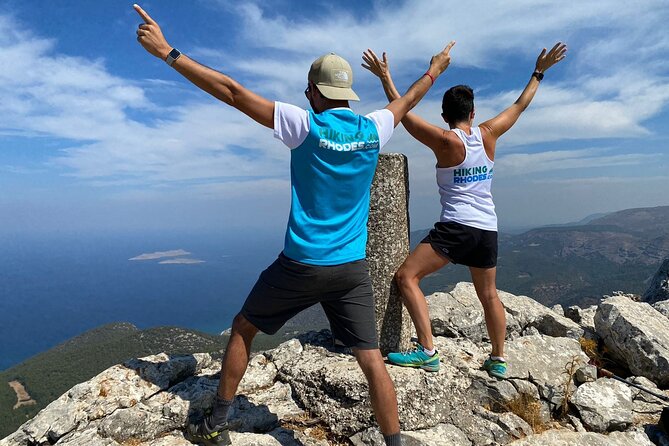
- 10 km route with ~500 m altitude difference for a satisfying workout, not a casual walk
- Limeri Cave tied to Second War espionage and a partisan radio station
- Ag.Ioannis church as a calm waypoint on the way toward the higher ground
- Mount Akramitis summit views where the pine/cypress greens meet Aegean horizons
- NATURA 2000 protected area with dense forest and unique wild fauna and flora
- Maximum 8 travelers so you’re not stuck in a crowded line
The route in plain terms: 10 km, 500 m, and three big moments
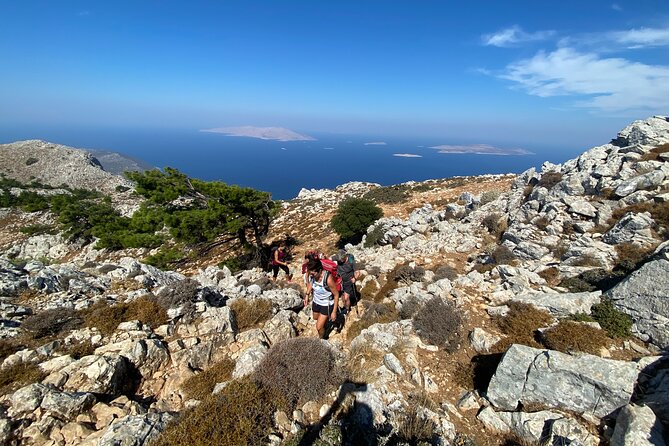
This is built as a full morning-to-midday hiking outing (about 5 hours), starting in the Ataviros area and ending back at the meeting point. The route covers roughly 10 km and climbs about 500 m. That means you’ll feel the effort steadily—woods first, then the historical stop, and finally the summit payoff.
The day’s three “anchor moments” are easy to follow. First you hike through the forest path to Limeri Cave, tucked into the mountain. Next comes a short, meaningful stop at the small Ag.Ioannis church. Then you push up to the top of Mount Akramitis, where the terrain opens up and the views take over—before you return downhill.
Because the descent is described as mainly stony, you’ll want to think about footing from the start. Plan to move at a steady pace, and don’t treat this like a speed hike. The route is athletic enough that good shoes and smart pacing matter as much as motivation.
You can also read our reviews of more tours and experiences in Rhodes.

Entering Limeri Cave: wartime espionage under Rhodes pines
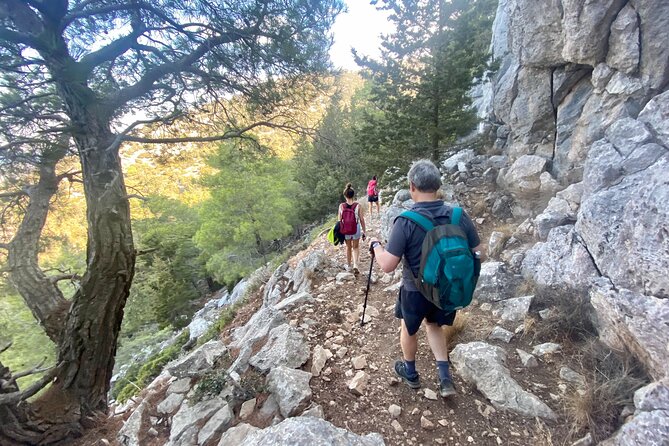
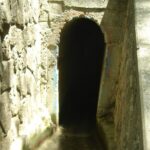
The trail’s first major destination is Limeri Cave, reached after hiking along an enchanting wooded path. What makes this stop more than a “wow, a cave” moment is what it represents: during the Second War, it functioned as an espionage base for partisan movements, and it even hosted a radio station.
That historical layer changes how you experience the landscape. Instead of viewing the cave as scenery, you start thinking about why this location mattered—hidden in the mountain, close enough for movement through the wooded routes, and useful for clandestine communications. When you reach it, give yourself a minute to look at the surrounding terrain from the way you came in. Even without extra dramatics, the setting helps you understand how people could plan and operate away from the open road.
In practical terms, caves can also feel cooler and dimmer than the sunlit trail. If you’re the type who likes taking photos, it’s worth thinking about that contrast ahead of time: keep your eyes on the trail while you’re walking, and then pause to capture the moment once you’re safely stopped.
Ag.Ioannis church: a small pause with good rhythm
After Limeri Cave, the hike continues toward the small church of Ag.Ioannis. This isn’t described as the main spectacle of the day, but it’s an important waypoint—one that helps you break up the effort and reset your attention.
I like these kinds of mid-route stops on hikes because they turn “time spent climbing” into “time spent noticing.” At this point you’ve already worked through the forest and the cave segment, so you’ll likely feel the walk shift from exploring to preparing. The church stop works like a natural mental marker: you’re moving closer to higher ground, and you can take a breath before continuing onward.
If you’re traveling with someone who gets tired on sustained climbs, this kind of pause is also handy. It gives you a clear moment to regroup, check water levels, and make sure everyone’s pacing stays comfortable.
Reaching Mount Akramitis: where the forest opens into Aegean panorama
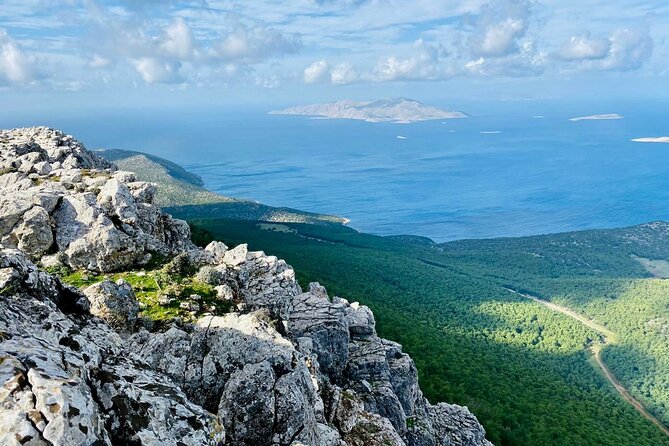
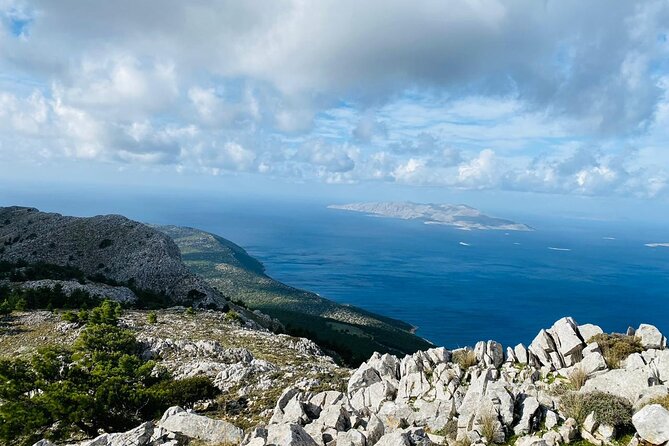
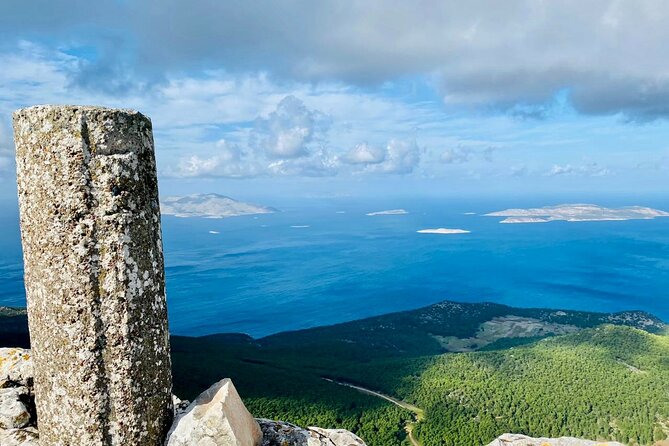
At the top of Mount Akramitis, you get the day’s big visual reward. The route is described as leading to the top of the island’s second mountain, and the experience is framed as the green meeting the Aegean blue.
That’s not just marketing language. On a hike like this, the summit view is where you finally feel the payoff for the climbing work you did earlier. The forest before the summit gives you texture—pine and cypress tones, shaded trail sections, and that tucked-in feeling. At the summit, you trade shade for breadth. Horizons matter here, and the view is part of why this hike is popular for people who like nature but also want a payoff they can’t get from a flat walk.
One more reason the top matters: this area is included in the European habitat network NATURA 2000, and it’s protected as a nature monument. That protection covers more than scenery. It signals that this landscape supports unique ecosystems of wild fauna and flora, including the dense pine and cypress forest that hikers move through on the way up.
So while you’re looking out at the Aegean, you’re also walking through a protected environment. Keep that in mind when you’re thinking about off-trail movement. Stick to the path, and treat the hike as both a workout and a respectful passage through a conservation area.
The stony descent: the part that decides how you feel later
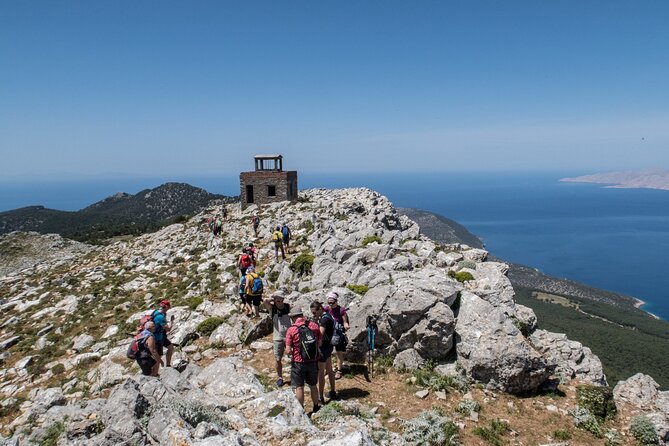
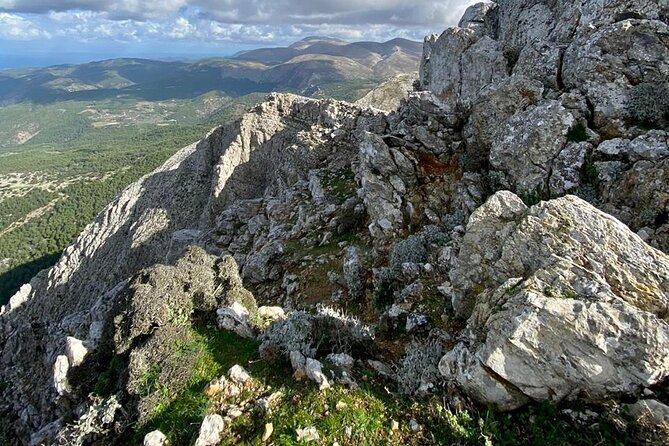
Getting down is always harder than it sounds. Here, the descent is described as mainly stony, which means you’ll likely deal with uneven footing for a good stretch. This is where you decide whether your hike ends with satisfaction or with sore ankles.
Use the stony section as your pacing lesson. Don’t rush it to “get it over with.” Take shorter steps, keep your weight controlled, and make sure your shoes have decent grip. If you use trekking poles, this is exactly the kind of terrain where they can help you stay stable.
It also helps to mentally plan your timing. Since the overall duration is about 5 hours, that means you’re balancing energy all the way back. You’re climbing, you’re stopping, you’re cresting. Then you have to finish strong on the way down.
If you know your legs tend to tighten up on descents, start the day with a slightly slower climb pace. Saving energy early gives you better control later, especially on rocky trail.




What a small group of up to 8 really changes
This hiking experience caps the group at 8 travelers, and that’s not a small detail. It directly affects how the walk feels. With fewer people, you’re less likely to get strung out in a chain that forces you to hike behind someone’s pace. You also get better chances to ask questions without feeling like you’re holding everyone up.
A big reason this can feel more personal is the guide experience. In the feedback you’ll see repeated praise for Manuela, described as professional, friendly, and full of knowledge about the area, its history, and the plants and nature you pass along the way. That matters because the hike isn’t just “walk here, stand there, take a picture.” The guide’s context helps you notice what’s around you while you’re still moving.
And if you’re someone who likes learning without turning the day into a classroom, this structure hits a nice balance: you get history at the cave, a practical sense of place around the church, and nature focus on the protected mountain environment.
Pickup and the Ataviros meeting point: making the day simpler
You don’t have to figure everything out on your own. Pickup is offered from hotels or apartments/villas, and the activity starts at the Ataviros area meeting point (listed as 8G894QV2+C8W…).
For me, the value of pickup on a hike like this is simple: it reduces friction. If your day plan depends on timing a bus or lining up a taxi, you spend mental energy on logistics instead of on the hike.
The tour also runs in English, and it uses a mobile ticket. That’s helpful for day trips where you don’t want to manage printed paperwork.
Finally, it’s worth noting that this experience is often booked ahead (on average, about 14 days in advance). If your dates are fixed, book earlier so you’re not hunting for last-minute slots.
Price and value: is $57.67 worth it?
At $57.67 per person, you’re not paying for a “private hike,” but you are paying for a guided route with a guided interpretation of key stops, plus pickup service. That combination is the core value.
Here’s why it adds up for a lot of people:
- You get a structured 5-hour outing that includes the major stops: Limeri Cave, Ag.Ioannis, and the Mount Akramitis summit area.
- You’re hiking a route with meaningful altitude change (about 500 m), which often feels smoother and more enjoyable with guidance and pacing.
- You get access to contextual learning: the Second War cave role, plus nature and protection details tied to NATURA 2000.
- The maximum group size helps keep the experience more focused than a bus-style day.
Is it a deal if you only want casual walking? Maybe not. But if you want a guided, athletic day in Rhodes that mixes history and protected nature in one outing, the price feels aligned with the effort and structure.
Fitness reality check: what good preparation looks like
The hike asks for good physical fitness. It’s not just distance. The combination of about 10 km plus about 500 m of altitude difference means you’ll work uphill for long enough that endurance matters.
If you hike a bit at home—regular walking, some hills, or frequent stairs—you’re probably in the right zone. If you rarely exercise, plan for a tougher day and consider whether you want a gentler route instead.
Also, pay attention to the stony descent. A person can climb fine and still struggle coming down if their balance isn’t used to rock and uneven steps. That’s why sturdy footwear is not optional for comfort.
One practical tip: build your pacing around the uphill effort. Start controlled, save energy for the summit, and don’t treat every uphill minute like a race. On a guided hike, you want to finish with enjoyment, not just survival.
Who should book this hike, and who might rethink it
This hike is a strong match if:
- You like real hiking (not just strolling), and 5 hours with altitude change sounds appealing.
- You want a day that mixes nature and historical context in the same walk.
- You prefer small groups and a guide who can answer questions about what you’re seeing.
- You’re motivated by summit views and like the payoff that comes after work.
You might rethink booking if:
- 500 m of climbing feels like too much right now.
- You’re worried about stony footing on the way down.
- You want a low-effort itinerary with minimal physical demands.
The upside is that the group limit and guided format make it easier to manage your pace than solo hiking. The downside is that it’s still a hike, and the terrain asks for real attention.
Should you book Mount Akramitis with this small-group hiking tour?
I’d book it if you’re aiming for a Rhodes day that feels meaningful and active: forest trail, Limeri Cave with wartime espionage context, a calm church stop at Ag.Ioannis, and a summit view over the Aegean. The NATURA 2000 setting adds a conservation-minded feel, and the small group size (up to 8) keeps it from becoming chaotic.
Skip it if your priority is an easy sightseeing stroll or if you’re not ready for rocky descent. If you’re physically up for it, though, this is exactly the kind of half-day hike that makes the island feel bigger than the city streets.
FAQ
How long is the Mount Akramitis hike?
It runs for about 5 hours.
How far is the hike, and how much altitude do you gain?
The hike covers around 10 km with about 500 m of altitude difference.
What are the main stops on the route?
You hike to Limeri Cave, pass by the small church of Ag.Ioannis, and reach the top area of Mount Akramitis.
Is pickup included?
Yes. Pickup is available from hotels or apartments/villas.
What group size should I expect?
The group is limited to a maximum of 8 travelers.
What fitness level do I need?
The experience requires a strong physical fitness level.
Is the tour offered in English?
Yes, it’s offered in English.
What if the weather is bad?
The tour requires good weather. If it’s canceled due to poor weather, you’ll be offered a different date or a full refund.
Can I cancel for free?
Yes. Free cancellation is available up to 24 hours in advance for a full refund.