REVIEW · SICILY
Palermo Street Food tour: art, history and ancient markets
Book on Viator →Operated by Palermo a Piedi - Walking Tour · Bookable on Viator
Palermo can feel like a movie, and this walk gives you the script. You start with street-level markets, then layer in the city’s history as you pass major sights like the Cathedral, Quattro Canti, and Teatro Massimo—while your guide steers you through the best bites. I especially love how the food stops are practical (you’ll actually taste enough to feel fed), and how the guide—often Palermitani like Fabrizio or Maurizio—connects what you’re eating with why Palermo looks the way it does. One thing to consider: it’s a 3-hour walking tour, so comfortable shoes matter, and you’ll want decent weather.
In This Review
- Why it works (and what to expect)
- Key highlights you’ll care about
- Palermo street food with history that actually sticks
- The “value equation”: $49.77 for food + major sights
- The pace: short sights, longer bites
- Stop 1: Capo Street Market (Capo/Ballarò-Vucciria vibes, but different)
- Stop 2: Dainotti’s da Arianna friggitoria stop (where you actually eat)
- Teatro Massimo: the opera landmark that makes Palermo feel big
- Stop 3: Cattedrale di Palermo (Arab-Norman UNESCO anchor)
- Stop 4: Quattro Canti—Palermo’s street-corner theatre
- Piazza Olivella: Sant’Ignazio and the museum connection
- Opera culture: Teatro dell’Opera dei Pupi by Mimmo Cuticchio
- Via Vittorio Emanuele (the Cassaro): palaces and the oldest big street
- What you’ll actually taste: the Palermo street-food lineup
- Who this tour suits best
- Small practical tips that make a big difference
- Should you book this Palermo street food and history walk?
- FAQ
- How long is the Palermo street food and history walking tour?
- What is the price per person?
- What time does the tour start?
- Where does the tour start and end?
- How many people are on the tour?
- What street foods are included in the tastings?
- Is a drink included?
- Which major sights are included?
- Are museum or other admission fees included?
- What happens if the weather is poor?
Why it works (and what to expect)
This is built for value: you pay about $49.77 and get a guided route, a mix of classic Palermo street foods (panelle, crocchè, arancina, sfincione, and cannolo), and a drink choice (water, cola, or beer). The group stays small (up to 16), and the pace is built around short sightseeing stops plus longer eating moments. If you’re the type who wants only museums and long indoor time, this might feel a bit too outdoors and food-forward—though that’s exactly where the charm lives.
Key highlights you’ll care about
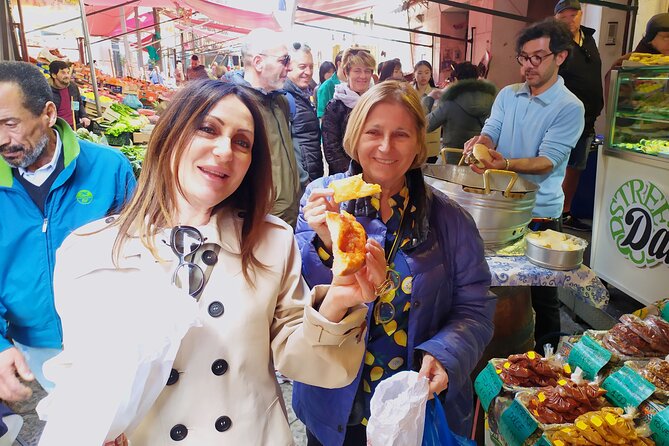
- Capo Street Market (Arab-origin): walk through a daily market vibe with food you can’t imitate anywhere else
- Dainotti’s da Arianna: a longer friggitoria stop (about 45 minutes) to really taste Palermo fried classics
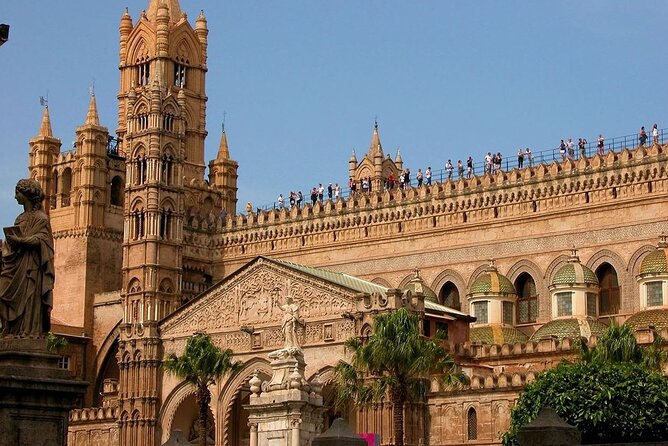
- Cathedral of Palermo: a 12th-century anchor tied to the Arab-Norman UNESCO story, with admission listed as free
- Quattro Canti: the octagonal square that frames Palermo’s main streets like a stage set
- Cassaro / Via Vittorio Emanuele: you’ll walk the oldest major street lined with palaces, churches, and convents
- Opera culture stop: a visit to Teatro dell’Opera dei Pupi tied to traditional puppet shows and UNESCO heritage
You can also read our reviews of more tours and experiences in Sicily.
Palermo street food with history that actually sticks
If you’ve ever eaten a famous dish and thought, Sure, but where did this come from?, Palermo has the answer—right on the street. This tour is designed for that exact feeling. You’re not just collecting photos. You’re moving through the historic center with an authorized guide who ties each neighborhood and monument to the city’s layered past.
Palermo’s story is complicated in the best way. Arab influences, Norman rule, Catholic power, and older Mediterranean trade all show up in daily life—especially in food. That’s why this tour works: the route helps you see the city while you taste what the city has turned into comfort food.
And the guide part matters. In the past, guides like Fabrizio and Maurizio have stood out for friendly energy, fast name-learning, and explanations that keep you interested. You’ll also get hands-on advice about where to keep eating after the tour ends—useful because Palermo food is everywhere, but knowing what to prioritize saves time.
The “value equation”: $49.77 for food + major sights
For a little under $50, you’re getting more than a snack crawl. The price includes:
- tastings of Palermo street foods like panelle, crocchè, sfincione, arancina, and cannolo
- a drink choice (water, cola, or beer)
- a guided walk connecting multiple major monuments
- a stop at the Cathedral of Palermo (with admission listed as free)
- the tour route through key historic areas
The practical advantage is simple: you don’t have to plan your own mini-food safari plus your own sights day. You get structure. You also get local guidance on what’s worth your calories and where to go next.
If you’re already thinking about doing street food on your own, this tour still earns its keep because it reduces decision fatigue. Palermo can overwhelm you with options. A guide helps you spend less time guessing and more time eating.
The pace: short sights, longer bites
The tour runs about 3 hours on foot. That timing is tight enough to feel like a highlight reel, but long enough for the food stops to matter. You’ll see several places in “look and learn” mode, then you’ll spend actual time in the places built for eating.
You’ll start at Piazza Olivella (near Via Roma area, in the historic center). The tour ends at Quattro Canti, and the end point is about a 20-minute walk from the port—plus taxis are right there.
For most people, this works well because it’s not a slow wander and it’s not a sprint. You’ll move, stop, taste, and move again. Bring water if you’re the type who walks fast, and plan to eat breakfast-to-lunch energy in terms of timing.
Stop 1: Capo Street Market (Capo/Ballarò-Vucciria vibes, but different)
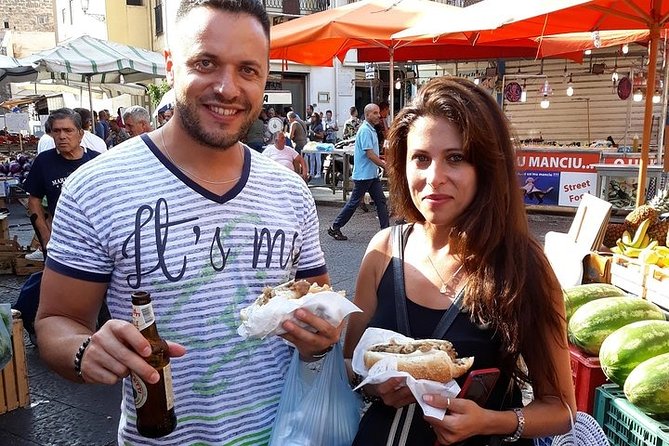
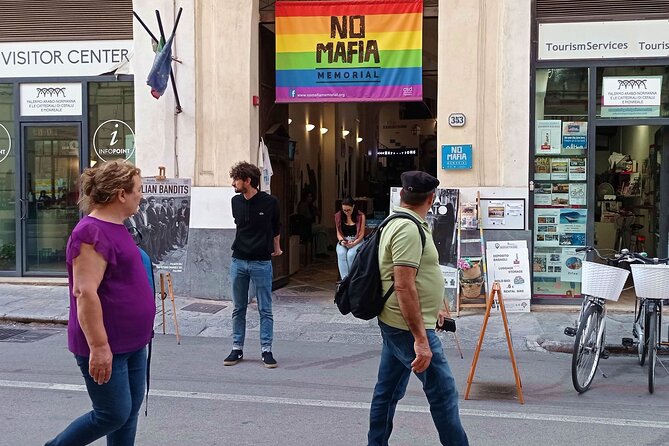
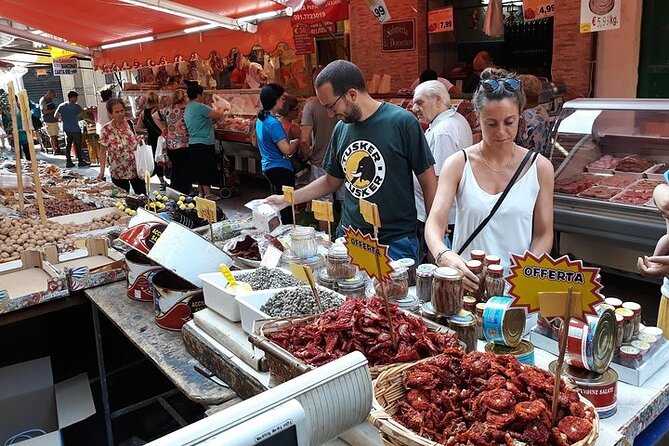
Your first real “welcome to Palermo” moment is the Capo Street Market, a daily market of Arab origin that runs along Via Porta Carini and Via Bandiera. This is where Palermo shows you its everyday face: stalls, aromas, noise, and that market rhythm where people aren’t just sightseeing—they’re shopping and eating.
Even though the stop is about 20 minutes, it’s not just a photo stop. You’re there to understand the market logic: why certain foods show up where they do, how fast street food moves, and what locals consider normal.
What I like about starting here is the way it sets your palate up for everything after. You enter the tour already smelling the city, then the guide steers you into specific tastings instead of letting you drift.
What to watch for: markets are crowded and lines can form. Keep your phone secure and expect a bit of squeeze. This is part of the experience.


Stop 2: Dainotti’s da Arianna friggitoria stop (where you actually eat)
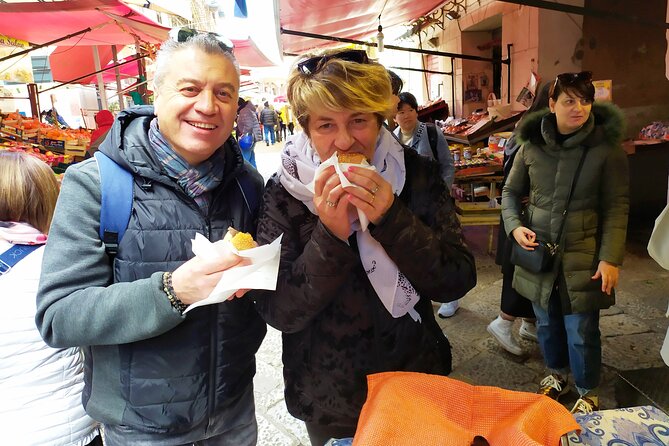
Next comes Dainotti’s da Arianna, a friggitoria stop that lasts about 45 minutes. This is one of the bigger “taste points” on the tour, and it’s also a place with real credibility: it has recently won a competition among the best street food vendors in Palermo organized by the television program Quattrorestaurants.
This matters because friggitorie in Palermo aren’t all the same. The quality shows in the texture of fried items, the seasoning, and how quickly things turn fresh. A longer stop means you’re not just taking one bite and moving on—you’re getting a fuller sampling rhythm.
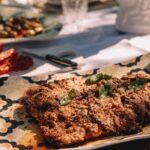
From the tour tasting list, this is where you’ll likely meet the classic fried crowd-pleasers such as panelle (chickpea fritters) and crocchè (fried potato croquettes). Expect a stall setting built for speed and taste.
Possible drawback: because this part centers on frying and crowded indoor/near-stall areas, it can be a little warm. If you’re heat-sensitive, go in knowing you’ll get a sweaty workout.
Teatro Massimo: the opera landmark that makes Palermo feel big
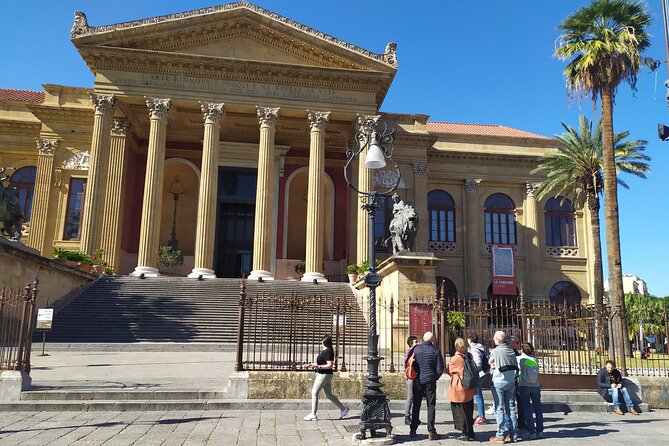
After the market-food energy, the tour opens up to a major monument: the largest opera house in Italy, Teatro Massimo. Even with limited time, seeing it on foot helps you grasp Palermo’s scale. It’s not just a historic town; it’s a cultural capital built over centuries.
You’ll likely get quick orientation from your guide—how this landmark fits into the city’s identity and why opera culture matters in places like Palermo where public life and art overlap.
Why it’s worth a short stop: it keeps the tour from becoming food-only. The city’s grandeur changes how you interpret the street-level things you tasted earlier.
Stop 3: Cattedrale di Palermo (Arab-Norman UNESCO anchor)
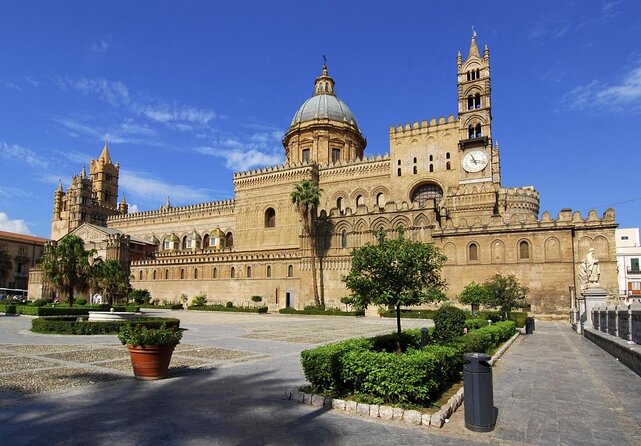
Next is the Cathedral of Palermo—a main Catholic church built in the 12th century, just after the Kingdom of Sicily took shape. This is tied to the UNESCO World Heritage Site: Arab-Norman itinerary, along with Monreale and Cefalù.
The Cathedral stop is about 20 minutes, and admission is listed as free. In plain terms: you can see a major historical layer without turning this into a ticketed museum day.
What you’re getting here is context. Palermo’s food doesn’t exist in a vacuum. It’s part of a city where different rulers and cultures shaped architecture, art styles, and daily habits. The guide’s explanation helps you link that to what you’re tasting.
Tip for your visit: don’t rush your eyes. Even if you’re not a religious history expert, you’ll likely notice the way art and architecture show multiple influences over time.
Stop 4: Quattro Canti—Palermo’s street-corner theatre
The Quattro Canti are one of those places that makes you instantly understand city planning. It’s an octagonal square built in the early 1600s at the intersection of Via Maqueda and the Cassaro (today Via Vittorio Emanuele), often referred to as the Teatro del Sole.
The stop is short (about 10 minutes), but it’s visually important. Standing here gives you a sense of how Palermo channels movement through a structured center. You can literally see why you’ll keep walking “straight lines” in multiple directions as the tour continues.
If you like architecture that’s easier to read than to study, this is your moment.
Piazza Olivella: Sant’Ignazio and the museum connection
Then you head toward Piazza Olivella, where you’ll see the church of Sant’Ignazio and the former Concento that houses the Archaeological Museum. This is a nice contrast to the street-market parts of the tour: religious architecture and cultural institutions in the middle of everyday life.
You’ll spend about 15 minutes here. The museum admission itself is not included, so this stop is about exterior viewing and guide context rather than a full museum detour.
Still, it’s useful because it helps you picture why Palermo has such heavy layers of history. When a city holds onto so many eras at once, you need these “place markers” to keep everything straight.
Opera culture: Teatro dell’Opera dei Pupi by Mimmo Cuticchio
Palermo isn’t only cathedrals and markets. It’s also traditional performance culture. The tour includes a stop at Teatro dell’Opera dei Pupi by Mimmo Cuticchio, tied to a classic Palermo tradition dating back to the 1800s and recognized as UNESCO heritage.
Even if you don’t go deep into a show format during this walking segment, the inclusion signals something important: in Palermo, culture often lives in street-level traditions—not just big institutions.
For value, this is a smart add. It gives your day a human dimension. You’re tasting the city, then you’re seeing the city’s storytelling tradition.
Via Vittorio Emanuele (the Cassaro): palaces and the oldest big street
The final major walk segment is along Via Vittorio Emanuele, which corresponds to the ancient Cassaro. This is described as the oldest street in Palermo, lined with palaces, churches, and convents.
This is where the tour’s “history in motion” feeling peaks. You’ve already seen monuments at key points; now you’re walking the corridor that connects them, so the city feels like one coherent machine.
The stop here is about 15 minutes, and admission is listed as included (which likely refers to parts of the tour experience rather than external sites). Either way, it’s a strong closing because it’s all visual—street façades, perspective, and the sense of Palermo’s long timeline.
What you’ll actually taste: the Palermo street-food lineup
The tour includes tastings of classic Palermo favorites:
- panelle (chickpea fritters)
- crocchè (fried potato croquettes)
- sfincione (a savory Palermo-style flatbread)
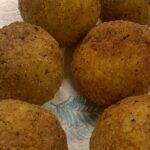
- arancina/arancina (fried rice balls)
- cannolo (sweet pastry with ricotta filling)
You’ll also get a drink choice: water, cola, or beer.
Here’s why that set is a smart mix:
- It covers both fried snack comfort (panelle, crocchè, arancina) and something more sit-and-savor (sfincione).
- It balances salty with sweet, so you don’t end the tour feeling like you just ate only one flavor.
- It’s iconic Palermo, not tourist-standard imitations.
If you’re traveling with someone who doesn’t want to over-plan meals, this is a huge plus. The guide’s job is to keep your food order logical and your timing comfortable.
Who this tour suits best
This is a great fit if you:
- want street food with context (not just bites)
- like walking city centers and learning as you go
- want to see major sights quickly, including Cathedral and Quattro Canti
- prefer a small group (max 16) with a guide who teaches instead of rushing you
It may be less ideal if you:
- hate crowds and tight market areas
- want a mostly indoor or museum-heavy day
- need a very slow pace with lots of rest breaks
Small practical tips that make a big difference
- Wear comfortable shoes. The route is walk-heavy and includes market sidewalks.
- Plan for fried food. Bring an appetite, not a dieting mindset.
- Don’t overstuff before the tour. The tasting lineup is substantial.
- Keep an eye on your guide’s timing near the Cathedral and monuments so you don’t feel rushed.
Should you book this Palermo street food and history walk?
I think it’s worth booking if you want Palermo in one compact day: market energy plus big monuments plus real food you can’t easily replicate. The price-to-experience ratio is strong because you’re not paying only for a few snacks—you’re paying for guided navigation through the historic center and a full tasting lineup, including sweet ending cannolo.
If your top priority is only museums, you might pick a different style of tour. But if you want to understand Palermo the way locals experience it—through streets, markets, and food—this is a smart choice.
FAQ
How long is the Palermo street food and history walking tour?
It lasts about 3 hours.
What is the price per person?
The price is $49.77 per person.
What time does the tour start?
The start time is 10:30 am at Piazza Olivella.
Where does the tour start and end?
It starts at Piazza Olivella, 90133 Palermo, and ends at Quattro Canti, Piazza Vigliena, 90133 Palermo.
How many people are on the tour?
The tour has a maximum of 16 travelers.
What street foods are included in the tastings?
Included tastings are panelle, crocchè, sfincione, arancina, and cannolo.
Is a drink included?
Yes. A drink of your choice between water, cola, and beer is included.
Which major sights are included?
The tour includes the Cathedral of Palermo, Quattro Canti, and Teatro Massimo. It also includes stops connected with Piazza Olivella and Via Vittorio Emanuele.
Are museum or other admission fees included?
Museum admission fees are not included. The Cathedral stop is listed as admission free on the tour details.
What happens if the weather is poor?
The experience requires good weather. If it’s canceled due to poor weather, you’ll be offered a different date or a full refund.