REVIEW · SICILY
Guided tour of the salt pans of Trapani and the Salt Museum
Book on Viator →Operated by Saline Culcasi - Riselva del Mare - Museo · Bookable on Viator
Salt turns Sicily into art. I love the WWF reserve walk through white salt, pink tanks, and mirrored water, and the hands-on look at how seawater becomes table salt. The main catch: the salt pans are outside Trapani, so plan on a car or an easy taxi ride.
This tour runs about 1 hour 15 minutes with a 50-minute perimeter stroll plus a 25-minute visit to the Museo del Sale. You get admission included at both stops, and it’s set up as a private tour for just your group, led in English.
In This Review
- Key things to know before you go
- Trapani’s salt pans: where the colors actually mean something
- Walking the WWF reserve and following salt from seawater to your hand
- Museo del Sale: the 1400s mill story you can walk through
- The guides’ approach: clear, energetic, and built for real understanding
- Price and value: what you’re really paying for
- Timing, weather, and when the light is best
- Getting there from Trapani: the real decision point
- Who should book this salt-pan tour
- Should you book? Quick decision guide
- FAQ
- FAQ
- How long is the guided tour?
- Is the tour offered in English?
- Is this a private tour?
- What’s included in the price?
- Where does the tour start?
- Where does the activity end?
- Is the tour suitable for families or different ages?
- Do I need good weather for the tour?
- Are service animals allowed?
- How far in advance should I book?
- What is the cancellation policy?
Key things to know before you go
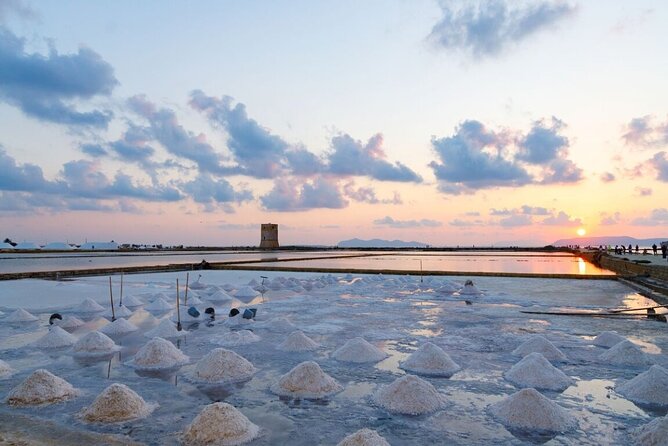
- WWF Saline di Trapani e Paceco walking route: You follow the perimeter of the salt pans where the water mirrors the sky.
- Color-sight detail: Expect white salt, blue sea, gray clay, and pink tanks in one easy loop.
- Hands-on production moments: You can collect salt by hand and see the step-by-step process up close.
- Museo del Sale in an ancient baglio: The museum sits in a historic complex, not a sterile showroom.
- Tools and how they worked: Expect explanation of classic salt-farming methods, including the Archimedes screw.
- Short, focused time: It’s built for a full experience without burning half your day.
Trapani’s salt pans: where the colors actually mean something
The Trapani salt pans aren’t just scenic. They’re a working landscape that turns simple seawater into salt through patient timing. On this tour, you get the context for what you’re seeing, so the place stops being pretty background and becomes a real process.
The walk starts at the Riserva Naturale Saline di Trapani e Paceco area, where you’ll move along the perimeter of the salt pans. It’s not a long hike. It’s a guided loop that helps you notice how the salt forms in different sections and how the sea and evaporation work together.
I especially like how the guide points out the natural mix of colors: white salt, blue sea, gray clay, and pink tanks. Those aren’t random Instagram shades. They’re visual clues for what’s happening in each stage.
You can also read our reviews of more tours and experiences in Sicily.

Walking the WWF reserve and following salt from seawater to your hand
This part of the tour feels calm, even though salt farming is anything but casual. You’re walking through an active landscape inside a reserve with protected plants and birds. That gives the whole experience a quieter, more watchable feel than if it were only about production.
As you walk, you’ll follow the route toward the banks of the salt pans. This is where the water acts like a mirror to the sky, and the reflections make it easy to understand why salt pans have always been tied to both work and wonder.
The tour also has a truly practical element: you’ll learn the step-by-step transformation from seawater to salt. And yes, you can collect salt with your hands. It’s the kind of moment that makes the process stick, because you’re not only hearing about it—you’re touching the result.
One practical tip: the surface can be dusty or uneven around working areas. I’d wear comfortable shoes and expect to get a little grime on your day, even if the walk is brief.
Museo del Sale: the 1400s mill story you can walk through

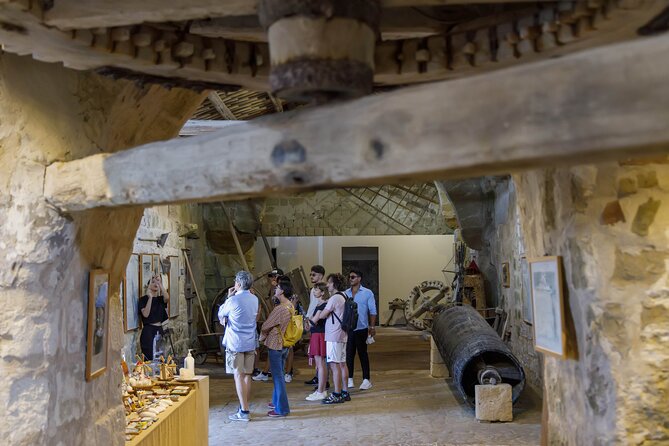
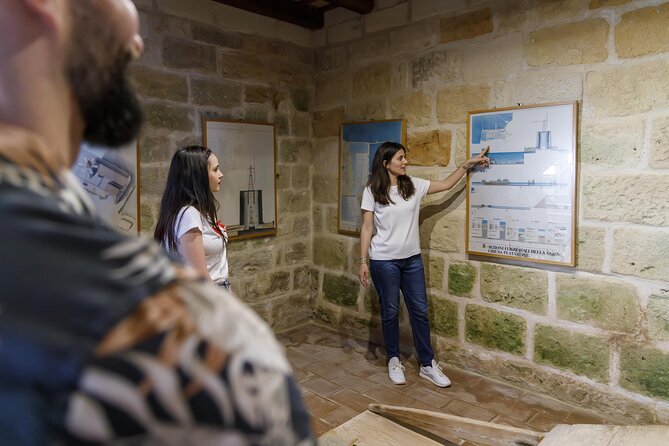
After the outdoor section, you head indoors to the Museo del Sale in an ancient baglio. This is one of the big reasons I think this tour works. You don’t just see today’s salt pans. You get the human story that kept the salt economy alive for centuries.
The museum tour focuses on the tiring reality of salt pan work, but it doesn’t stop at labor. It also connects that labor to the history of the family who managed the operation for generations. That family angle makes the museum feel personal instead of like a chart on a wall.
A standout detail: the museum includes an ancient mill from the 1400s. If you like how old technology shaped everyday food and trade, you’ll probably enjoy the way the guide ties objects and methods to real life at the salt pans.
Some versions of this experience also include a small tasting. Even if you’re not a big food person, salt tasting is a quick way to make the whole day feel concrete—because you finally taste what you’ve been learning about.
The guides’ approach: clear, energetic, and built for real understanding

The best part of a guided salt-pan tour is whether the guide can translate a complex process into something you can actually picture. Here, the guides are a big reason the experience scores so high.
Across the tour, you’ll hear explanations in English, often with helpful backup from museum staff. The pace is built for short attention spans, not lectures. Expect clear steps, practical comparisons, and a lot of enthusiasm.
One detail that shows up in the tour highlights is the Archimedes screw. That’s the kind of tool that sounds technical until someone explains what it does in the bigger system. When it clicks, you’ll understand how workers moved and managed water to keep the salt-making cycle going.
If you’re the type who likes questions, this is a good tour to ask them in. The subject is specific and hands-on, so your curiosity usually gets answered directly.
Price and value: what you’re really paying for
At $21.77 per person, this is priced like a budget-friendly experience. But the value isn’t just the cost. It’s the mix: one hour outside in a working, scenic landscape, plus admission-included museum time focused on historical context.
Because admission is included, you’re not piecing together extra tickets after you arrive. And because the schedule is tight, you’re getting an efficient total experience without taking over your whole day in Sicily.
The only real value risk is logistics. If you don’t have an easy way to reach the meeting point, you can end up spending extra money on transport. One downside to consider is that some people are surprised by how far the salt pans are from central Trapani. If you’re already budgeting for a taxi (or have a rental car), you’ll feel the price makes more sense.



Timing, weather, and when the light is best
This experience runs best when the weather cooperates. The tour requires good weather, and if it’s canceled due to poor conditions, you’ll be offered a different date or a full refund.
If you have flexibility, timing matters. Salt pans look incredible in soft light, and late-day hours are often when you’ll see the most dramatic reflections. One practical reason to consider a later slot: you may get that classic “the sky and water are doing tricks” feeling near the banks.
Also, plan clothing around sun and wind. You’re outdoors in a salty coastal setting, so light layers and sun protection can make the difference between comfortable and annoyed.
Getting there from Trapani: the real decision point
Here’s the blunt truth: this isn’t a city-center stroll. The meeting point is at Via Salina Chiusa, 1, 91027 Paceco (TP), and the experience ends back at the meeting point.
If you’re staying in Trapani proper, you should plan transportation ahead of time. The tour area is outside Trapani, and there’s no public-transit-style solution presented in the tour info. In other words, don’t build your plan on buses showing up on time.
If you’re driving, you’re in good shape. If you’re car-free, treat a taxi as part of the day’s budget, and give yourself extra buffer time.
Good to know: the tour is a private format for your group, so you won’t get split up with strangers mid-day. That can help your schedule if you’re coordinating rides.
Who should book this salt-pan tour
This is a strong fit if you want more than a photo stop. You’ll like it if you enjoy places where the story is tied directly to work, tools, and the environment.
It’s also a good choice for families or mixed ages because the experience is described as suitable for all age groups and most travelers can participate. The walking portion is guided and timed, so it’s not an all-day endurance test.
You may enjoy it even more if you care about food origins. Salt sounds basic until you see how much planning goes into making it. This tour gives you the missing piece.
The one group it might frustrate is anyone who hates getting a little sandy/outdoorsy. The setting is outdoors and functional, not polished and indoor-only.
Should you book? Quick decision guide
Book it if you want a short, guided, admission-included look at how Trapani salt pans work today and how they worked centuries ago. The combination of the WWF reserve walk and the Museo del Sale with the 1400s mill is a clean one-two punch.
Skip or rethink if transportation is your weak spot. If you can’t easily reach Paceco and you’re hoping public transport will solve it, this tour can become more hassle than it’s worth. Solve the ride first, and you’ll likely feel the $21.77 price is fair for the time and content.
FAQ
FAQ
How long is the guided tour?
The tour lasts about 1 hour 15 minutes (approx.), with a 50-minute salt pan walk and a 25-minute museum visit.
Is the tour offered in English?
Yes. This experience is offered in English.
Is this a private tour?
Yes. It’s a private tour/activity, and only your group participates.
What’s included in the price?
Admission tickets are included for both the salt pan area and the Museo del Sale.
Where does the tour start?
The start point is Via Salina Chiusa, 1, 91027 Paceco TP, Italy.
Where does the activity end?
The activity ends back at the meeting point.
Is the tour suitable for families or different ages?
The experience is described as suitable for all age groups within the WWF reserve, and most travelers can participate.
Do I need good weather for the tour?
Yes. The experience requires good weather, and if it’s canceled due to poor weather you’ll be offered a different date or a full refund.
Are service animals allowed?
Yes. Service animals are allowed.
How far in advance should I book?
On average, it’s booked about 10 days in advance.
What is the cancellation policy?
Free cancellation is available. You can cancel up to 24 hours in advance for a full refund.
If you want, tell me your travel month and whether you’ll have a car, and I’ll suggest the smartest time slot for light and logistics.