REVIEW · LANZAROTE
Group Longboard Surf Lesson in Lanzarote
Book on Viator →Operated by Longboard Gliders · Bookable on Viator
Longboard surfing starts easy here. In Caleta de Famara, Lanzarote, this 4-hour lesson uses tiny groups of four and coaching from Niccolò to get you comfortable fast. You start with simple beach work, then move into the white water so you build confidence before the harder stuff.
The main catch is weather. This experience requires good weather, and if conditions fail you’ll get a different date or a full refund.
In This Review
- Key highlights
- Caleta de Famara: the right place to learn longboarding
- Your 4-hour lesson flow: beach drills to white-water rides
- What you learn on the beach: safety, positioning, and the longboard body
- Paddling and pop-up timing: learning to stand without rushing
- Turning on a longboard: making the board go where you want
- Value for your money: why this small-group style works
- Meeting point and timing: plan your day around the session
- Who should book this longboard surf lesson (and who might rethink it)
- Should you book Longboard Gliders in Lanzarote?
- FAQ
- How long is the longboard surf lesson?
- Where does the lesson meet, and does it end nearby?
- What language is the instruction in?
- How big is the group?
- Do adults and kids get mixed together?
- What board type do you use during the lesson?
- What happens if the weather is poor?
- Is there free cancellation?
Key highlights
- Small groups (max 4) and same surfing level mean you get more hands-on help.
- Soft boards first, hard boards later keep progress realistic and less intimidating.
- Beach and ocean safety rules are taught before you spend more time on the water.
- White-water focus helps you learn paddle timing and balance with fewer headaches.
- Longboard basics that matter: laydown technique, paddle form, stance, pop-up timing, and turning.
Caleta de Famara: the right place to learn longboarding
Caleta de Famara is a smart setting for a longboard surf lesson because the whole format is built around confidence. You’re not thrown straight into the deep end. Instead, you begin on land and then work your way into the surf step-by-step, which is exactly how you want to learn a sport where balance and timing are everything.
This lesson is run in a small, private group style. Maximum four people means the instructor can actually watch your body position and correct what matters, without shouting over ten surfers. It also helps with pacing: if you need a few extra tries getting your stance right, you’re not waiting around while others go.
The other quiet win is the longboard itself. Longer, wider boards catch more waves, including smaller ones. That matters for first-timers because you want frequent wave contact while you’re learning basics like paddling and the stand-up sequence.
You can also read our reviews of more tours and experiences in Lanzarote.



Your 4-hour lesson flow: beach drills to white-water rides
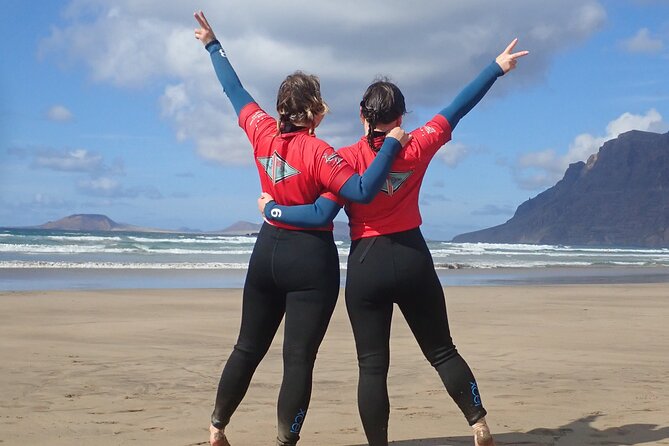
Plan for roughly four hours, give or take, and expect a smooth progression. The lesson starts on the beach with easy exercises designed to teach longboard fundamentals without pressure. This is where you learn how your board should feel under you, how to move on top of it, and how to set yourself up for the ocean work later.
Next comes the white water stage. That’s the middle ground between learning motions on the shore and managing the full chaos of waves out in open surf. You practice techniques where you can focus on timing—when to paddle, when to take off, and how to stand in a stable way—without needing to solve every advanced problem at once.
You’ll also move through board types in order: soft boards first, then progression to harder boards. That isn’t just a gear choice. It’s a learning strategy. Soft boards generally make mistakes less punishing, so you can build muscle memory and confidence before the lesson asks you to do more precise work on a harder board.
What you learn on the beach: safety, positioning, and the longboard body
The beach portion isn’t random. It includes warming-up and stretching exercises specifically for longboard surfing. Longboarding uses different angles than many people expect, especially around getting your feet placed quickly and keeping a steady stance once you’re up.
After that, you get fundamental safety rules for handling a longboard both on the beach and in the ocean. Even if you’ve surfed before, you’ll want the reminder: a longboard is bigger, it moves differently, and it changes how you manage yourself around other surfers and moving water.
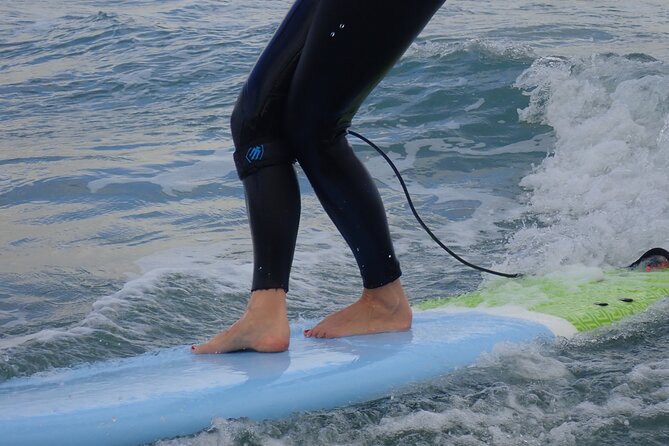
Then you shift into board positioning. You’ll learn how to lay on a longboard correctly, plus core movement items like paddle technique and how to handle your stance on the board. This stuff sounds basic, but it’s the foundation for everything that follows. If your body is set wrong before you paddle, the pop-up and takeoff feel harder than they should.
One more practical point: the group structure matters here. Because the lesson keeps adults and kids separate and doesn’t mix skill levels, you’re less likely to be dragging behind while the instructor teaches slower steps, or rushed while you’re still trying to understand the basics.
Paddling and pop-up timing: learning to stand without rushing
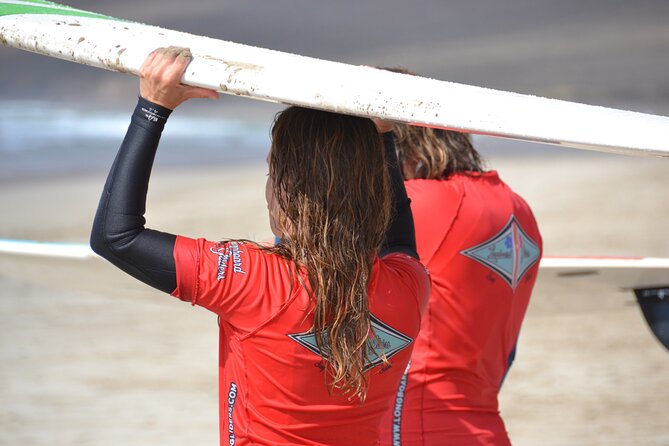
The lesson teaches the full chain, not just the moment you’re standing up. You’ll work on paddle technique, then how to transition to your stance and stand up on the longboard.
The instructor also focuses on takeoff timing—when to go from paddling to standing as a wave lifts you. This is one of those skills where small corrections can change your whole day. If you’re taking off too early, the board feels unstable. Too late, and the wave is already gone. The goal is to learn a rhythm that matches the board and the wave.
This is also where white-water practice pays off. In calmer surf conditions, you can repeat the movement more often and get real feedback on what your timing looks like. Repetition matters because the stand-up isn’t only strength. It’s sequence, foot placement, and balance.
If you’ve been nervous about longboarding, this is where the lesson typically helps the most. You aren’t just learning to surf. You’re learning how to trust your body on a bigger board, with guided steps that reduce guesswork.
Turning on a longboard: making the board go where you want
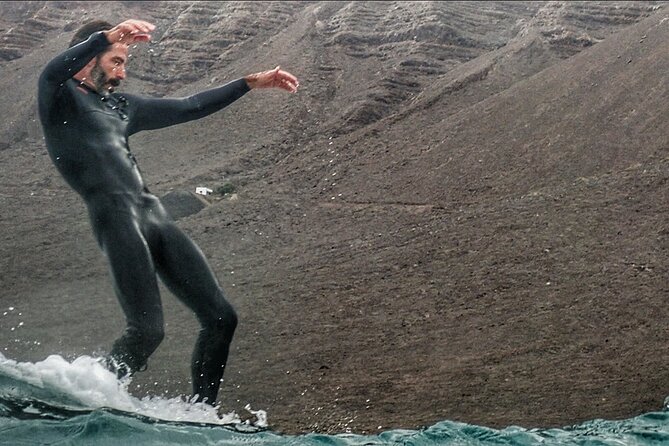
Most first lessons focus heavily on getting up. This one also teaches how to turn your longboard, which is a big deal if you want more than straight-line riding.
Turning is part physics, part balance, and part confidence. You need to know what to do with your stance and weight once you’re up, and you need enough stability to steer without fighting the board. That’s why the lesson’s progression—soft board to hard board, beach to white water—matters. You’re building the skills in the order your brain needs.
The lesson also ties turning back into earlier fundamentals like timing. If your takeoff timing is off, turning feels messy because you’re not consistently set up on the wave. Once your timing gets closer to correct, turning becomes less scary and more like something you can repeat.






Value for your money: why this small-group style works
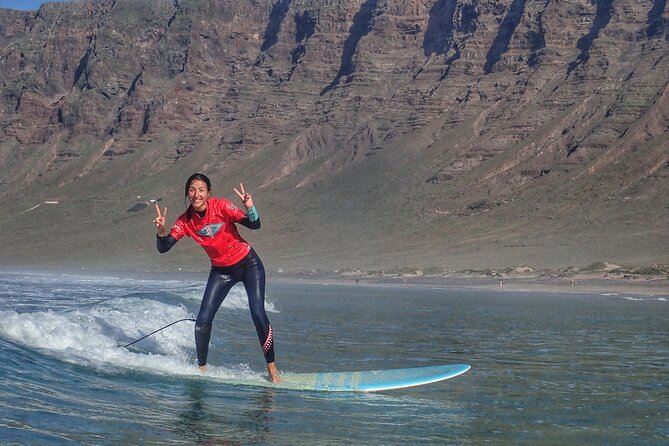
At $84.33 per person for about four hours, the big question is value. The price makes sense when you focus on what you’re actually getting: small group size, structured progression, and coaching that’s aimed at fundamentals.
In a lesson with just up to four surfers, you get more chances to be corrected. That’s not a luxury. It’s the fastest way to improve, especially with something as technical as longboarding stance and timing.
You also get a learning path that respects beginner reality. Soft boards first reduce punishment for small mistakes. White-water practice reduces risk while you work on repeatable skills like paddle technique, stand-up timing, and turning basics. When a lesson teaches the whole chain instead of only one highlight moment, your time on the water tends to feel more productive.
Add that to the fact that instruction is in English and you’re not stuck translating terms while you try to figure out foot placement. For many visitors, that alone can make the lesson feel smooth and worth it.
Meeting point and timing: plan your day around the session
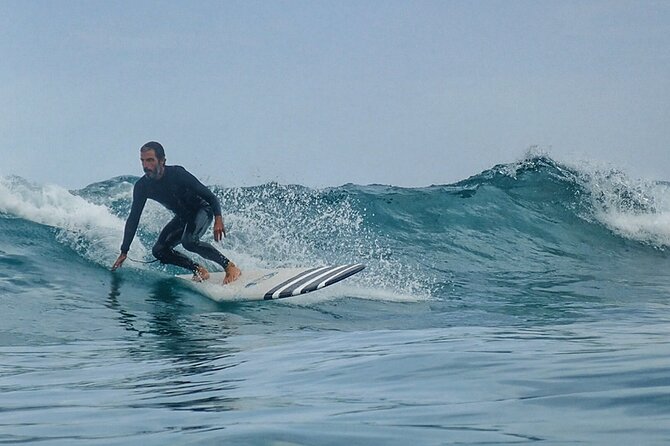
This starts at 35558 Caleta de Famara, Las Palmas, Spain, and it ends back at the same meeting point. The provider operates between 8:30 AM and 6:30 PM daily, and the activity runs on the schedule through late 2026 dates.
A few practical tips for your planning:
- Give yourself buffer time to arrive relaxed. You’ll do warm-ups and stretching, so don’t show up sprinting.
- Expect the lesson to be weather-dependent. If conditions aren’t right, you’ll get a different date or your money back.
- Since you’ll be in the water for the active parts, treat the experience like a real sport session, not a casual walk on the beach.
Also, you’ll receive confirmation at booking time, and you’ll typically use a mobile ticket. That’s handy if you’re juggling other Lanzarote plans.
Who should book this longboard surf lesson (and who might rethink it)
I think this is a great fit if:
- You want longboarding basics without jumping into advanced surf situations.
- You learn best with step-by-step coaching and frequent chances to try.
- You’re traveling as a couple or small group and want private-style attention rather than a big class.
It’s especially well-designed for mixed experience levels within “beginner to improving,” because the lesson keeps surfers at the same level and uses a structured progression from soft to hard boards. That reduces stress and boosts learning speed.
One possible reason to rethink it: if you’re set on surfing on a specific day no matter what, the good-weather requirement is a factor. The experience isn’t promising every forecast. If conditions don’t cooperate, you’ll need flexibility due to rescheduling or a refund.
Should you book Longboard Gliders in Lanzarote?
If your goal is to learn how longboard surfing works in a way that feels safe, logical, and not overly crowded, I’d book this. The combo of small group size, soft-to-hard board progression, and instruction that covers the full sequence—paddling, stance, stand-up timing, turning—gives you real chances to improve during the lesson window.
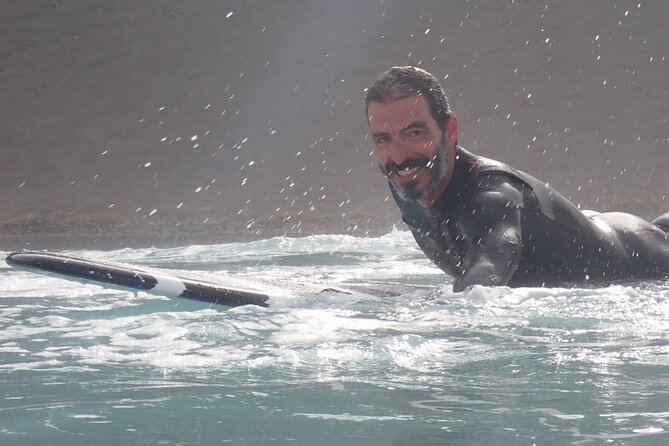
Also, pay attention to coaching quality. Niccolò’s approach stands out for being competent and patient, and that kind of calm teaching matters when you’re learning balance on a big board.
FAQ
How long is the longboard surf lesson?
It lasts about 4 hours.
Where does the lesson meet, and does it end nearby?
The start is at 35558 Caleta de Famara, Las Palmas, Spain, and the activity ends back at the meeting point.
What language is the instruction in?
The lesson is offered in English.
How big is the group?
The group is small, with a maximum of 4 people, and it keeps participants at the same surfing level.
Do adults and kids get mixed together?
No. The lesson never mixes adults with kids.
What board type do you use during the lesson?
You start with soft boards and then progress to hardboards.
What happens if the weather is poor?
The experience requires good weather. If it’s canceled due to poor weather, you’ll be offered a different date or a full refund.
Is there free cancellation?
Yes. You can cancel for a full refund up to 24 hours in advance of the experience’s start time.