REVIEW · LANZAROTE
Museo Atlantico: Diving Class for Non-Certified Divers
Book on GetYourGuide →Operated by Atlantis Diving Lanzarote · Bookable on GetYourGuide
Scuba under art is a rare combo. In Lanzarote, you get hands-on underwater training and then a real visit to the Museo Atlántico with Jason deCaires Taylor sculptures in the Atlantic. It’s the kind of day that feels different from the usual beach-and-brochure routine.
My favorite part is how the SSI-certified team builds confidence step by step, with gear, instruction, and a structured plan. The other big win is seeing famous underwater sculptures up close after you’ve learned the basics for safe air breathing and control. One thing to consider: you must be able to fully understand the instructor’s language so you can follow safety briefings.
- Two-part water program with a short theory lesson, then two separate underwater sessions in one day
- Small group size (max 8), with very close instructor support and low participant-to-instructor ratios
- Jason deCaires Taylor sculptures inside the Atlantic Underwater Museum (Museo Atlántico)
- Free photos and videos plus a digital diploma after the course
- Training up to 12 metres so you know what you’re doing before you see the art
In This Review
- Museo Atlántico: learning scuba with Jason deCaires Taylor art in the Atlantic
- The morning plan: 20-minute essentials, then skills up to 12 metres
- Puerto del Carmen: where practice meets real ocean life
- The afternoon museum visit: briefing, then the Maresia to Museo Atlántico
- Playa Blanca and shore time: warm-water vacation energy between sessions
- Safety, instructor support, and whether you’ll feel comfortable
- Value for money: what $176 buys you in a one-day package
- What to bring, what to avoid, and timing with flights
- Who should book this course, and who should skip it
- Should you book Museo Atlántico for first-time scuba students?
- FAQ
- How long is the course?
- What does it cost?
- What is included in the price?
- Do I need prior certification?
- What languages do the instructors speak?
- Who isn’t suitable for this activity?
Museo Atlántico: learning scuba with Jason deCaires Taylor art in the Atlantic
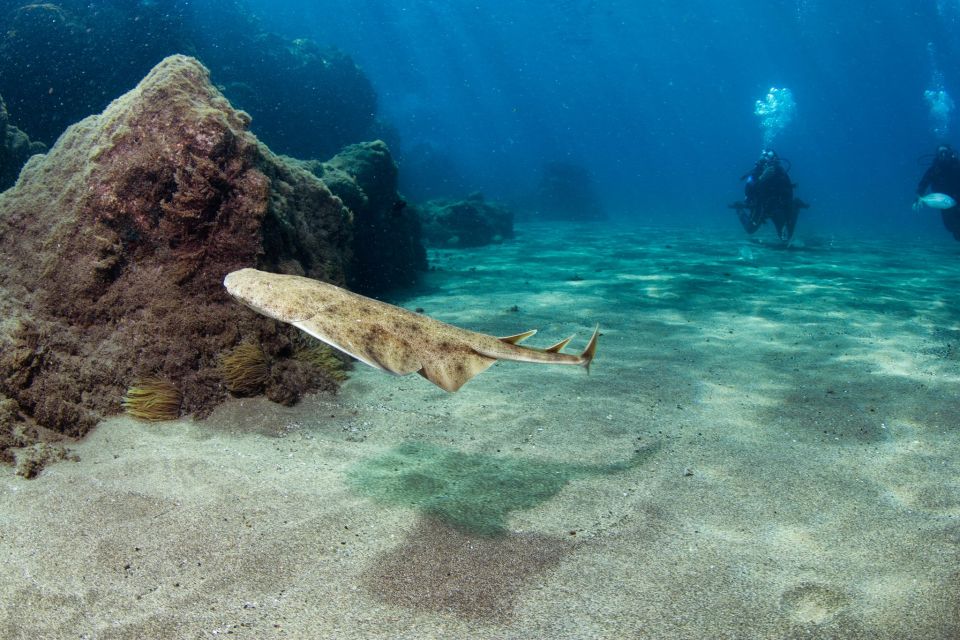
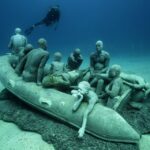
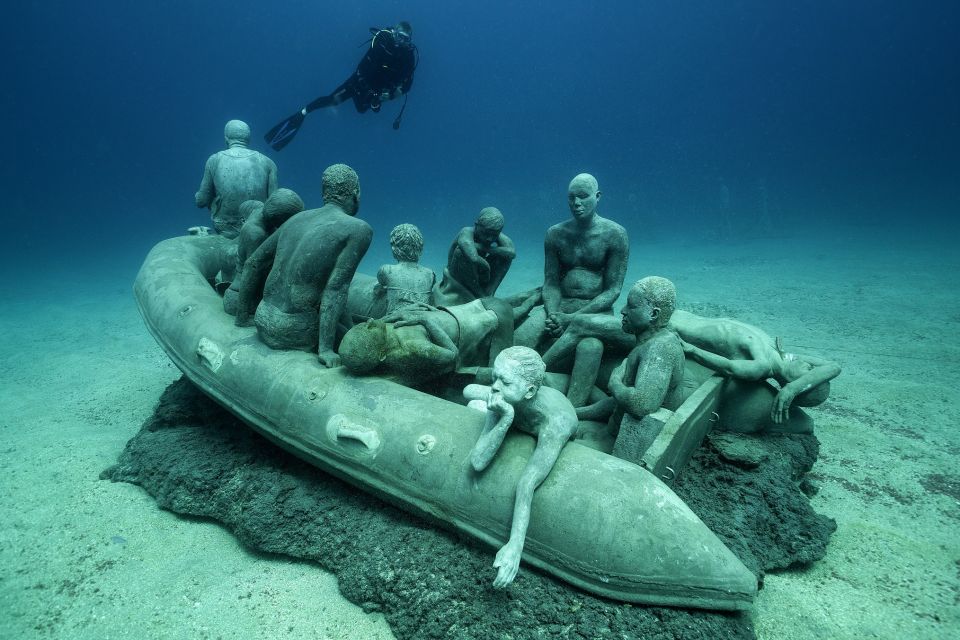
Museo Atlántico is what happens when art and ocean life share the same address. The museum is an underwater setting where you can view sculptures by Jason deCaires Taylor, placed underwater as part of the underwater art experience. What makes this course special is that you’re not just touring the museum from the surface. You’re also learning enough scuba fundamentals to enjoy what’s around you, while staying controlled and safe.
Lanzarote is also a strong match for this kind of day. You’re in a major Canary Islands tourist area, so you get that mix of real ocean conditions plus an easy day plan that includes shore time. Expect warm waters and beaches in the background of your schedule, not a remote expedition vibe.
For first-timers, the appeal isn’t only the museum. It’s the structure. You’re guided from basic rules into a controlled underwater session, and then you’re ready to experience the museum with a professional briefing beforehand. That sequence helps turn excitement into competence.
The morning plan: 20-minute essentials, then skills up to 12 metres
The course starts with setup at Atlantis Diving Lanzarote, where you’ll get your bearings and your gear basics sorted. Then you’ll head to the Puerto del Carmen area by van for the first big chunk of the day.
Before you go underwater, you’ll get a 20-minute lesson focused on the essential scuba rules. For your comfort, this is where you want to listen hard. The better you understand the safety basics, the calmer you’ll feel when you’re breathing underwater. It’s also the moment where the instructors teach you how to handle simple tasks and signals while submerged.
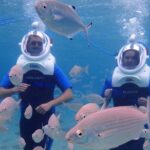
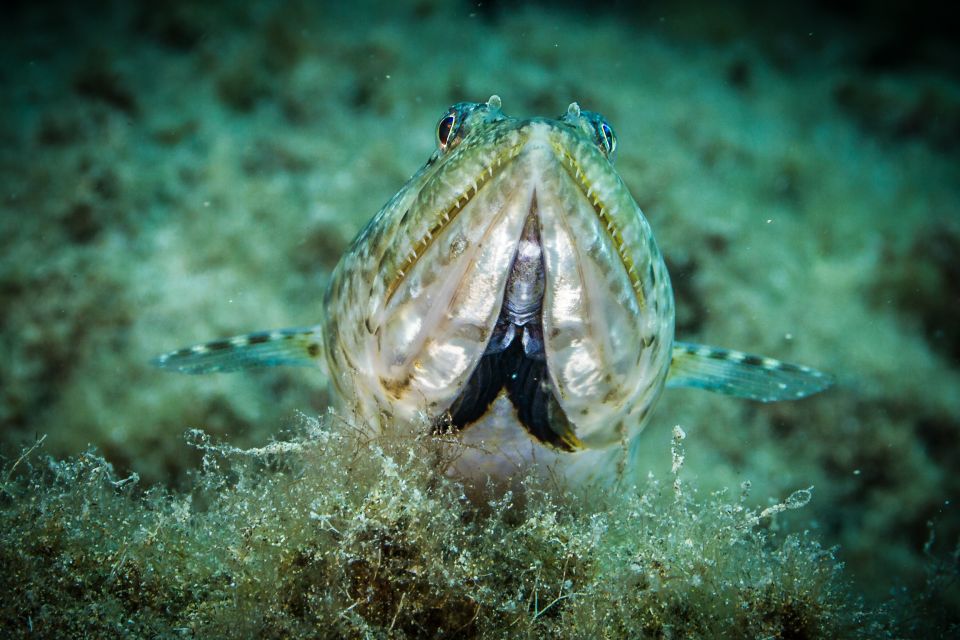
After that, you’ll do a long training underwater session—about 55 to 60 minutes—designed to teach basic skills. The program keeps the experience at a maximum depth of 12 metres, which matters for two reasons: it stays beginner-friendly, and it gives you room to practice without the pressure of going too deep too fast. You’ll also get to enjoy the Atlantic life you see along the way, not just “practice drills” in a pool-like setting.
A key detail: the instructors emphasize safety concepts and skills, not just the wow factor. So even when you’re excited, you’re working inside a plan.
You can also read our reviews of more tours and experiences in Lanzarote.

Puerto del Carmen: where practice meets real ocean life
Puerto del Carmen is where your first underwater training feels grounded. You’re not immediately sent to an “art museum” mission. Instead, you get time to learn the mechanics first, while still being in the Atlantic environment.
The benefit for you is confidence. You’ll likely notice how your breathing, buoyancy control, and comfort level become clearer as you repeat simple tasks. That’s the point of starting here rather than going straight to the museum. You leave the morning knowing what it feels like to move underwater with an instructor watching your technique.
One mild drawback: the day is structured and time is packed. You may feel a bit “scheduled” if you’re the type who likes wandering freely. That said, you’re trading that for two guided underwater sessions plus an underwater museum visit in a single day, which is hard to beat.
The afternoon museum visit: briefing, then the Maresia to Museo Atlántico
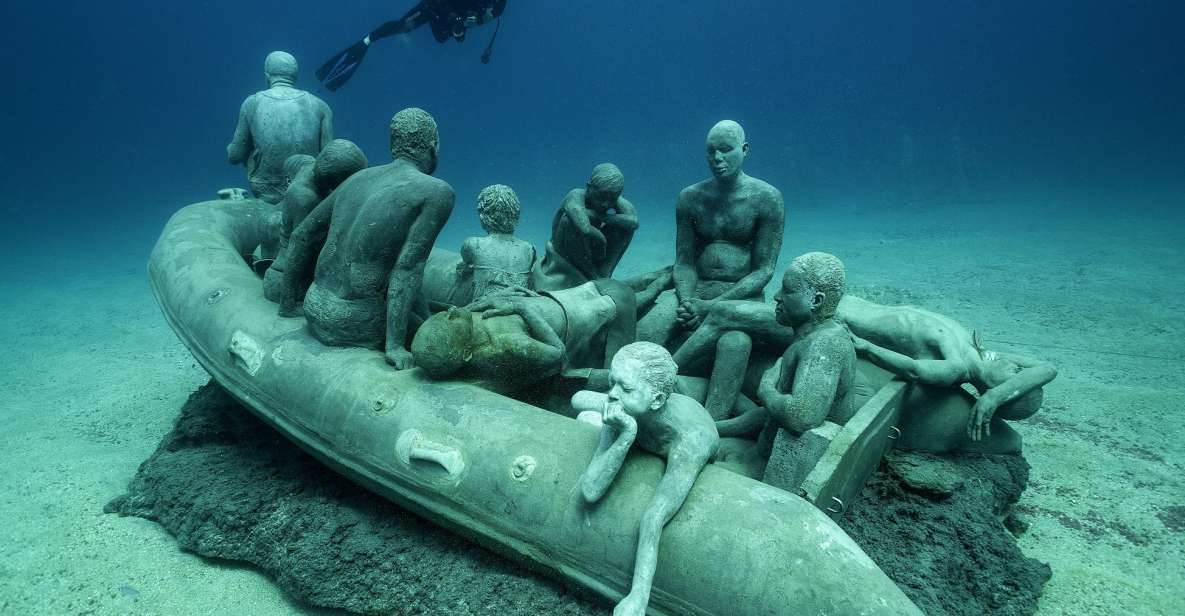
After your morning work, you’ll take a van segment toward the Museo Atlántico area. Before your second underwater session, the instructor gives you an afternoon briefing specifically tied to the museum experience. That’s important because the goal isn’t only learning mechanics now. You’re going to be looking for sculptures, following directions, and staying aware of your surroundings.
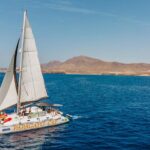
Then comes the second underwater session, where you get to see the underwater sculptures of Jason deCaires Taylor with your own eyes. The boat used for the museum part of the day is the Maresia. Being taken out by a boat also helps explain why this feels like a proper excursion rather than a short lesson and a quick swim.
The real value of this second session is the combination of two things:
1) You’re already comfortable enough to enjoy what you see.
2) The museum isn’t just “cool objects.” It’s a setting where underwater life interacts with the art over time, so you’re likely to notice ocean creatures and textures around the sculptures.
You’ll also get free photos and videos, plus the chance to capture the day in a way that doesn’t require you to juggle cameras while learning. That’s a practical win for beginners who are busy focusing on technique.
Playa Blanca and shore time: warm-water vacation energy between sessions
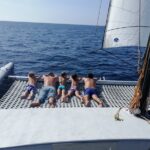
This course isn’t only about being underwater. You’ll also get a shore segment at Playa Blanca, Lanzarote later in the day. It’s a chance to dry off, reset your body, and enjoy the island atmosphere beyond the water.
This part matters more than you might think. After underwater sessions and gear handling, your shoulders, legs, and breathing feel different. Shore time helps you come back to normal before you return to Atlantis Diving Lanzarote.
If you’re planning your trip, this is a good day to pair with a relaxed evening meal afterward. The schedule is active, and you’ll appreciate the downtime.
Safety, instructor support, and whether you’ll feel comfortable
Safety here isn’t left to hope. The team is made up of certified instructors associated with SSI (Scuba Schools International), and the course is designed for non-certified students. The small group format helps a lot, too.
Two instructor-to-student details are provided: you’ll have one professional instructor for every three students, and the program also lists a maximum of two students per instructor. Either way, the message is consistent: you should feel watched, guided, and able to ask questions without being lost in a crowd.
There’s also the language requirement, and it’s a big one. You must be able to fully understand the language of your instructor to participate, because you’re responsible for following safety briefings. If you book in a language you can’t understand well enough, the provider won’t compromise on safety and you won’t be taken into the water.
Other safety-related items are clearly laid out:
- You’ll complete a medical questionnaire on-site before you start the scuba part.
- The activity includes full insurance for the activity.
- It’s not suitable for children under 10, pregnant women, or people with heart problems or epilepsy.
If you’re health-limited, don’t assume it’s fine because you’re curious. Read the restrictions carefully and treat the questionnaire seriously.



Value for money: what $176 buys you in a one-day package
At $176 per person for about 6 hours, you’re paying for more than a sightseeing outing. You’re purchasing:
- a structured beginner scuba program (including training and a museum underwater session)
- all necessary scuba equipment
- close professional instruction
- full insurance
- a digital diploma
- free photos and videos
That’s where the value lives. Many activities charge extra for equipment, instruction time, or photos. Here, the day is built so your “cost stack” stays simpler: you show up, you get geared up, you learn, you experience the museum, and you get the digital proof after.
The other value lever is the small group size—limited to 8 participants. For a first-time scuba experience, that low headcount usually translates into better attention and fewer awkward moments where you can’t quite hear instructions.
Also, this is a very specific experience: visiting the Museo Atlántico underwater art museum while doing beginner scuba training. The unique setting is not something you can usually replicate with a basic pool lesson.
What to bring, what to avoid, and timing with flights
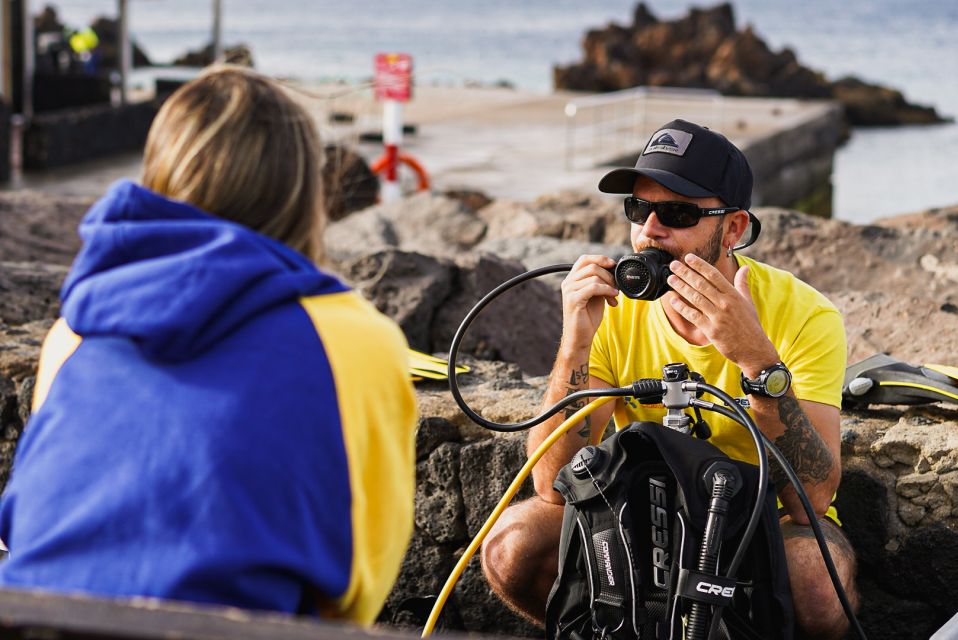
For a smooth day, bring:
- Swimwear
- Change of clothes
- Towel
You also need to plan your schedule around flying. The program advises that you should leave 24 hours between scuba activity and flying. That’s a classic safety rule for decompression planning, and it’s smart to treat it as non-negotiable.
There are also simple behavior rules:
- No alcohol and drugs are allowed.
If you forget the towel or only bring one set of clothes, you’ll feel it later. This is one of those activities where being mildly prepared saves you from being uncomfortable for hours.
Who should book this course, and who should skip it
This is a strong fit if you:
- are a non-certified student wanting a guided, beginner-friendly plan
- want to learn basic scuba skills in a controlled way (including training up to 12 metres)
- care about seeing the Jason deCaires Taylor sculptures underwater, not just reading about them
- like the idea of two underwater sessions in one day, plus shore time
It may not be the best choice if you:
- have trouble understanding instruction in your selected language
- have conditions listed as not suitable by the provider
- want lots of free time to wander without following a set schedule
Also, if you’re traveling as a family and thinking about bringing kids, note the minimum age of 10. That restriction is clear, and it will shape your planning.
Should you book Museo Atlántico for first-time scuba students?
Book it if you want a day that’s both educational and genuinely unusual. You’re not just paying for the museum. You’re learning the fundamentals you need to experience the art underwater, with SSI-certified instructors, small group attention, included equipment, and free photos/videos.
Skip it if language is a concern or if you have health constraints that match the provider’s restrictions. Also, if you hate structured schedules, know that this is a tightly run day with van legs, briefings, and two water sessions.
If you match the fit—non-certified, ready to follow safety instructions, and excited by the idea of underwater sculptures—this is one of those rare “two-in-one” experiences that justifies the cost.
FAQ
How long is the course?
The total experience is listed as 6 hours.
What does it cost?
The price is $176 per person.
What is included in the price?
You get all necessary scuba equipment, one professional instructor per the listed ratio, 1 long training underwater session and 1 underwater museum session, full insurance, a diving digital diploma, and free photos and videos.
Do I need prior certification?
Yes. This experience is described as a course for non-certified scuba students.
What languages do the instructors speak?
Instructors are listed as speaking Catalan, Spanish, and English. You must be able to fully understand the language you select for safety briefings.
Who isn’t suitable for this activity?
It’s not suitable for children under 10, pregnant women, people with heart problems, and people with epilepsy. A medical questionnaire is completed on-site before you start.