REVIEW · CRETE
Full-Day Small-Group Tour in Crete with Zeus Cave Visit
Book on Viator →Operated by Safari Experts Crete · Bookable on Viator
A 4WD day through Crete’s real countryside. This small-group tour blends working farm moments with mountain-road stops, plus the big-choice moment of the optional Zeus Cave visit. You get a clear, guided route that helps you see villages and viewpoints that are hard to reach by bus.
What I really like is how hands-on it feels at the start, from goat milking to local cheese and olive-oil tastings. I also love the pacing: enough stops to feel like a full day, but not so rushed that you’re sprinting for photos. One caution: the ride includes rougher dirt-road sections, so pack walking shoes and be honest about comfort needs.
In This Review
- Key highlights at a glance
- A 4WD Crete day built for getting off the main roads
- Pickup timing, your first seat assignment, and how the day flows
- Potamies farm stop: where the day turns from sightseeing into daily life
- Aposelemis Dam: submerged buildings, wetland birds, and scale you can’t fake
- Ano Kera and Ebassas gorge dirt roads: the part you’ll feel in your legs
- Lasithi Plateau windmills: a quick stop with a clear story
- Dikteon Cave and the optional Zeus Cave ticket: plan for closure
- Wood-oven meals in Ano Kera and Krasi: lunch is part of the experience
- Krasi’s plane tree and the Mochos panoramic finale
- Price and value: what you’re paying for (and what costs extra)
- Who should book this Crete 4WD tour (and who should not)
- Should you book the Zeus Cave 4WD day in Crete?
- FAQ
- How long is the Crete Zeus Cave 4WD tour?
- Is hotel pickup included?
- What is the group size?
- Is lunch included?
- Do I need a ticket for the Cave of Zeus?
- Are there extra entrance fees besides the Zeus Cave ticket?
- Do you provide child seats?
- What should I bring?
Key highlights at a glance
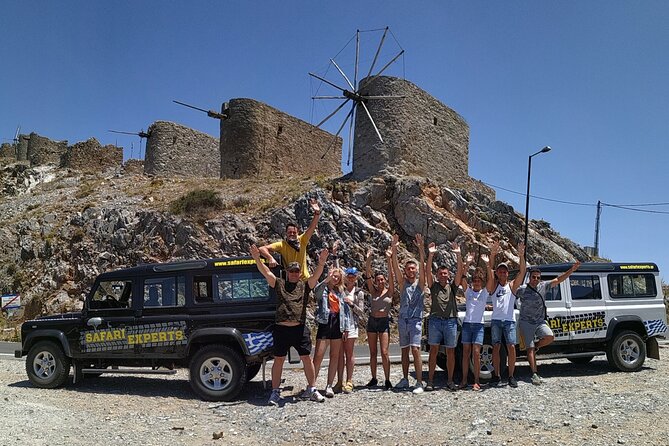
- 4WD access to spots other cars miss, including dirt roads and mountain viewpoints
- Potamies farm visit with tastings like fresh cheese, olive oil, and rakomelo
- Aposelemis Dam and its submerged village story, plus a wetland with birds
- Lasithi Plateau windmills for quick history and panoramic photo views
- Optional Cave of Zeus, with time built in if it’s closed
- Wood-oven lunch with wine and water at traditional taverns
A 4WD Crete day built for getting off the main roads
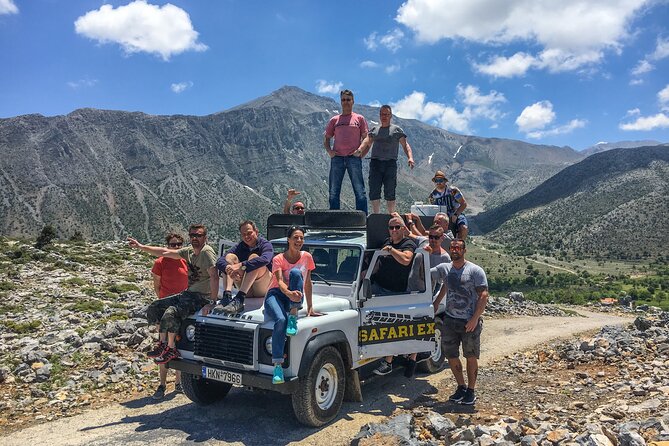
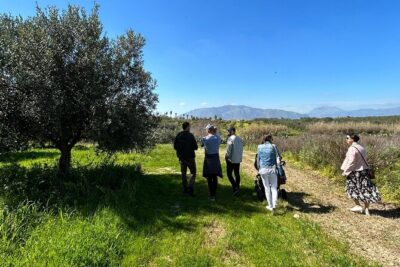
This is the kind of tour that makes you feel oriented fast. Instead of bouncing from “big ticket” sites only, you move through the island’s interior: farms, plateaus, gorges, and small villages. The 4WD vehicle matters. It lets the guide reach places that normal buses and low-clearance cars can’t.
The group size is capped at 15 travelers, which keeps things from turning into a cattle-car day. You still get the comfort of being guided—so you’re not trying to figure out tiny roads or when to stop—while having enough breathing room to enjoy each stop.
Expect an active day. Even when you’re not walking far, you’re changing elevations, moving between stops, and spending time on dirt-road routes. That’s part of the fun, but it also explains why sturdy shoes and a water bottle are worth bringing.
You can also read our reviews of more tours and experiences in Crete.
Pickup timing, your first seat assignment, and how the day flows
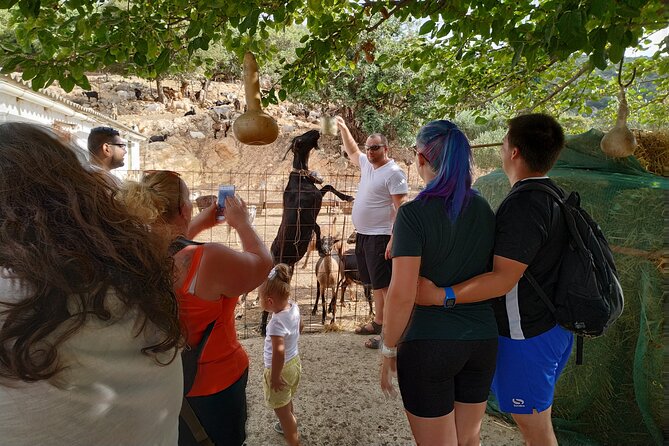
Pickup is offered from a wide ring around the north coast—areas like Heraklion (including Amoudara, Analipsis-Anissaras, Chersonissos-Piskopiano-Koutouloufari, Elounda, Agios Nikolaos, Gouves-Kokkini Hani, Malia, Sisi, and Stalis). Pickup time sits between 7:45am and 9:00am, then you’re dropped back between 4:30pm and 5:00pm.
Two practical points help your day go smoothly:
- Your exact pickup time is confirmed after booking, so check your message the day before.
- If your hotel is on a street the vehicle can’t reach, you’ll be pointed to a nearby meeting spot.
What I like about the overall flow is that it keeps the day logical. You start in a working village/farm environment, move toward water and dam history, then climb toward the plateau zone and mountain sights. Lunch happens in the middle—so you’re not doing the “eat around 2pm, starving until 6pm” thing.
Potamies farm stop: where the day turns from sightseeing into daily life
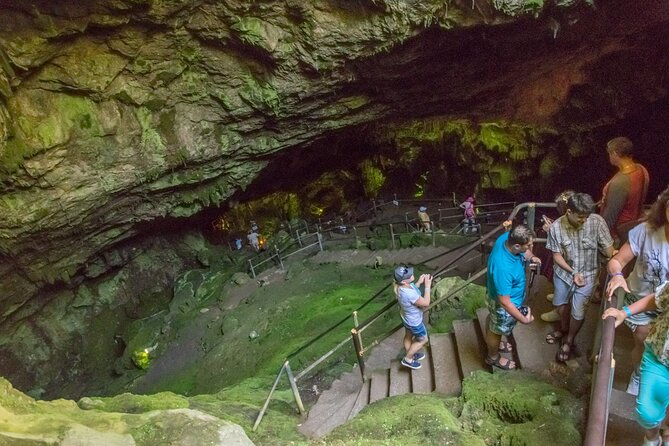
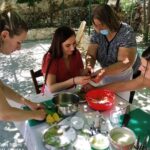
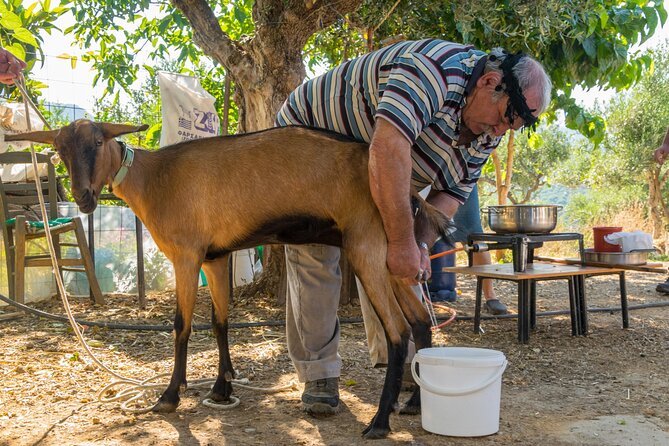
Your first stop is Potamies, one of the representative villages of Crete. The big win here is that it’s not just a quick look at farm buildings. You’re guided to a traditional farm where you can watch milking of animals and see everyday activities like cheese making.
Then comes the part that makes the senses remember it:
- tasting fresh cheese
- trying olive oil
- and sampling raki (rakiomelo is mentioned as part of the local offerings)
It’s a “learning by doing” style stop. Even if you’re not the type who usually signs up for food experiences, this one works because it’s tied to a real routine: animals, milk, cheese, oil. It’s also one of those moments where you learn why Crete tastes the way it does.
Time-wise, you’re here for about 45 minutes and there’s no admission ticket required for this stop. The farm portion is short, so arrive ready to ask questions if you have them. Also: if you’re sensitive to strong smells (milk, animals, herbs), take a breath and give yourself a minute to settle in.
Aposelemis Dam: submerged buildings, wetland birds, and scale you can’t fake
Next up is the Aposelemis Dam, described as the largest water supply project in Crete. This stop has a haunting visual: the village of Sfendili is submerged, with older houses fading on the water’s surface.
It’s not just a photo stop. The surrounding wetland atmosphere brings in wildlife energy—specifically a variety of birds is mentioned. Even if you don’t spend your whole time scanning the sky, this stop adds contrast. You start the day with animals and food, then you shift into a “water system and its human impacts” story.
You’ll have about 20 minutes here. No admission ticket is required. That short timing is a tradeoff: you won’t get a long walk, but you do get a meaningful scene without eating up the whole day.
Ano Kera and Ebassas gorge dirt roads: the part you’ll feel in your legs
After the dam, the tour starts climbing. You’ll use dirt roads and pass through the gorge of Ebassas. This is where you really notice that the vehicle can handle rougher terrain and that the route is designed for “mountain Crete,” not just coastal driving.
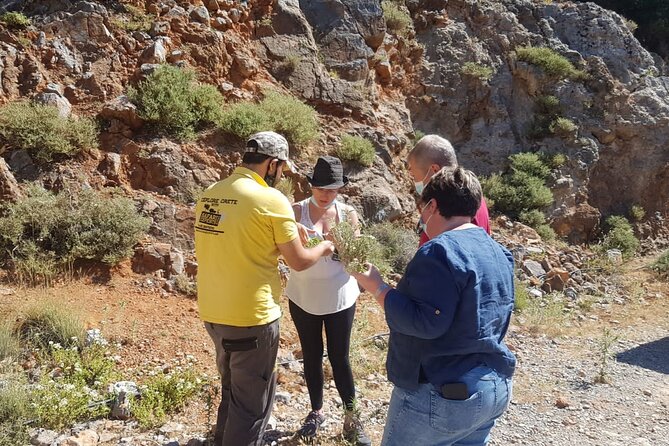
There’s also a small, smart cultural moment: at a short stop, the guide collects local herbs like oregano, thyme, and sage, the way Cretans used to do.
That herb detail is small, but it’s worth paying attention to. It helps you connect what you taste later (in meals and cheese/oil experiences) with where the flavors come from. It also turns a roadside break into something educational.
You’ll spend about 45 minutes at this stage, with no admission ticket required. Wear sun protection here. Even on a cloudy day, the mountain sun can still bite.


Lasithi Plateau windmills: a quick stop with a clear story
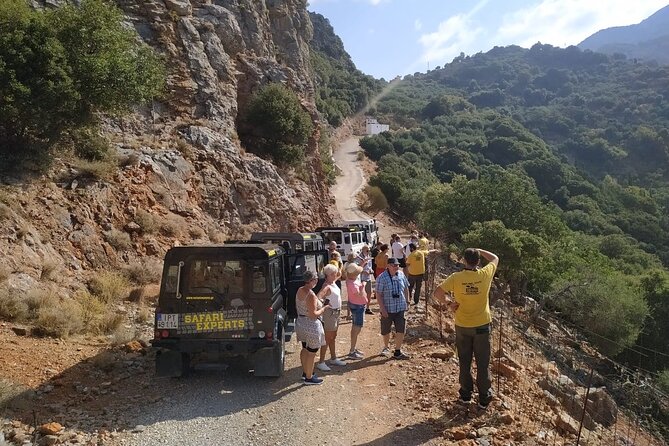
At the entrance of the Lasithi Plateau, you stop at the longest windmill line in Crete. It’s a short stop—about 15 minutes—but it’s timed well. You get a panoramic photo opportunity and a bit of historical context about windmills and how people once relied on wind for work.
This is one of those stops that’s easy to overlook if you think you’re only coming for Zeus Cave. Don’t. Windmills are a practical symbol of how the plateau functioned before modern systems.
No admission ticket is required here either. It’s simply time to look, learn, and snap a few photos.
Dikteon Cave and the optional Zeus Cave ticket: plan for closure
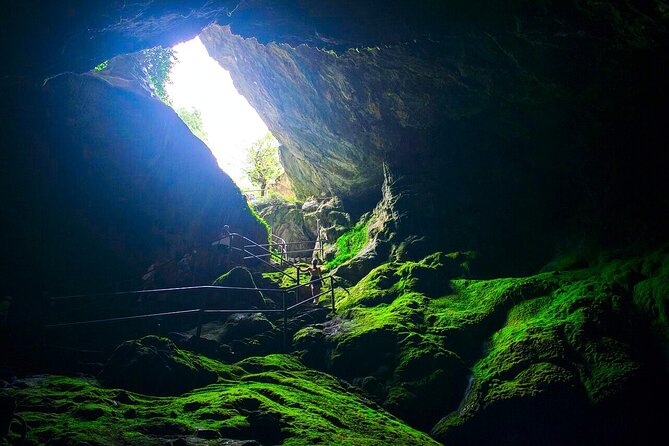
Your next big decision point is on the Lassithi Plateau, with free time for coffee and, optionally, the impressive cave associated with Zeus. The tour notes this as the birthplace of Zeus and gives 1 hour 30 minutes for this segment.
Here’s the important practical reality: the Cave of Zeus ticket is not included (it’s listed as €15.00 per person). Also, the tour data is clear that cave closures can happen for works. If it’s closed, you get free time for the café nearby or other activities suggested by the guide.
That flexibility is key. Some people plan their entire day expecting one site, but this tour builds in a contingency. Even if you don’t get the cave itself, you still have dedicated time in the plateau area rather than scrambling for alternatives at the last minute.
In short: if Zeus Cave is your must-see, budget for the ticket. If it’s not your only goal, you’ll still have a satisfying block of mountain time.
Wood-oven meals in Ano Kera and Krasi: lunch is part of the experience
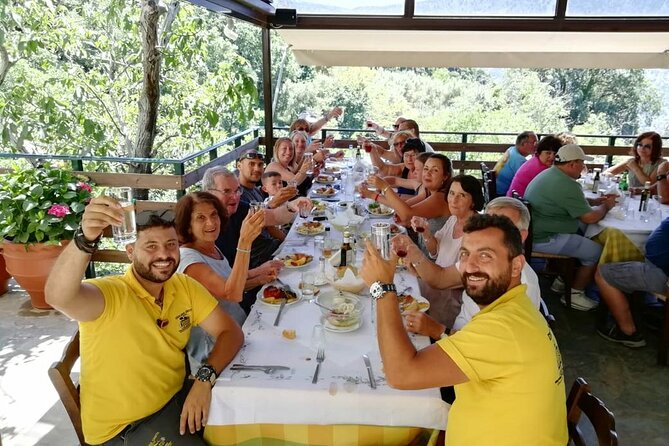
Food on this tour isn’t an afterthought. It’s scheduled into the best part of the day—midway—so you can refuel without interrupting the flow.
First, you return to Ano Kera for an authentic meal at a traditional tavern baked in a wood oven. This stop includes food with wine and water, and you can alert the operator in advance about allergies or dietary needs.
Then later, you have lunch in Krasi at another traditional tavern featuring food from the wood oven and local wine. That means you’re not getting the same meal twice in different places. You get two different “traditional tavern” flavors across two settings.
Each of these meal-focused stops includes time for eating—about 1 hour 30 minutes in Ano Kera and 1 hour in Krasi—and both are listed with no admission ticket required.
One more practical note: because wine is included, you might want to pace yourself. Even though you’re not driving, you may still want to be alert for scenic stops and walking sections.
Krasi’s plane tree and the Mochos panoramic finale
After lunch, the tour shifts toward slower, scenic “take it in” moments.
In Krasi, there’s a stop at the Platanus tree: three huge plane trees are mentioned, with one described as the largest and perennial plane tree aged over 2000 years. This is a classic Crete stop: a village square anchor, a living landmark, and a natural meeting point for a few calm photos.
Then the day ends with Mochos, where you get a panoramic view stretching from Sissi to Analipsi. The time here is short—about 15 minutes—but it’s timed for sunset-adjacent light in many cases during summer, so bring your best sunglasses and be ready to stop the scrolling.
This finale matters because it shows you the island beyond the stops. You get a bigger frame of what you’ve been driving through all day.
Price and value: what you’re paying for (and what costs extra)
At $107.63 per person for about 8 hours, this tour costs less than you might expect when you factor in transport, included meals, and small-group handling.
Here’s what you’re getting for the price:
- Pickup and drop-off
- a 4WD vehicle with fuel
- an experienced driver-guide setup
- lunch with wine and water (so you’re not hunting for food mid-tour)
- multiple guided stops where you’re not just “looking,” you’re tasting, listening, or learning
What to budget separately:
- Cave of Zeus ticket is listed at €15.00 per person and is not included
- the tour also notes an entrance fee for adults (over 25), tied to ticketing rules, so plan for potential extras if you fall into that category
If you’re comparing value, this is worth thinking about: you’re paying for access—4WD route reach, farm interaction time, and guided context—plus a meal that’s built into the day. That usually beats the cost of cobbling together a half-day rental car plus lunch plus paid entry for the big site.
Who should book this Crete 4WD tour (and who should not)
This is a great match if you want:
- a first-day orientation to Crete beyond Heraklion’s immediate sights
- an active day that mixes farm life, herbs, and local food
- off-road driving and viewpoint stops without having to plan transport yourself
It’s also a good family option because the day includes lots of varied stops, and the operator notes child seats are provided if you request them.
The main reason to hesitate is ride comfort. Dirt-road travel is part of the tour, and it’s specifically noted that it’s not recommended for travelers with serious medical conditions. If you have back issues or mobility concerns, you’ll want to consider whether rough sections and frequent stop-and-go movement will be okay for you.
If you’re the type who hates “too much driving” in one day, you might find the schedule busy. But if you like full-day structure and want to maximize your limited time, this tour hits the sweet spot.
Should you book the Zeus Cave 4WD day in Crete?
Book it if you want a single day that covers multiple sides of Crete: farm routines, dam history, mountain roads, windmills, and a very Cretan lunch setup. I’d especially recommend it as your “make sense of the island” day, because the route gives you context for what you’ll see later on your own.
Skip it or choose carefully if your vacation is built around one non-negotiable experience and you’ll be upset if the Zeus Cave is closed. The tour does build in time and alternatives, but the cave ticket is an extra cost, and closures can happen.
My bottom line: if you’re happy to trade some certainty around Zeus for a full day of hands-on Crete, this is a strong pick.
FAQ
How long is the Crete Zeus Cave 4WD tour?
It runs for about 8 hours (approx.).
Is hotel pickup included?
Yes. Pickup is offered from wider areas around Heraklion, including Amoudara, Analipsis–Anissaras, Chersonissos–Piskopiano–Koutouloufari, Elounda, Agios Nikolaos, Gouves–Kokkini Hani, Malia, Sisi, Stalis, between 7:45am and 9:00am. Drop-off is around 4:30pm to 5:00pm.
What is the group size?
The tour has a maximum of 15 travelers.
Is lunch included?
Yes. Lunch is included, with wine and water.
Do I need a ticket for the Cave of Zeus?
Yes. The Cave of Zeus ticket is €15.00 per person, and it is not included. The tour also notes that if the cave is closed, you’ll have free time for a café nearby or other activities suggested by the guide.
Are there extra entrance fees besides the Zeus Cave ticket?
The tour information lists entrance fee requirements (including an entrance fee for ages over 25). Details beyond that are not specified, so it’s smart to plan for possible extra payments on the day.
Do you provide child seats?
Yes. Child seats are provided if you let the operator know when you book.
What should I bring?
Wear walking shoes and bring sunscreen, a hat, sun glasses, a jacket, and water.