REVIEW · SICILY
Etna Tour – HalfDay Small Group & licensed Tour Guide
Book on Viator →Bookable on Viator
Etna feels closer when you have a guide. This half-day trip focuses on real volcano touring: guided walking past craters and old lava flows, then a visit to the lava tube with helmets and lights so you can see the darker side of Etna safely, without wandering wrong trails. I like how licensed guide Saro sets the pace and keeps the route clear on a mountain where paths can look confusing fast.
You’ll also finish with the best kind of decompression. A traditional Sicilian farm tasting rounds out the hike with local products and wines, which makes the morning feel less like a checklist and more like a Sicilian experience. The main downside to plan for is cold, wind, and rugged terrain up high—bring warm layers and wear sturdy shoes, because you’ll be walking on rough ground.
In This Review
- Key things I’d plan around
- Meeting Saro at 8:30: small-group Mt. Etna logistics that matter
- Crater hikes around 2000 meters and Valle del Bove views
- Ancient forests, extinct craters, and why Etna looks the way it does
- The lava tube experience: helmets, lights, and step-by-step safety
- Silvestri Crater: the €5 add-on if you want the small one
- Farm tasting after the volcano: local products and Sicilian wine time
- Price and value: what $90.74 gets you for 5 hours
- Weather, cold wind, and packing tips that actually help
- Who this Etna tour is best for (and who should think twice)
- Should you book this Mt. Etna half-day tour?
- FAQ
- What time does the Mt. Etna tour start, and how long is it?
- Is pickup included?
- What gear is included for the hike and lava tube?
- Do I need to pay for the Silvestri Crater?
- Is lunch included?
- What if the weather is poor?
- How big is the group?
Key things I’d plan around
- Small group (max 8 travelers) for a calmer pace and more personal attention
- Free pickup in Catania with extra-cost pickup options from Taormina, Messina, and Siracusa
- Helmets, lights, and hiking poles for the crater walk and the lava tube
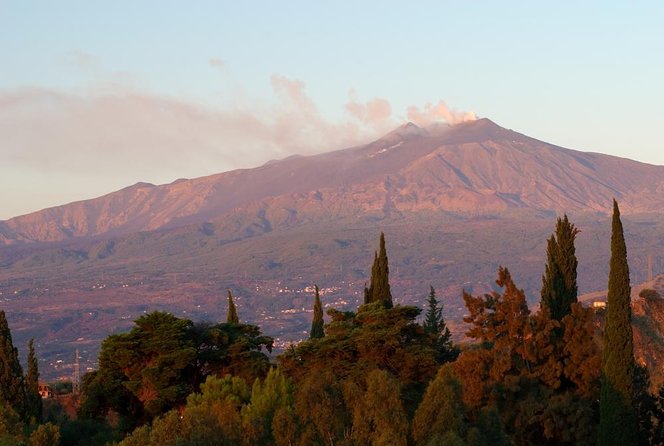
- Walking around 2000 meters through extinct craters and moonlike lava fields
- Valle del Bove viewpoints from the volcano area, kept at a safe distance
- Silvestri Crater ticket €5 (optional) for the small Silvestri Crater, as of Oct 2, 2025
Meeting Saro at 8:30: small-group Mt. Etna logistics that matter
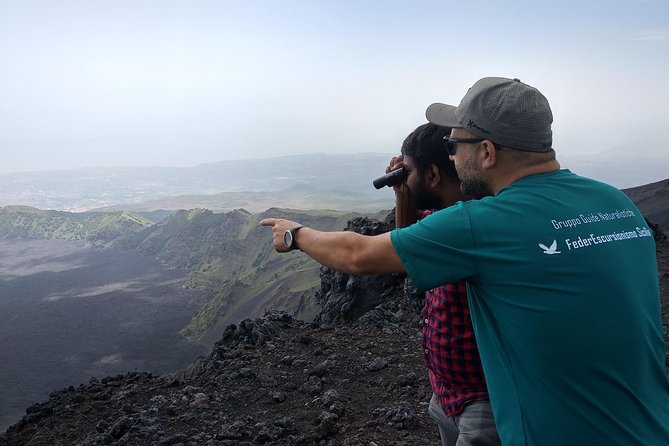
This is a 5 to 6 hour half-day excursion that starts at 8:30 am. It’s built as a small group experience with a maximum of 8 people, which is a big deal on Etna—fewer people means less stopping-and-starting and more time to actually look at what you’re seeing.
If you’re based in Catania, pickup is free. If you’re staying in Taormina, Messina, or Siracusa, pickup is available but costs extra. Either way, the tour ends back at the meeting point, so you’re not left planning your return while you’re tired.
One more small practical note: the tour is offered in English, and you’ll get a mobile ticket. It also runs on good weather, so if conditions are rough, you’ll be offered a different date or a full refund (more on that later).
You can also read our reviews of more tours and experiences in Sicily.
Crater hikes around 2000 meters and Valle del Bove views
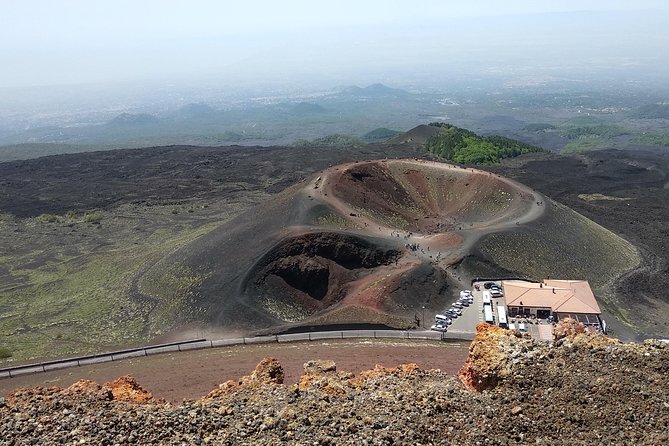
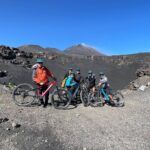
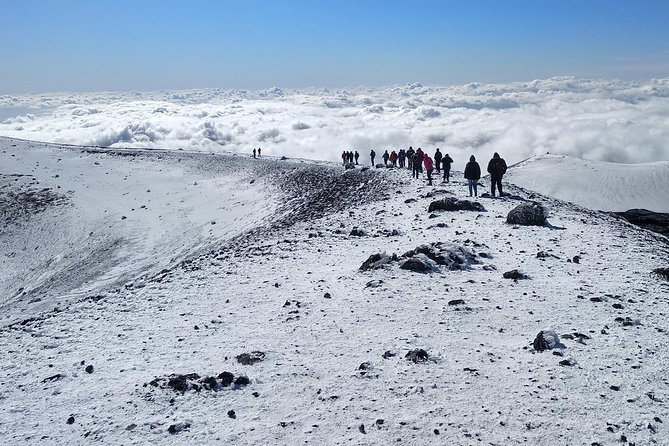
The heart of this trip is walking Etna’s volcanic terrain with a guide who knows how to connect the dots. You trek past volcanic craters and older lava flows that create a lunar-looking mix of rock, ash, and scattered outcrops. Instead of guessing where to go, you’re guided through areas at about 2000 meters, including old lateral craters and sections tied to Etna’s more recent activity.
What you’re really paying for here is context plus direction. In your first hour you get the sense that Etna is not just one peak—it’s a whole system of eruptions, layers, and reused ground. Your guide helps you read the terrain, so you’re not just standing in front of rocks thinking: what am I looking at?
A key payoff is the view toward Valle del Bove. You won’t be anywhere sketchy close, but the perspective is the point: you get a dramatic sense of scale, and you can see how the volcano’s past reshaped the area around it.
Ancient forests, extinct craters, and why Etna looks the way it does
Etna has a way of making you feel like you’re walking on another world. During this tour, you move through different kinds of terrain: sections described as ancient forests and older extinct craters, then you shift into the moonlike lava fields that prove how active Etna has been over time.
Even if you’re not a geology nerd, the guide makes it easier to understand what you’re seeing. You learn how Etna’s eruptions affect landscapes and even how locals organize around the volcano’s rhythm. That matters, because Etna is part of daily life here, not just a big attraction.
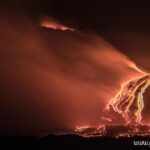
You’ll also hear about recent eruptions and visit crater areas as part of the morning’s walk. It’s not framed as a scare story. It’s framed as a story of change—how heat and pressure build new surfaces, then how time and weather start doing their work.
The lava tube experience: helmets, lights, and step-by-step safety
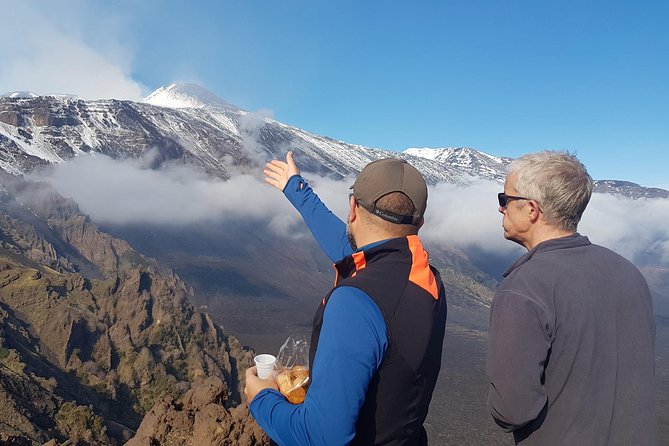
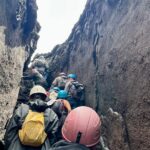
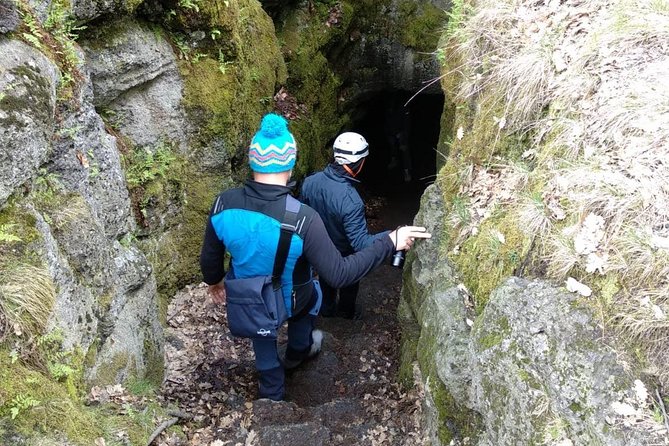
The lava tube stop is one of those experiences that’s hard to replace. You don’t just look at a crater and call it done—you go into a volcanic cave system, where the underground version of Etna is waiting.
This tour includes helmets and lights, and that makes a huge difference. You’re seeing the tube’s interior with proper lighting instead of trying to manage your phone flashlight while you walk through uneven rock. You’ll also have hiking poles for traction during the on-foot parts of the trip.
One review highlight was extra attention to safety gear for the tube, like added protective items in addition to helmets. Even if that’s not guaranteed every day, the overall message is clear: you’re not being sent in there blind. Your guide stays focused on comfort and safety, especially because conditions can be chilly underground and the ground can be slick.
How it feels: you slow down. The sound changes. Your sense of scale changes. And you understand why people call Etna Mama—because the mountain is doing something active, even when you’re standing inside what used to flow.
Silvestri Crater: the €5 add-on if you want the small one
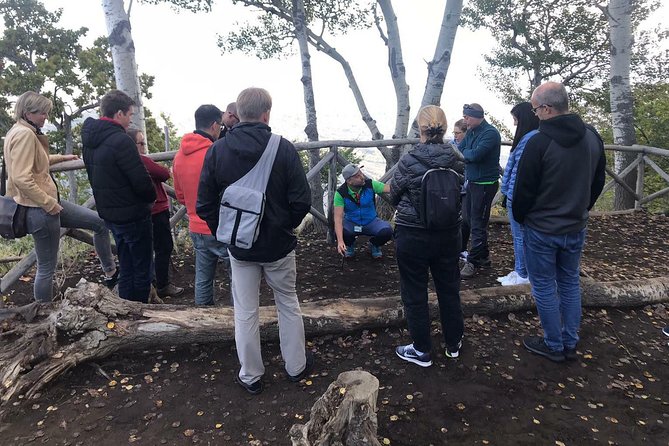
There’s one ticket detail you should know before you go: Silvestri Crater has an entry rule that changed starting Oct 2, 2025. As of then, you need a €5 per person ticket to visit the small Silvestri Crater. Other crater sites on the tour are described as free.
So, decide early how ambitious you want to be. If you’re the type who wants every crater photo possible, budget the €5 and plan for it. If you’d rather spend your energy on the walk and the lava tube, you can focus on the included stops that don’t require that extra fee.
This is also a good example of why a guided route is useful. Your guide can steer you toward what’s worth your time based on what you care about—views, walking, or the underground stop.



Farm tasting after the volcano: local products and Sicilian wine time
After the hiking and the lava tube, you end with something that feels like Sicily instead of just a sightseeing circuit: a visit to a traditional Sicilian farm. You’ll have a tasting of local products and wines, which is a smart way to end a cold, active morning.
This stop adds a real change of pace. Up on Etna you’re dealing with wind, rock, and attention to footing. On the farm you can sit, taste, and ask questions about what you just saw.
I love this kind of finish because it helps the morning land. Etna isn’t only the volcano—it’s the region around it, including the grapes and farming that continue anyway. You don’t have to turn the day into a food scramble; the tasting is built into the tour flow.
Price and value: what $90.74 gets you for 5 hours
At about $90.74 per person, this tour sits in the “worth it if you care about doing Etna right” zone. Here’s why the value makes sense based on what’s included:
- A licensed tour guide who handles route decisions on confusing terrain
- Helmet and light plus hiking poles, which you’d have to improvise or replace if not included
- A structured route that covers both craters and a lava tube
- A small group size (max 8), which usually improves how much time you spend actually experiencing rather than waiting
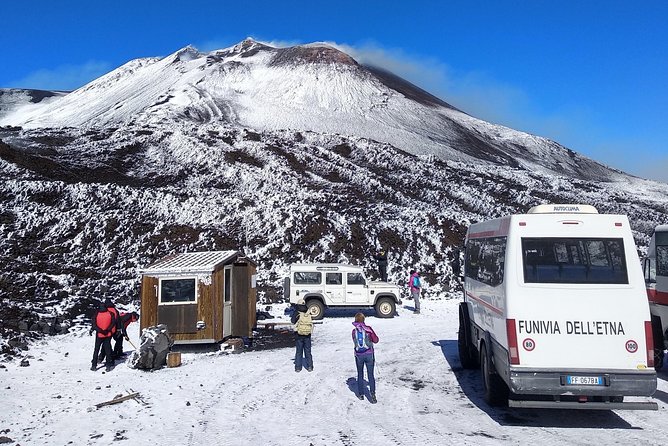
What’s not included is also useful to know: lunch isn’t included, and Funivia dell’Etna is not included. If you’re someone who needs a big lunch plan, you’ll want to arrange that after the tour.
You also get some flexibility built into the experience. There’s an optional €5 ticket for the small Silvestri Crater. Everything else is handled as part of the overall tour pricing structure, so you’re not getting nickeled-and-dimed at every step.
Weather, cold wind, and packing tips that actually help
This experience requires good weather. If conditions are poor, you’ll be offered another date or a full refund. That matters because Etna isn’t a flat, comfortable walk in the park—wind and mist can reduce visibility fast.
From what you should plan for, the hike can get cold and windy, especially at altitude and during outdoor crater sections. Bring more layers than you’d expect. Even if it’s warm in the city at 9 am, it can feel different near the volcano.
Sturdy footwear is not optional here. You’ll walk through uneven volcanic ground and crater areas, and even with poles, you’ll want shoes that grip. If you’re sensitive to cold, pack extra warmth for the lava tube stop too, since it’s underground and the temperature can feel different than the open air.
Who this Etna tour is best for (and who should think twice)
This tour fits best if you want the volcano experience without turning it into navigation homework. The small group format plus a guide who keeps you safe and pointed in the right direction makes it ideal for:
- First-timers to Etna who want meaningful stops, not random wandering
- People who care about geology context and local perspective
- Anyone who wants a half-day instead of a full day trip
Consider thinking twice if you:
- Hate cold/wind and don’t want to dress for it
- Prefer fully flexible touring with lots of independent downtime
Also note that vehicle comfort can vary. One review mentioned that the vehicle felt a bit cramped for getting in and out at the back for older participants. If you’re concerned about that, you might want to ask ahead about pickup vehicle details and seating layout.
Should you book this Mt. Etna half-day tour?
I’d book it if your main goal is a guided Etna morning that hits the big moments: craters up around 2000 meters, a lava tube with helmets and lights, and a relaxed end at a traditional farm tasting.
I’d skip it or rethink it if weather is a major worry for you or if you’re only interested in summit views and nothing else. This tour is built around walking and underground geology, not a drive-by photo stop.
If you’re traveling from Catania, the free pickup is a nice bonus. And with a max group size of 8, it’s the kind of experience that keeps your attention where it should be—on Etna, not on logistics.
FAQ
What time does the Mt. Etna tour start, and how long is it?
The tour starts at 8:30 am and runs for about 5 to 6 hours.
Is pickup included?
Pickup from Catania is free. Pickup from Taormina, Messina, or Siracusa is available as an extra service with additional charges.
What gear is included for the hike and lava tube?
The tour includes a helmet and light plus hiking poles. A licensed tour guide is also included.
Do I need to pay for the Silvestri Crater?
As of Oct 2, 2025, visiting the small Silvestri Crater requires a ticket of €5 per person. Other crater visits are described as free.
Is lunch included?
No. Lunch is not included.
What if the weather is poor?
This tour requires good weather. If it’s canceled due to poor weather, you’ll be offered a different date or a full refund.
How big is the group?
The group is limited to a maximum of 8 travelers.