REVIEW · SICILY
Etna Bike Tour – Cycling in Sicily
Book on Viator →Operated by Cycling Sicily · Bookable on Viator
Cycling Mt Etna is a workout with payoff. I love that this guided ride takes the guesswork out of the route, and I love the small group of eight that keeps the pace steady up the slope. The possible catch is that even with supportive guides, this is still a serious climb, and the bike gearing may feel tough if you’re more of a cruisers’ cyclist.
I like how the day is built in layers: a lowland warm-up toward Catania, then climbs that gradually get steeper as you head above Fiumefreddo di Sicilia and toward Piedimonte Etneo. You also stop to refill bottles with fresh volcanic mineral water, which is a smart move when heat and effort start stacking up. If you don’t plan your energy well, the final ascent can push you harder than you expect.
You’ll ride a full carbon road bike with a helmet and a choice of pedal systems (flat, Shimano, or Look), so you’re not showing up with rental surprises. You’ll want a moderate fitness level because you’re aiming to climb from about 827 m up to Rifugio Citelli around 1750 m before the descent back down. And yes, you should bring your own snacks and drink strategy, because the tour description focuses on water refills more than fueling.
In This Review
- Key things to know before you pedal up Etna
- Why guided Etna cycling beats doing it alone
- The Giardini Naxos start: warm-up roads toward Catania
- Above Fiumefreddo and Piedimonte Etneo: the first real test
- Mt Etna Wine road: where the climb turns scenic and strategic
- Bartali & Coppi to Rifugio Citelli: the toughest climb on the day
- The downhill back: fast legs, careful hands
- Bikes, pedals, and guide support: what’s included (and why it’s good value)
- Price and logistics: how to judge whether this fits your budget
- Who should book this Etna bike tour (and who should skip it)
- Should you book Etna Bike Tour – Cycling in Sicily?
- FAQ
- How long is the Etna bike tour?
- How big is the group?
- What fitness level do I need?
- What bike and pedal options are included?
- What happens if weather is bad?
- Where do I meet and end the tour?
Key things to know before you pedal up Etna
- Eight riders maximum keeps you together so you don’t get stuck waiting at every turn.
- Carbon road bikes with helmet and pedals mean you can focus on cadence instead of bike hassles.
- Refill volcanic mineral water gives you a practical hydration rhythm mid-ride.
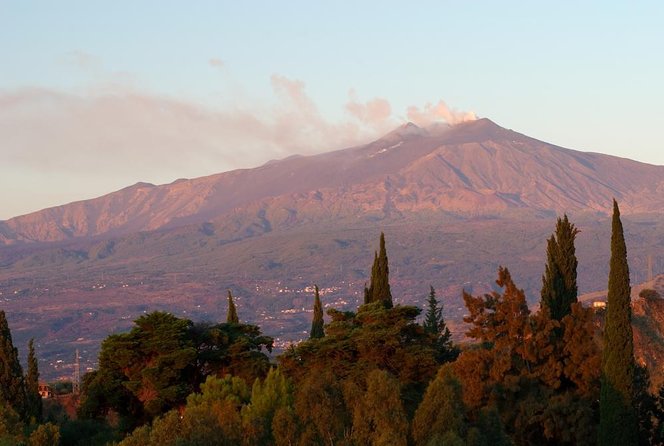
- Bartali & Coppi slope is the main challenge with a big jump in altitude toward Rifugio Citelli.
- Pacing matters; slower riders may feel time pressure late in the climb.
- Descent is fast and fun but road conditions can vary so braking and attention matter.
Why guided Etna cycling beats doing it alone
Etna can be a navigation headache. The roads are busy, slopes change, and the “where do I turn?” part can steal energy from the actual riding. With a guide leading the line, you can lock into your rhythm and spend your attention on the climb and the views.
The small group size is a big deal. With a maximum of eight riders, it’s easier to regroup when the gradient kicks up and it’s easier for the guide to notice who’s fading. Guides like Greta and Luigi have been praised for staying patient and supportive, especially when someone rides slower or needs more regrouping.
That said, the guide can’t erase physics. If you’re planning to ride this like a casual spin, the slope will remind you it’s Mt Etna, not a flat country road. Think “hard morning, rewarding finish,” and you’ll be happier.
You can also read our reviews of more tours and experiences in Sicily.
The Giardini Naxos start: warm-up roads toward Catania
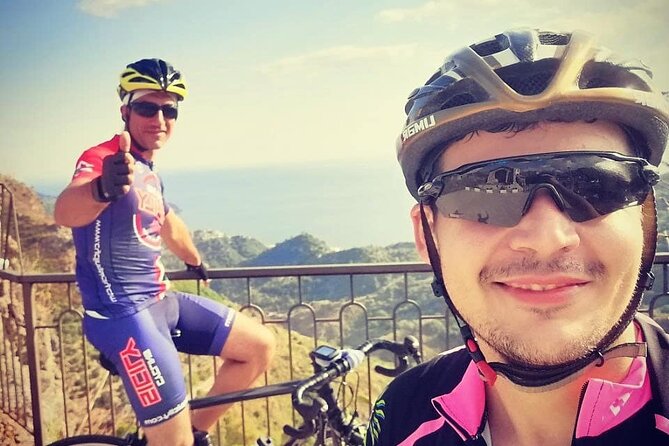
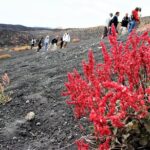
The ride begins at Via Recanati, 26, Giardini Naxos, where you set up your bikes and go over the day’s plan. It’s a good system because you’re not learning your bike on a grade with a crowd watching.
For the first stretch, you start pedaling heading toward Catania in a lowland area for about 5 km. This is your warm-up—enough effort to wake up your legs, not enough to empty them. There’s also a bit of a mental benefit here: you get a feel for road riding before you start climbing hard.
Next comes a soft hill section—about 5% to 10%—for another roughly 5 km. That’s the first real “okay, we’re doing this” moment. If you’re unsure about your gears or your cadence, this is where you sort it out.
Above Fiumefreddo and Piedimonte Etneo: the first real test
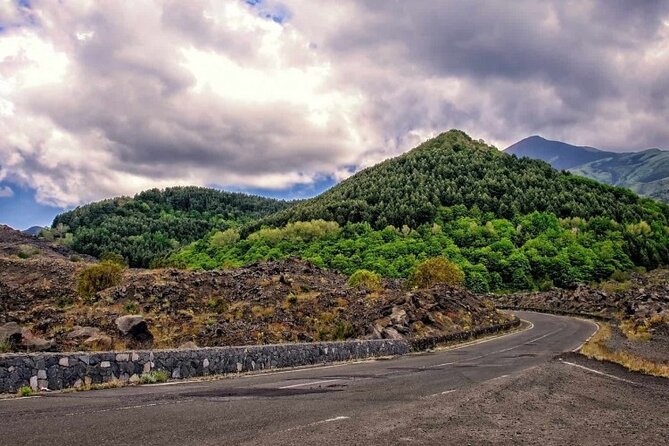
Once you pass above Fiumefreddo di Sicilia, the climb ramps up. You’re aiming to reach Piedimonte Etneo, a town built on an ancient lava flow on the northeastern side of the volcano. The setting alone makes the effort feel more meaningful, but the real reason it matters is that this stretch builds your endurance.
By the time you’ve biked about 10 km and climbed around 350 m D+, you’re still not done with the first challenge. Then the tour continues until you reach roughly 18 km and about 800 m D+. That “not done yet” detail is important: the ride doesn’t just spike once and then coast. It keeps asking for steady power.
Road riding up a volcano also means you’ll feel altitude and heat together. Even on a short ride, you can get cooked if you go out too hot. A practical approach is to keep your effort controlled early so you don’t arrive at the harder sections already behind.
Mt Etna Wine road: where the climb turns scenic and strategic
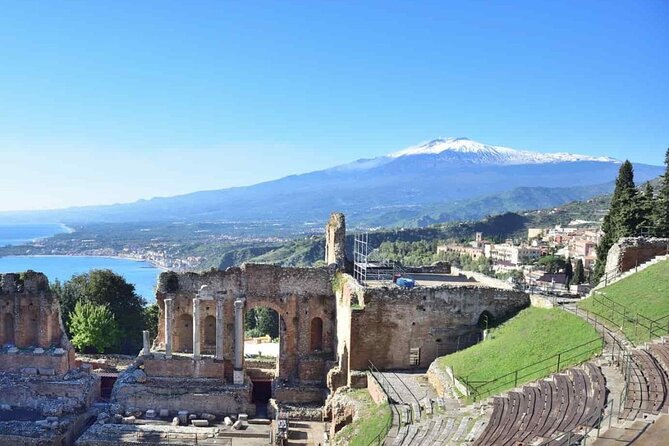
After the first tough climb, you roll onto what’s described as the Mt Etna Wine road along the northern volcano slope. This part matters because it’s where your mental game shows up. You’ve been working, but you’re not yet at the final big ascent—so it’s a time to settle into a pace you can hold.
Before the last climb, you’ll fill bottles with fresh volcanic mineral water. That stop is more than comfort—it’s a cue to manage your hydration timing instead of waiting until you’re already thirsty. Keep in mind that refills don’t replace good planning; they help you execute your plan.
This is also the part where small pacing differences start to matter. With a group, you’re trying to balance “stay together” with “don’t blow up.” If you know you’re a slower climber, it helps to be honest early so the guide can keep your day from stretching too long.
Bartali & Coppi to Rifugio Citelli: the toughest climb on the day
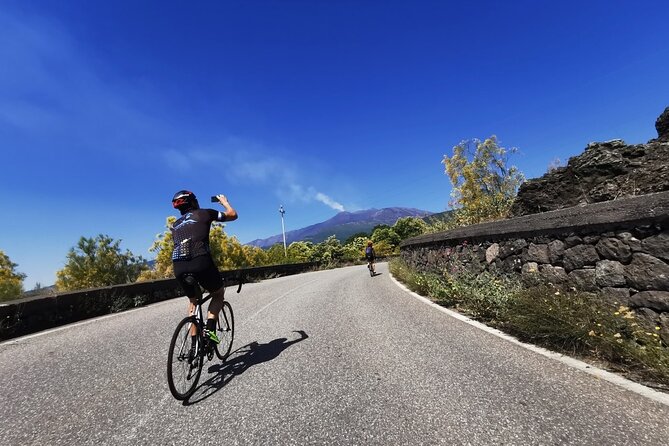
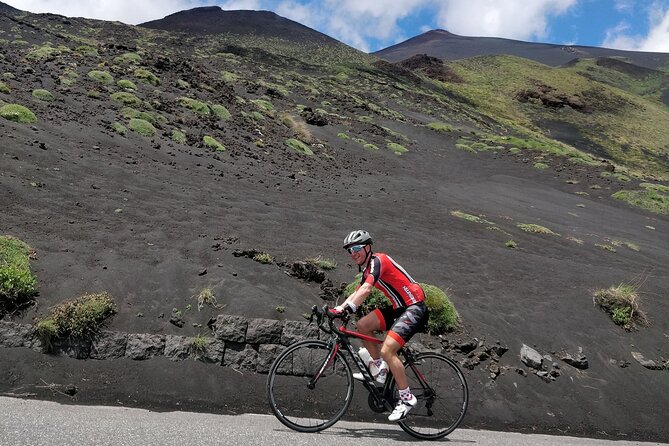
The last major ascent is known as the slope of Bartali & Coppi. You start around 827 m above sea level and aim to reach Rifugio Citelli at roughly 1750 m. That altitude gain is the moment Etna fully arrives, and it’s why this tour is best for riders who can put in real climbing effort.
One useful reality check: a steady average pace around 6–10 km/h can help keep the ride from dragging. If you’re much slower, you may feel the climb take longer than the tour’s rough 4-hour expectation. That time difference can be the difference between finishing strong and fighting cramps late.
Bike setup can also make or break this final section. A quibble that came up for one rider was that the rented bike had a semi-compact chainring and a cassette that felt like it needed easier gearing for a climb like this. You can’t always swap parts on the spot, but you can ask ahead (or right at setup) what gearing options you’ll have for the steep moments.
The good news: you’re not doing it alone. Guides such as Marco and Leonardo have been noted for keeping riders comfortable and informed during the climb, including regrouping when needed. Their job is to help you ride the slope, not just race up it.
The downhill back: fast legs, careful hands
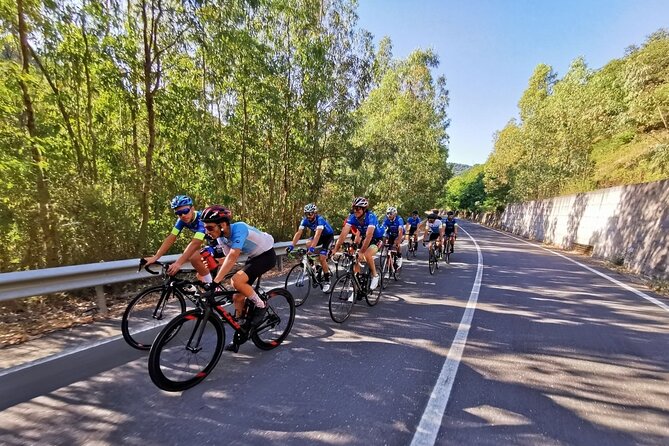
After reaching Rifugio Citelli, you get the downhill section back. This is where the day shifts from grinding to flying, and it’s one of the reasons road cyclists like Etna so much. Done well, descent can feel like a reward for suffering.
But descent is not a free pass. Your brakes matter, your line matters, and road conditions can vary. One rider mentioned things like tour buses and some iffy road surfaces along the way, so expect that you might share parts of the road and you should stay alert.
A calm technique helps: sit back slightly, keep your weight balanced, and avoid locking your eyes only on the wheel in front. If you’ve got fatigue, don’t force hero braking—look ahead and manage speed early.
Bikes, pedals, and guide support: what’s included (and why it’s good value)
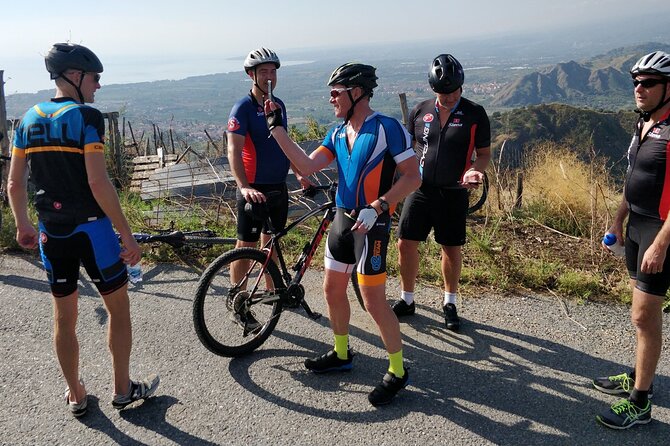
At $162.03 per person, the big value is not the bike—it’s the combination of bike + expert pacing + a route that would be work to organize alone. You’re getting a full carbon road bike, a helmet, and pedal choices (flat, Shimano, or Look). That removes a common stress for visitors: showing up without the right equipment for real climbing.
What’s also valuable is the guide’s role in keeping the ride smooth for mixed ability levels. With a small group, the guide can manage regroup points and communicate what’s coming next. That kind of planning makes your time on the volcano feel efficient, even though the climb is hard.
Two things are not included: private transportation, and anything related to personal food. The tour description includes water refills, but it doesn’t promise a full fueling stop. I strongly suggest you bring a snack you can eat while you’re stopped, plus a plan for hydration. If you only count on water during the push to the refuge, you might run short if you’re working harder than average.
Price and logistics: how to judge whether this fits your budget
This is priced like an “active experience,” not like a casual sightseeing add-on. You’re paying for a guide, a high-end bike, and a full morning that runs on real effort rather than easy cruising.
It’s also fairly time-efficient: about 4 hours. That’s good if you’re only in Sicily for a short window and want one big Etna moment without turning it into an all-day event. The trade-off is that there isn’t much slack time—so you should pick this when you can commit to the ride for real.
For logistics, you’ll want to be at Giardini Naxos early. The meeting point is Via Recanati, 26, and the tour ends back there. The area is noted as near public transportation, which helps if you don’t want to rent a car just for one climb.
Weather is another practical factor. The experience requires good weather, and if it’s canceled due to poor conditions, you’ll be offered another date or a refund. This is the right approach for a mountain ride where safety depends on conditions.
Who should book this Etna bike tour (and who should skip it)
You’ll probably love this if you:
- ride a road bike already or can handle steady climbing for a few hours
- want a guided plan and don’t want to spend vacation time figuring out routes and turns
- enjoy structured rides with a small group and clear pacing
You might want to look for an easier option if:
- you’re new to road cycling or dislike sustained gradients
- you expect a casual pedal day with minimal strain
- you don’t like managing your hydration and energy during effort
The tour specifically notes moderate physical fitness as the target level. In practical terms, that means you’re not just rolling along—you’re climbing. If you can hold steady effort and recover between steep bits, you’re in the right place.
Should you book Etna Bike Tour – Cycling in Sicily?
If your goal is one focused Mt Etna cycling experience without turning it into a route-finding project, I’d book it. The small-group pacing, the carbon bike setup, and the guided line up a real climb make this a strong value for active travelers.
Just go in with eyes open. This is a workout: the final push to Rifugio Citelli is the hardest part of the day, and pacing matters more than people expect. Pack smart (snack + hydration plan), confirm the gearing feels right for you at setup, and you’ll be set up for the kind of ride that makes Etna feel personal.
FAQ
How long is the Etna bike tour?
It runs for about 4 hours.
How big is the group?
The tour has a maximum of 8 travelers.
What fitness level do I need?
You should have a moderate physical fitness level.
What bike and pedal options are included?
You get a full carbon road bike, a helmet, and pedals in the categories flat, Shimano, or Look.
What happens if weather is bad?
The experience requires good weather. If it’s canceled due to poor weather, you’ll be offered a different date or a full refund.
Where do I meet and end the tour?
You meet at Via Recanati, 26, 98035 Giardini Naxos ME, Italy, and the tour ends back at the same meeting point.