REVIEW · SICILY
Erice walking-tour, the ancient village and local products (all incl)
Book on Viator →Operated by Trapani Emotions · Bookable on Viator
Erice is a hill town that rewards slow steps. This walking tour in Sicily mixes medieval gates, old churches, and hands-on local craft stops with snack breaks that actually feel Sicilian. I love how the tour pushes beyond photo stops into the world of traditional production—especially the pottery workshop and the historic carpet loom.
The best part is the small, guided pace through the ancient lanes, plus time to see why this place still tries to keep its crafts alive. One thing to consider: a couple of key church/ruins entrances cost extra, so you’ll want a little cash or card handy for those optional ticketed spots.
In This Review
- Key Highlights You’ll Notice Fast
- Why Erice Feels Like Time Travel on Foot
- Meeting in Trapani: How the Day Gets Rolling
- Porta Trapani: Crossing Erice’s Main Medieval Gateway
- Matrice Church and Torre di Re Federico: Optional Stops With Big Payoff
- Matrice Church (Cathedral of Erice)
- Torre di Re Federico
- Ruins of the Santissimo Salvatore: Stones With a XIII-Century Past
- The Pizza Moment and the Ettore Majorana Science Connection
- Pottery and Carpet Loom Workshops: Local Products Worth Slowing Down For
- Pottery Workshop (Included)
- Erice Carpet Workshop With an Ancient Loom (Included)
- Tastings and snacks
- San Carlo Monastery and San Giuliano Church: Quiet Heritage Stops
- Monastero e Chiesa di San Carlo
- Chiesa di San Giuliano
- English Gardens, Castle of Venus Area, and the Norman Castle Views
- Price and What You Really Get for $114.45
- Who Should Book This Erice Walking Tour?
- Should You Book It or Do It Independently?
- FAQ
- What’s the tour duration?
- Where does the tour start and end?
- Is the tour in English?
- What’s included in the price?
- Are church and ruins entrance tickets included?
- What time does it run?
- Do I need good weather?
Key Highlights You’ll Notice Fast
- Porta Trapani: cross the main medieval gateway into Erice’s old core
- Historic craft time: pottery workshop plus an Erice carpet workshop with an ancient loom
- Snack stops that feel local: typical pastries tastings and a pizza moment in the middle of the walk
- Religious and fortress mix: churches, monastic ruins, and a Norman castle viewpoint
- Guided context: you don’t just walk past buildings—you learn what they were for
Why Erice Feels Like Time Travel on Foot

Erice is the kind of place where you feel the village working around you. The streets are narrow, the buildings look carved from the mountain itself, and you keep catching little details—doorways, old stonework, remnants of earlier eras—between the bigger sights.
What I like most is that the tour balances the grand landmarks with everyday production. You’re not only looking at history; you’re seeing the tools and processes that help keep local culture moving today. That’s what makes this feel more like a guided day in a real community than a checklist.
You’ll also end up with a smart sense of layout: where the sacred buildings sit, where the older structures were (including ruins), and how the fortress-castle zone connects everything. Walking is the point here, and the guide helps you see the “why” behind the geography.
You can also read our reviews of more tours and experiences in Sicily.

Meeting in Trapani: How the Day Gets Rolling
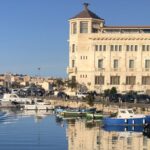
You start in Trapani at Via Ammiraglio Staiti, 101, with a 9:00 am departure and the tour ending back at the same meeting point. Expect about 3 hours 30 minutes total, and a small group size of up to 16 travelers, which keeps the pace from turning into herding.
The tour is offered in English, and you’ll use a mobile ticket. You also get private transportation as part of the package, so you’re not stuck figuring out connections with a schedule full of walking.
Practical tip: wear shoes with real grip. Erice’s lanes are historic, not modern-friendly, and you’ll be moving between multiple sights, some higher than others.
Porta Trapani: Crossing Erice’s Main Medieval Gateway
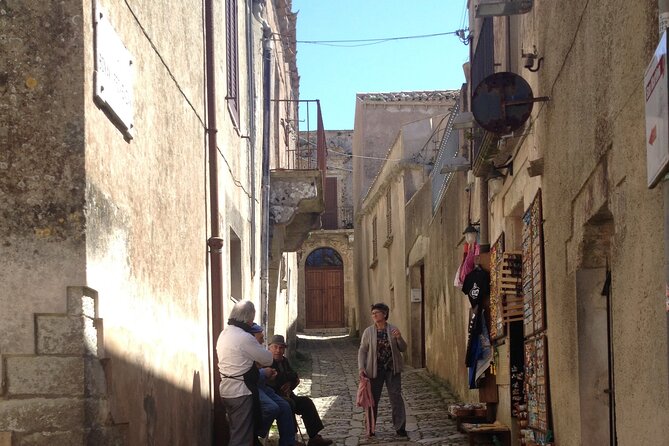
The first stop is Porta Trapani, the big medieval gateway that marks entry to the village. It’s short—just a quick moment—but it sets the tone immediately. You go through the gate and suddenly the village feels like a closed world, not just a place you’re visiting.
This is one of the free segments (admission ticket free for this stop), and it’s also a helpful warm-up. You’re adjusting to the stone, the slope, and the rhythm of the lanes, all while your guide frames what you’re about to see.
I like this kind of start because it stops the day from feeling random. Instead of walking in blind, you’re walking with context—how Erice used to be accessed, defended, and organized.
Matrice Church and Torre di Re Federico: Optional Stops With Big Payoff
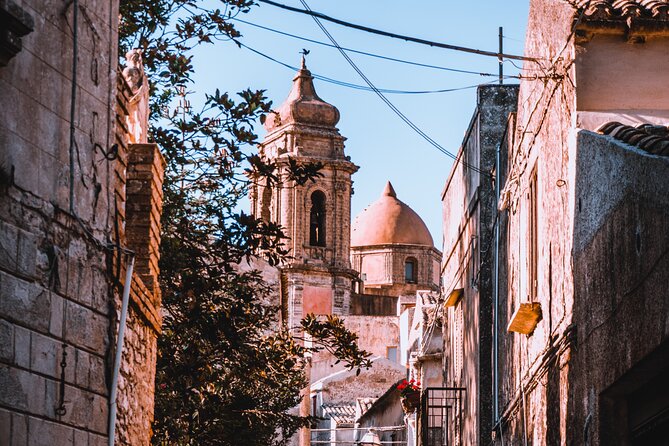
Next up are two major landmarks tied to Erice’s religious and defensive identity.
Matrice Church (Cathedral of Erice)
Matrice Church is the city’s cathedral, described as the mother church of Erice. The visit is possible upon request from your guide, and the entrance ticket for the main church is not included (noted at €2.50 per person).
You’ll want to treat this as a “payoff stop.” If you’re the type who likes church interiors, inscriptions, and the way sacred buildings express local identity, this is worth making time for. If you’re less into interiors and more into street-level atmosphere, you can focus on the walk segments instead.



Torre di Re Federico
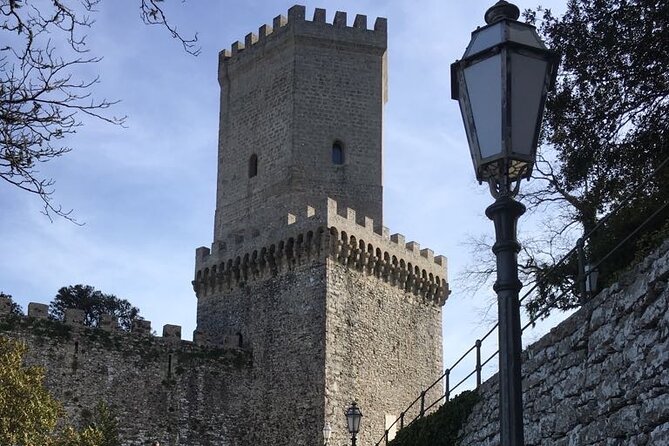
Then comes Torre di Re Federico, a 28-meter-high structure built for defensive purposes and now one of Erice’s symbols. Like Matrice, entry is possible upon request, and the ticket is not included.
This tower stop matters because it shifts your perspective. From defensive structure to landmark, it explains how Erice moved from survival to identity—how a structure once meant to protect the town becomes a reference point for the town’s story.
If you want the most from these optional stops, ask your guide right at the start of the day what’s realistically open and best for your interests.
Ruins of the Santissimo Salvatore: Stones With a XIII-Century Past
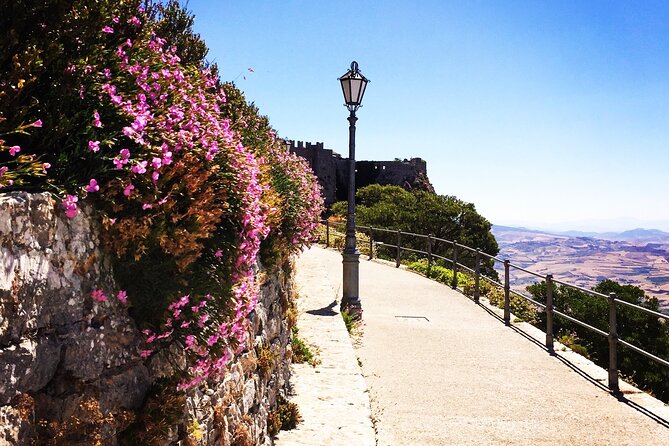
The walk also includes I Ruderi del Monastero del Santissimo Salvatore, an ancient monastery and an early noble palace dating to the XIII century. The ruins aren’t just “leftovers”—they’re a clue to how power and religion were intertwined here, and how buildings evolved over time.
The entrance ticket for the ruins is not included (also listed at €2.50 per person). Even if you decide not to pay for an entrance at that moment, the area is still useful for understanding the site layout and what the guide is tying together.
What makes this stop work is the storytelling element: you’ll discover the history of this church and the buildings in the surrounding area with your guide. It turns the ruins from random stone piles into a readable chapter.
The Pizza Moment and the Ettore Majorana Science Connection
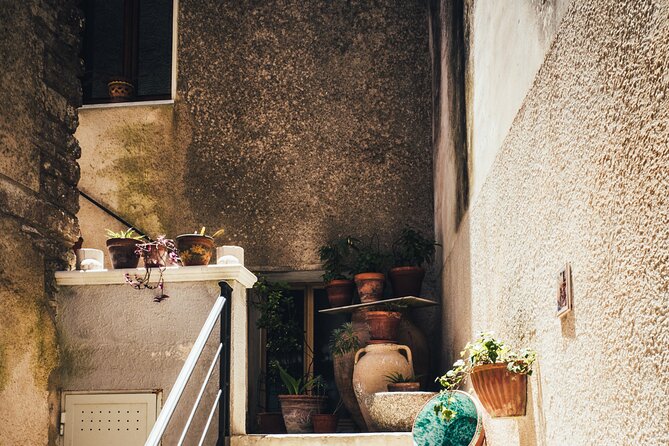
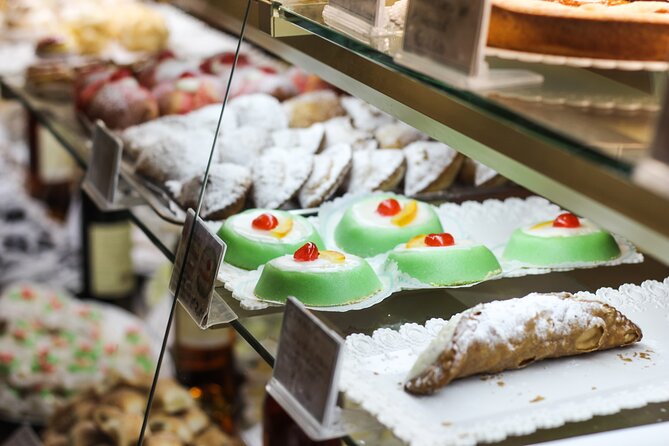
Somewhere mid-walk, you get to pause for the most important pizza in the city of Erice—a food break that’s timed to the flow of the sightseeing rather than interrupting it. You also get snacks tastings of typical local pastries as part of what’s included, so this is more than one quick bite.
Then the tour threads in an unexpected detail: once a convent, a related building is now used as a conference room of the Ettore Majorana International Center for Scientific Culture. It’s a reminder that Erice isn’t only past-tense stone walls.
I like these kinds of transitions because they make the village feel alive. History is present, but it’s not frozen. It’s being repurposed, used, and kept relevant.
Pottery and Carpet Loom Workshops: Local Products Worth Slowing Down For
This is where the experience earns its place if you care about real local culture.
Pottery Workshop (Included)
You’ll visit a pottery workshop, which means you’re not just buying ceramics—you’re seeing the working side of the craft. The tour includes this workshop visit, so it’s part of the price rather than an extra add-on.
Even if you’re not planning to bring pottery home, watching how artisans think about materials and form helps you understand why Sicilian craft styles look the way they do. It’s also a nice change of pace from church-and-stone sightseeing.
Erice Carpet Workshop With an Ancient Loom (Included)
Next is the historic Erice carpet workshop, featuring an ancient loom. This is one of those details that immediately sets the tour apart from the usual “walk and shop” version of village tourism.
The loom isn’t just a display. It’s a working cultural machine, and seeing it helps you understand how skill gets passed on. If you love textiles, you’ll probably spend a few extra minutes here without meaning to.
Tastings and snacks
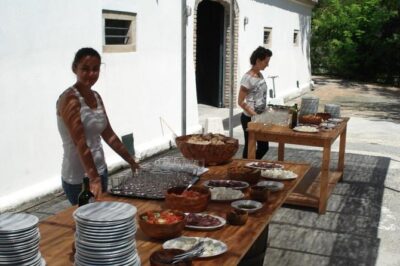
Along the way, you’ll get snacks tastings of typical local pastries. This matters because it ties the day’s theme together—traditional life isn’t only in workshops. It’s also in what people eat, share, and keep making.
San Carlo Monastery and San Giuliano Church: Quiet Heritage Stops
The tour continues with two worship sites that give Erice a “sacred corners” feel.
Monastero e Chiesa di San Carlo
You’ll visit Monastero e Chiesa di San Carlo. This one is listed with admission ticket free. Even with a short stop, getting inside a monastery church area helps you slow down and notice how these buildings shape the mood of the village.
There’s also a fascinating reference tied to this area: the headquarters of the CERN detachment in Geneva in the former monastery of San Pietro, later San Rocco. That’s the kind of connection you don’t get from a standard photo tour.
Chiesa di San Giuliano
Then comes Chiesa di San Giuliano, described as one of the oldest places of worship in Erice. This stop lists admission ticket included, so it’s one less thing to plan around.
This is another stop worth paying attention to even if you’re not a church-interior person. Older religious sites often hold clues in their position and structure—how the town grew around faith, protection, and community life.
English Gardens, Castle of Venus Area, and the Norman Castle Views
As you move toward the top end of Erice’s story, you’ll pass through varied sights that connect the village’s elegance to its defense-minded roots.
There’s mention of a building of eclectic taste below the castle of Venus, plus English gardens that are now a natural monument enhancing the historic area. Translation: you get a break from pure stone and architecture, and you get a designed-in “green” element that frames how the village looks.
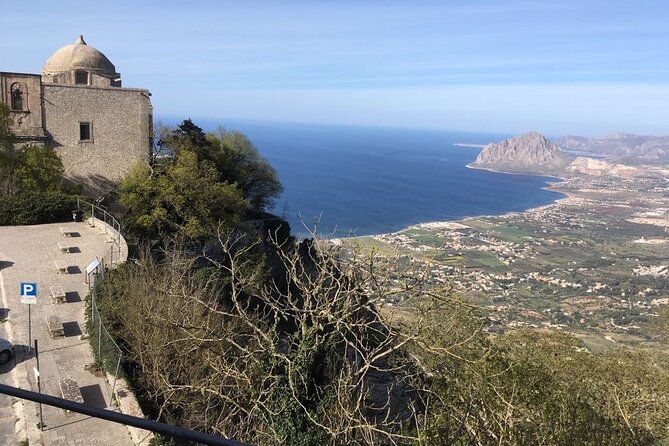
Finally, the highlight climb arrives: the Norman castle at the top of the mountain. You’ll get unique, breathtaking views (and yes, this is the kind of view that makes you stop talking for a second). This is also the spot where your earlier stops snap into place: you can see how the town’s churches and structures relate to the defensive higher ground.
Keep in mind the tour uses the remaining time to travel between attractions, so don’t expect every single spot to be long and lingering. Think of this as a curated arc: history down in the streets, then the big panorama at the end.
Price and What You Really Get for $114.45
At $114.45 per person for about 3.5 hours, this tour isn’t the cheapest way to see Erice. But it’s also not “just a walk.”
Here’s what you’re paying for in real terms:
- Private transportation to keep the day efficient
- Guided stops at major village structures (including optional entries)
- Two craft visits that most walking tours don’t include: pottery + an Erice carpet workshop with an ancient loom
- Food value, meaning typical pastries tastings and a pizza moment
Some entrance costs are listed as not included: €2.50 per person for the main church and €2.50 per person for the monastery ruins. Those are small add-ons, but they can matter for the math if you plan to do everything.
For me, the value comes from the combination: you get the history context and you get the living crafts. If your goal is only sweeping views and a couple churches, you might save money on a self-guided day. If your goal is understanding how Erice still produces culture—then this feels like a fair trade.
Who Should Book This Erice Walking Tour?
This works especially well if you:
- Like your sightseeing guided, with specific context rather than wandering
- Care about traditional Sicilian crafts (ceramics and textiles)
- Want a food break that’s part of the itinerary, not an afterthought
- Appreciate a smaller group pace through older, more winding streets
It’s also a good fit for repeat visitors to the area. Erice can be charming on a first visit, but the workshops and the explanations make it rewarding again, even if you’ve been before.
If you’re traveling with very limited mobility, you should consider that the day includes walking and moving between multiple points around a hilltop village. The tour says most people can participate, but it doesn’t promise step-free routes.
Should You Book It or Do It Independently?
Book this tour if you want Erice with structure and cultural depth. The craft workshops (pottery and the historic carpet loom) plus pastry tastings and the pizza stop are the kind of mix that makes a guided tour feel worth it rather than optional.
Do it independently if your priority is purely views and quick browsing, and you don’t want to pay for scheduled workshops or guided explanations. You’ll still find Erice beautiful on your own, but you’ll likely miss the “working craft” layer that the tour builds into the day.
My call: if you like hands-on culture and you’re willing to pay a little extra for access and context, this is a smart way to spend half a day in Erice.
FAQ
What’s the tour duration?
It’s about 3 hours 30 minutes.
Where does the tour start and end?
It starts at Via Ammiraglio Staiti, 101, 91100 Trapani TP, Italy and ends back at the same meeting point.
Is the tour in English?
Yes, it’s offered in English.
What’s included in the price?
Private transportation, a pottery workshop visit, a historic Erice carpet workshop with an ancient loom, and snacks tastings of typical local pastries.
Are church and ruins entrance tickets included?
Not all of them. Matrice Church and the ruins of the Most Holy Savior Monastery list an admission ticket cost of €2.50 per person (not included). San Carlo is free, and Chiesa di San Giuliano is listed as included.
What time does it run?
The start time is 9:00 am.
Do I need good weather?
Yes. The experience requires good weather, and if it’s canceled for poor weather, you’ll be offered a different date or a full refund.