REVIEW · MALLORCA
Coasteering in South Mallorca with Transfers
Book on Viator →Operated by Experience Mallorca S.L · Bookable on Viator
Cliff jumps and ocean caves in four hours. This south-to-north Mallorca coasteering trip is built for real coastal adventure with hotel pickup, plus a guide who teaches you how to move along the cliff edge safely. It’s one part climbing, one part water play, and one part “okay, I can do this” moment—especially once you’re lowering yourself down with a rope and discovering the sea formations up close.
I like that the jumps are progressive, so you can start smaller and build up as you feel ready. I also like the small-group feel (up to 10 people), which makes it easier for the guide to spot who needs an extra moment before stepping into the next jump.
One consideration: the coastline access and the water can be rough. If you don’t do well with uneven walking, wet scrambling, and wave-timing, this can feel more “work” than “thrill.”
In This Review
- Key Things That Make This Coasteering Tour Feel Special
- How Coasteering Works on Mallorca’s Sea-Cliff Edge
- Getting Picked Up in South Mallorca (Transfers That Matter in Real Life)
- The 4-Hour Game Plan: Jumps, Rappel, Climbing, Caves, Zip Line
- 1) Gear up and get set
- 2) Travel to a northern coast location
- 3) Practice and then increase jump heights
- 4) Lower yourself with rappel to sea-level
- 5) Sea caves and ocean-edge exploring
- 6) Zip line and final return
- Safety Reality Check: What’s Included and What to Watch For
- Rough Terrain and Rougher Water: When the Day Changes
- What to Wear and Bring (Without Overpacking)
- Wear
- Bring
- Consider skipping
- Meet Your Guide: Coaching Makes or Breaks the Day
- Price and Value: Is $90.51 Worth It?
- Who This Coasteering Tour Fits Best (And Who Should Think Twice)
- Should You Book This Coasteering Tour With Transfers?
- FAQ
- How long is the coasteering experience?
- Where do I meet for the tour?
- Is hotel pickup and drop-off included?
- Do I need to speak Spanish?
- What equipment is provided?
- What should I bring for food?
- What’s the minimum age?
- How high are the cliff jumps?
- What should I wear?
- Is the tour suitable for beginners?
Key Things That Make This Coasteering Tour Feel Special
- Hotel transfer included for most areas in south Mallorca, saving you the stress of getting to the coast
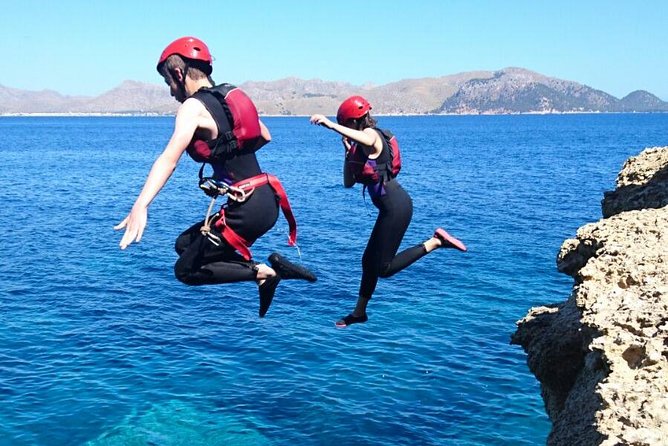
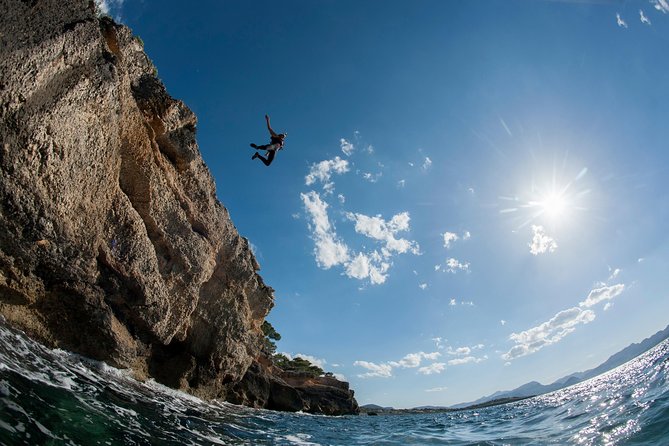
- Progressive cliff jumps from about 2 meters up toward 12 meters, paced by your confidence
- Rappel and climbing elements so you don’t just jump—you learn how to move safely on the rock
- Sea-cave and pool exploration with the ocean right next to your boots
- Zip line added at the end in many spots for a fast, fun finish
- Small group size (max 10) for more hands-on coaching from the local guide
How Coasteering Works on Mallorca’s Sea-Cliff Edge
Coasteering is basically traveling along the rocky border where land turns into sea. You’re not hiking on a trail in the normal sense; you’re moving from cliff point to cliff point using whatever’s practical—short walks, scrambling, climbing holds, rappelling down to the water, then swimming and regrouping for the next move.
On this tour, you’ll get kitted out in a wetsuit and safety gear before you start. Then you’ll work through the “ladder” of skills: getting comfortable stepping close to the edge, practicing the jump rhythm, learning how to lower yourself down with a climbing rope and rappel setup, and scrambling around rock sections near the ocean.
What I find especially good about this format is that it’s not only adrenaline. It’s also instruction. The guide helps you understand where to place your feet, how to jump with control, and how to handle that first moment where your brain says “nope” but your body ends up going anyway.
And since the coast is shaped by caves, pools, and carved rock, the payoff isn’t just the height—it’s the sense of exploration. One jump spot turns into the next because that rocky shoreline is already a natural obstacle course.
You can also read our reviews of more tours and experiences in Mallorca.



Getting Picked Up in South Mallorca (Transfers That Matter in Real Life)
This tour runs from southern Mallorca with pickup offered from Puig de Ros along the coast to Andratx. In practice, that’s the kind of pickup range that matters: it reduces driving time and lets you show up to a rough-and-rugged coastline day without figuring out the last stretch on your own.
You’ll either:
- Meet the driver at your hotel area, or
- Meet at a central starting point in south Mallorca (the exact pickup zone depends on where you’re staying)
The operator also calls out a simple zoning rule: you’ll want the north coasteering zone if you’re around the Alcúdia area, and the east zone for Cala d’Or and Cala Ratjada. If you pick the wrong zone when booking, you can end up on the wrong side of the island for the action. So double-check that choice when you book.
One more logistics detail worth knowing: the tour starts at Carr. de Cala Fornells, 30, 07160 Cala Fornells if you’re not picked up, and the day ends back at that meeting point. If you have transfers, you’ll be taken back to your hotel afterward.
Also keep in mind meeting points can be simple rather than fancy. One person shared that there wasn’t a clear signpost for where to wait, and that changing happened near the van. Not a dealbreaker, just proof you should arrive a little early and watch for the minivan.
The 4-Hour Game Plan: Jumps, Rappel, Climbing, Caves, Zip Line
The duration is about 4 hours, and the experience usually feels fast once you’re in motion—because you’re constantly switching between tasks rather than doing one long set-piece.
Here’s what the day is built around:
1) Gear up and get set
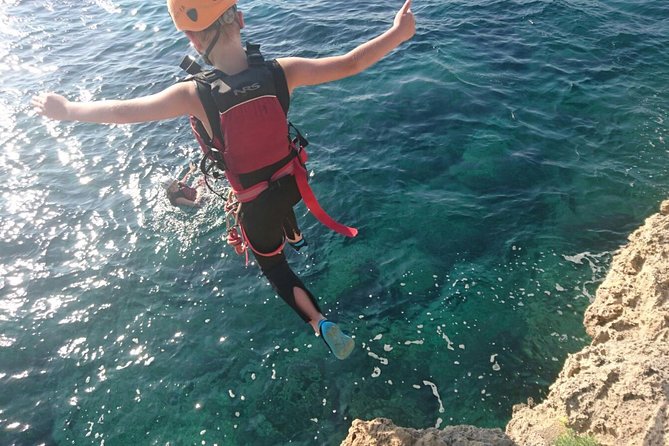
You meet your guide (and often a driver for transport), get safety briefed, then pull on your wetsuit and protective gear. You’ll also get footwear designed for the water and rock (and a helmet). You don’t need to show up dressed like an athlete already, but you should be ready to get wet and climb in short bursts.
2) Travel to a northern coast location
After pickup, the minivan takes you north for a coasteering coastline. The point isn’t luxury scenery viewing from a bus—it’s getting you to cliffs and sea formations where the sport makes sense. Some days are more cave-and-pool focused, other days are more jump-and-scramble focused, and the guide adjusts.
A name that pops up in people’s descriptions is Caló d’en Monjo / Caló des Monjo, which suggests you may be heading to that kind of rugged, cliffy shoreline area.





3) Practice and then increase jump heights
Jump sizes can range from roughly 2 meters (6 feet) up to about 12 meters (39 feet). You’ll have the option to take on progressively higher jumps as you explore and your comfort grows.
This matters for beginners because it turns the day into a “confidence ladder.” You can do the first jumps to learn the timing and water entry without feeling forced into the tallest option immediately.
4) Lower yourself with rappel to sea-level
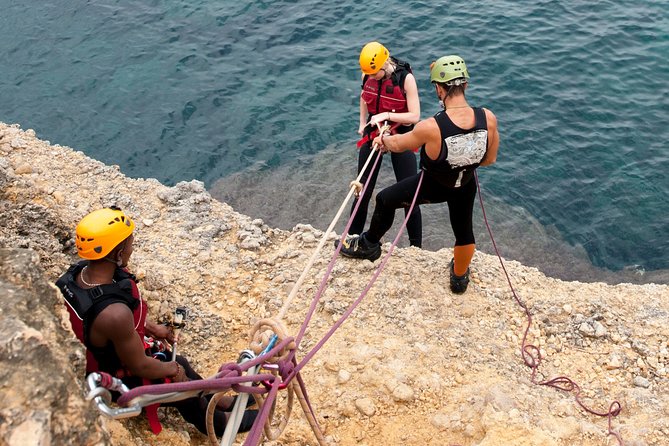
After you’re feeling good, you’ll do the part that makes coasteering different from a simple cliff-jump excursion: lowering yourself from the sea cliff using rope and a rappel device, then moving around the rock edge and water pools.
If you like climbing, you’ll probably find this section satisfying. If you’re afraid of heights, you’ll still get coaching, but you should be honest with yourself and choose the pace that keeps you calm.
5) Sea caves and ocean-edge exploring
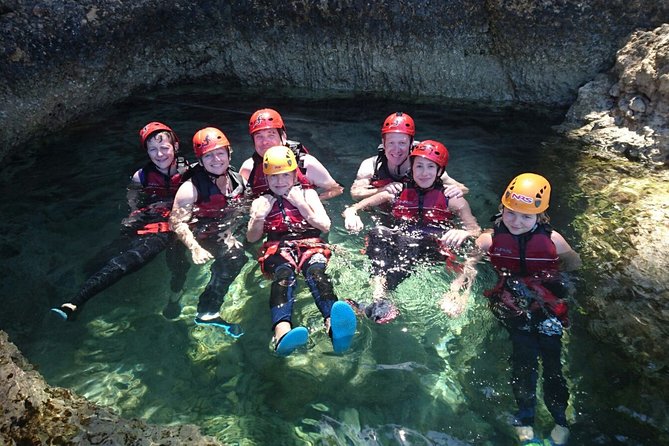
Between jumps and climbing, you’ll explore the pools and formations along the coast—often described as a maze of sea caves. This is where the “adventure” part becomes more than a checklist. You’re watching your guide read the coastline and choose a path based on where you can safely step, climb, swim, and regroup.
6) Zip line and final return
Many schedules include a zip line between cliffs near the end. It’s a cool way to finish: less technical than climbing, but still thrilling because you’re flying over open water.
After your final jump or zip line pass, you’ll meet up with the driver and head back. The day ends back at the meeting point, or with your included hotel transfer.
Safety Reality Check: What’s Included and What to Watch For
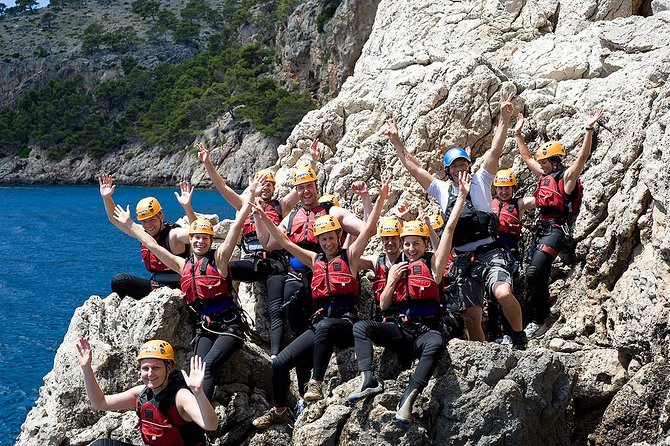
You are given equipment and a guide, and the tour includes insurance, helmets, and wetsuits designed for abrasion protection and comfort in water temperatures that are described as comfortable.
You’re also told that the minimum age is 8 years, which tells me the operator expects a guided coaching style rather than a pure “send it” vibe.
Still, safety is more than gear. It’s also your choices mid-day. One harsh note from a small number of people was about equipment quality—specifically concern with water-shoe grip and wetsuit condition. I can’t verify how often that happens, but I will tell you how to handle it in a smart, practical way:
- When you’re offered footwear, check the grip right away on the ground you’re standing on.
- If anything looks torn or unsafe, ask to swap before you start the coastal section.
- If you already own water shoes with excellent traction, consider bringing them so you can choose what you trust most.
Most days run smooth. The majority of comments praise guides for patient instruction and confidence-building. People name guides like Naco, Joni, Mario and Niko, Jose, Rafael, and Alfonso for easing people in, adjusting to the group, and coaching technique rather than just yelling “go.”
One more “safety-by-experience” detail: rough terrain and wave movement can change how hard the climbing and exit feels. Your plan should include the idea that you may need extra time to scramble out of the water at some points.
Rough Terrain and Rougher Water: When the Day Changes
Coasteering is weather- and sea-driven. The operator requires good weather, and they’ll adjust with what conditions allow. When the sea is rougher than expected, two things often happen:
1) Swims feel longer because waves push you around.
2) Climbing out can feel more strenuous because you’re working against timing and grip on wet rock.
One family note basically boils down to this: the terrain to the cove can be rough and the water can be rougher than expected, so you have to take it slow. That’s the honest version of coasteering. Even when you’re physically capable, the ocean adds variables you can’t fully control.
So if your tolerance for chaos is low—if you hate sudden movement, getting pushed by waves, or scrambling on uneven footing—this is where you should think twice or speak with the guide at the start about what you can handle.
What to Wear and Bring (Without Overpacking)
I’ll give you the packing approach that keeps you comfortable and not annoyed.
Wear
- Your bathing suit under clothes you don’t mind getting wet
- Hiking shoes or comfortable footwear for the rocky approach (even though you’ll get provided water shoes, you still may walk on rough ground first)
- Sun protection: sunscreen is essential on these coasting days
Bring
- Sun screen (and if you’ve got reef-safe, even better—some people recommend it)
- Bottled water
- Your own lunch (food and drinks are not included)
- Towel
- Your device protection: waterproof phone cases came up as a smart move, especially if you want photos and videos without worrying about salt water
Consider skipping
One person basically said they didn’t need much of what’s on the list and that the wet suit, helmet, and water shoes cover most of the critical gear. So don’t pack an entire beach kit. Think: swimsuit, towel, water, sunscreen, lunch, and something to protect your phone.
Also be prepared for your hands to get scraped. Even with proper technique, you’ll be grabbing rock to climb out of the water multiple times.
Meet Your Guide: Coaching Makes or Breaks the Day
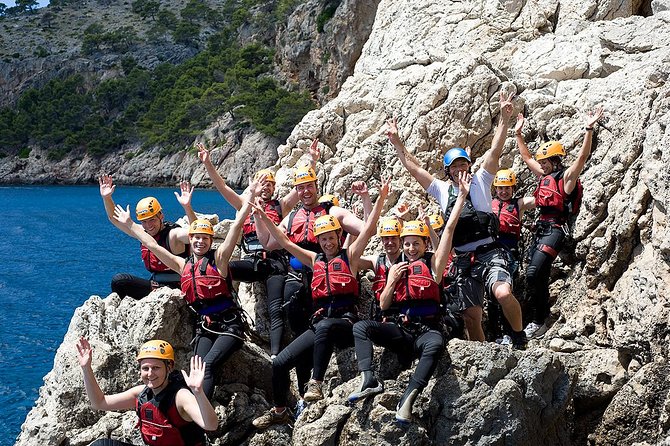
This sport isn’t only about strength. It’s about technique, timing, and staying calm at the edge.
That’s why the guide matters so much. People highlight guides who:
- Build confidence gradually (small jumps first, then bigger ones)
- Explain exactly where to place your feet
- Adjust routes if the group isn’t matching the same pace
- Encourage back flips and tricks for advanced jumpers, while keeping beginners safe
Named examples include Naco for patient encouragement and a course that included a zip line into the right jump, and Joni for creating a fun, challenging but manageable flow for families.
If you’re new to this, your best strategy is to communicate early: tell the guide what you’re comfortable doing today, and what you want to avoid. Most coaching styles here aim to make the experience work for different comfort levels in the same group.
Price and Value: Is $90.51 Worth It?
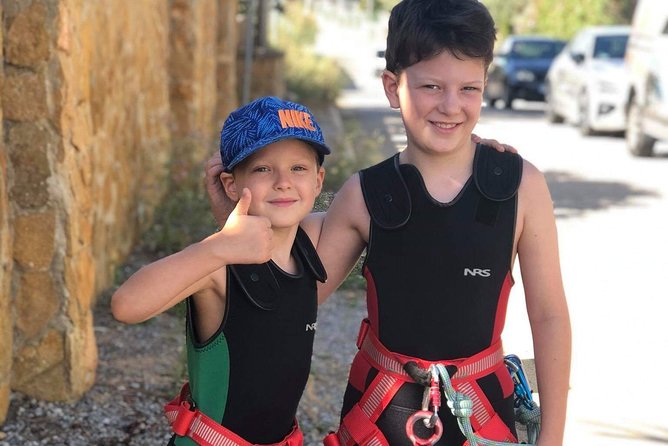
At about $90.51 per person for roughly 4 hours, the value is strongest if you count what’s included:
- Hotel pickup and drop-off (major savings over figuring out your own transport)
- Qualified local guide
- Insurance
- All equipment and shoes (wetsuit, helmet, water shoes)
- Minivan transport
You also get the “whole package” of coasteering rather than a single activity. You’re not just buying cliff jumps. You’re buying the combination of rappelling, climbing/scrambling, swimming along sea pools, cave exploration, and often a zip line finish.
The main cost you should plan for is on your own food and drinks. You’ll bring lunch and water, so your day cost is really “tour price plus your snacks.”
If you’re the kind of traveler who likes guided training and a controlled path to adrenaline, this is a good deal. If you want a quieter sightseeing day, then coasteering may feel too physical and too dependent on ocean conditions for the price to feel “worth it.”
Who This Coasteering Tour Fits Best (And Who Should Think Twice)
Best fit:
- Active travelers who can handle short scrambles and swimming in salt water
- People who want a guided progression, not a random free-for-all
- Families with kids old enough to follow instructions (minimum age is 8)
- Teens and adults who like heights but want coaching to reduce panic
Maybe not the best fit:
- If you strongly dislike uneven rocky terrain
- If you panic at the edge even with practice jumps
- If rough sea conditions would likely ruin your day mentally or physically
- If you’re expecting a relaxed “walk to a viewpoint” kind of outing
One helpful detail: the tour says most travelers can participate, and the coaching style is set up for different jump comfort levels. So even if you’re a first-timer, you’re not necessarily out of luck—just be honest about your limits.
Should You Book This Coasteering Tour With Transfers?
If you want a memorable Mallorca day that mixes cliffs, caves, climbing moves, swimming, and a progressive jump ladder, I think you’ll be happy booking this. The included transfers are a real advantage, the group size keeps it personal, and the coaching shows up in how people describe guides named for patience and confidence-building.
Before you go, decide two things:
1) Can you handle wet, uneven coastal scrambling without feeling unsafe?
2) Can you accept that the sea might be a bit rough, and the plan adapts?
If your answers are yes, book it. Bring reef-safe sunscreen if you can, pack only what you need, and check your footwear grip and wetsuit condition the moment you get gear.
FAQ
How long is the coasteering experience?
It runs for about 4 hours.
Where do I meet for the tour?
The start meeting point is Carr. de Cala Fornells, 30, 07160 Cala Fornells, Illes Balears, Spain.
Is hotel pickup and drop-off included?
Yes. Hotel pickup and drop-off are included, with pickup offered from south Mallorca areas along the coast from Puig de Ros to Andratx.
Do I need to speak Spanish?
English is offered, and guides speak Spanish and English as a minimum. The operator makes efforts to provide the language you request.
What equipment is provided?
You’ll receive a wetsuit and other safety gear, plus water shoes and a helmet. Insurance is also included.
What should I bring for food?
Food and drinks are not included, so bring your own lunch and water.
What’s the minimum age?
The minimum age is 8 years.
How high are the cliff jumps?
Jump heights can range from about 2 meters (6 feet) up to about 12 meters (39 feet).
What should I wear?
Wear comfortable clothes and hiking shoes. Bring a bathing suit and a towel. Sun screen helps too.
Is the tour suitable for beginners?
The tour notes that most people can participate, and the guides are described as easing people in and adjusting jump options based on comfort.