REVIEW · MALLORCA
PREMIUM TOUR : Enjoy aquatic caves with caving guides
Book on Viator →Operated by AVcaving-mallorca · Bookable on Viator
Crystal cave lakes, reached by hike and swim. This Mallorca aquatic caves tour takes you to sea-connected caverns where you move through rooms of crystalline water and Jurassic-looking stone—using different entry options depending on conditions.
I love two things most. First, the guides do more than point and rush: Vanessa and Toni (and other top guides like Luis and Antonio, depending on the day) keep the tone friendly while explaining what you’re seeing and how to respect the cave. Second, you’re given the right gear at the start—long-sleeve wetsuit, helmet, lighting, and cavity footwear—so you can focus on the adventure instead of scrambling for rentals.
One consideration: you’ll need real comfort in the water and some hiking legs. Expect a 30–40 minute walk to the beach, then swimming in open water (one review describes it as about two football fields) and sometimes a more intense entry if the surf is rough.
In This Review
- Key highlights you’ll actually care about
- Mallorca’s sea-cave vibe: Jurassic stone meets swim time
- Meeting point in Manacor: gear, backpack, and your first instructions
- The hike to the beach: simple, but it sets the tone
- The open-water approach: when sea conditions shape the plan
- Choosing your entry: swim, jump, or a 20m rappel
- Inside the cave: crystal lakes, Jurassic formations, and quiet rules
- Guides you’ll remember: Vanessa, Toni, Luis, and Antonio
- Duration and pacing: about 4 hours, but not rushed
- What’s included (and what you still need): value math for $101.20
- Who should book this aquatic caves tour—and who should think twice
- Practical tips so you enjoy it more
- Should you book this sea cave tour in Mallorca?
- FAQ
- Where is the meeting point?
- How long is the tour?
- What language is the tour offered in?
- What gear is included?
- What does the tour include for safety?
- What should I bring since bottled water and lunch are not included?
- What are the possible ways to reach the cave entrance?
- Are there rules inside the cave?
- Is the group small?
Key highlights you’ll actually care about
- Small group size (max 12): more attention, more time to look closely.
- Gear handed to you right away: wetsuit, helmet, lighting, and cave footwear are included.
- Multiple ways to reach the cave entrance: swim, a jump (about 4m), or a rappel (about 20m) if conditions allow.
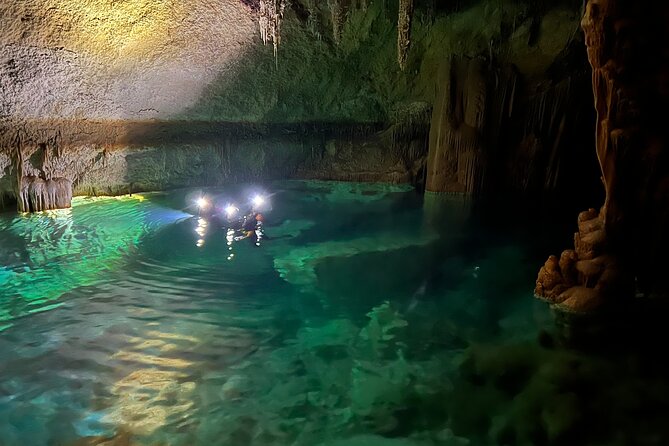
- Crystal lakes inside the cave: you’ll move through multiple rooms with clear, Jurassic-formed scenery.
- Clear safety and behavior rules: no shouting, no jumping into lakes, and no touching/breaking formations.
Mallorca’s sea-cave vibe: Jurassic stone meets swim time
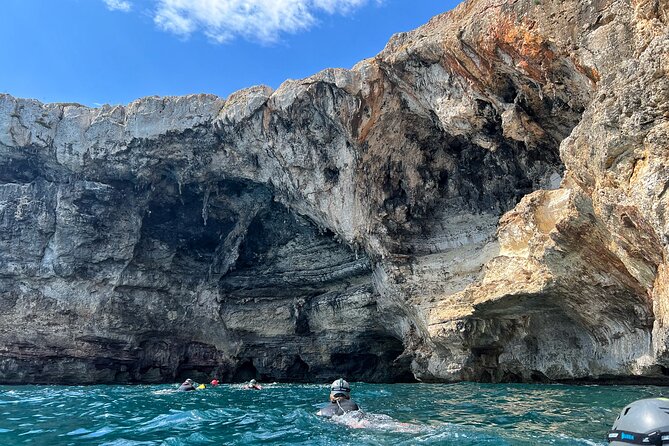
This is one of those tours where the setting does half the selling. You start on Mallorca near Manacor, then work your way to a marine-access cave system where the inside looks almost too clean and bright to be real. The mix is what makes it special: cave rooms, stone formations, and lakes of clear water you travel through rather than just stare at.
What you’re really buying is a guided “how-to” experience. You’re not just paying to see caves—you’re learning how to move safely in a cave environment connected to the sea. And because the group stays small, the guide can keep a steady rhythm instead of herding people like luggage.
You can also read our reviews of more tours and experiences in Mallorca.


Meeting point in Manacor: gear, backpack, and your first instructions
The tour starts and ends at Carrer de les Petúnies, 5, in Manacor (07680, Illes Balears). At the meeting point, you get a backpack plus the key cave gear: a neoprene (wetsuit), a helmet, and shoes made for the cave. You can put your things in that backpack, so you’re not carrying extra weight while you hike and swim.
From there, it’s about a 30-minute walk to the beach. Wear footwear and clothing that make that walk comfortable; you’ll appreciate it later when you’re tired and the next part is water.
Quick note on behavior rules—because they matter here. The tour explicitly asks you not to raise your voice, not to jump into the lakes, not to break or hit formations, and not to urinate inside. It’s not just “be nice.” The cave is fragile, and your actions affect the whole experience.
The hike to the beach: simple, but it sets the tone
Expect the hike to be steady, about 30 minutes. One review calls it 30–40 minutes over hills, and mentions flip-flops only as something not ideal unless you’re truly used to tricky terrain. This part is your warm-up, and it also tells you whether this tour fits your comfort level.
You don’t need to be a mountain athlete. But you do need to be okay with moving on uneven ground while wearing your cave gear and anticipating open water next.
The open-water approach: when sea conditions shape the plan
Once you reach the beach, you’ll equip yourself for the marine-access approach. Then comes the part that makes this tour feel like the real deal: getting to the cave entrance through the sea.
On Monday to Friday, the entrance options can include:
- Swim directly to the cave entrance
- Jump (around 4m) and swim
- Rappel (around 20m) and swim toward the entrance with marine access
Which option you do depends on the day and conditions. One important detail from an experience: if surf and water levels prevent reaching the planned entrance, the group may switch to an alternate cave plan with another guide. That’s not a downgrade—it’s how the operator keeps the day moving safely.
So yes, you might end up with a longer swim or a more dramatic entry depending on the sea. The upside is that you get an actual guided cave experience rather than a “promise it might be fun” situation.
Choosing your entry: swim, jump, or a 20m rappel
This is not a pick-your-own-adventure desk. The guide leads, and the sea makes decisions for you. Still, it helps to know what each option means in practice.
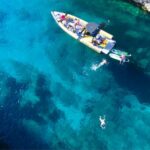
Swimming option: This is the most straightforward mentally. You’ll swim through open water to reach the entrance. One review describes it as a long swim, about two football fields. If you’re comfortable in open water, you’ll likely appreciate this route.
Jump option (about 4m): If you’re comfortable with heights, it’s a faster way to get in the water and continue toward the entrance. The guide controls the timing and flow, and you’ll still be swimming afterward.
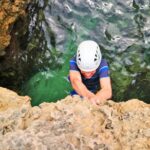
Rappel option (about 20m): This is the most technical. You’ll go down on rope, then swim toward the cave entrance. If you don’t like heights or ropes, tell your guide early so you can talk through what’s realistic for your comfort.
No matter which route you take, the tone is controlled. You’ll be moving as a group with instructions that keep you safe and keep the cave intact.




Inside the cave: crystal lakes, Jurassic formations, and quiet rules
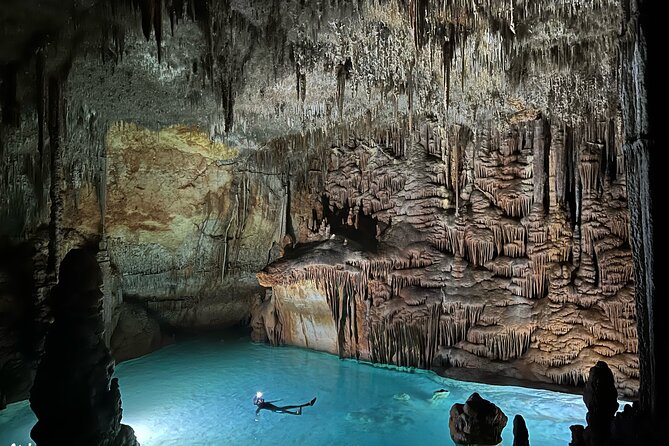
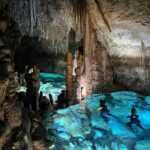
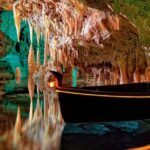
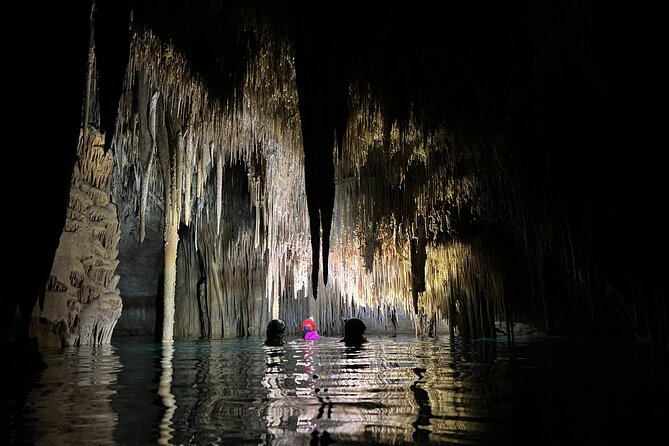
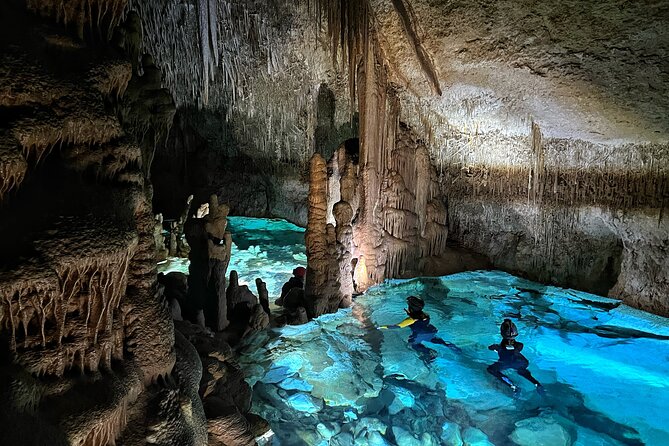
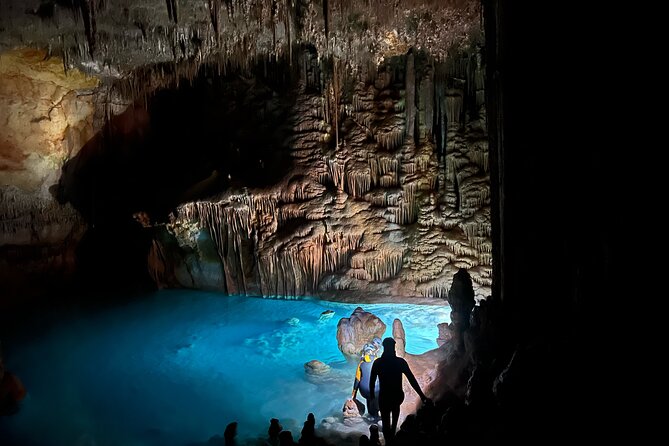
Once you’re inside, the atmosphere changes fast. The tour is designed to take you through the cave system in its entirety—different rooms, with many areas featuring lakes of crystal-clear water. You’ll see Jurassic-style stone formations both inside and outside the water, which is why the cave feels so cinematic.
Here’s the practical part: you’re not touring from the deck. You swim partly through some of the lakes, and you’ll likely spend time just watching what the cave walls and water do as light hits them. Lighting is provided, so you can actually see the forms instead of guessing in the dark.
And please take the rule about not raising your voice seriously. In a cave, sound carries, and the operator is clearly trying to protect both the experience and the environment. Think “quiet focus,” not “shouting over the cool view.”
Photo reality check: one person noted they couldn’t take pictures inside themselves. That doesn’t mean it’s impossible, but plan on prioritizing movement and safety over filming every moment.
Guides you’ll remember: Vanessa, Toni, Luis, and Antonio
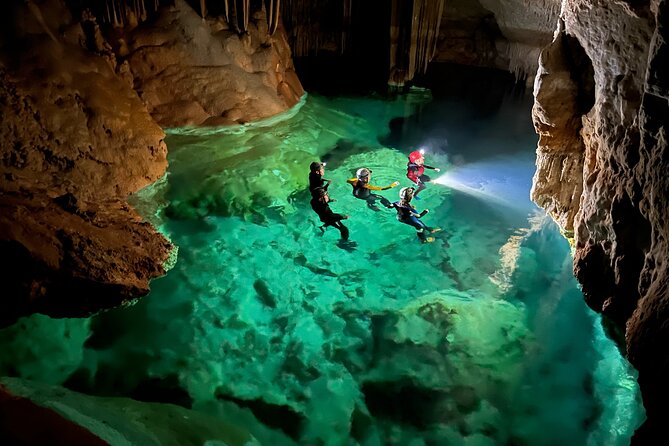
The caves are spectacular, but the guides are what make it feel respectful and doable. The best reviews highlight friendly, engaged leadership, with guides who clearly love the caves and also explain them.
Names show up repeatedly: Vanessa and Toni are mentioned for their passion and clear explanations. Other guides like Luis and Antonio also come up as competent and enthusiastic. What you should look for in any guide (and what you’ll likely experience here) is balance: they keep things fun while still enforcing the rules that protect the cave formations and keep the swim safe.
If you want an experience where you leave understanding what you saw—not just surviving the swim—this kind of guide attention is the main reason it gets a 5-star rating.
Duration and pacing: about 4 hours, but not rushed
The tour runs about 4 hours. That includes the hike to the beach, the swim to the entrance (or jump/rappel route), the time exploring inside, and the return back to the meeting point.
Because the day includes movement in and out of water, pacing matters. The best experiences feel unhurried once you’re in the cave. One review also notes the guide left plenty of time to admire the scenery and hear explanations, which is exactly what you want in a place this fragile.
What’s included (and what you still need): value math for $101.20
At $101.20 per person for about 4 hours, you’re paying for more than a “walk to caves.” You’re getting:
Included:
- long-sleeve wetsuit
- helmet
- lighting
- cavity footwear
- individual insurance
Not included:
- bottled water
- lunch
Also, you’re operating with a mobile ticket, and the tour is offered in English. Max group size is 12, which helps you feel guided rather than processed.
The value part: many cave experiences cost extra for gear and safety components. Here, those fundamentals are included, which makes the price feel more fair—especially if you don’t want to hunt down wetsuits, helmets, and proper footwear on your own.
The tradeoff is you’ll still need to handle your own hydration and food plan. If you’re doing this in the morning, bring whatever you normally eat beforehand, and plan for water after.
Who should book this aquatic caves tour—and who should think twice
This is for you if you want active sightseeing. You’ll hike, swim, and move through cave rooms with water and formations. If you’re comfortable in the ocean and like hands-on guidance, you’ll probably have one of the best adventure days of your Mallorca trip.
It’s also for you if you care about how the cave is treated. The rules are clear: no jumping into the lakes, no breaking formations, no shouting. You’re there to experience something delicate, not to treat it like a water park.
Think twice if you:
- dislike open water swims
- aren’t comfortable with heights or rope (if a rappel is used)
- get nervous when conditions are rough and the entry feels more intense
One review even points out that slightly rougher conditions can make it more adventurous. That doesn’t mean it’s unsafe—just that the day can be more demanding than the calm-surface photos.
Practical tips so you enjoy it more
The best advice is simple: listen hard at the start, move like your guide is already planning for you, and don’t try to “muscle through” the water.
A few practical reminders based on what the tour requires:
- Keep your voice down inside the cave.
- Don’t touch or hit formations—your body language matters here.
- Don’t plan on jumping into the lakes. That’s forbidden.
- If surf is strong, expect a more intense water entry and don’t fight the guide’s instructions.
Also, since you’ll be wearing a wetsuit and helmet, don’t overpack with extra stuff. You’ll have the backpack provided for your items, but the day is about staying streamlined.
Should you book this sea cave tour in Mallorca?
Book it if you want a real aquatic adventure with strong guide leadership, included gear, and a small-group feel. The combination of wetsuit + helmet + lighting + guided cave navigation is a lot for one half-day, and the caves themselves are the star.
Skip it (or ask more questions first) if swimming in open water is a problem for you, or if you’re not comfortable with the physical hike and water entry. This tour isn’t just a sightseeing ticket. It’s an active experience built around sea access.
FAQ
Where is the meeting point?
The meeting point is Carrer de les Petúnies, 5, 07680 Manacor, Illes Balears, Spain.
How long is the tour?
It’s about 4 hours.
What language is the tour offered in?
The tour is offered in English.
What gear is included?
You get a long-sleeve wetsuit, a helmet, lighting, and cavity footwear.
What does the tour include for safety?
The tour includes individual insurance.
What should I bring since bottled water and lunch are not included?
Bottled water and lunch are not included, so you’ll want to plan your own hydration and food.
What are the possible ways to reach the cave entrance?
Depending on sea conditions, you may swim, jump (about 4m) and swim, or rappel (about 20m) and then swim toward the entrance.
Are there rules inside the cave?
Yes. You’re asked not to raise your voice, not to jump into the lakes, not to break or hit formations, and not to urinate inside.
Is the group small?
Yes, the tour has a maximum of 12 travelers.