REVIEW · TENERIFE
Bonadea II Ecological Whale Watching, 2 hours
Book on Viator →Operated by Bonadea II - Diomedea · Bookable on Viator
Small-boat whale watching in Tenerife feels special. This ecological trip out of Costa Adeje focuses on dolphins and whales in the wild, within the protected waters of the Teno-Rasca ZEC.
I love the small group size (max 6), which makes the whole outing calmer and easier to enjoy. I also love the quiet, wildlife-first approach, including moments when the captain slows down or turns off the engine to reduce disturbance.
The main thing to consider is practical: the boat has a 130 kg weight limit, and like all wildlife trips it depends on good weather.
In This Review
- Key Highlights at a Glance
- Ecological Whale Watching from Costa Adeje, Tenerife
- Why the Teno-Rasca Protected Zone Makes This Tour Different
- Getting on Bonadea II: Group Size, Weight Limit, and Comfort
- The Two-Hour Flow: What You’ll Do on the Water
- Wildlife You Can Actually Hope to See (Not Just In Theory)
- The Quiet, Respectful Approach That Keeps the Focus on Animals
- Conservation in Action: Plastic Pickup on the Return
- How Much Does It Cost, and Is It Good Value?
- Who This Tour Fits Best (and Who Might Want Another Option)
- Booking Tips to Help It Go Smoothly
- Should You Book Bonadea II Ecological Whale Watching?
- FAQ
- How long is Bonadea II ecological whale watching?
- Where does the tour start?
- Is the tour in English?
- How many people are on the boat?
- Is there a weight limit?
- Do I get a mobile ticket?
- How soon will I receive confirmation after booking?
- Are service animals allowed?
- What happens if the weather is poor?
- Can I cancel for a full refund?
Key Highlights at a Glance
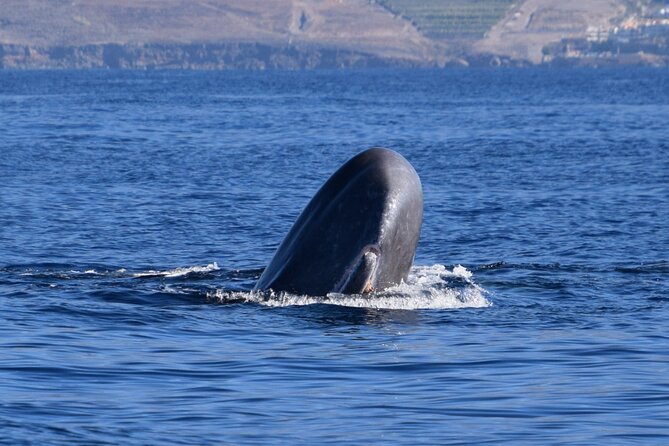
- Blue Boat certified operations in the Teno-Rasca Special Conservation Zone (ZEC)
- Max 6 passengers, so you get closer views without crowd energy
- Respectful wildlife handling, including quiet behavior around cetaceans
- Real conservation mindset, like picking up plastic debris during the outing
- Strong chance of pilot whales and dolphins, with turtles and seabirds possible
Ecological Whale Watching from Costa Adeje, Tenerife
If you picture big whale tours with lots of noise and lots of people, this is a very different vibe. Bonadea II runs ecological whale watching in the south of Tenerife, using a smaller boat and a protected marine area as its base.
The meeting point is Av. de Colón 4 in Costa Adeje (Santa Cruz de Tenerife). From there, the experience is built around time on the water—about 2 hours—with a focus on seeing cetaceans in their natural setting, not just ticking off a wildlife checklist.
The operator also frames the whole activity as part education and part protection. That matters because whale watching isn’t only about animals showing up. It’s about how a boat behaves when they do.
You can also read our reviews of more tours and experiences in Tenerife.
Why the Teno-Rasca Protected Zone Makes This Tour Different
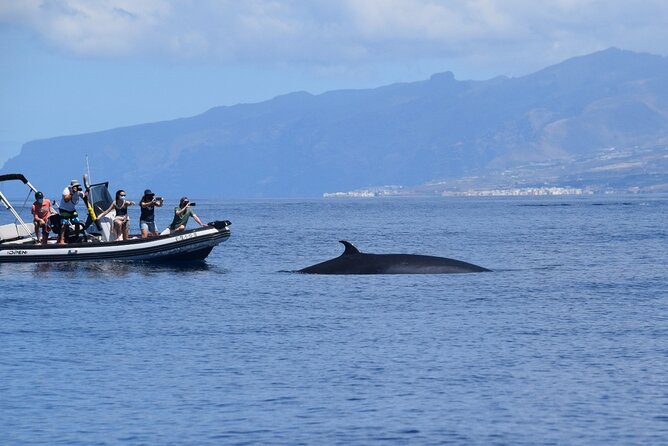
This trip isn’t just “wildlife spotting.” It operates in a designated conservation space: the Special Conservation Zone (ZEC) Teno-Rasca, integrated into the Natura 2000 network.
What that means for you is simple: you’re spending your time in waters that are managed with marine protection in mind, instead of cruising anywhere that looks convenient. The operator also notes that it holds the Blue Boat flag, an authorization tied to the Government of the Canary Islands tourism department and the Spanish Ministry of the Environment for whale watching activities.
In plain terms, you’re more likely to experience wildlife at a human pace. And when the goal is conservation, the captain’s decisions tend to reflect it.
Getting on Bonadea II: Group Size, Weight Limit, and Comfort
This tour caps at 6 travelers, and that limit shows up in how the experience feels. You’re not competing for sightlines against a boat full of people. You also get more room to stay focused on the animals and the captain’s guidance.
You should also know the boat has a weight restriction: passengers cannot be over 130 kilos due to the boat’s characteristics. If you’re close to that limit, it’s worth checking before you book so you don’t run into a problem at departure.
A few other practical notes from the tour details:
- Mobile ticket is used.
- English is offered.
- Service animals are allowed.
- It’s near public transportation, which helps if you’re not driving.
- Confirmation is received at booking.
One more small but meaningful detail: the captain is an experienced operator, with decades of time both navigating passengers and observing cetaceans. That experience matters because animal behavior can change fast, and the captain’s judgment is what keeps the tour smooth.
The Two-Hour Flow: What You’ll Do on the Water
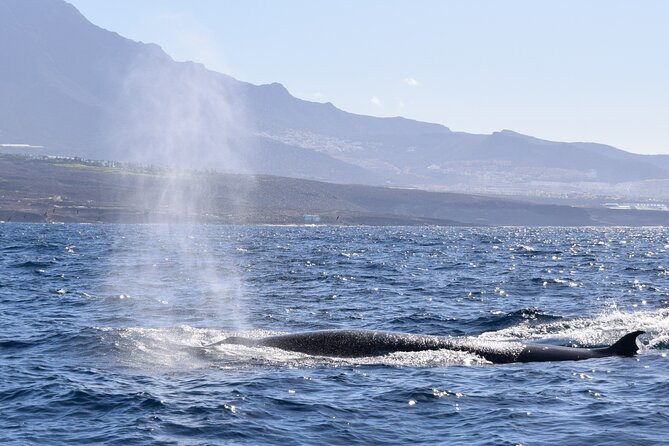
The outing is short enough to feel energetic, but long enough to give wildlife a real chance to show up. You’re out in the south of Tenerife and you may travel beyond the immediate coastline depending on conditions and where animals are found.
Here’s what the time at sea tends to look like:
- You start at the meeting point in Costa Adeje, then head out to the whale watching zone.
- During the cruise, the captain keeps searching in the protected area for cetaceans and pauses appropriately when sightings happen.
- The boat can repeat circuits in the conservation zone if animals are active, so you’re not just driving past a spot once.
- On the way back, the experience may include an extra conservation moment, like collecting floating debris.
One of the best parts is that the tour doesn’t feel rushed. With a 2-hour duration, the captain can spend more of that time responding to what’s in front of you, rather than racing through a long itinerary.
Wildlife You Can Actually Hope to See (Not Just In Theory)
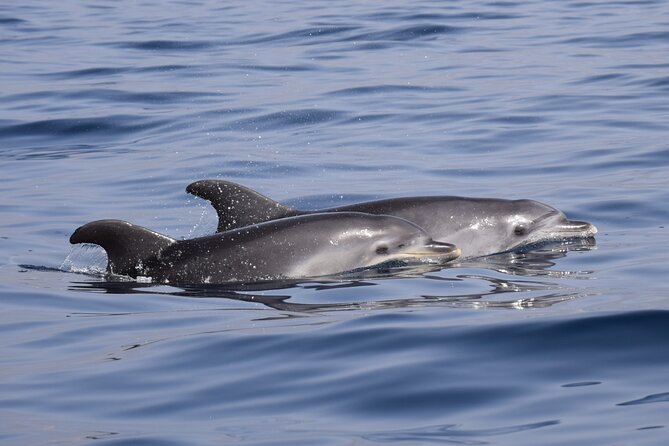
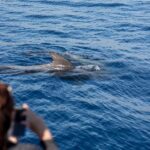
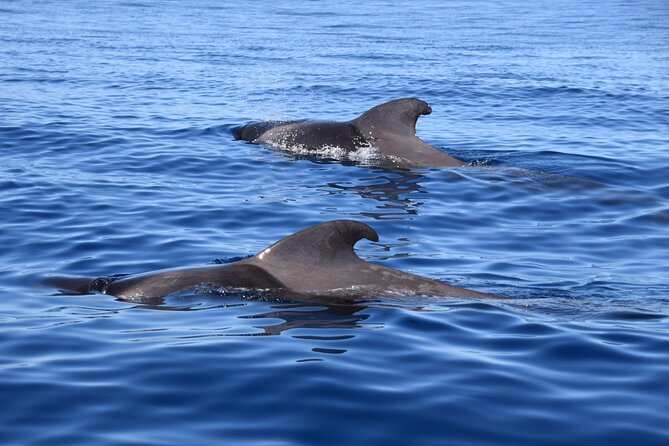
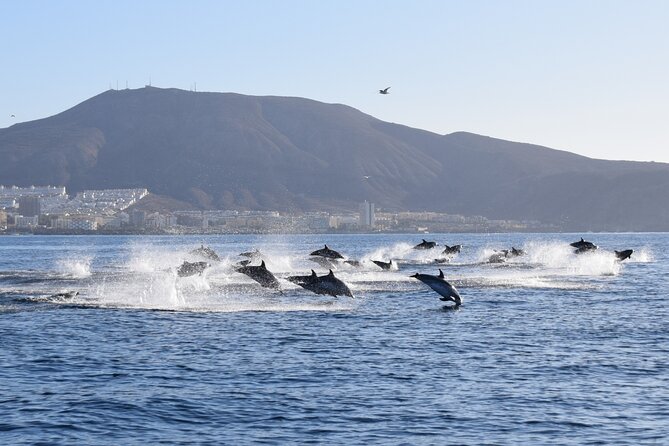
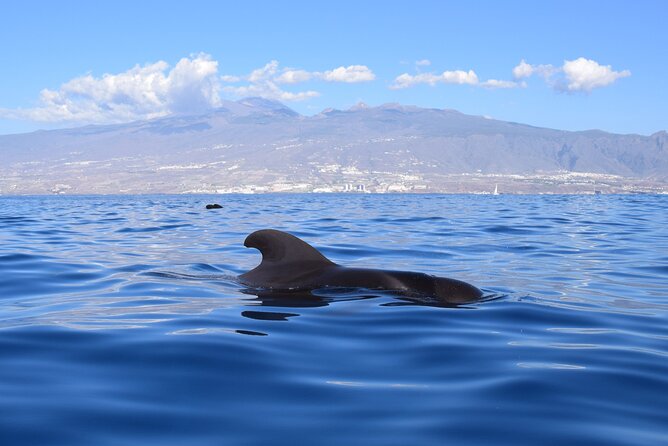
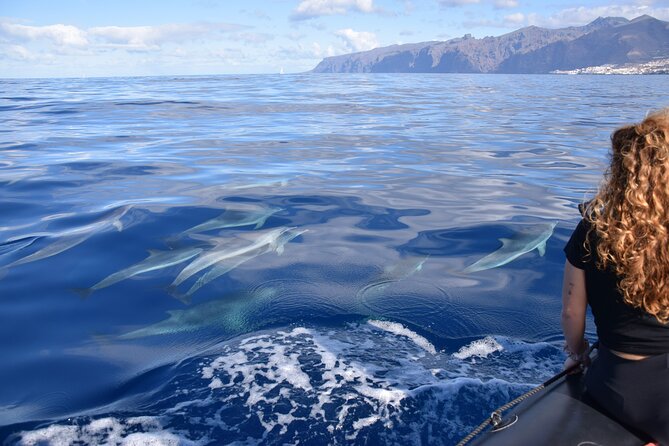
This is the kind of whale watching where you can get real variety in a short time. The most consistently mentioned sightings are pilot whales and dolphins, with turtles and seabirds also possible.
From the experience details and the animal mix people describe, here’s what you might see:
- Pilot whales (often in family groups, including mothers with young calves)
- Dolphins, including bottlenose dolphins
- Turtles, including a rare mention of a leatherback turtle
- Seabirds, such as Cory’s shearwater
- Sometimes, multiple species in the same session
A nice detail: on at least one outing, a late clue about whale activity led the captain to turn around and find a whole school. That’s a reminder that whale watching is reactive. When the captain is tracking responsibly and still willing to adjust quickly, your odds improve.
Also pay attention to behavior, not just location. When pilot whales come up to breathe or rest after feeding, the waiting is part of the show. The captain’s style is to let the animals control the moment, rather than forcing a chase.

The Quiet, Respectful Approach That Keeps the Focus on Animals
The tone on board is set by how the boat behaves around wildlife. A core theme here is respectful distance and minimal disturbance, and you feel it in how the captain positions the boat.
You can expect the captain to prioritize:
- Not chasing animals
- Keeping the approach calm
- Slowing down when you’re close
- In some moments, turning off the engine so the animals can approach without the constant noise of running power
People also describe moments where the dolphins seem to react to the presence in a playful way—then the captain gives them space and stays patient. That’s the key: even when you’re close enough for great viewing, the priority is still the same.
There’s also an awareness component. The operator stresses the importance of keeping the marine environment safe and points out that illegal boat behavior can affect animals, especially when boats enter protected zones with loud entertainment.
So you’re not just watching. You’re watching with context.
Conservation in Action: Plastic Pickup on the Return
A lot of eco tours say the right words. This one takes an observable step: on the way back, the captain may stop to collect floating plastic debris along the water.
That matters for two reasons:
- It turns “environmental responsibility” from a slogan into a visible action.
- It gives you an immediate connection to the problem, because you see how much trash floats where you’re hoping to see marine life.
The fact that the captain cares enough to do this during the trip also fits with the overall wildlife-first approach. It’s not only about getting close to whales; it’s about reducing the human mess in the same waters.
And if you like science-by-story (instead of lecturing), this kind of moment makes the whole experience feel grounded.
How Much Does It Cost, and Is It Good Value?
The price is $78.64 per person for about 2 hours on the Bonadea II whale watching boat. On paper, that’s not a bargain. But value depends on what you’re paying for.
Here’s what you’re getting that supports the price:
- A small group (max 6), which usually means more attention and less crowding than large-boat tours
- Operating in a protected conservation zone tied to official environmental authorization
- An experience guided by long-term experience in cetacean observation
- A captain who aims for wildlife-friendly behavior, not rapid aggressive pursuit
- Conservation-minded actions, like plastic pickup during the cruise
If you care about the ethical side of whale watching and you want a calmer experience with better chances for close, respectful sightings, this pricing starts to make more sense. You’re paying for responsible access, not just transportation.
And if you’re coming during a period when the sea is stable, the timing can feel especially worth it because the tour lasts long enough for meaningful viewing.
Who This Tour Fits Best (and Who Might Want Another Option)
This tour is a great match for:
- Families and people who want a low-crowd boat experience
- Couples who want a calmer outing with a good chance of real encounters
- Anyone who prefers wildlife-first rules over chasing behavior
You might reconsider if:
- You need a boat that can take passengers above the 130 kg weight limit
- You’re booking with no flexibility at all, since the experience requires good weather
Also remember that the boat can’t be a perfect wildlife guarantee. The operator can position and search responsibly, but nature decides what you’ll actually see.
Booking Tips to Help It Go Smoothly
A few practical things will help you enjoy the experience more, even before you step on board.
- Bring and keep your mobile ticket ready for check-in.
- Arrive at the Av. de Colón 4 meeting area in Costa Adeje with a little time buffer so you don’t feel rushed.
- If you’re sensitive to boat movement, plan accordingly. The tour lasts about 2 hours, and you’ll be out on open water enough to feel the sea.
- Know that the experience is weather dependent and uses a minimum traveler requirement. If conditions aren’t right, you may be offered a different date or a full refund.
If you want the best odds of a great encounter, pick the cleanest weather day you can manage, and give yourself enough flexibility to roll with schedule changes if needed.
Should You Book Bonadea II Ecological Whale Watching?
I think this is a strong pick if you want Tenerife whale watching with a clear conservation vibe and a small-boat feel. The combination of Blue Boat authorization, the Teno-Rasca protected zone, and a captain who prioritizes quiet, respectful behavior makes it feel less like a spectacle and more like responsible wildlife time.
The main reasons to book are straightforward:
- Max 6 passengers keeps it personal and calm
- The approach aims to protect marine life while still getting close enough for memorable viewing
- Conservation actions like plastic pickup show the operator means it
The main reasons to pause are also clear:
- The 130 kg weight limit is a deal-breaker for some people
- You’re relying on good weather for the trip to run
If you’re the kind of person who wants whales and dolphins without the noisy chaos, this is the sort of tour you’ll be happy you chose.
FAQ
How long is Bonadea II ecological whale watching?
It lasts about 2 hours.
Where does the tour start?
The meeting point is Av. de Colón, 4, 38660 Costa Adeje, Santa Cruz de Tenerife, Spain.
Is the tour in English?
Yes. English is offered.
How many people are on the boat?
The tour has a maximum of 6 travelers.
Is there a weight limit?
Yes. Due to the boat’s characteristics, passengers over 130 kilos cannot be carried.
Do I get a mobile ticket?
Yes. The tour uses a mobile ticket.
How soon will I receive confirmation after booking?
Confirmation is received at the time of booking.
Are service animals allowed?
Yes, service animals are allowed.
What happens if the weather is poor?
This experience requires good weather. If it’s canceled due to poor weather, you’ll be offered a different date or a full refund.
Can I cancel for a full refund?
Yes. You can cancel up to 24 hours in advance for a full refund. If you cancel less than 24 hours before the start time, the amount paid will not be refunded.