REVIEW · NANTUCKET
Beyond the Cobblestones Self Guided Walking Tour of Nantucket
Book on Viator →Operated by Drives & Detours · Bookable on Viator
Nantucket’s story feels easier on foot. This self-guided mobile walking tour turns a casual stroll into a clear route with narrated pauses, and I like how it threads 2 miles of mostly flat walking through the island’s working wharf life and famous landmarks. One thing to watch: the app may not behave perfectly on every phone, and it doesn’t account for live issues like street closures, so you’ll want to be flexible.
For $9.99 per person, it’s a low-cost way to add structure to a day. You get an app download and an easy-to-follow flow that starts at the Whaling Museum area and ends back where you began, with enough time (usually 2+ hours) for the audio and photo breaks. The main drawback is timing drift: when you pause for narration at each stop, the walk can stretch beyond the quick version in your head.
In This Review
- Key Things I’d Do Differently Next Time
- Entering Nantucket: how this $9.99 tour actually works
- Start at 13 Broad St and use the Whaling Museum as your anchor
- The Atheneum stop: a neat way to connect buildings to people
- Straight Wharf and Old South Wharf: the working heart you can walk through
- Straight Wharf (about 20 minutes)
- Old South Wharf (about 15 minutes)
- Petrel and “Compass Rose”: photo stops with real backstory
- Quaker Meeting House: a calmer pause with history in the walls
- Hadwen House and the other homes: where whaling success becomes a setting
- Hadwen House (20 minutes; admission not included)
- America’s first female astronomer
- Quaker sisters and the restored barn
- A whaling-ship owner and the Great Fire of 1846
- Tech and timing: the app experience you should plan for
- Price and value: where your $9.99 really goes
- Who this tour suits best (and who might want something else)
- Should you book Beyond the Cobblestones in Nantucket?
- FAQ
- Where does the Beyond the Cobblestones tour in Nantucket start?
- How long does the walking tour take?
- How much does the tour cost?
- What’s included in the tour price?
- Do I need a smartphone?
- Are there admission fees for any stops?
- Can I cancel for a full refund?
Key Things I’d Do Differently Next Time
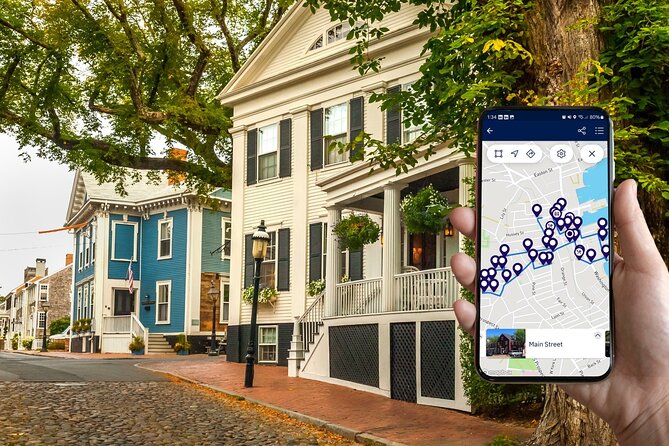
- Download before you go: Activate and download the tour ahead of time so you’re not stuck mid-walk.
- Bring comfy shoes and a plan B: The route is mostly flat, but you’ll still want good footwear because you’re outside for a while.
- Pair it with the Whaling Museum ticket: If you plan to go inside, buying ahead can line up bonus passes and free readmission.
- Give yourself extra time for audio: Expect pauses in front of attractions, not just quick passing.
- Watch for phone quirks and closures: The app may not update current conditions, and some devices have struggled.
Entering Nantucket: how this $9.99 tour actually works
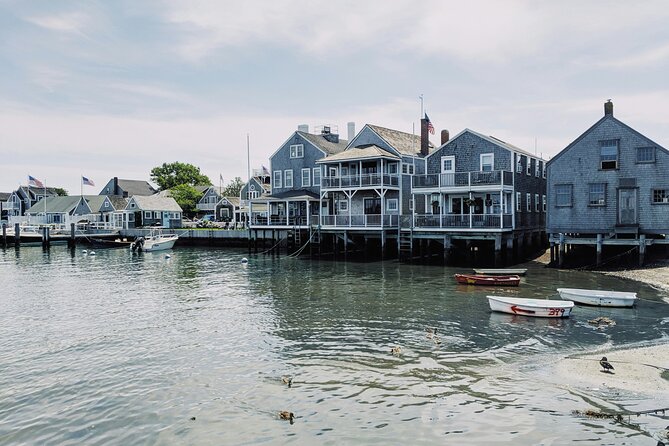
This is one of those experiences that sounds simple until you start it. You show up at 13 Broad St in Nantucket, near the Whaling Museum, then follow a pre-set walking route with audio that prompts you to stop, look, and listen. It’s self-guided, so you’re not waiting for a group. It’s also effectively your route, since it’s just your party doing it—no mixed crowd to slow you down or rush you along.
The value is in the pacing. Nantucket can be pretty easy to walk—until you realize you’re not sure what you’re looking at. This tour gives you a reason to slow down at the Wharves, historic markers, and notable buildings, without locking you into a long museum-style schedule.
The other value is cost. Ten bucks for a structured, audio-led walk is a bargain on a pricey island, especially when kids under 11 are free. If you’re doing a first trip, it can help you get bearings fast.
You can also read our reviews of more tours and experiences in Nantucket.



Start at 13 Broad St and use the Whaling Museum as your anchor
You begin at the meeting point: 13 Broad St, Nantucket. The tour starts in front of the Whaling Museum, with a short “hello” moment that encourages you to visit the museum at the end of the tour. I like this approach because the walk turns into a warm-up. You’ll see a bunch of whaling-related landmarks during the route, and then you can decide whether you want to go deeper inside the museum.
It also helps that the tour loops back to the meeting point. That means you don’t have to think through transport at the end, and you don’t end up feeling like you’ve been dragged across town.
Timing-wise, you should plan for 2+ hours in real life. It’s about a 2-mile walk and described as relatively flat, but the stops are built around listening. If you’re the type who enjoys reading plaques and taking photos, it can easily run long.
The Atheneum stop: a neat way to connect buildings to people
One of the first points of interest is the Nantucket Atheneum. You learn about it from outside and hear about well-known figures who have visited or spoken there over the years. This matters because Nantucket isn’t only about ships and harpoons. It’s also about ideas, culture, and the people who shaped island life.
Outside-a-building stops can be hit or miss on some tours, but this one uses the setting as a prompt. You’re not just staring at brick. You’re listening for context: who came here, what kind of voices were part of Nantucket’s story, and how institutions like the Atheneum helped connect the island to the wider world.
Practical tip: since this tour is audio-led, you’ll want to keep one hand free for your phone. Those early minutes are where you learn the rhythm of the experience.
Straight Wharf and Old South Wharf: the working heart you can walk through
Then you hit the island’s wharf life with two key stops.
Straight Wharf (about 20 minutes)
This is where the tour focuses on the commercial hub Nantucket once was. You get to wander through shops and restaurants while the audio explains why this area mattered. Even if you don’t plan to shop, the stop is useful because it gives you a “why” for what you’re seeing today.
The time allocation is generous. Twenty minutes gives you room to look around without rushing to the next location. Admission is free for this stop, so you’re not forced into spending time or money—just into noticing.





Old South Wharf (about 15 minutes)
Next comes a narrower gravel path and a chance to pop into a few art galleries. The audio ties this area to Nantucket’s texture—smaller lanes, different atmosphere, and a sense that the island’s creative side grew right alongside its maritime roots.
This part of the walk is also a nice change of pace. Instead of only big open waterfront views, you get a more intimate path feel and the chance to step into places that may be just off the main street.
If you’re short on time, these two wharves are the core “I get Nantucket now” section—especially if you’re visiting on a day with good weather.
Petrel and “Compass Rose”: photo stops with real backstory
You’ll get a break from the constant walking rhythm with two specific landmark moments.
First, there’s a historic marker memorializing The Petrel, a Nantucket steamship dating from the late nineteenth and early twentieth centuries. I like markers like this because they take you from general whaling-era talk into something more concrete. You’re not guessing which ship is being referenced—you’re learning what’s on the ground in front of you.
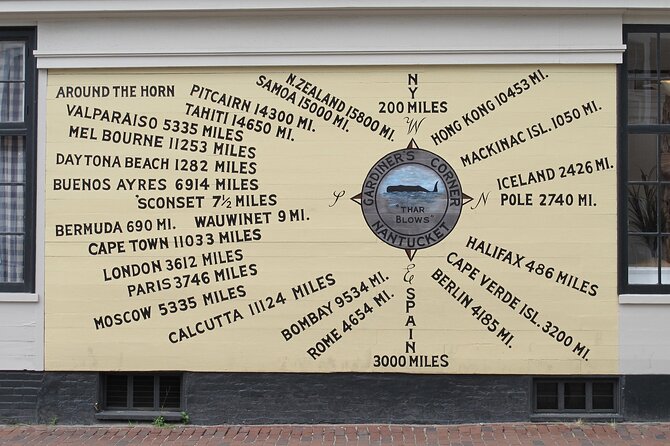
Then you’ll be prompted to snap a photo of the Compass Rose on the side of the Ralph Lauren building and learn about the photographer who commissioned it in 1936. This is the kind of stop that makes a tour feel less like a checklist and more like a treasure hunt for details you’d otherwise walk right past.
If you’re the “take pictures but don’t know why” type, these two stops will fix that.
Quaker Meeting House: a calmer pause with history in the walls
Next up is the Quaker Meeting House. You view it as you hear about its history on the island.
I always appreciate meeting houses on walking tours because they change the mood. The wharves and commercial areas are outward-looking. A meeting house stop shifts you inward—toward community life, values, and the island’s social structure. You don’t need to buy a ticket to get something out of it, since this part is built around looking and listening.
If your day in Nantucket is packed, this can act like a mental reset before the tour heads into more specific home and museum-related stops.
Hadwen House and the other homes: where whaling success becomes a setting

Now the tour turns toward residential history, which is where Nantucket’s story starts to feel personal.
Hadwen House (20 minutes; admission not included)
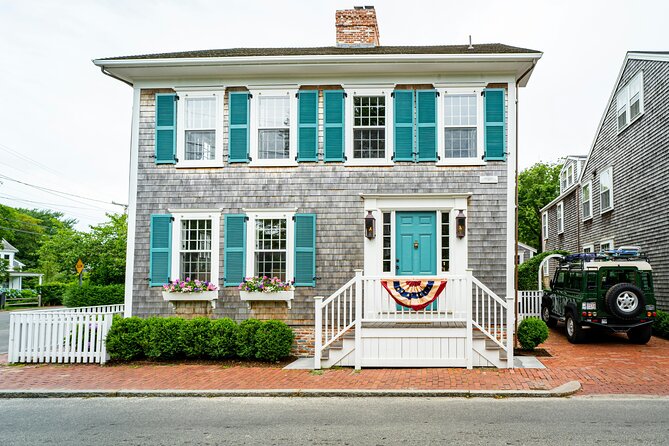
You view Hadwen House, built in 1846 by William Hadwen. It’s described as a prime example of island whaling success. This is also the one spot where the tour notes that admission is $10 per person—and it’s not included in the cost of the walking tour.
That said, there’s a valuable connection if you plan your day around the Whaling Museum. The information you’re given indicates that Hadwen House admission can be included if you purchase admission to the Whaling Museum.
So here’s the decision point for you: if you’re going to do the Whaling Museum anyway, you can likely reduce extra ticket friction. If you’re not planning museum time, you’ll still get value from the view and audio, but you might choose not to go inside at Hadwen House to keep your schedule light.
America’s first female astronomer
Then you learn about America’s first female astronomer as you view her historic home. You’re not going inside here based on the info provided; it’s a perspective stop. Still, it’s a reminder that Nantucket’s identity isn’t only ships and sea life. Science and education show up in the story too.
Quaker sisters and the restored barn
Next, you learn about two Quaker sisters who restored an old barn into a quirky mix of art and architecture as you view it from outside. Even without entering, this kind of stop can be satisfying because it teaches you how transformation happened—how old island structures got new purpose.
Quirky is the right word here, based on how it’s described. It suggests you’ll likely enjoy looking at the building details even if you can’t go in.
A whaling-ship owner and the Great Fire of 1846
Finally, you learn about a prosperous whaling-ship owner who built a house for his family in 1845, and how it survived the Great Fire of 1846. This is a heavy event, but it’s made practical through architecture. You’re looking at something that endured when a lot didn’t, and the audio connects the physical space to the island’s survival story.
This ending stretch is a good time to slow down. By the time you reach these homes, the tour has already trained your eyes to notice scale, materials, and what “success” looks like when it shows up in real buildings.
Tech and timing: the app experience you should plan for
This tour lives and dies by your phone.
You get a mobile ticket and an app download (with flexible usage and unlimited access). Confirmation is received at booking time, and the tour is offered in English. Opening hours run from early morning to late evening (5:00 AM to 10:00 PM), so you’re not trapped into one tiny window.
But here’s the realistic part: the app didn’t work for at least one Samsung user, and customer service couldn’t fix it during the trip. They did issue a refund. That tells me two things for you: download and test early, and don’t treat the phone as guaranteed.
Also, the app doesn’t update current conditions like street closures. If you hit a blocked path, you’ll need to make a quick decision to route yourself and get back to the next stop. It’s not a deal-breaker, but it does mean you should:
- check streets before you start if you can
- keep your stamina for a little rerouting
- allow extra time so one detour doesn’t ruin the whole day
One more tip: plan to carry a phone charger or a battery pack. Being outside, using GPS, and listening to audio drains power.
Price and value: where your $9.99 really goes
Let’s talk money. $9.99 per person is low for an audio-led experience on Nantucket. The inclusion list is straightforward: the app & tour download and flexible usage with unlimited access.
So what are you paying for?
- structure (so you’re not guessing what to see)
- narration that tells you what you’re looking at
- a route that stitches together wharves, markers, meeting-house context, and historic homes
The main cost add-on is Hadwen House admission ($10 per person) and possibly any museum tickets you choose to buy separately. Since the Whaling Museum is right there at the start, many people will naturally combine.
One of the strongest value tips is this: if you’re considering the Whaling Museum, buy your admission ticket ahead of the tour. The pass is described as good all day with free readmission, and it includes free passes to some sites on the walking tour and other historical sites not included in the walking route.
That can turn a walking tour into a day ticket strategy. If you like the idea of maximizing ticket benefits and cutting down on extra spending, this pairing is smart.
Who this tour suits best (and who might want something else)
This is a great fit if you:
- want self-paced sightseeing with clear stops
- like audio narration and short pauses rather than long museum time
- enjoy learning why places matter while you walk
- are comfortable using a phone for navigation
It’s also a good choice for families, given that children under 11 are free.
It may not be ideal if:
- you’ve had app/GPS issues on past trips
- you’re expecting real-time rerouting around closures
- you want a strictly short walk with minimal listening time
If you like to keep your day tight, set expectations now. The tour includes audio pauses and can run longer than 2 hours.
Should you book Beyond the Cobblestones in Nantucket?
I’d book it if you want an easy way to turn “we’re walking around” into “we’re understanding the island as we go.” For ten bucks, it gives you a workable storyline: wharves to landmarks, then meeting-house and home context that rounds out Nantucket beyond the waterfront.
Before you buy, do two things:
- Plan to download and test the tour on your phone ahead of time.
- If the Whaling Museum is on your list, treat your museum ticket as part of the plan, since it may connect to free passes and free readmission.
If your phone behaves and you give yourself a little extra time for narration, you’ll likely come away with a clearer sense of Nantucket’s whaling-era industry, its community institutions, and the buildings that still carry those stories today.
FAQ
Where does the Beyond the Cobblestones tour in Nantucket start?
It starts at 13 Broad St, Nantucket, MA 02554, USA, in front of the Whaling Museum area.
How long does the walking tour take?
It usually takes about 2 to 3 hours, and it can take 2+ hours in real life because the route includes pauses for audio at each attraction.
How much does the tour cost?
The price is $9.99 per person.
What’s included in the tour price?
Included: the app & tour download, and flexible usage with unlimited access. You also get a mobile ticket. Admission tickets to specific places are not all included.
Do I need a smartphone?
Yes. You’ll use your own smartphone, and the smartphone is not included.
Are there admission fees for any stops?
Hadwen House requires admission ($10 per person) and is not included in the walking tour. Other stops listed on the route indicate free admission.
Can I cancel for a full refund?
Yes. Free cancellation is offered, and you can cancel up to 24 hours in advance for a full refund.