REVIEW · SICILY
Archaeological excursion to the Rocca della Falconiera in Ustica
Book on Viator →Operated by Escursioni Ciprea Ustica · Bookable on Viator
Roman tombs and island exile, in one climb. This 2-hour archaeological outing on Rocca della Falconiera ties together Roman hypogea and necropolis life with the island’s 1920s–1960s confino story, plus a top-of-the-hill panorama that makes the whole island feel reachable. The real win is the guide style from Escursioni Ciprea Ustica, often with Vittorio (and sometimes Irene), who makes dense history clear, fast, and even lightly funny.
I’d treat this as a “learn while walking” tour, not a museum sit-down. The only drawback: it depends on good weather, and you’ll be climbing on uneven ground at an early evening start—so pack for a real stroll, not a postcard walk.
You meet at Via Dottore Mario Randaccio, 11, Ustica at 6:00 pm, get an entry component to the archaeological area, and return to the same meeting point. Masks are included, and mobile tickets are used; bottled water is not.
In This Review
- Key things you’ll notice on this Rocca della Falconiera tour
- Rocca della Falconiera: the Roman necropolis setting you can actually feel
- Confino years and political names: why Ustica’s 20th-century story belongs here
- The last visible volcano: geology you can understand without math
- Walking route on Via Calvario and the hilltop panorama plan
- Guide energy at Ciprea Ustica: story-telling that keeps pace with real walking
- Price and value: what $20.90 buys you in real terms
- Logistics that affect comfort: timing, meeting point, and group size
- Who should book this tour, and who should skip it
- Should you book the archaeological excursion to Rocca della Falconiera?
- FAQ
- FAQ
- How long is the Rocca della Falconiera archaeological excursion?
- What time does the tour start?
- Where do I meet for the tour?
- Is pickup available?
- What is the price per person?
- What’s included in the ticket?
- Is bottled water included?
- What should I wear?
- Is the tour dependent on weather?
- Is it suitable for most travelers?
Key things you’ll notice on this Rocca della Falconiera tour
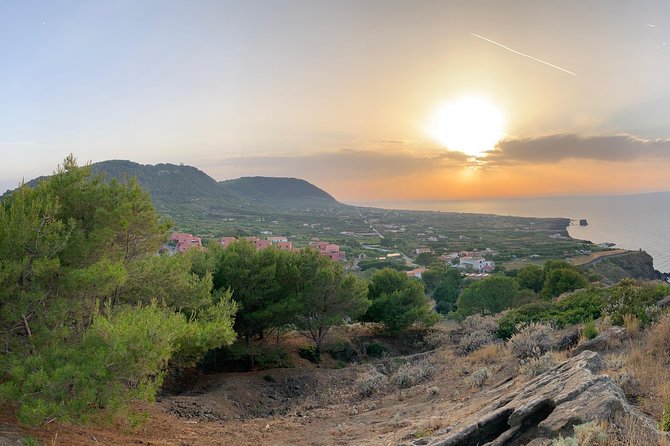
- Roman hypogea + necropolis focus: You’re not just seeing ruins, you’re hearing how people understood death.
- Confino era context in plain words: The tour connects Ustica’s confined history to names like Antonio Gramsci, Amedeo Bordiga, and Nello Rosselli.
- A volcano still visible on the island: You’ll get an explanation of the last volcano you can still see from here.
- Via Calvario walking and a hilltop climb: Expect a route with movement, then a sweeping island view at the end.
- Ciprea Ustica’s energetic guiding: Guides like Vittorio are known for lively storytelling, humor, and sharp pacing.
- Small-group feel within a bigger max size: Up to 75 people, but the structure is built around walking, talking, and stopping.
Rocca della Falconiera: the Roman necropolis setting you can actually feel
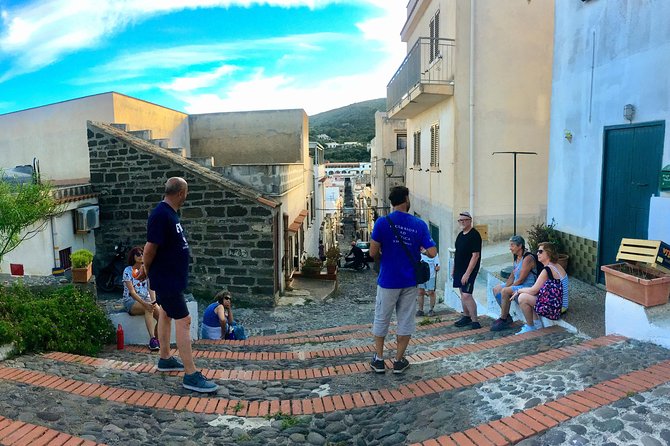
Ustica is small, but the archaeology is not small. The heart of this tour is the Rocca della Falconiera area, where you’ll enter spaces tied to Roman-era life after death. The tour specifically spotlights the Roman hypogea and the necropolis that sits here, and that matters because it shifts the experience from scenery to meaning.
Here’s what I like about the approach: the guide doesn’t treat tombs as random stone rooms. You’ll hear how ancient people understood the sacredness of death, and that changes how you look at the site. Instead of thinking, what am I supposed to see?, you start asking, why would they build it like this, and what did it mean to the community?
Also, because you’re outdoors and moving between points, it feels less like an indoor lecture and more like reading a timeline across the island. The archaeological part isn’t only technical; it’s tied to atmosphere—how the place is positioned and how the view frames the story.
Practical takeaway: if you like archaeology that explains the human side—ritual, belief, community—this stop is your main payoff.
You can also read our reviews of more tours and experiences in Sicily.

Confino years and political names: why Ustica’s 20th-century story belongs here
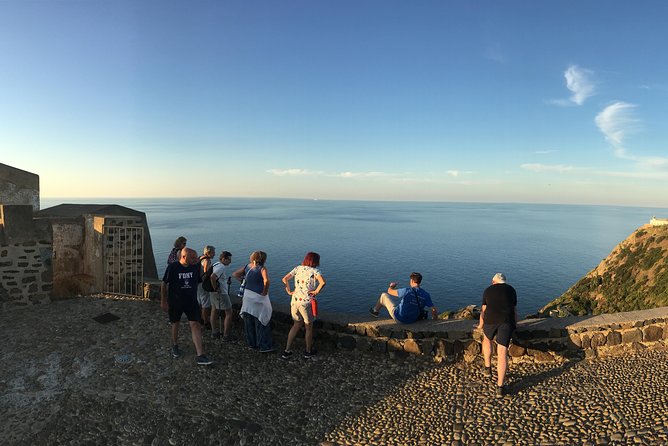
The Rocca area is more than Roman tombs. On this route, the guide brings in Ustica’s confined history, from the 1920s through the 1960s, and connects it to major historical personalities: Antonio Gramsci, Amedeo Bordiga, and Nello Rosselli.
That might sound like a hard pivot—from ancient death to modern exile—but the tour makes it fit by linking both eras through the island’s role as a kind of boundary space. You’ll also hear about the two wars, framed in a way that gives the setting. It’s not just name-dropping. The point is to help you understand why Ustica ended up holding such heavy chapters of European history.
If you’re the type who gets bored when history becomes a list of dates, you’ll probably appreciate the delivery style described for Ciprea Ustica guides: lively, story-forward, and designed to make connections stick. The best moments are when the guide ties the political era to the island’s geography and daily reality—why it mattered that these people were sent somewhere remote, and how the island shaped their experience.
One note to keep expectations realistic: this isn’t a deep academic seminar. It’s a 2-hour guided synthesis. If you want every detail in writing, consider pairing it with longer reading time on your own after.
The last visible volcano: geology you can understand without math
Ustica is volcanic, and this tour includes a key geology lesson: you’ll get an explanation of the only volcano on the island that is still visible from here. That’s a practical kind of knowledge, because it helps you connect what you’re seeing—rock, elevation, the way the island rises—with the island’s origin story.
What makes this useful on a walking tour is timing. You don’t learn geology as abstract theory. You hear it while you’re on the actual ground that shaped the island. And because the guide also covers the confined history and the Roman necropolis, geology becomes the common thread: the island’s physical form helped determine how it was used, perceived, and inhabited across centuries.
If you’re someone who usually skips geology talks, try not to. Even a short volcano explanation can change your understanding of Ustica from sea-and-sun into a place with a long, physical past.
Walking route on Via Calvario and the hilltop panorama plan
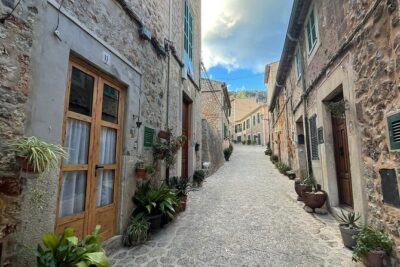
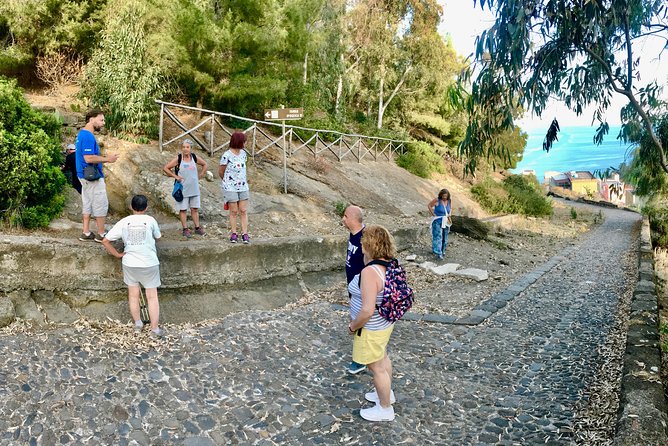
The experience is built around movement, starting with walking along Via Calvario. This is where the tour earns its “worth doing” rating. You’re not only standing at one viewpoint; you’re traveling through the island’s layers while the guide talks.
From there, the tour includes time at the Rocca area with an admission ticket included, and you’ll be able to enter the archaeological spaces connected to the Roman hypogea and the necropolis. In other words, you get more than a look from outside.
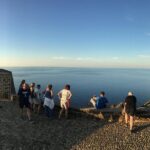
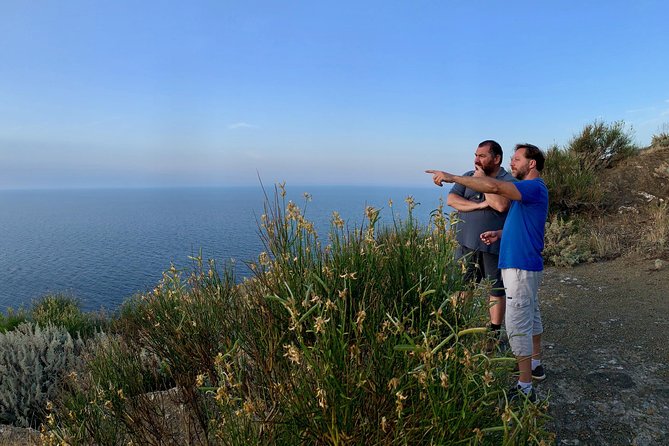
Then comes the part many people remember most: climbing to the top of the hill for the panorama. Even if you don’t consider yourself a “views person,” this is a smart ending. It ties together everything you just heard:
- Roman burial spaces become part of a bigger setting.
- The confino story feels less like a textbook topic and more like something that happened in a place with a horizon and distance.
- The volcanic origin becomes visible in how the island rises.
My advice: treat the climb as part of the tour, not a bonus. Wear shoes with grip, and if you’re traveling with anyone who gets slow on stairs, plan to take it at an easy pace.
Guide energy at Ciprea Ustica: story-telling that keeps pace with real walking
The guides behind Escursioni Ciprea Ustica are a big part of why this works. The descriptions tied to the experience repeatedly emphasize engaging passion and lively storytelling. Vittorio, in particular, comes up often: guides with that kind of presence tend to do two things well.
First, they make big themes manageable. You’ll move through Roman death rituals, 20th-century confinement history, and volcanic context inside a short time window. Second, they keep it human. The history isn’t delivered as a dry checklist. It’s delivered as a connected story you can carry home.
You might also encounter Irene as part of the guiding team, and that matters because it suggests the guiding quality isn’t dependent on one single person. If you’re picky about tours where the guide is either asleep at the wheel or reads from a phone, this is the opposite of that.
If your travel style is “give me the why behind what I see,” you’ll likely enjoy this one.



Price and value: what $20.90 buys you in real terms
At $20.90 per person for about 2 hours, this tour is priced like a local-guided experience rather than a long, multi-stop excursion. The value comes from what’s included:
- Admission ticket included for the time at the Rocca area (listed as about 15 minutes)
- Masks included
- Mobile ticket use
- A guided structure that combines multiple themes: Roman archaeology, confino history, and volcano explanation
What you should think about is what you’re paying for: not just access to a site, but interpretation plus a viewpoint payoff. Many “cheap” tours cut corners with a rushed overview and no context. This one is built around talking while walking, plus entry into the archaeological area.
What’s not included is bottled water. That’s a small miss, but it’s easy to fix: bring a bottle or plan to buy water before you start. Since you’ll be out for 2 hours on an island that’s known for sun and breezes, you’ll be glad you did.
Logistics that affect comfort: timing, meeting point, and group size
This activity starts at 6:00 pm and ends back at the meeting point. You’ll start at Via Dottore Mario Randaccio, 11, 90051 Ustica PA. Pickup is offered, which can be helpful on a small island where you might not want to do extra walking just to begin the tour.
Group size has a cap of 75. That’s not “private tour” small, but it’s also not so large that you’re likely to lose your place during the walk. The tour is designed for movement, so the pacing usually works better than a sit-down lecture with dozens of people.
Weather matters. The tour notes it requires good weather, and if it’s canceled due to poor weather you’re offered a different date or a full refund. So if you’re visiting Ustica for only a short window, this is a good one to book earlier than later.
Who should book this tour, and who should skip it
This fits best if you want:
- A guided walk with real entry into an archaeological site
- History that connects Roman-era necropolis life to Ustica’s 20th-century confined story
- A volcano explanation tied to where you’re standing
- A hilltop panorama at the end, without needing to plan it yourself
It may be less ideal if:
- You struggle with climbing or uneven ground
- You only want long periods of sitting
- You’re traveling when weather is uncertain and you can’t flex your schedule
Most travelers can participate, but “can” isn’t the same as “comfortable.” If comfort is your priority, wear the best shoes you packed.
Should you book the archaeological excursion to Rocca della Falconiera?
I’d book it if you care about meaning, not just photos. This tour combines three strong threads—Roman hypogea, the confino era with names like Antonio Gramsci and Amedeo Bordiga, and a volcano you can still see—then ends with a view that makes Ustica feel like one connected place.
Skip it only if you’re not up for a guided climb at dusk, or if you dislike weather-dependent plans. Otherwise, for $20.90 you’re getting entry, interpretation, and a finish that helps the whole island click.
FAQ
FAQ
How long is the Rocca della Falconiera archaeological excursion?
The tour lasts about 2 hours.
What time does the tour start?
The start time is 6:00 pm.
Where do I meet for the tour?
You meet at Via Dottore Mario Randaccio, 11, 90051 Ustica PA, Italy. The tour ends back at the meeting point.
Is pickup available?
Pickup is offered.
What is the price per person?
The price is $20.90 per person.
What’s included in the ticket?
Masks are included, and an admission ticket for the Rocca della Falconiera area is included.
Is bottled water included?
No. Bottled water is not included.
What should I wear?
Wear comfortable clothes and shoes, since the tour involves walking and climbing.
Is the tour dependent on weather?
Yes. The experience requires good weather. If it’s canceled due to poor weather, you’ll be offered a different date or a full refund.
Is it suitable for most travelers?
Most travelers can participate, and service animals are allowed.