REVIEW · SICILY
Typical Sicilian Cooking Course overlooking the Archaeological Park
Book on Viator →Operated by Maria Rita · Bookable on Viator
Fresh pasta, warm light, and ancient Syracuse in view. This private Sicilian cooking course in Siracusa puts you at a real home-table while you learn classic techniques. What I like most is the chance to make handmade pasta and sauces yourself, then eat the results with included wine, coffee, and tea.
The only thing to consider is the “kitchen at home” vibe: you’re cooking in a private apartment setting, not a big public studio. If you’re expecting lots of space, wheel-around-the-room theatrics, or hotel-style comfort, this will feel more intimate—and that’s usually the point.
In This Review
- Key highlights
- A Siracusa Cooking Class Overlooking the Archaeological Park
- The Menu: Busiate Pesto, Pizza-Style Mains, and Pastry Choices
- Pasta Shaping and Sauce Secrets You’ll Actually Use Later
- Your Table View: Eating Over the Archaeological Area
- Dietary Needs: Vegan, Vegetarian, and Celiac-Friendly Planning
- Timing, Meeting Point, and How to Pair It With Neapolis
- Price and Value: What $120.02 Gets You in Real Cooking Time
- Who This Sicilian Cooking Course Suits Best
- Should You Book This Siracusa Cooking Course?
- FAQ
- How long is the Sicilian cooking course in Siracusa?
- Is this a private experience?
- What language is the class offered in?
- What’s included with the meal?
- Can the menu be adapted for dietary restrictions?
- Can I cancel for a refund?
Key highlights
- Private class in a Sicilian home (not a crowd, not a show)
- Fresh pasta skills plus classic Busiate-style shapes and sauce know-how
- Menu options for vegans, vegetarians, and celiacs, planned together after booking
- Drinks included (still/sparkling water, wine for those 18+, plus coffee or tea)
- Balcony views over the archaeological area, making the meal feel like part of the experience
A Siracusa Cooking Class Overlooking the Archaeological Park
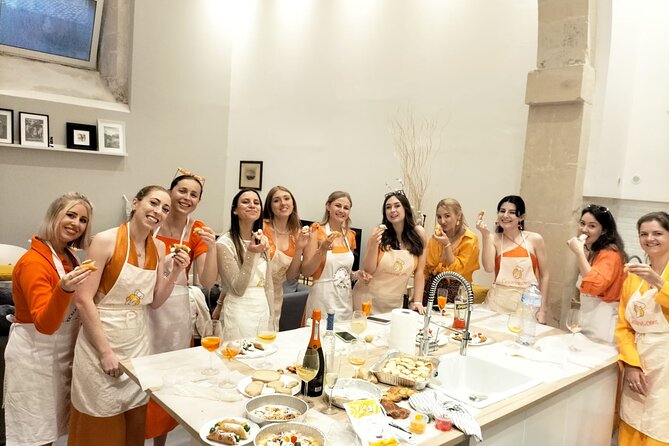
This is the kind of tour that makes Siracusa feel close up. You start with the practical stuff—show up at Via Costanza Bruno, 10, meet your host, get your bearings—and then the day turns into real cooking work. No rushing. No lecturing from behind a glass counter. You’re hands-on, learning how Sicilian food is built: dough, chopping, sauce, patience, then a table that actually looks out on the ancient city.
The “overlooking the archaeological park” part matters more than you might think. You’re not just eating dinner, you’re watching the city’s layers while you cook and plate. One of the best moments is when the meal comes together and the view shifts from background scenery to something you naturally pause for. It makes the whole class feel like a small ritual instead of a checklist.
And yes, it’s private. That means you can ask questions without waiting for a mic and competing for attention. In the best cases, it stays calm and cozy, with enough time for personal feedback while you shape pasta or adjust seasoning.
One more small plus: the class runs several time blocks during the week, so you can usually match it to a day of exploring Siracusa at a comfortable pace.
You can also read our reviews of more tours and experiences in Sicily.


The Menu: Busiate Pesto, Pizza-Style Mains, and Pastry Choices
The menu is flexible, but it’s rooted in classic Sicilian building blocks. After booking, Maria Rita contacts you to decide what you’ll cook together. That matters because you can steer toward what you actually want to eat—rather than doing a fixed lineup that might not fit your tastes or dietary needs.
Here’s what you should expect from a typical selection:
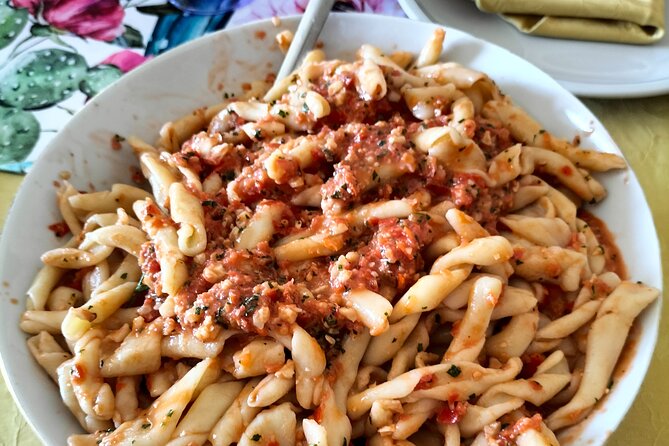
Busiate with Trapanese pesto
Busiate is the star in the sample menu. It’s made from durum wheat semolina and shaped into a pasta that holds onto sauce. The pesto direction is classic Sicilian-flavored: garlic, basil, tomato, parmesan, and other key ingredients Maria Rita uses to get the taste right.
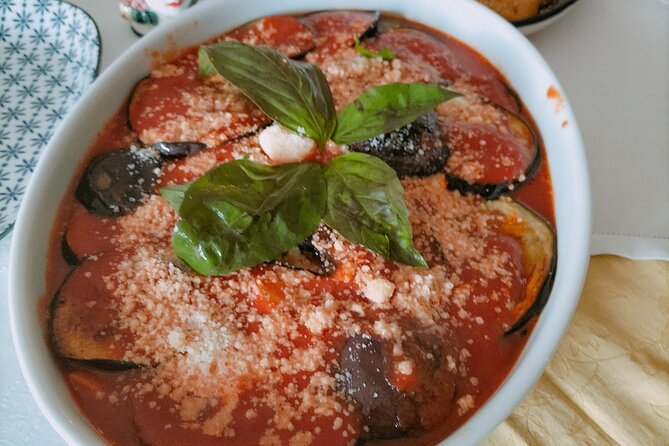
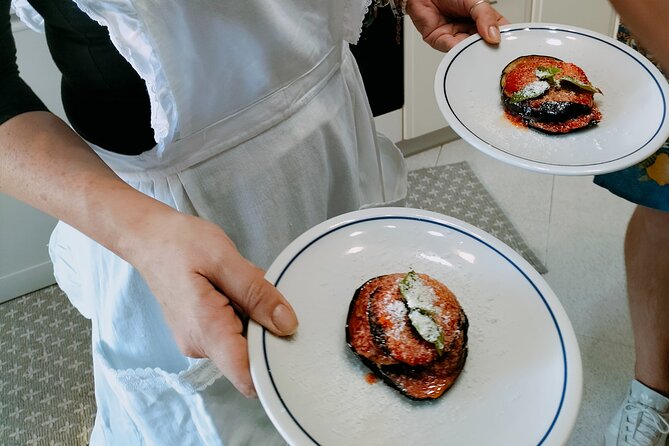
Starter options often include bruschetta or parmigiana
Think of these as the “you’ll understand the flavor logic” course—simple ingredients treated with care, so you taste how each component supports the next one.
Desserts rotate among cannolo, tiramisu, or almond biscuits
Sicilian desserts tend to be both comforting and a little dramatic. Even when the ingredients are straightforward, the texture is what makes people remember it.
Second main options may include Typical Siracusana pizza
This isn’t just pizza as a generic concept. It’s tied to local style, and the class framing helps you learn what makes it distinct.
Depending on the menu you choose, you might also see other Sicilian classics show up—like caponata (peppers and onions worked into a rich sauce) or meat-and-cheese staples—because the class is designed to adapt to your group.
If you want a smooth experience: pick a menu theme when Maria Rita reaches out. If you love pasta, go pasta-heavy. If you’re more dessert-minded, lean into cannolo or almond biscuits. The point is you get to bring Sicily into your own cooking routine, not just taste it once.
Pasta Shaping and Sauce Secrets You’ll Actually Use Later
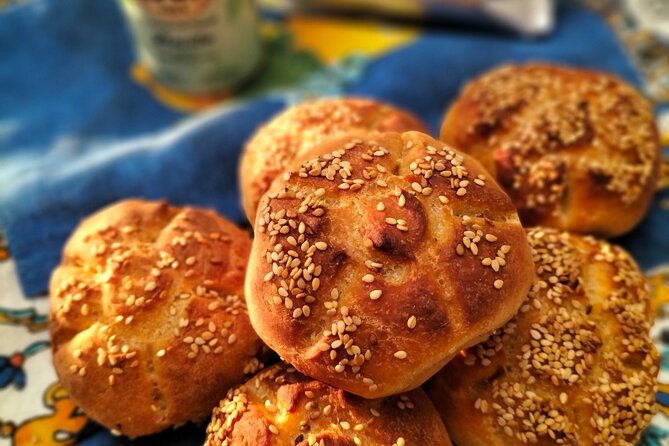
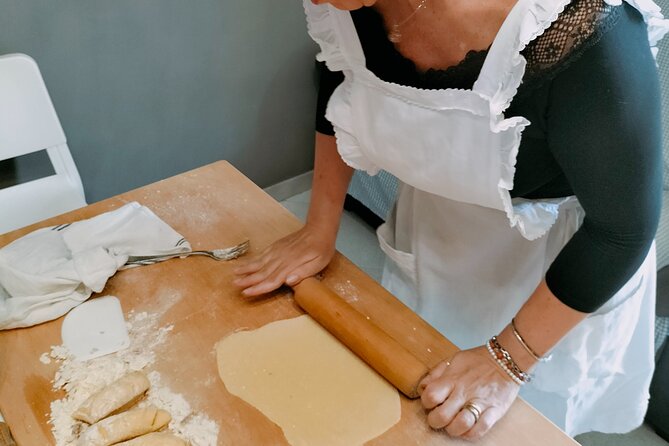
The heart of this experience is learning how the dishes come together. You’re not memorizing recipes written in a travel brochure. You’re building the same food the Sicilians build—step by step—so the techniques transfer to your kitchen later.
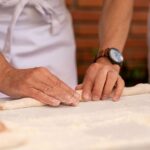
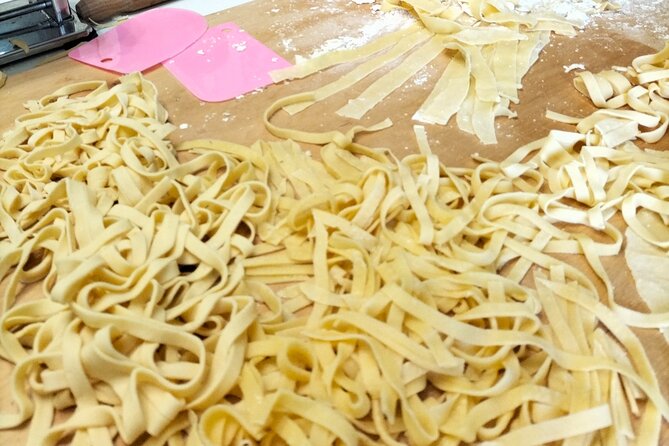
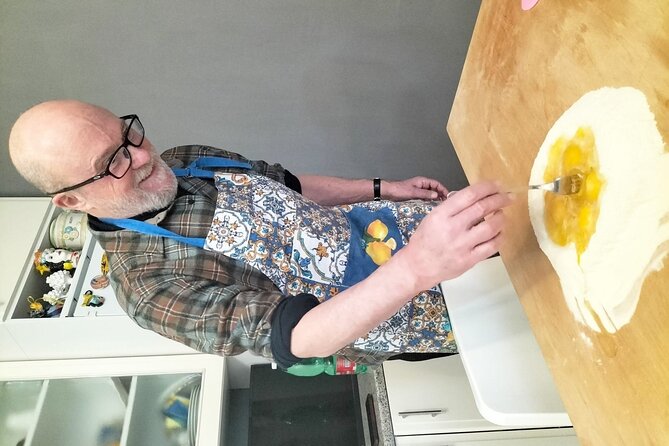
In the pasta portion, the focus is on making dough from scratch and then shaping it. One of the most useful parts is learning the mechanics of dough and handling—what the dough should feel like, how to work it without tearing, and how to manage the timing so everything finishes together. In previous classes, people have worked on pasta in multiple shapes, which is great because it shows you that pasta is flexible, not one rigid form.
Then you move into the sauce world. With pesto, you’re working with the base flavors that define Sicilian taste: garlic, basil, tomato, parmesan. You’ll learn how to balance the elements so it doesn’t turn into just “green sauce with cheese.” You also learn how pasta and sauce meet—how long the sauce needs, how it clings, and how to season so it tastes right on the plate.
If your menu includes caponata or other vegetable-based dishes, you’ll get real prep time: chopping, organizing ingredients, and watching a sauce thicken as it cooks. That kind of skill is pure value because it’s not limited to one dish. It’s the same technique thinking you’ll apply to future vegetable sides.
Bottom line: after 3 hours, you should feel like you can reproduce the logic at home. Not necessarily every Sicilian nuance on the first try—but you’ll understand the system.
Your Table View: Eating Over the Archaeological Area
Cooking is only half the deal. The other half is eating the results in the same setting where you cooked them. And here, that’s where you feel the “overlooking the archaeological park” advantage.
The table is set up so you can enjoy what you made, right after you make it. That pacing matters. You don’t end up tasting in a rush. You sit down when the food is ready, then you actually taste and talk while the view does its job.
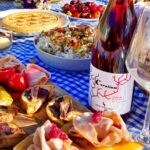
Drinks are part of the included package. You get still and sparkling water, plus red or white wine and coffee or tea. Wine is included, but consumption is limited to adults over 18, so if your group includes younger travelers, plan around that. (Also, it’s Sicily—people still keep it relaxed, even when wine is on the menu.)
One more detail worth noting: in some classes, the mood stays very small-group and personal, which makes the meal more conversation-friendly. If you’re traveling with a couple friends or family, it can feel like you got invited for dinner, not ticketed into an activity.
Dietary Needs: Vegan, Vegetarian, and Celiac-Friendly Planning
A lot of cooking classes say they can handle dietary needs. This one is explicitly built for it. Maria Rita talks about vegans, vegetarians, and celiacs up front, and the menu is decided together after booking. That’s a big difference, because it means the dishes can be matched to your needs rather than swapped at the last second.
If you’re vegan or vegetarian, expect the menu to adjust while still keeping the Sicilian style. One class experience described a fully four-course vegan menu, which gives you confidence that the food isn’t just “remove the cheese and hope for the best.”
For celiacs, the fact that celiac dietary needs are mentioned means you should bring up specifics during the menu planning call. Don’t be shy. Ask what’s possible and what isn’t. Even if the class adapts, your clarity helps Maria Rita tailor the plan accurately.
The practical takeaway for you: when you get the post-booking message, treat it like a quick planning meeting. Share allergies, dietary preferences, and what you absolutely want to learn (fresh pasta? pesto? dessert?). The better you steer the menu, the more you’ll leave with recipes you actually want to cook again.



Timing, Meeting Point, and How to Pair It With Neapolis
The class runs on Tuesday through Saturday with two main time windows: 10:00 AM–1:00 PM and 5:00 PM–8:00 PM. The tour ends back at the meeting point, so your day stays easy to manage.
You meet at Via Costanza Bruno, 10, 96100 Siracusa SR, Italy. It’s also described as near public transportation, which is helpful if you’re not driving. Since private transportation isn’t included, plan to reach the area by bus, walking, taxi, or whatever your Siracusa base supports.
Here’s a smart way to pair this with sightseeing: if you want archaeology time, consider doing the Neapolis archaeological park around your cooking class. One helpful tip from past participants is that the park is about a 7-minute walk from the class area. That’s close enough to make an easy plan: walk the park, come back for cooking, then finish with dinner plus the view.
Also, 3 hours goes fast once you’re rolling dough and tasting along the way. If you schedule something right before, keep it light. Give yourself breathing room for travel time and for arriving calm. Cooking classes feel better when you don’t sprint to them.
Price and Value: What $120.02 Gets You in Real Cooking Time
At $120.02 per person for about 3 hours, this isn’t cheap. But it’s also not the kind of pay-to-watch “demo” class where you get a spoonful and a certificate.
What you’re paying for is:
- Private, group-limited instruction in a real kitchen setting
- Hands-on teaching for pasta and classic Sicilian dishes
- A full meal based on the menu you choose
- Included drinks: water, wine, and coffee or tea
That included drinks piece matters in real life. You’re not trying to budget for dinner plus drinks plus coffee at the end. It’s built into the experience.
The value gets even better if your group is small. Because it’s private, you typically get more direct feedback while you’re shaping pasta or learning sauce technique. If you’re the type who learns by doing, this price makes sense.
If you’re traveling solo, you might pay the same per-person rate as a couple would. In that case, ask yourself one question: do you want a guided, hands-on meal that turns into teachable skills? If yes, this is a strong fit.
Who This Sicilian Cooking Course Suits Best
This class fits best if you want more than food tasting. You want skills.
Here are the kinds of travelers who tend to love it:
- Couples or small groups who like a calm, personal pace
- Anyone who wants to leave with real pasta-making technique, not just a list of dishes
- Travelers who care about dietary fit—because vegan and celiac needs are addressed directly
- People who enjoy Sicilian hospitality, including family touches (Maria Rita’s household may include help and friendly interruptions from her family)
It’s also a good match if you’re planning your first Syracuse trip and want a “local life” experience. You’re not eating from a platform. You’re eating where the cooking happens.
If, on the other hand, you only want a quick bite and you hate hands-on work, you may find the cooking time takes more effort than you expected. Still, even for beginners, the instruction is meant to be clear and step-by-step.
Should You Book This Siracusa Cooking Course?
I’d book this if you want a hands-on Sicilian meal with a real view attached. The biggest wins are the combination of pasta-making practice, a menu designed with your choices in mind, and that quiet, homey pace where you can ask questions without feeling rushed.
Skip it (or at least rethink your expectations) if you’re looking for a large-scale culinary show, a hotel-style environment, or if you’re unwilling to get involved with dough, chopping, and tasting as you cook.
If you can align it with either the 10–1 or 5–8 window, and you’re ready to plan a menu with Maria Rita, this is one of the more satisfying ways to spend a morning or evening in Siracusa.
FAQ
How long is the Sicilian cooking course in Siracusa?
It’s about 3 hours.
Is this a private experience?
Yes. It’s a private tour/activity, meaning only your group participates.
What language is the class offered in?
The experience is offered in English.
What’s included with the meal?
You get still and sparkling water, red or white wine, and coffee or tea.
Can the menu be adapted for dietary restrictions?
Yes. The experience explicitly mentions options for vegans, vegetarians, and celiacs, and you decide the menu together after booking.
Can I cancel for a refund?
You can cancel for a full refund if you cancel at least 24 hours before the experience’s start time. Free cancellation is available under that rule.