REVIEW · MOOREA
Swim with humpback whales
Book on Viator →Operated by Corallina Tours · Bookable on Viator
Humpbacks don’t show up on a schedule. This Moorea experience mixes humpback whale searching in open water with guided swimming in waist-height conditions, so it feels adventurous without being a free-for-all. If you time your visit for the whale season, it’s the kind of animal encounter that actually changes how you look at the ocean.
I like that the tour setup keeps things practical: snorkeling equipment is included, and the guides work in both English and French (with names like Francesca and Tamahere showing up in the crew). I also like the small-group feel, capped at 12 people, with clear coaching so you know how to behave once you’re in the water.
One thing to plan around: even with a 12-person cap, there’s a modern constraint—only a limited number of swimmers can enter the water at once (due to 2025 regulations). On top of that, wind, swell, and whale movement can shape how long you’re actually swimming with them.
In This Review
- Key things I’d plan around
- Moorea whale season and why this swim works
- Getting to Corallina Tours and starting at 8:30 am
- Cruising the lagoon: the search part is half the magic
- Swimming with humpbacks in waist-deep water
- Rays and black-tip sharks: the lagoon stop that rounds out the day
- Group size, safety, and why the 12-person cap can still feel manageable
- Weather, sea state, and what it means for your comfort
- What’s included (and what you need to plan for)
- Price and value: is $264.13 worth it?
- Who should book this whale swim in Moorea?
- Tips to maximize your chances once you’re in the water
- Should you book this Moorea humpback whale swim?
- FAQ
- How long is the humpback whale swim experience?
- Where does the tour start in Moorea?
- Is pickup included?
- What’s the group size?
- Do I need to bring snorkeling equipment?
- Can I use the restroom during the tour?
- Are the guides English-speaking?
- How many people can swim in the water at one time?
- When is the best time to go for humpbacks?
- Is this booking refundable?
Key things I’d plan around
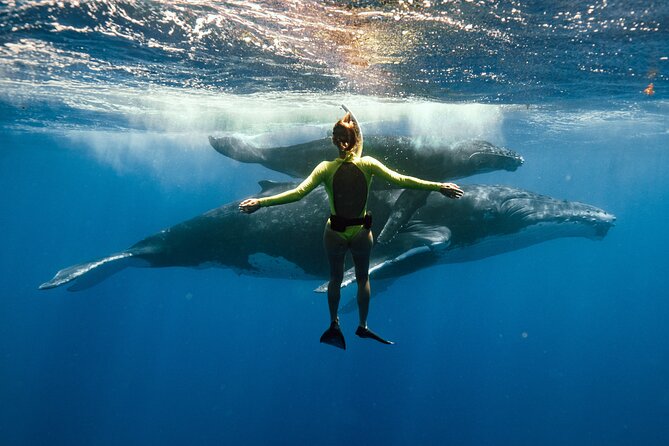
- Limited in-water swimmers at a time: up to 6 swimmers in the water while as many as 12 are on board.
- Your day depends on weather and whales: rougher seas can mean more time in the water without perfect clarity.
- Behavior matters: calm, quiet movement helps you avoid startling whales.
- You’ll do more than whales: a lagoon stop often includes swimming or wading with rays and black-tip sharks.
- No onboard restroom: plan your timing and bring what you need before you step on the boat.
- Comfort level with fins helps: open-water swimming can be active, not just floating.
Moorea whale season and why this swim works
Moorea is one of those places where nature comes with a calendar. Between July and early November, humpback whales are often in their winter home waters, which is why this kind of swim is so tightly linked to the season. If you’re planning a trip in those months, you’re not just going on a boat—you’re showing up when the story has a real chance of happening.
What makes this experience especially appealing is that it’s not only “watch from the boat.” You’ll cruise, observe whale activity, and then get guided into waist-height water when conditions allow. That balance is a big deal: you get closeness without needing to be a confident ocean swimmer who can handle deep, chaotic surf.
Also, the way the guides communicate helps. The tour runs with English and French speaking guides, so you’re not stuck guessing what to do when everyone’s floating face-to-face with something enormous and alive.
You can also read our reviews of more tours and experiences in Moorea.

Getting to Corallina Tours and starting at 8:30 am
Your morning begins at Corallina Tours in Maharepa, at the excursion baleine snorkeling meeting spot: BP19 Maharepa, Moorea-Maiao 98728, French Polynesia. The start time is 8:30 am, and the day ends back at the same meeting point.
If pickup is offered for your route, you’ll have round-trip transportation as part of the experience. One practical upside: this is usually easier than trying to time taxis or figuring out schedules on your own in a day that depends on the ocean being cooperative.
And because you’re starting early, you’ll likely beat some of the day’s heat and get on the water while conditions can still be more manageable. That matters when you’re about to do active swimming in fins.
Cruising the lagoon: the search part is half the magic
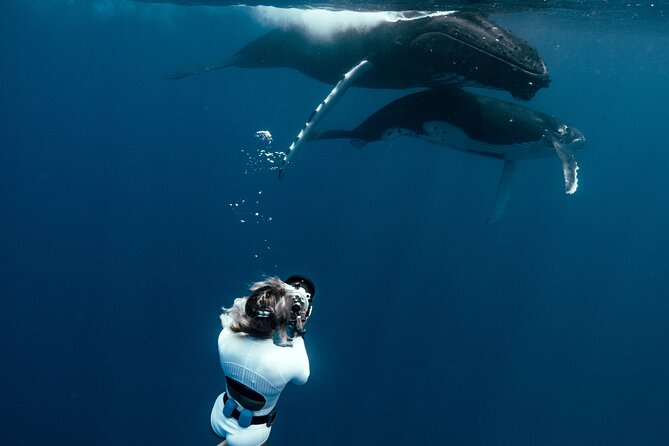
Once you’re on the boat, the experience shifts into “find and confirm” mode. You cruise in the lagoon area, watch for signs of whale activity, and then you move from observing to preparing for swimming when you get the green light.
This search period is important for two reasons:
- Humpbacks move quickly. If the guide can track where they surface and shift, your chance of a close water encounter improves.
- You need the right conditions. Even when whales are there, wind and swell determine whether swimming stays comfortable and safe.
From the feedback you can read into the day’s pacing: the crew is focused on locating whales and adjusting your position as they travel. That’s why the boat ride isn’t filler. It’s part of the hunt, and it sets up the moment you actually get in.
Swimming with humpbacks in waist-deep water
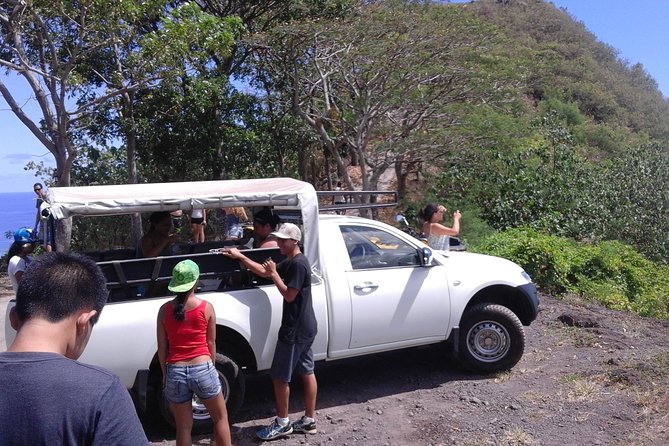
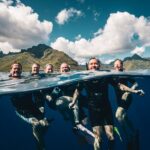
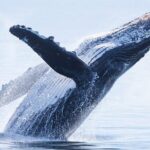
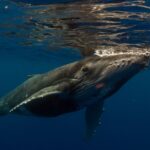
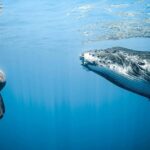
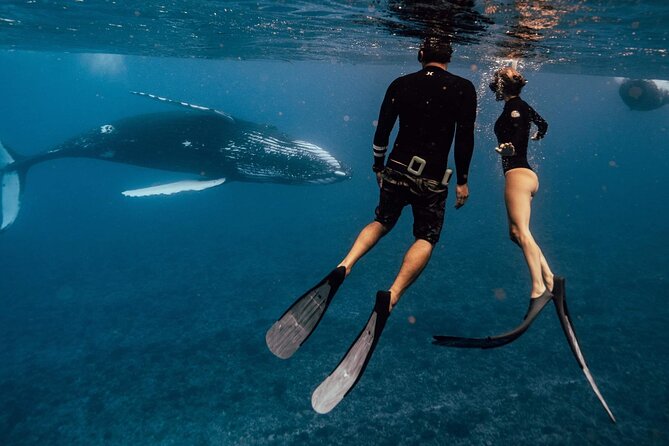
This is the core experience: observing and swimming open ocean with humpback whales. The tour is designed around supervision and a swim format that can feel less intimidating than deep-water snorkeling. You’ll be guided by a crew member who manages how and when people enter and move in the water.
A key detail for your expectations: even if the overall group cap is 12, rules mean you may not all swim at the same time. Under 2025 regulations, the number of swimmers in the water at once is limited, and the boat experience is adapted so more people can still have time in. The trade-off is that you might spend a bit of time waiting on board while another small set gets their turn.
If you want the best shot at a smooth moment in the water, follow the vibe the crew teaches: quiet hands, slow kicks, and no sudden splashes. One of the most useful bits of real-world advice from the day’s feedback is that excited, aggressive movement can scare whales off. You’re not trying to win a race underwater—you’re trying to be part of the ocean’s background noise.
Rays and black-tip sharks: the lagoon stop that rounds out the day
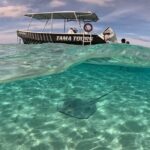
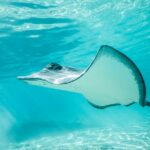
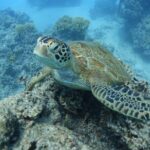
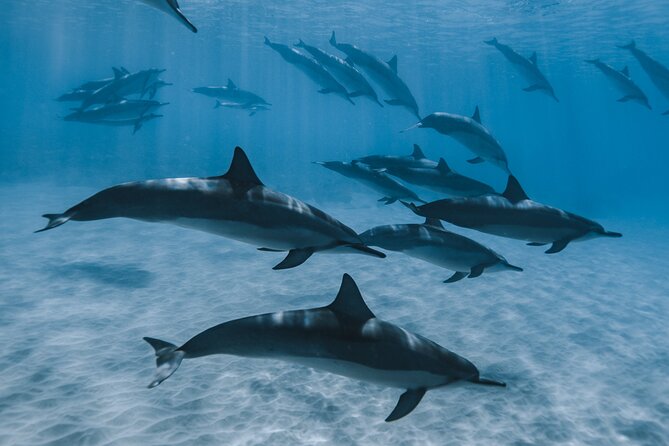
After the whale portion, you’ll shift to a lagoon stop where you can meet and swim with rays and black-tip sharks. This part tends to feel different from the open-water whale swim. You’re often in water where you can spot more activity near the surface, so the experience can feel more like guided wildlife viewing with a snorkeling option rather than constant chasing.
In the practical sense, this is where the tour becomes a “beyond whales” win. Even on days when whale encounters are brief, this lagoon stop can still deliver memorable close-up marine life.
One more benefit: it’s a natural way to reset your body after open ocean swimming. You still need to stay alert and follow instructions, but the rhythm usually feels more about observing and gliding than about keeping up with a rapidly moving animal that’s changing direction.




Group size, safety, and why the 12-person cap can still feel manageable
The tour caps at 12 travelers, with a maximum number of swimmers in the water at a time under the newer regulations. On paper, that can sound complicated, but the point is to manage safety and animal behavior while still giving many people access to the water.
Here’s how it matters for you:
- You’re more likely to get individualized guidance than on huge group tours.
- You’ll probably rotate in and out of the water, so you aren’t all fighting for the same perfect surface moment.
- You should expect some waiting if whale conditions are active and the guide wants controlled, quiet entry.
I also appreciate that the crew communicates in multiple languages. When you’re adjusting fin position and body movement while staying calm, being able to understand instructions fast is more than convenience—it’s comfort.
Weather, sea state, and what it means for your comfort
This experience requires good weather. That’s not just a legal line; it affects what you actually feel. Rougher seas can make swimming more tiring, and water clarity can vary. On some days, you may spend longer time in the water because you’re chasing whale activity while conditions are less than ideal.
So here’s the honest prep mindset: think of this as an active ocean outing. Even with waist-height water, you’ll likely be doing real movement, not just standing and observing. If you’re someone who gets tired easily or has limited stamina, that’s the main risk.
The best strategy is to go in feeling fit enough for a few hours of ocean work. The tour data specifically notes that you should have a strong physical fitness level.
What’s included (and what you need to plan for)
Included:
- Snorkeling equipment (so you don’t have to rent gear separately)
- Bottled water
- Round-trip transportation (pickup offered)
Not included:
- A restroom on board
That last point is small but real. If you’re sensitive to timing, plan to use facilities before you leave the meeting point and keep water intake sensible.
Also, bring the things you control: a swimsuit under your layers, reef-safe sunscreen (and plan to reapply), and anything you need to keep hair and belongings secure. One practical note from the on-the-water experience: if you forget something basic like a towel, the crew may help—still, don’t count on last-minute rescues.
Price and value: is $264.13 worth it?
At $264.13 per person, this isn’t a casual add-on. The value comes from three areas:
- You’re not just watching. The experience includes guided swimming time with humpback whales, not only boat viewing.
- Equipment and logistics are handled. Snorkeling gear and bottled water are included, plus transportation is part of the package.
- You get more than one kind of wildlife. The whale swim is paired with a lagoon encounter that often involves rays and black-tip sharks, which helps even out the day’s “animal unpredictability.”
Is there risk? Yes. Mother Nature runs the schedule. If whales are moving and visibility is rough, you might get less swimming time than you imagined. That’s true of every whale encounter anywhere.
But if you want a guided, safety-conscious format in Moorea during peak season, this pricing fits the reality of what it takes to get you into the water with wildlife.
Who should book this whale swim in Moorea?
This experience is best for you if:
- You’re visiting Moorea between July and early November
- You want a guided in-water wildlife experience, not just a boat tour
- You can handle a few hours of active ocean movement and staying calm while swimming
It’s also a good fit if you value clear multilingual support. With English and French speaking guides, you won’t feel left out when it’s time to listen, adjust, and follow directions.
If you’re traveling with very young kids, or if you’re expecting a purely relaxed float with no effort, you might find the physical component harder than you planned. The tour environment is designed for swimming and fins, not sitting.
Tips to maximize your chances once you’re in the water
Here are the small, high-impact moves that can make your swim better:
- Enter quietly and move slowly. Save big splashes for land.
- Use your fins on purpose, not on impulse. The tour format can feel more demanding when you’re constantly correcting position.
- Keep your head up when you breathe. Don’t burn energy trying to chase a sightline.
- Follow the guide’s timing. If whales surface and then move, your best chance is staying aligned with the crew’s plan.
Also, go in mentally ready for motion. Humpbacks can shift fast, and sometimes you’ll see plenty from the boat but get fewer long swims together. That’s normal whale behavior, and a good guide plan helps you adjust instead of feeling disappointed.
Should you book this Moorea humpback whale swim?
If you’re choosing between a whale-viewing trip and an actual guided swim, I’d lean toward booking this one—especially during July–early November—because the pairing of whale time plus lagoon marine life gives you a full day of value.
Book it if you meet the fitness reality, can stay calm and quiet in the water, and you’re okay with nature doing nature things. Skip it (or consider a different format) if you want an easy, low-activity outing or you’re strongly sensitive to rough sea conditions.
One last way to decide: look at what you most want from Moorea. If your top goal is the moment you’re breathing ocean air next to a humpback and watching its behavior up close, this is built for that moment.
FAQ
How long is the humpback whale swim experience?
It runs about 3 to 4 hours (approx.).
Where does the tour start in Moorea?
The meeting point is Corallina Tours excursion baleine snorkeling Moorea Polynesie BP19 Maharepa, Moorea-Maiao 98728, French Polynesia. The activity starts at 8:30 am.
Is pickup included?
Pickup is offered, and round-trip transportation is included as part of the experience.
What’s the group size?
The tour has a maximum of 12 travelers.
Do I need to bring snorkeling equipment?
No. Snorkeling equipment is included, along with bottled water.
Can I use the restroom during the tour?
The tour does not include a restroom on board.
Are the guides English-speaking?
Yes. The guides speak English and French.
How many people can swim in the water at one time?
Under 2025 regulations, the number of swimmers in the water at a time is limited to 6, even if up to 12 are on board.
When is the best time to go for humpbacks?
This is a great choice for a visit between July and early November.
Is this booking refundable?
No. It is non-refundable and cannot be changed. If it’s canceled due to poor weather, you’ll be offered a different date or a full refund, and if the minimum number of travelers isn’t met, you’ll be offered a different date/experience or a full refund.