REVIEW · CORFU
Small-group Corfu Town Historical Walking Tour
Book on Viator →Operated by Corfu Walking Tours · Bookable on Viator
Old Corfu comes into focus in three hours. This guided, small-group stroll through the UNESCO historic center is built around the big sights most people miss or misread, from the Old Fortress to St Spyridon. I love the way the guide keeps it interactive in a group capped at eight, and I also like that the Old Fortress admission ticket is included. One possible drawback: it’s a walking tour, so you’ll be on your feet most of the time, and the price can feel a little steep at first glance.
I also like that you can pick the timing, with morning or evening departures, depending on your plans. The tour runs in English, uses a mobile ticket, and keeps the pace friendly—even in hotter months, guides have been known to steer you toward shade when possible. If you want an easy intro that still feels personal, this format usually clicks fast.
In This Review
- Key things that make this Corfu Town walk worth it
- Entering Old Corfu at the Old Fortress (Schulemburg statue meet)
- Old Fortress of Corfu: where the island’s power stops being abstract
- Spianada Square and Liston: the big square that people actually use
- The Palace of St Michael and St George: British rule, and a museum worth planning
- Church of Saint Spyridon: Venetian architecture and a very strong local faith
- Old Town Hall of Corfu (San Giacomo Theatre): layers of civic life
- Walking the Jewish quarter (Evraiki): Venice-like alleys, wartime breakage
- Morning vs evening timing: how to pick the right departure
- Group size, pace, and why you’ll feel like a person, not a number
- Price and what you get for $95.86
- Who should book this Corfu Town walking tour?
- Should you book Corfu Town’s Historical Walking Tour?
- FAQ
- How long is the Small-group Corfu Town Historical Walking Tour?
- What time does the tour start, and are there evening departures?
- How large is the group?
- Is the Old Fortress admission ticket included?
- Is this tour very walking-heavy?
- Can I cancel for a full refund?
Key things that make this Corfu Town walk worth it
- Small group size (up to 10, designed for up to eight), so questions don’t get lost in the crowd
- Old Fortress visit with admission included, so you start seeing the fort’s role right away
- Spianada Square stop with specific local flavor like Liston cafés and even Corfu’s cricket connection
- St Spyridon church with its Venetian-style look and a crypt holding the saint’s relics
- English rule landmark at the Palace of St Michael and St George, tied to the Corfu Museum of Asian Arts
Entering Old Corfu at the Old Fortress (Schulemburg statue meet)
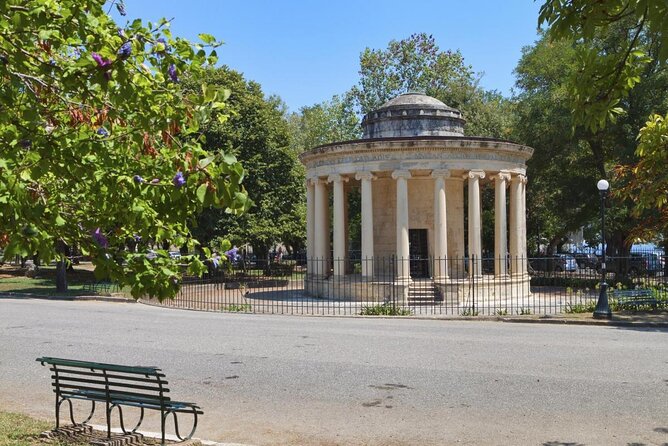
You kick things off with a meeting spot near the action, then you enter the Old Fortress together with your accredited guide. The tour starts at Agoniston Politechniou (Kerkira 491 00), and for the first stop you’ll meet in front of the fortress at the statue of Schulemburg.
What I like about starting here is that the fortress gives you a “why” before you get lost in the “what.” Corfu Old Town can look like a postcard of centuries, but the fort helps you understand it as a strategic place—someone built defenses here for a reason, and the guide frames that clearly before you go further.
You can also read our reviews of more tours and experiences in Corfu.



Old Fortress of Corfu: where the island’s power stops being abstract
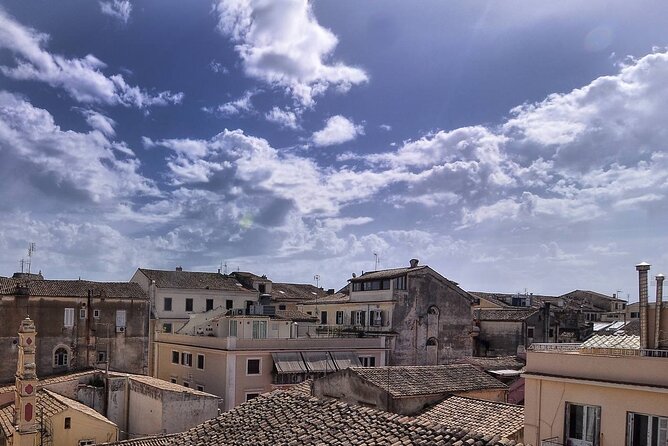
The fortress stop runs about one hour, and the ticket is included. Expect your guide to set the historical stage as you walk in and look around, so you’re not just ticking off walls and viewpoints.
This is also a smart use of time because the fortress area helps you orient yourself. Even if you’re not a hardcore fortification person, you’ll come away with a better sense of how Corfu defended itself and how different European influences left fingerprints on the island.
If it’s sunny, bring sunscreen. And if you’re traveling in summer, plan to take it easy with hydration—fortress walking adds up.
Spianada Square and Liston: the big square that people actually use

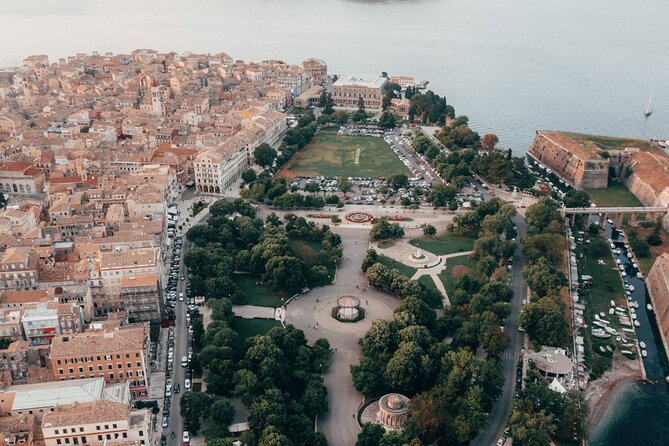
Next you move to Spianada Square, the town’s central open space and one of Corfu’s best “read the town in one glance” stops. You’ll hear why the name comes from a Venetian word meaning an open flat area, and you’ll also learn why locals connect it to public life.
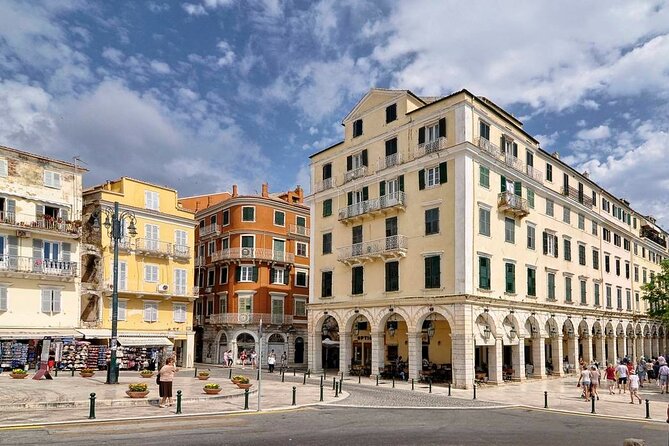
This is where Liston comes in: the arcaded side of the square is lined with some of the town’s nicer cafés and restaurants. It’s also tied to a neat historical detail—before the 19th century, the area served defensive purposes, and the French helped shape it into a public square.
One of the more fun specifics: cricket matches are played on the Esplanade, described as the only place in Greece where the sport happens. Even if you’re not into sports, that kind of detail makes the square feel lived-in rather than museum-like.
The Palace of St Michael and St George: British rule, and a museum worth planning
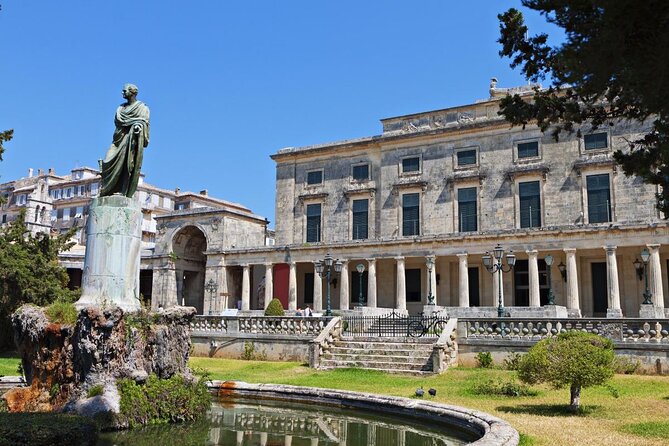
As you walk through Corfu Town’s northern historic center, you reach the Palace of Saint Michael and Saint George. This is one of those landmarks that explains a whole chapter of the island: English rule began in 1814 and ended in 1864, when the Ionian Islands were reunified with the rest of Greece.
Your guide explains that the British Lord High Commissioner, Sir Thomas Maitland, requested the palace. The building was meant as his residence and as the administrative headquarters for the period.
Today, the palace is home to the Corfu Museum of Asian Arts, the only museum of its kind in Greece focused on the art and antiquities of the Far East and India. It was founded in 1928, and the collection is described as around 15,000 works. If you’re the type who likes to follow a stop with a follow-up, this is a perfect “bookmark it” moment. You’ll learn where the museum lives, then you can decide later if you want to spend more time inside.
Church of Saint Spyridon: Venetian architecture and a very strong local faith
Your next major stop is the Church of Saint Spyridon, patron saint of the island and known as a miracle worker. You’ll visit the church and hear how deeply the local community connects to Agios Spyridon, with the guide pointing out what locals believe and how it shows up in daily life.
The church dates to the 16th century, and its architecture is typical of Venetian architecture. One practical detail: the bell tower is the highest point in town and is visible across Old Town Corfu, so even before you fully understand everything, you’ll start recognizing it as a landmark.
Inside, the story gets even more specific. The church has a crypt where the saint’s relics are kept in a double sarcophagus. This is the kind of moment where a good guide matters, because the meaning behind what you’re seeing can be easy to miss if you’re just looking.




Old Town Hall of Corfu (San Giacomo Theatre): layers of civic life
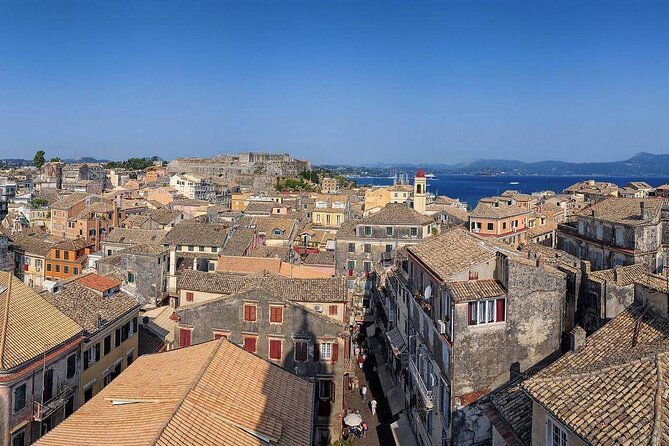
As you keep walking through narrow streets, you’ll pass the Town Hall area and learn about the building that became the Old Town Hall of Corfu, also known historically as the San Giacomo Theatre. This stop is short—about 15 minutes—but it packs multiple eras into one structure.
Here’s the timeline your guide shares: the building began as a club for noblemen, then in 1720 it hosted the Noble Theatre of Saint Giacomo. Later, in 1903, it became the Town Hall.
This is a useful stop if you like seeing how one place can shift roles over centuries without ever moving far away. It also helps you read the streets around you: in Old Town, the buildings aren’t isolated. They’re all part of the same long city conversation.
Walking the Jewish quarter (Evraiki): Venice-like alleys, wartime breakage

You’ll also walk through the Jewish quarter, which was once a Venetian “ghetto” and is still called Evraiki in Greek. The area stretched across the southeast section of the city near the Venetian fortifications, and the alleyways were lined with faded, multistory houses—compared to Venice’s street feel.
The guide explains how the Jewish quarter lost its urban unity due to bombardments during World War II. It’s a heavier moment than some of the other stops, but it matters because it turns Old Town from an aesthetic experience into a human one.
If you’re sensitive to history, keep that in mind. You don’t need to rush past it. Let the guide’s pacing do its job.
Morning vs evening timing: how to pick the right departure
The tour offers a choice of morning or evening departures, and that matters more than it sounds. Morning usually means better light for photos and more comfortable temperatures, while evenings can feel calmer in the streets and sometimes more alive with locals out and about.
The tour lasts about three hours and involves steady walking through Old Town. The good news: guides have been praised for keeping a sensible pace and checking in with the group. If it’s hot, I’d treat shade as part of your strategy, not an afterthought.
This one is also run in English, with an accredited guide, so you’re getting the story in a way you can actually use while you wander afterward.
Group size, pace, and why you’ll feel like a person, not a number
This is built as a small-group walk. The format is described as limited to eight, and the maximum group size is listed as ten, which tells you the intent: you shouldn’t be stuck listening to a monologue from far away.
In plain terms, that’s why the experience tends to feel warm and interactive. You get time for questions, and the guide can adjust explanations based on what the group wants to know—church meaning, fort purpose, Venetian and British influence, or how Corfu works today.
One more practical point from the overall style of the tour: expect a lot of time on your feet. You don’t need to be a marathon runner, but you do need comfortable shoes and the willingness to walk narrow lanes.
Price and what you get for $95.86
At about $95.86 per person for roughly three hours, this tour isn’t a bargain. It can be the kind of price you pause over before booking.
Here’s why it can still feel fair: the Old Fortress admission ticket is included, and you’re also paying for an accredited guide who turns scattered buildings into a coherent story. In Old Town, that coherence saves time. Without a guide, you might walk past key meanings or assume a building is from one era when it’s actually another.
The included ticket also makes it easier to budget. You don’t have to hunt for what’s open, what costs extra, or where you should start inside the fortress.
If you’re short on time in Corfu Town, or you want a strong first orientation before you strike out on your own, this is a good use of money. If you’re planning a long stay and you’re the type who loves reading guidebooks at your own pace, you might choose to do parts of it independently. But if you want the city explained while you walk, this price starts looking more logical.
Who should book this Corfu Town walking tour?
Book it if you want:
- A guided, story-based walk through UNESCO historic-center streets
- A smart mix of fortress, churches, civic buildings, and lived urban history
- A tour where you can ask questions and actually talk with the guide
You’ll also get extra value if you’re returning to Corfu. Even when people know the island basics, the combination of fortress context, Venetian details, British-era landmarks, and the Evraiki section tends to add new angles.
I’d think twice if your group hates walking, wants lots of sitting breaks, or you’re traveling with people who tune out during history-focused explanations. This is history told while you walk—so it fits best when that’s your vibe.
Should you book Corfu Town’s Historical Walking Tour?
If your goal is to understand Old Town Corfu fast, I’d say yes. The included fortress entry, the tight small-group feel, and the stop choices hit the highest-impact sites without turning your day into a sprint.
If, however, you’re allergic to walking and you prefer totally free-form exploration with minimal structure, this might feel like too much. In that case, you could visit the major sights on your own. But if you’re ready for a guided three-hour orientation that makes the streets easier to read afterward, this tour is an excellent pick.
FAQ
How long is the Small-group Corfu Town Historical Walking Tour?
The tour runs for about 3 hours.
What time does the tour start, and are there evening departures?
There is a morning start listed at 10:00 am, and the tour also offers a choice of morning or evening departure times.
How large is the group?
The tour is limited to a maximum of 10 people, and it’s described as a small-group experience with a group size limited to eight.
Is the Old Fortress admission ticket included?
Yes. Admission ticket is included for the Old Fortress stop.
Is this tour very walking-heavy?
It’s a walking tour and you should be prepared to spend most of the time on your feet while moving through Old Town streets.
Can I cancel for a full refund?
Yes. Free cancellation is available up to 24 hours in advance for a full refund.