REVIEW · MALLORCA
Shore Excursion: Coasteering in Mallorca
Book on Viator →Operated by Experience Mallorca S.L · Bookable on Viator
Coasteering gets you off the usual Mallorca path. It’s a hands-on way to meet the coastline up close, with gear included and a guided day that often includes cliff jumps and zip line. The main drawback: you need to be comfortable swimming and climbing back up on rocky, sometimes sharp terrain.
I like how this tour keeps logistics simple from Palma by minivan, and it runs with a small group (up to 16). You’ll get a proper training session and safety briefing before you start doing the fun stuff, and guides like Jose, Mario, Juan, Oscar, Antonio, and Rafael Raffi have been singled out for patient instruction and great energy. Still, if heights or water scare you, you may find parts of the day challenging even though the guides try to respect comfort levels.
In This Review
- Key points before you go
- From Palma pickup to the Cala Fornells coast: how the 4-hour day runs
- Meeting point details that save time when you’re on a schedule
- Suit up fast: wetsuit, water shoes, and what you can leave behind
- Training and safety briefing: what you learn before you jump
- Coasteering, cliff jumps, and zip line: what the 3 hours actually look like
- The physical side: swimming, climbing, and how hard it feels
- Water temperature, wetsuits, and why timing matters
- Price and value: is $89.87 worth it?
- What to pack: the small items that make a big difference
- Which guides and personalities to expect
- Who should book coasteering in Mallorca (and who should skip it)
- Tips to make your cruise-day timing feel smooth
- Should you book Coasteering in Mallorca?
- FAQ
- How long is the coasteering tour in Mallorca?
- What does the $89.87 per person price include?
- Is food and drinks included?
- Where is the meeting point?
- Do I need to bring a swimsuit and towel?
- What are the age and fitness requirements?
- Is the tour offered in English?
- What safety gear is provided?
- What if weather is poor or I need to cancel?
Key points before you go
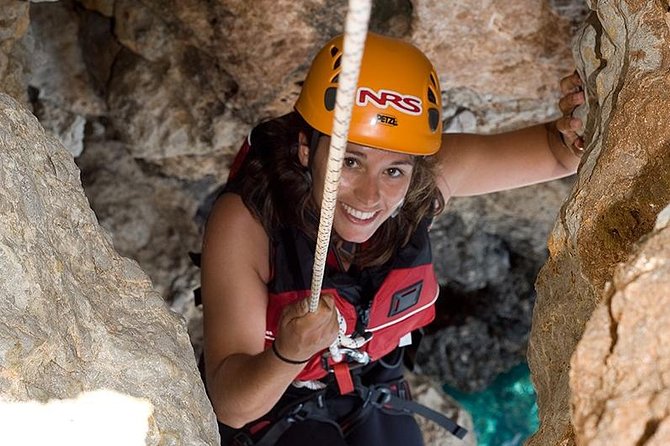
- Round-trip minivan from Palma makes cruise-day timing easier than DIY.
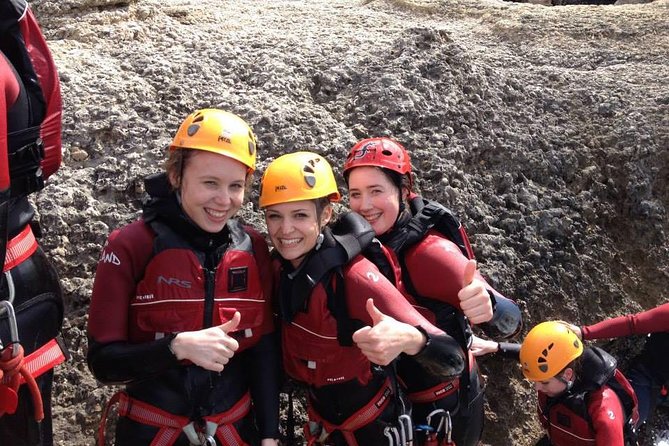
- All equipment is provided (wetsuit, helmet, flotation vest, water shoes) so you don’t have to shop or rent.
- A real training and safety briefing comes before jumps, so you know what to expect.
- Progression is built in: smaller jumps first, then higher options like 10 meters if you’re ready.
- You don’t have to do every move; some folks skip certain jumps or zip line and float instead.
- Bring your own food and drinks since lunch isn’t included, only time outdoors is.
From Palma pickup to the Cala Fornells coast: how the 4-hour day runs
This is built for cruise passengers and for people who don’t want to wrestle with buses. Your day starts near the port area in Palma, then you ride by minivan to the coasteering site and finish back where you meet.
If your ship docks at the west sea wall (Dique Del Oeste) and you’re at terminal Estacion Martima 5, you’ll walk about 7 to 10 minutes to the meeting school: Escola de Formació Professional Nauticopesquera de Palma. Look for the white building and a huge ship anchor on the grass. As you leave the dock gate, you should see cannons on your right; if you spot the fort, you’ve likely walked too far.
From the port to the water, expect travel time plus a short walk once you arrive. Several people describe a drive of around 25 to 30 minutes and a trail walk of roughly 10 minutes to reach the cliffs and ocean viewpoint before suiting up.
You can also read our reviews of more tours and experiences in Mallorca.


Meeting point details that save time when you’re on a schedule
The best move is to plan for a quick, no-stress meetup. Your guide is there at the school with a marked van and a bright yellow t-shirt, so you’re not wandering with the crowd.
One helpful detail from past cruisers: the GPS point can be off a bit. If your map drops you a few minutes away, just keep going until you find that large anchor and the right school area.
If you’re running late, the experience operator has shown they can regroup quickly. Still, don’t treat that as a plan—show up early, especially on cruise days when the whole group is watching the clock.
Suit up fast: wetsuit, water shoes, and what you can leave behind
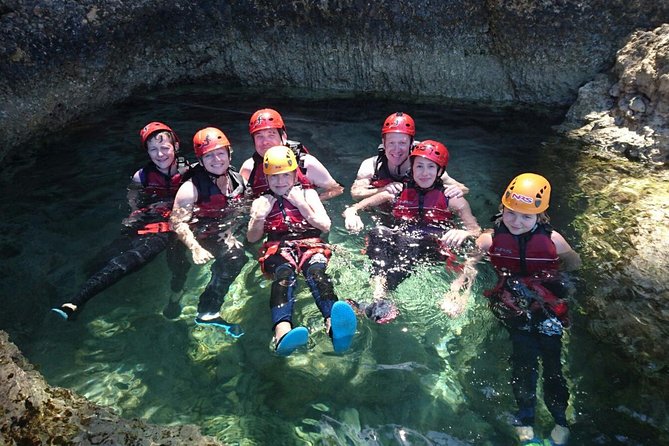
This tour is hands-on from the start, but you’re not showing up in wet gear. You’ll change into your suit and equipment at the site, in a gravel parking lot area, then walk to the water.
What’s included matters here: wetsuit, helmet, flotation vest, and water shoes are provided. That’s a big deal because you don’t have to figure out sizing in Spain at the last minute, and your feet get traction on rocks that can be slippery.
You can also stash dry stuff in the van. People have reported leaving dry clothes, towels, water, and even shoes in the vehicles while they do the active parts of the tour. It’s smart to carry only what you truly need for the first part of the route in a small waterproof-friendly bag.
Training and safety briefing: what you learn before you jump
Coasteering is equal parts fun and technique, and the day is structured so you learn what you need before you’re committing to bigger jumps. You start with a training session and safety briefing, then you move gradually to more adventurous options.
A lot of the confidence comes from the way guides pace the day. Guides are described as patient and supportive—one common theme is that the staff doesn’t pressure people into moves that don’t match their comfort level. That means you might start with smaller cliff jumps and work up from there, instead of going straight to the highest drop.
You’ll also get hands-on coaching for the exits—the part where you pull yourself out of the water and climb onto rock. This is where a lot of beginners feel the difference between watching coasteering on video and doing it for real.
Coasteering, cliff jumps, and zip line: what the 3 hours actually look like
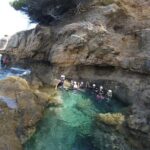
The coasteering block is about 3 hours at the coast. Expect a mix of cliff jumping, scrambling along the shoreline, and routes that include getting back up onto rocks.
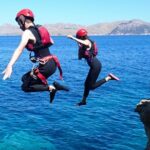
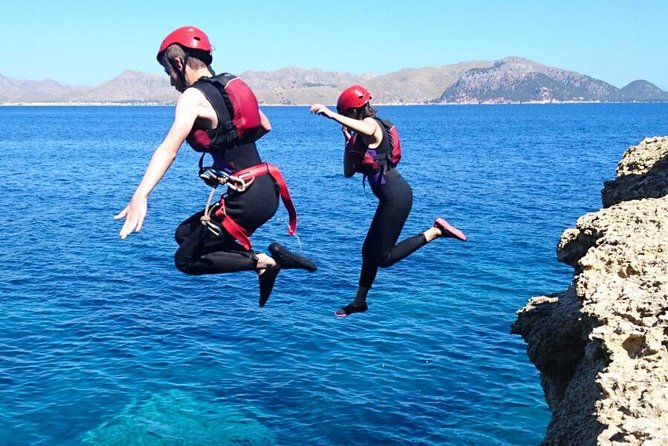
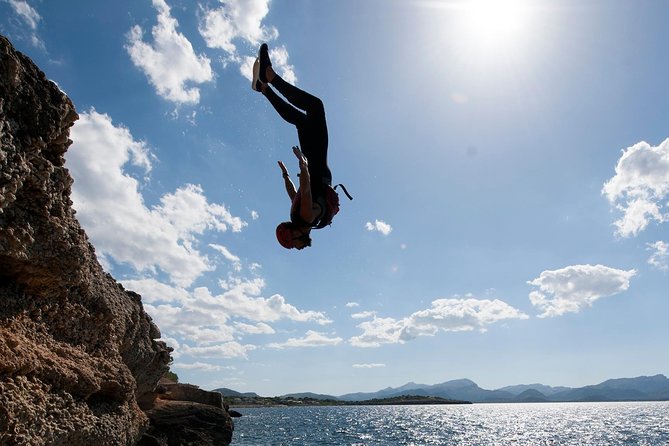
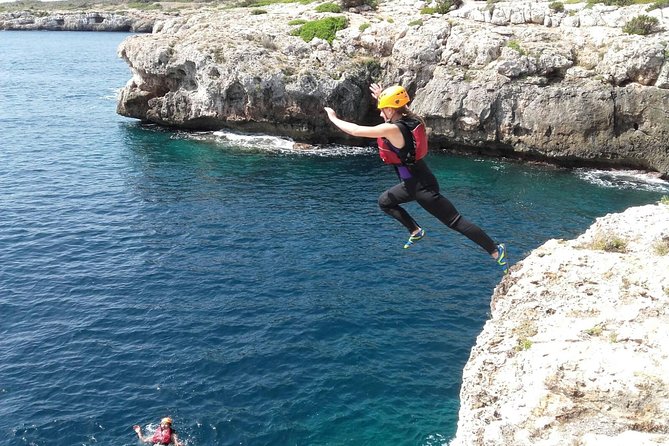
The “jump” part can range from small drops to serious heights. One group noted jumping from about 2 meters up to 10 meters, with the highest jump around 10 meters. Another described a roughly 30-foot cliff jump—same ballpark, just in different units.
Then there’s the zip line across a small cove. One very common highlight is that zip line element because it gives you speed and a clear view over the water while you’re still in control of your body position.
You may also see rappelling or abseiling-style segments depending on how the day flows. Several people mention repelling or abseiling as part of the adventure menu, so don’t treat it as only a jumping day.


The physical side: swimming, climbing, and how hard it feels
Here’s the truth: you’re not signing up for a gentle stroll. This tour works for people with moderate physical fitness, and you should be able to swim and climb over rocky areas.
Getting back up is often the hardest part. Multiple accounts mention that climbing over sharp rocks can be tough, even when the guides help. You’ll use upper body strength to pull yourself out after jumps, and you’ll want your core and arms to be ready for that kind of work.
Sharpness matters too. The rocks are described as sharp by past participants, and that means your gear choice is not a small detail. The provided water shoes help, but your hands and arms can still take some scrapes during climbs.
If you like a challenge and you’re okay with a workout feel, you’ll probably love it. If you freeze at heights or you can’t swim, you may have to stick to easier portions or float more than jump—some people do that and still have a great time.
Water temperature, wetsuits, and why timing matters
Mallorca’s Mediterranean water can be cold to your skin at first, then manageable fast once you’re moving. One group described the water as cold in late spring, but the wetsuit made it okay. Another group mentioned a mid-70s water feel in early October while in a wetsuit.
So the key point is not the number on the thermometer. It’s that the wetsuit changes the experience from uncomfortable chill to “okay, let’s do this.”
If you run cold, plan for it anyway. Wear sunscreen well, and treat the first splash as the hardest part.
Price and value: is $89.87 worth it?
At $89.87 per person, this is not a cheap “walk and look” shore excursion. What makes it good value is the bundle: pickup and drop-off, qualified local guide, full equipment (including wetsuit and water shoes), insurance, and minivan transport.
If you tried to recreate this yourself, you’d likely pay for gear rentals, a guide (because safety and technique are central), and transport. Here, you’re paying for a complete experience that’s built around safety and execution.
The one cost you have to plan for is food and drinks. You’ll want your own lunch, plus bottled water and sunscreen. Past participants often mention that bringing lunch isn’t overkill, even if others forget and still manage.
There are also group discounts, which can make the per-person math even nicer if you’re traveling with family or friends.
What to pack: the small items that make a big difference
This is the kind of activity where your “normal day at the beach” kit needs a few upgrades.
Bring:
- bathing suit and towel (you’ll change into the wet gear)
- sun screen
- bottled water
- your own lunch (food and drinks are not included)
- comfortable clothes and hiking shoes (even though water shoes are provided, you still do walking on land)
Phone and camera reality check: some people try waterproof pouches, but higher jumps and the zip line can still be rough on devices. One person said phones didn’t survive the jumps after being stored in a pouch, and they ended up leaving valuables on the cliff area earlier in the day. If you want to film a lot, consider bringing a hard-shell waterproof setup, the kind that can take impact and float.
Also, wear what helps you climb. A rash guard or long-sleeve shirt can reduce scratches on arms when you’re scrambling and bracing yourself.
Which guides and personalities to expect
The guide experience comes through clearly in the feedback. Names that have been mentioned include Jose, Mario, Juan, Oscar, Antonio, Patrick, and Rafael Raffi. The common theme is patience, humor, and real safety awareness.
One more important point: coasteering is not only about pushing limits—it’s also about matching the day to the group. Some people report the guide tailoring the experience to different comfort levels, allowing participants to skip zip line or higher jumps if they wanted.
That said, any activity with physical constraints can create friction. One negative account described a poor interaction and a perceived lack of respect around ability level. My practical advice: if you know you’ll need extra reassurance, say so early and ask how they handle different comfort zones.
Who should book coasteering in Mallorca (and who should skip it)
This is a great fit for:
- active families with kids old enough for the minimum age (8+)
- teens and adults who like adventure and don’t mind a workout
- swimmers who can handle getting in, then pushing up out of the water
- people who want an authentic coastline experience instead of just scenic photos
This is probably a rough fit for:
- anyone with a strong fear of heights or a strong fear of cold water splashes
- people who struggle with climbing and getting back up on rocks
- anyone expecting a relaxed beach outing
If your group has mixed comfort levels, you might still have a good day. The setup allows for different participation levels, so not everyone has to do every jump to enjoy the coastline.
Tips to make your cruise-day timing feel smooth
Coasteering runs best when you keep your schedule simple. If you’re on a cruise, build buffer time for walking from your ship to the meeting school and for waiting for the group.
Also, bring only what you need in active zones. You’ll do a short hike to the water and then move through several activity points, so the less you carry, the easier it is to focus on the climb and jumps.
For hands and gear safety, older shoes might feel tempting, but many people prefer the water shoes system provided because it’s designed for the rock texture. If you’re using your own gear, make sure it still works for wet, rocky scrambling.
Finally, do sunscreen early. You’ll be exposed on land during the walk and on the water during activity, and sunscreen is one of those simple things that prevent an afternoon of regret.
Should you book Coasteering in Mallorca?
I’d book this if you want a hands-on shore excursion that feels different from the usual Palma sightseeing loop. The combination of included gear, a real safety briefing, and adrenaline options like cliff jumps and a zip line makes it a high-value day for active travelers.
I’d think twice if you’re not a confident swimmer or if climbing rocks feels like a hard no. This isn’t just about jumping; it’s about the physical exit and scrambling that follows.
If your group is up for an adventure with a professional team, Mallorca’s coastline is one of the best places in the Mediterranean to do it. Just show up prepared, be honest about your comfort level, and let the guide help you find your speed.
FAQ
How long is the coasteering tour in Mallorca?
It runs for about 4 hours total, with the coasteering activity lasting around 3 hours.
What does the $89.87 per person price include?
You get cruise pickup and drop-off, all equipment and shoes, a qualified local guide, insurance, and transport by minivan.
Is food and drinks included?
No. You should bring your own lunch and plan for water.
Where is the meeting point?
The start is Carr. de Cala Fornells, 30, 07160 Cala Fornells, Illes Balears, Spain, with a specific pickup meeting location for cruise ships at a school near the Dique del Oeste area in Palma.
Do I need to bring a swimsuit and towel?
Yes. Bring your bathing suit and towel since you’ll be changing and getting in the water.
What are the age and fitness requirements?
The minimum age is 8 years, and it’s recommended for people with a moderate physical fitness level.
Is the tour offered in English?
The tour is offered in English, and guides will speak Spanish and English as a minimum.
What safety gear is provided?
You’ll be provided with a wetsuit, helmet, flotation vest, and water shoes, plus you’ll get a safety briefing and training session.
What if weather is poor or I need to cancel?
This activity requires good weather. You can cancel for a full refund up to 24 hours in advance, and if the tour is canceled due to poor weather, you’ll be offered another date or a full refund.