REVIEW · SICILY
A walk among the monuments and markets of Palermo
Book on Viator →Operated by Cetty Spoto · Bookable on Viator
If Palermo feels confusing at first, this route helps you map it fast. You get a tight loop of markets and top monuments, plus time for food stops like the famous cannolo. The guide, Cetty Spoto, leads in English and can tailor the pace to your interests, which is a big reason this walk earns such high marks. One consideration: each stop is short, so if you want long sit-down time at a single sight, you’ll need to plan an add-on after.
I also like how this walk doesn’t treat Palermo as just postcard scenery. It moves from the everyday flow of the Capo street stalls to major landmarks like the Cathedral and the baroque street corners at Quattro Canti. The only drawback to expect is practical: you’ll cover a few different areas on foot in about 2 hours 30 minutes, so comfy shoes matter.
In This Review
- Key highlights you’ll feel right away
- Capo Street Market: snacks, habits, and your Palermo starter pack
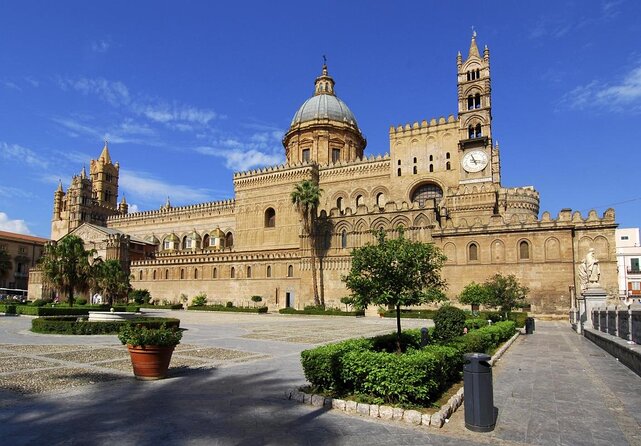
- Cattedrale di Palermo: the Cathedral’s mix of shapes and styles
- Quattro Canti: baroque Palermo at the city’s octagonal center
- Piazza Pretoria: Carrara marble fountain and a “real” photo moment
- Santa Caterina d’Alessandria: sweets, cannolo, and the convent atmosphere
- Price and what $102.02 really buys you in Palermo
- The small-group difference: why Cetty’s guidance matters
- Timing, meeting point, and how the route flows
- Who should book this Palermo market-and-monument walk
- Should you book this walk among monuments and markets?
- FAQ
- How long is the walk among Palermo’s monuments and markets?
- How much does the tour cost?
- What language is the tour offered in?
- Is pickup available?
- Do you include a cannolo taste at the end?
- What is the cancellation policy?
Key highlights you’ll feel right away
- Capo Street Market: a real street-level introduction to Palermo’s food culture
- Cetty Spoto’s English-led pacing: smart explanations without the lecturing vibe
- Cathedral mix of styles: one building that shows Palermo’s layered influences
- Quattro Canti and Piazza Pretoria: classic “stop-and-stare” landmarks close together
- Santa Caterina sweets and cannolo: a Palermo tradition you’ll actually taste
Capo Street Market: snacks, habits, and your Palermo starter pack
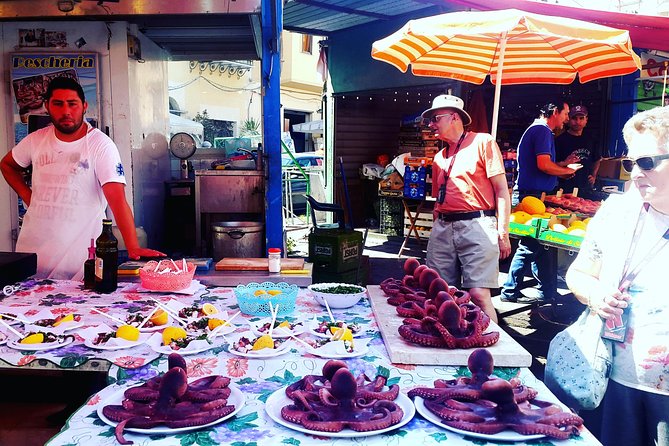
This is where the walk becomes more than sightseeing. Capo Street Market is the kind of place that teaches you how locals actually live: stalls close together, people chatting, and food that’s meant to be eaten on the move. You spend about 45 minutes wandering through the market area with a guide, and that timing is perfect. It’s long enough to see the pattern of the stalls and try to read the labels and rhythms, but not so long that you feel stuck in one section.
What I like about this first stop is that it sets context for everything else. When you later look at Palermo’s grand churches and baroque corners, you understand the city isn’t only monuments. It’s a working place with daily routines—and market food is part of the identity.
A practical tip: go with the mindset of snack browsing. The market experience is about noticing products, street-food habits, and what people seem to be buying for the moment. Even if you’re not planning a huge meal right there, you’ll leave with a better sense of what to hunt for on your own later.
Possible drawback: if you hate crowds or get overwhelmed in busy street markets, you may prefer to take the tour at a calmer hour and keep your expectations realistic. This is an urban market setting, not a quiet museum foyer.
You can also read our reviews of more tours and experiences in Sicily.

Cattedrale di Palermo: the Cathedral’s mix of shapes and styles
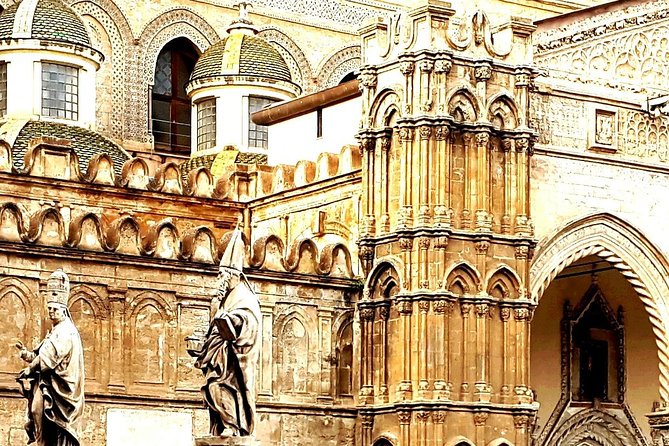
Next you head to the Cattedrale di Palermo, with about 20 minutes on-site. That short window is enough to appreciate the Cathedral’s big idea: it’s not one uniform style. You see a blend of shapes and architectural language in a single complex body. Palermo has changed hands and influences over centuries, and this Cathedral shows that in stone.
Inside stops like this are often hit-or-miss on guided tours. The difference here is that the Cathedral segment is positioned right after the market, so your brain shifts gears smoothly. You go from everyday textures to major craftsmanship. Even in limited time, you can spot how different parts look like they belong to different eras, which is exactly the point.
Here’s how to get the most from your visit in just 20 minutes:
- Look for the contrast—areas that look newer or stylistically different.
- Don’t try to read everything. Instead, pick one spot to orient yourself, then let the rest of the building work like a visual puzzle.
If you’re the type who loves architecture, this is a good primer. If you’re more into street life, you still get value because the Cathedral offers a sharp contrast to the market world you just experienced.
Quattro Canti: baroque Palermo at the city’s octagonal center
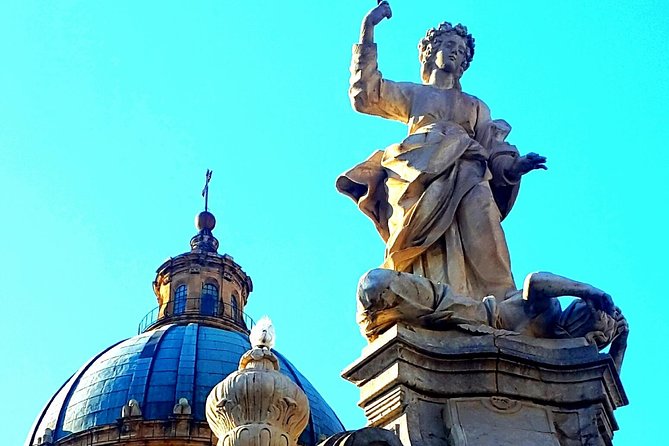
After the Cathedral, the route brings you to Quattro Canti, with about 15 minutes here. This is one of those places where the name tells you what you’re seeing: four corners. It’s also known as the center of Baroque Palermo, and the structure is laid out in an octagonal form, built around the intersection of two major streets—Via Vittorio Emanuele and Via Maqueda.
What makes Quattro Canti special isn’t just the buildings. It’s the sense of order. Those corners are like a stage set where architecture and street planning meet. You get to see how the city’s layout and design choices create a recognizable center.
In 15 minutes, you won’t do a full deep architectural study. But you will get what you need for great self-guided exploring later. Once you know Quattro Canti, you start understanding the city’s geometry. It becomes easier to navigate, and you’ll recognize this as a key focal point on your next walks.
Timing consideration: if you want to take lots of photos without pressure, arrive with a simple plan—shoot the corner view first, then move on. That helps you enjoy the place rather than rushing through it.
Piazza Pretoria: Carrara marble fountain and a “real” photo moment
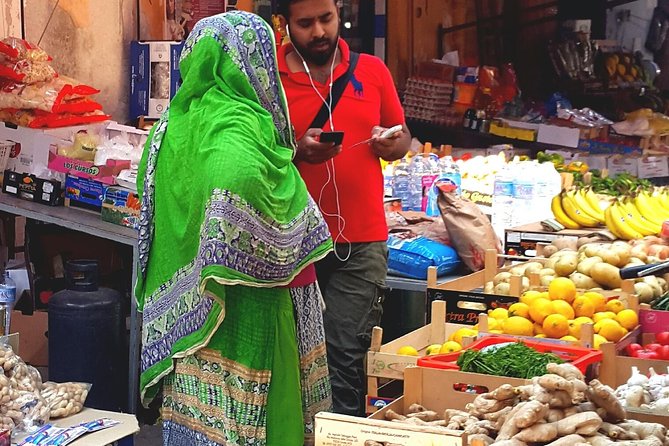
Then comes Piazza Pretoria, about 20 minutes. The star is a late Renaissance Carrara marble fountain in the center of the square. This is the kind of landmark that rewards a slow look, even if you’re not spending hours there.
A practical way to enjoy Piazza Pretoria on this kind of guided walk:
- First, stand back and take in the square as a whole.
- Then step closer for details on the fountain. That’s where you notice the workmanship and how the marble catches the light.
This stop also works as a mental break. You’ve moved through market energy, then into intense architectural attention. Piazza Pretoria gives you open space and clear sightlines. It’s also a useful “anchor” point since the walk ends at Piazza Pretoria.
If you’re traveling with limited time in Palermo, this stop alone makes sense. It’s a memorable scene, and it’s conveniently placed at the end of the route, so you can continue exploring without needing to retrace your steps.
Santa Caterina d’Alessandria: sweets, cannolo, and the convent atmosphere
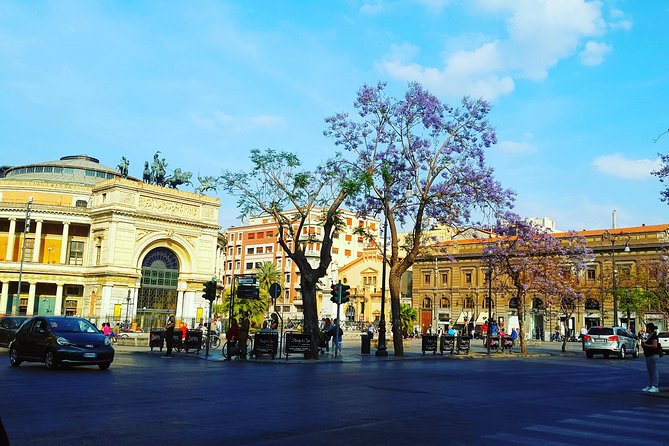
The final major stop is the Church and Monastery of Santa Caterina d’Alessandria, with about 40 minutes. This is where the tour turns from monuments to taste.
You get inside the convent adjacent to the church, and that’s where you encounter typical Palermo sweets. The highlight is the chance to taste cannolo. For me, that kind of food stop is valuable because it turns what you see into what you understand. You’re not just hearing about Palermo’s traditions—you’re tasting one of the city’s most recognizable sweets.
Why this works well at the end of the walk: you finish your sightseeing loop and then get one last, calming experience in a more contained setting. Santa Caterina feels different from the street and square areas you’ve been walking through. That change of pace makes the sweets stop feel like part of the experience rather than a random add-on.
How to make the most of the 40 minutes:
- Treat it as both a cultural moment and a practical one. Taste the cannolo, then ask questions if you’re curious about what makes the filling and pastry different.
- If you’re prone to sugar fatigue, go slow. One tasting is usually plenty.
Possible drawback: food tastings are always personal. If you’re not into sweet desserts at all, you may wish the tour leaned harder into the architectural side. Still, even then, the monastery/convent setting adds a real sense of place.




Price and what $102.02 really buys you in Palermo
At $102.02 per person for roughly 2 hours 30 minutes, this isn’t a bargain snack tour. It’s more like a guided “orientation + highlights + one memorable food moment” package.
Here’s where the value comes from:
- You get access to multiple major stops in one run: Capo Street Market, Cattedrale di Palermo, Quattro Canti, Piazza Pretoria, and Santa Caterina d’Alessandria.
- The guide experience matters. Cetty Spoto’s style shows up strongly in the feedback: clear English, lots of practical detail, and suggestions that help you eat and explore on your own.
- The group is small, capped at a maximum of 10 travelers, so you’re not disappearing into a crowd. That matters when time is tight and you want explanations you can actually follow.
Add-ons like pickup (if you choose it) and group discounts can make the cost feel more manageable, especially if you’re traveling with others. Also, mobile ticketing is usually a minor convenience, but it reduces friction when you’re moving between different points in the city.
If your main goal is to “just get pictures,” a self-guided walk might be cheaper. If your goal is to understand what you’re looking at and leave with a short list of places to revisit, this price starts to make more sense.
The small-group difference: why Cetty’s guidance matters
The standout theme here is the guide. Cetty Spoto isn’t just reciting facts. Her English is described as excellent, and she’s credited with being both informative and genuinely pleasant to spend time with. Even better, the tour is described as adaptable—so you can steer the day a bit without derailing it.
That’s why I think this tour is especially good for your first visit to Palermo. When you’re new, the city can feel like too much at once. A good guide helps you prioritize. Here, the guidance includes not only what to see but also where to go next for meals on your own.
The pacing also feels well matched to the format. This walk has enough structure to keep you moving through key stops, but it doesn’t feel like you’re trapped in a rigid script. That balance is hard to find.
One thing to keep in mind: because it’s a shorter overall tour, you won’t get to do everything at a deep, slow level. If you love a single monument, you’ll want to return later.
Timing, meeting point, and how the route flows
The tour starts in Palermo and ends at Piazza Pretoria (90133 Palermo PA, Italy). The flow is logical: you begin in the market environment, move into major landmarks, then finish with sweets in a quieter religious setting, wrapping at one of the most famous squares.
You’re told the activity typically runs about 2 hours 30 minutes, and most of the individual stops are timed in quick segments—ranging from 15 minutes for Quattro Canti up to 45 minutes at Capo Street Market. That structure is exactly what makes it efficient for a day when Palermo is new to you.
This is a walking tour, and it’s near public transportation, which gives you flexibility if you want to join partway or continue on your own afterward. Also, the tour is offered in English, and most people can participate, so it’s not limited to history buffs.
Who should book this Palermo market-and-monument walk
This tour fits best if:
- You’re on your first trip to Palermo and want an organized orientation without wasting time.
- You care about both the visual landmarks (Cathedral, Quattro Canti, Piazza Pretoria) and the everyday culture (Capo street market and cannolo).
- You like small-group experiences where the guide can respond to what you’re curious about.
It may be less ideal if:
- You want long stays in each monument or you prefer an unstructured wander with no timed stops.
- You don’t enjoy walking in busy street environments like markets.
If you’re a planner, you’ll love how the stops “connect” visually and geographically. If you’re a foodie, you’ll appreciate that sweets are not an afterthought—they’re part of the route.
Should you book this walk among monuments and markets?
Yes, if you want a smart introduction to Palermo that mixes market energy with major landmarks, and you care about getting practical guidance—not just dates and names. The combination of a small group (max 10), English-led hosting by Cetty Spoto, and the food focus (including cannolo tasting) is what makes it feel worth your time.
Before you book, think about your travel style. If you’re okay with shorter visits and you’ll continue exploring afterward on your own, this is an efficient and satisfying way to start. If you want slow museum-style pacing, you may prefer a tour with fewer stops and longer time in each place.
FAQ
How long is the walk among Palermo’s monuments and markets?
It runs for about 2 hours 30 minutes.
How much does the tour cost?
The price is $102.02 per person.
What language is the tour offered in?
The tour is offered in English.
Is pickup available?
Pickup is offered.
Do you include a cannolo taste at the end?
Yes. At the Church and Monastery of Santa Caterina d’Alessandria, you’ll have a chance to taste cannolo.
What is the cancellation policy?
Free cancellation is available. You can cancel up to 24 hours in advance for a full refund. If you cancel less than 24 hours before the start time, the amount paid isn’t refunded.