REVIEW · RHODES TOWN
Rhodes Town: Pomegranate Pottery Masterclass
Book on GetYourGuide →Operated by Creative Cube - Oktana Pottery · Bookable on GetYourGuide
Clay, pomegranates, and a little good fortune—right in Rhodes. In a small basement studio led by Theo, you practice handbuilding pottery basics and shape a pomegranate from real clay while learning pomegranate symbolism tied to Greek culture. The only real catch: you won’t take home the exact pomegranate you build during the session, since your piece needs drying and firing later.
What you do take home is still personal. You’ll paint a pomegranate that’s been prepared for you, and then you select a finished, beautifully made pomegranate made by someone else from an earlier class—part of a feel-good cycle that links people across Rhodes.
In This Review
- Key things I’d watch for
- Rhodes Town pottery with a pomegranate twist
- Finding the red-window workshop in Rhodes Town
- The 2-hour flow: shape your clay, paint your prepared piece, pick a finished souvenir
- Handbuilding techniques you’ll actually use again
- The pomegranate symbol: more than a cute fruit-shaped craft
- The global exchange feel: why you take home someone else’s pomegranate
- Price and value for $47 per person
- Who this Rhodes Town masterclass suits best
- Should you book the Pomegranate Pottery Masterclass in Rhodes Town?
- FAQ
- How long is the Rhodes Town Pomegranate Pottery Masterclass?
- What do I make, and do I take home my finished pomegranate?
- Is it suitable for children?
- What languages does the instructor speak?
- How big is the group?
- What’s included in the price, and can I cancel?
Key things I’d watch for
- Theo runs the class with English and Greek and keeps the tone relaxed, not intimidating
- You learn handbuilding techniques (not wheel-throwing) and shape a pomegranate by hand
- Your session includes painting and glaze work, plus an element of kiln timing you don’t have to manage
- The take-home setup is a global swap, so you choose a finished piece from earlier participants
- Small-group format means more hands-on attention, limited to 10 people
Rhodes Town pottery with a pomegranate twist
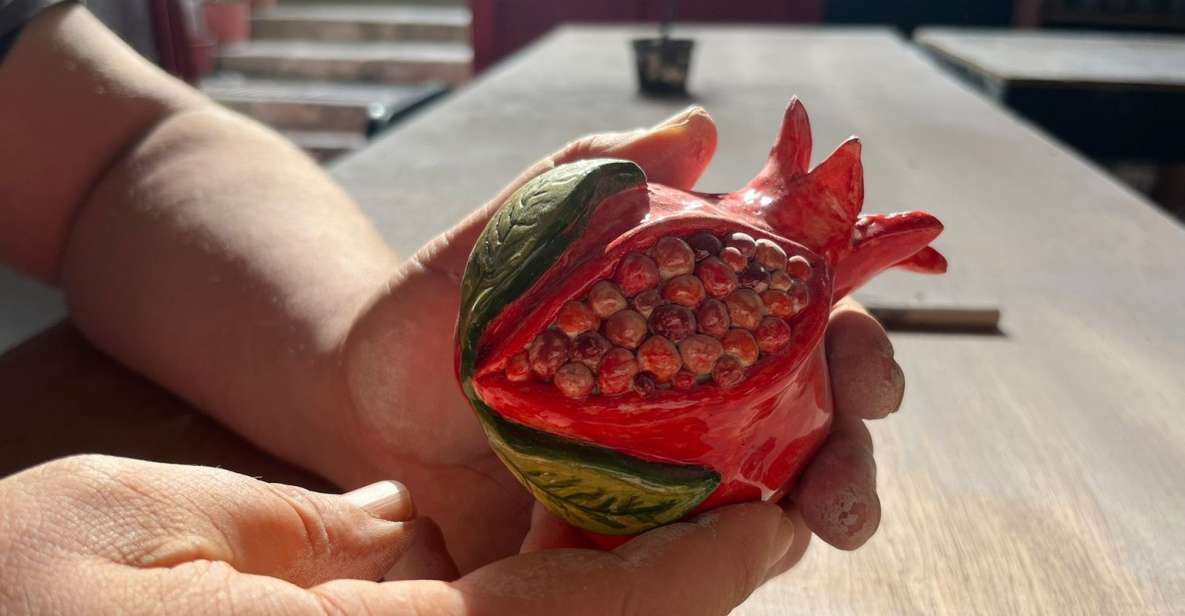
If you’re looking for something different from beach days and daytime sightseeing, this is a smart pick. Rhodes Town has plenty to see, but this workshop gives your hands and brain a break. You’re making a ceramic pomegranate—an object with meaning—using real clay, with an instructor guiding each step.
What I like most is the combo: tactile craft + culture. You don’t just form a souvenir shape. You also learn why the pomegranate matters—abundance, fertility, good fortune, and wealth. That turns the class from a casual activity into something you can actually talk about afterward.
The second big win is the pace. The session is built around a slow, doable rhythm. Even if you’ve never worked with clay, the steps are manageable, and Theo’s teaching approach keeps things calm. Multiple people have described it as relaxing and therapeutic, and that matches the way the workshop is structured: make, set aside, paint, then choose.
You can also read our reviews of more tours and experiences in Rhodes Town.



Finding the red-window workshop in Rhodes Town
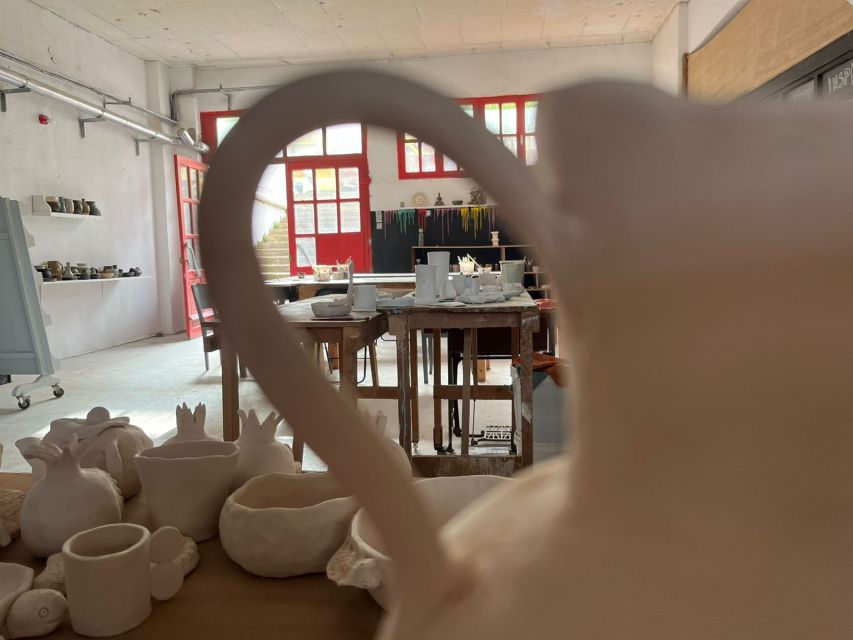
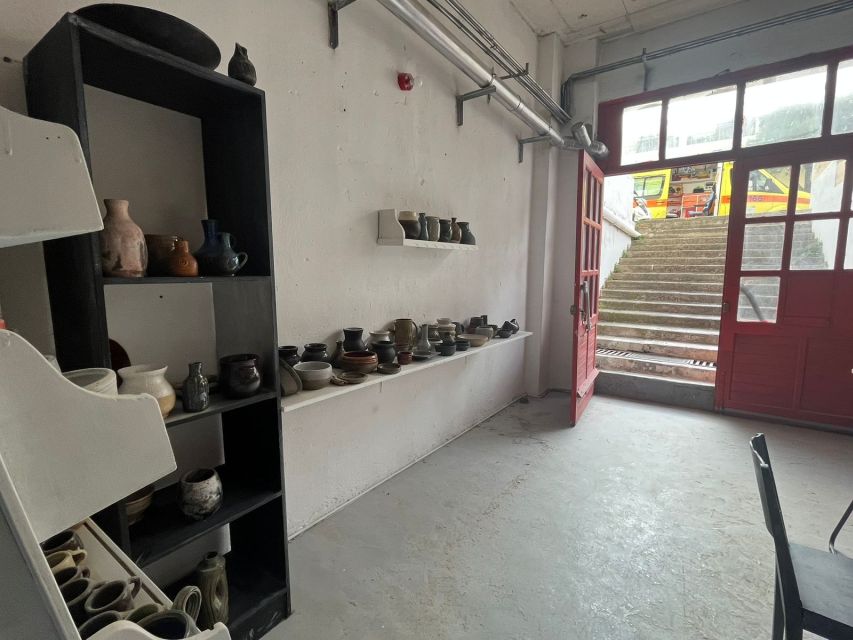
This class meets in a pottery workshop in Rhodes Town in a 120 sq.m basement space with red windows. That description matters. Basements can be easy to miss when you’re walking fast, so give yourself an extra few minutes and look for those red windows.
The studio size is part of the appeal. You’re not crammed into a large hall with rows of people. The small group limit of 10 keeps the room conversational, and that usually means you get more direct help when your clay needs it.
Also, the basic comfort factors are handled for you. You’re offered fresh filtered coffee, plus ice-cold bottled water and refreshments. It sounds small, but when you’re doing hands-on work, having that comfort tucked in makes the session feel more like a community workshop than a production line.
The 2-hour flow: shape your clay, paint your prepared piece, pick a finished souvenir
Think of the workshop as a handcrafted relay. You work with your own pomegranate during the clay stage. Then the process continues after you leave.
Here’s how the session works in practice:
1) You start by making the pomegranate in clay
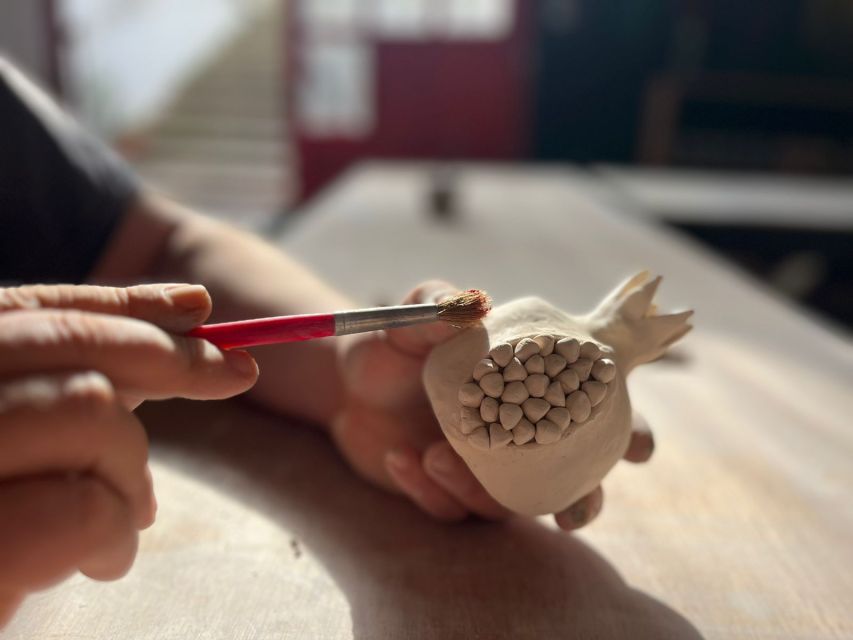
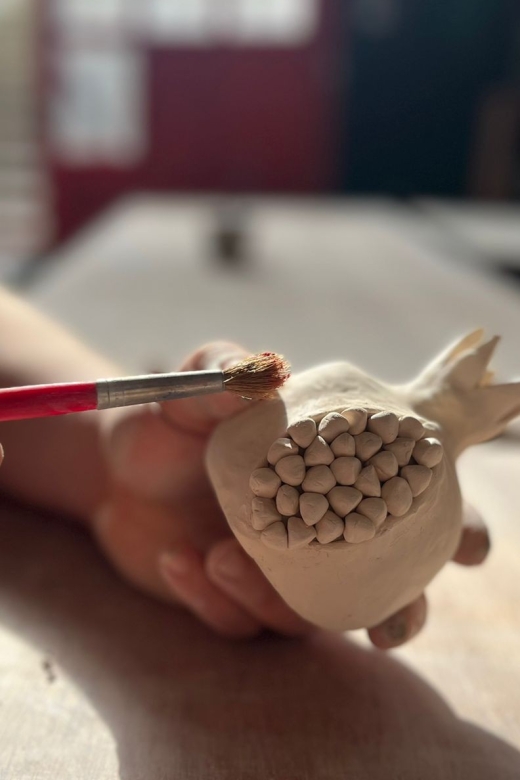
Theo guides you through the basic method for forming a pomegranate by hand. The focus is on handbuilding techniques—shaping and assembling parts—so first-timers don’t feel like they’re missing a prerequisite. You’ll create your pomegranate using actual clay during class.
2) Your piece needs drying and later finishing
Your pomegranate goes off for the next phases: painting and firing take about two weeks. That’s why the timing works the way it does. The workshop doesn’t try to rush firing and glazing before you leave. It also avoids the disappointment of taking home something that isn’t properly finished.
3) While yours is waiting, you paint a prepared pomegranate
During your 2 hours, you’ll paint a pomegranate that’s ready for you to decorate. This is a practical design choice. It means you still leave with a meaningful hand-painted result, even though your own clay creation isn’t ready yet.
4) Then you choose a finished pomegranate to take home
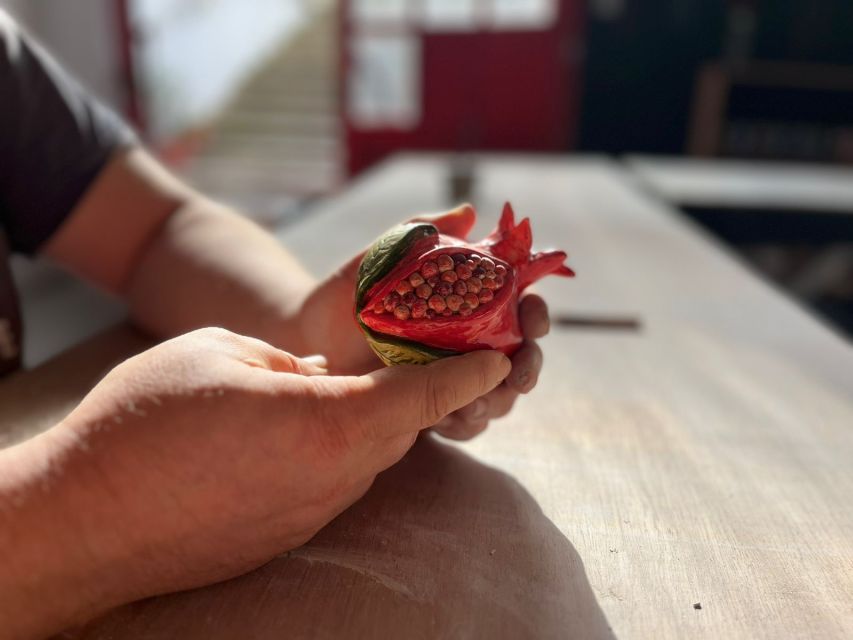
At the end, you select a beautifully crafted, finished pomegranate made by someone from an earlier class. Several people have called this exchange part “magic,” because you’re not just buying a souvenir—you’re choosing an object that has already been through the full process.
Why this matters for your planning
If you want an instant, take-it-and-go ceramic, this setup might surprise you at first. But if you’re okay with the idea that the workshop is part craft class and part community exchange, it lands really well. You still get the creativity in your hands, and you still walk away with a finished souvenir.
Handbuilding techniques you’ll actually use again
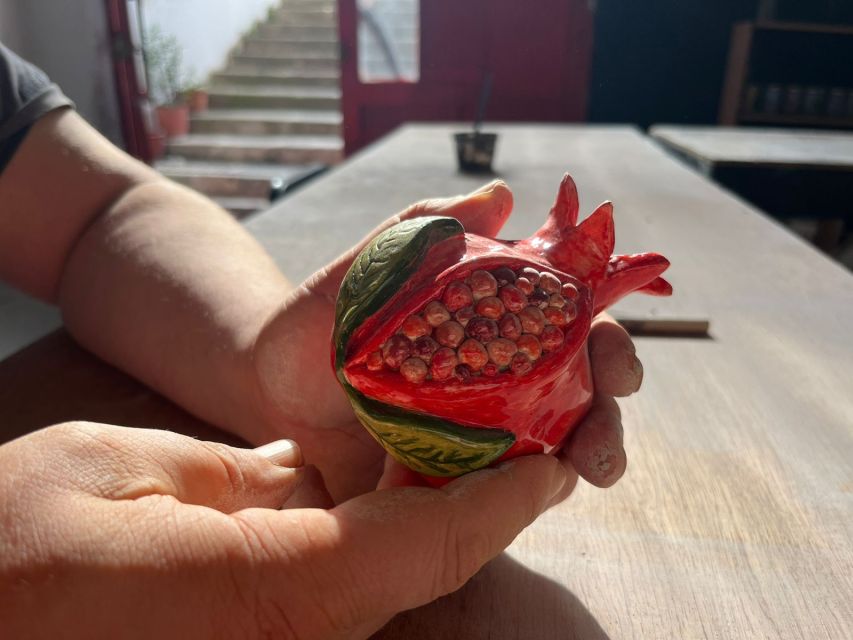
A lot of pottery classes in tourist areas end up feeling like you’re following a craft template. This one is still structured, but the skills are useful because you’re learning how to build forms, not just how to copy a picture.
During the session, you learn the basic techniques of handbuilding pottery. That includes shaping the pomegranate form and working the clay into something that looks like the symbol it’s meant to be. Even if your first attempt isn’t perfect, you’ll leave with confidence that you understand the process.
A few practical tips that help first-timers feel steady in class:
- Move at the pace Theo sets. Clay is forgiving early on, but rushing usually makes shapes harder to control.
- Expect some trial-and-adjustment. In a small group setting, Theo can correct details before they become problems later.
- Don’t overthink the “meaning.” The best decorations tend to be the ones you finish without freezing.
Theo’s teaching style shows up in the feedback people give: clear steps, encouragement, and helpful tips for people who have never touched clay before.
The pomegranate symbol: more than a cute fruit-shaped craft
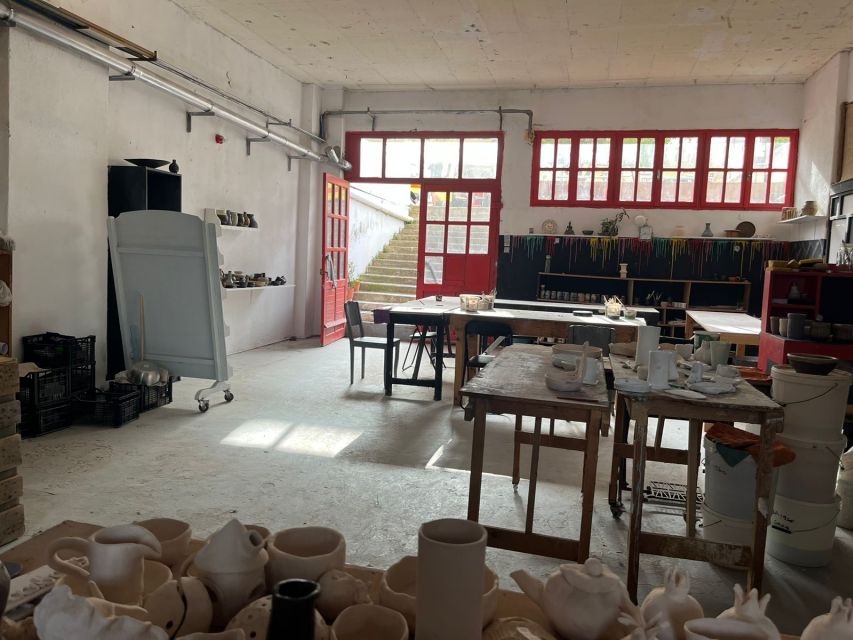
The pomegranate is a big deal in Greek culture, and this workshop treats it like more than decoration. Theo explains the significance tied to abundance and fertility, plus the broader ideas of good fortune and wealth.
That cultural context matters for your souvenir experience. When you understand what you’re making, you remember the details more. You also know how to frame it when someone asks what it is back home.
And it’s not just a one-country symbol. The class connects the pomegranate to other cultures that use it for similar meanings. That’s why the workshop feels like a bridge between places: you’re in Rhodes Town, but the object you create carries ideas that travel.
If you like crafts that have a story—without needing a museum visit to get it—this is your lane.






The global exchange feel: why you take home someone else’s pomegranate
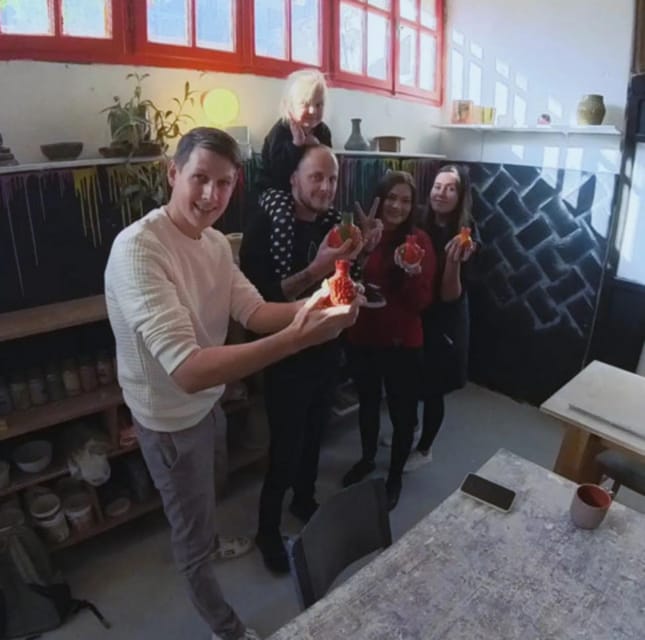
This is the part that divides people at first: you build one pomegranate in clay, but you choose a finished one made by a previous participant to take home.
There are two ways to look at it:
A downside (the obvious one)
If your dream is to take home the exact object you shaped, this won’t match that expectation. Your own piece is part of the kiln cycle and won’t be ready immediately.
A plus (the part that grows on you)
Once you understand the relay, it becomes the point. Your session doesn’t happen in isolation. Your clay pomegranate joins the chain, and the final souvenir you bring home already represents someone else’s time, decisions, and style.
Several people have said that this creates a sense of connection—like your pomegranate’s journey continues and ends up somewhere else in the world. For gift-giving, too, it means you can offer a small story with the object, not just a decorative item.
It’s also family-friendly in a thoughtful way. Even when kids are participating, the format keeps the outcome reliable: they can decorate, and the final take-home piece is already finished.
Price and value for $47 per person
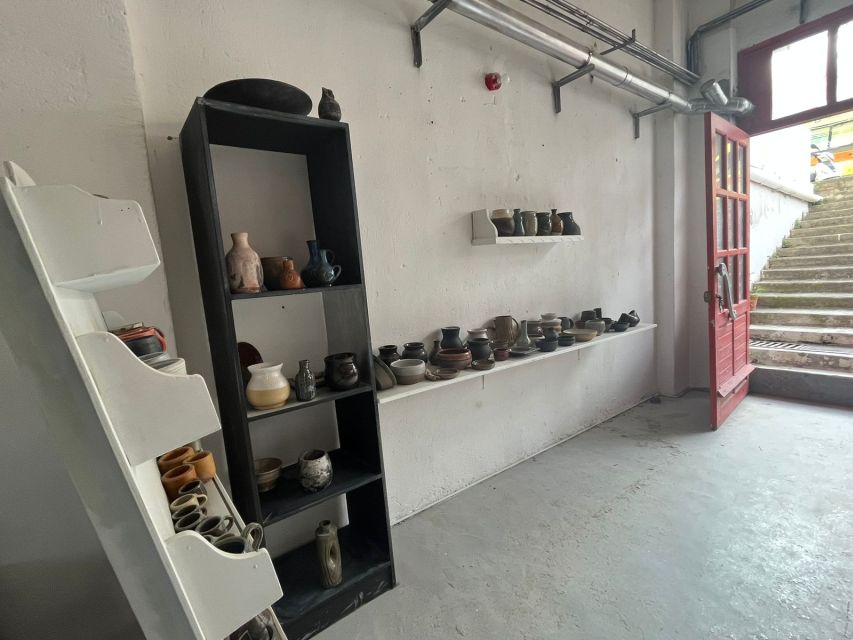
$47 for a 2-hour workshop can feel either like a steal or like a question mark, depending on what’s included. Here, the value is more solid than the number suggests because you get:
- A hands-on pottery workshop with an instructor
- Tools and paints
- Filtered coffee, plus ice-cold bottled water and refreshments
- A finished ceramic pomegranate to take home, chosen at the end
The small-group limit (up to 10) also matters. When an instructor is working with a smaller room, you typically spend less time standing around and more time actually doing. That’s part of what makes the class feel worth it, even for first-timers.
The one value check you should do is this: decide whether you’re okay with the swap model. If yes, you’re paying for a finished souvenir plus instruction plus a calm, meaningful craft session. If you need the exact item you make, then you might find the exchange format frustrating.
Who this Rhodes Town masterclass suits best
This workshop fits best if you want a creative break that doesn’t require prior experience.
You’ll probably love it if:
- you’re a first-timer who wants handbuilding basics taught clearly
- you want a souvenir with story and symbolism, not mass-produced goods
- you like slower, quieter activities during travel (coffee helps)
- you’re traveling as a couple or solo and want a small-group experience
It’s also family-friendly, but with a boundary: it’s not suitable for children under 7. If you’re traveling with kids around that age or older, it can work well because the session is guided and structured, and the studio setup supports hands-on participation.
If you have mobility concerns, it’s worth asking directly. One participant noted that Theo helped lift a mobility scooter down and back up stairs. That’s encouraging, but don’t assume it’s universal—confirm what the studio can accommodate for your specific needs.
Should you book the Pomegranate Pottery Masterclass in Rhodes Town?
Book it if you want an activity that combines creativity with Greek symbolism, and you’re open to the idea of a crafted exchange. The workshop’s structure keeps it beginner-friendly, and the take-home finale is a real advantage because you’re not leaving with an unfinished project.
Skip it only if you strongly need the exact pomegranate you build to be the one you take home the same day. Here, your clay work is part of a later firing timeline, so the souvenir in your hands comes from the finished work of earlier participants.
If you’re planning a Rhodes Town itinerary and want one experience that feels calmer than crowds, this is a great slot. You’ll leave with a tangible piece of the place—and a small story of abundance you can carry home.
FAQ
How long is the Rhodes Town Pomegranate Pottery Masterclass?
The workshop lasts 2 hours. Check available starting times when you book.
What do I make, and do I take home my finished pomegranate?
You shape a pomegranate from real clay during the workshop. Your own piece then needs drying and later painting and firing that takes about two weeks, so you won’t take home your exact piece from your session the same day. At the end, you choose a beautifully crafted finished pomegranate made by a previous participant.
Is it suitable for children?
It is not suitable for children under 7 years old. The activity is described as family-friendly, and it’s run as a small group.
What languages does the instructor speak?
The instructor teaches in English and Greek.
How big is the group?
The class is a small group limited to 10 participants.
What’s included in the price, and can I cancel?
The price includes the pottery workshop, instructor, tools and paints, freshly made filtered coffee, ice-cold bottled water, and refreshments. There’s free cancellation up to 24 hours in advance for a full refund, and you can reserve now and pay later.