REVIEW · SICILY
Private Tour of Syracuse, Ortigia and Noto
Book on Viator →Operated by The Best of Sicily Tours and Transfers · Bookable on Viator
Sicily in one packed day? This private tour strings together Ortigia and Noto so you see two very different Sicilian personalities in hours. I like the convenience of a direct private pickup (you pick the location), and I also like that you get real time on your own once you arrive, not just a drive-by checklist. The only real catch: if you want long, slow wandering in Ortigia, the schedule can feel a bit tight.
You’ll also like the way the day is built around anchors. Syracuse gives you the big historical beats tied to Archimedes and the Roman siege, and it funnels you to the coastal highlights of Ortigia like Fonte Aretusa and the Temple of Apollo. Noto then flips the mood with Baroque streets and the famous Cathedral rebuilt after the 1693 earthquake.
Before you go, think about your expectations for story depth. Some days feel more like a guided driver plus fact sharing (with optional extra guiding if you request it), so you’ll get the most value if you enjoy seeing the sites and asking questions as you go.
In This Review
- Key points to know before you go
- How this private day is paced (and who it suits)
- Ortigia: Fonte Aretusa, Temple of Apollo, and the Cathedral of Syracuse
- Syracuse beyond Ortigia: Neapolis and the “Dionysius ear” moment
- Noto’s Baroque streets: why the 1693 rebuild still shapes the city
- Food and local flavor stops: Modica chocolate and almonds, plus a reality check
- Your guide-driver can make or break the day
- Value and price: what $240.28 per person is really paying for
- Time breakdown: is 4 hours in Ortigia enough?
- Pickup and practical logistics that keep the day easy
- Is this tour for you? Quick match guide
- Should you book this private day trip?
- FAQ
- How long is the Private Tour of Syracuse, Ortigia and Noto?
- What does the tour cost?
- Is pickup included, and can I choose where to be picked up?
- Is this a private tour?
- Are admission tickets included for the stops?
- Do I need a paper ticket?
- How far in advance should I book?
- Is there a weather requirement?
- What is the cancellation policy?
- Is the tour accessible for most travelers?
- How do guides handle added history or a more guided experience?
Key points to know before you go
- Ortigia focus: Fonte Aretusa, Temple of Apollo, and the Cathedral of Syracuse are the day’s main Syracuse anchors.
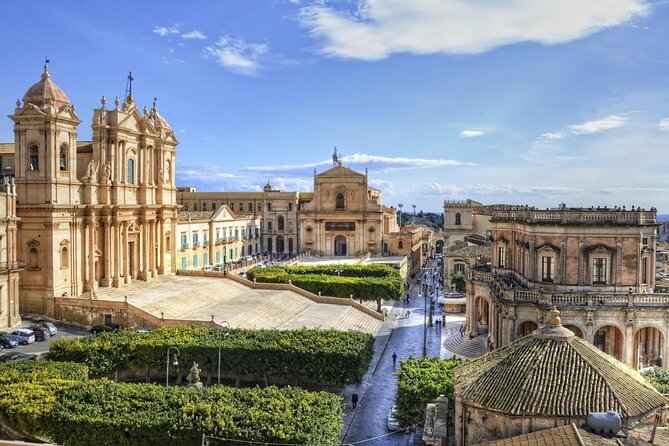
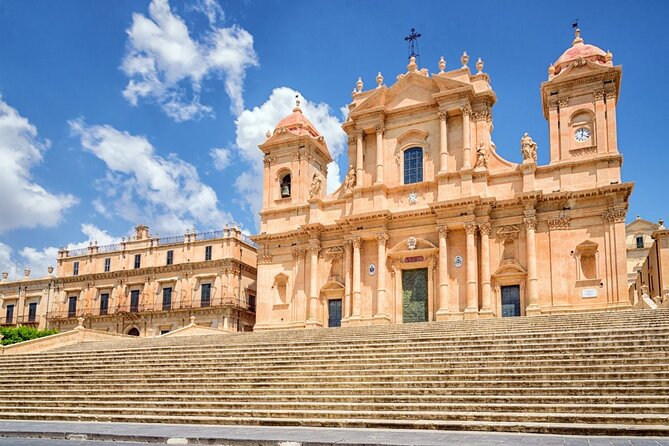
- Noto Baroque by design: rebuilt after 1693, with time to walk the historic center and reach the Cathedral of Noto.
- Private means responsive: it’s only your group, with pickup at your chosen spot and flexibility built into the day.
- Admission is listed as free: the stops are set up so you’re not paying ticket fees on top of the tour.
- Guide-driver quality varies: Manuel and Gabriele are both called out as excellent, but one bad swap can shift the vibe toward more driving than storytelling.
- Good weather matters: the tour requires decent conditions, since it’s heavily walking-and-looking.
How this private day is paced (and who it suits)
This is a 6 to 8 hour private tour that links Syracuse (mainly Ortigia) and Noto. You’re not trying to do every archaeological site on the island. Instead, you’re guided to the places you’ll actually want photos of and spend time in.
The private format changes the whole feel. If you’re traveling with family, friends, or a couple who wants control, you won’t be squeezed into a big group. And because pickup is offered from a location you choose, you can start the day without wasting time hunting down a meeting point. In other words: you save energy for walking in the historic centers.
The one thing to watch is pacing. You’ll have around 4 hours for Syracuse/Ortigia and about 2 hours for Noto. That can be perfect for a first visit, but it’s not the kind of schedule where you’ll have endless time to drift lane by lane in Ortigia. If you want extra hours in the old town, plan to add your own time after the tour.
You can also read our reviews of more tours and experiences in Sicily.


Ortigia: Fonte Aretusa, Temple of Apollo, and the Cathedral of Syracuse
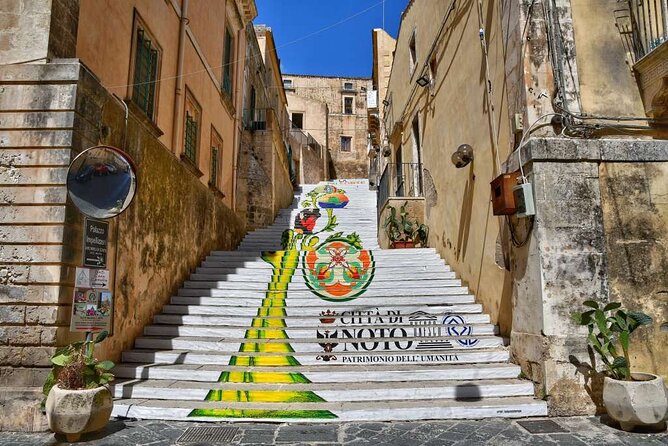
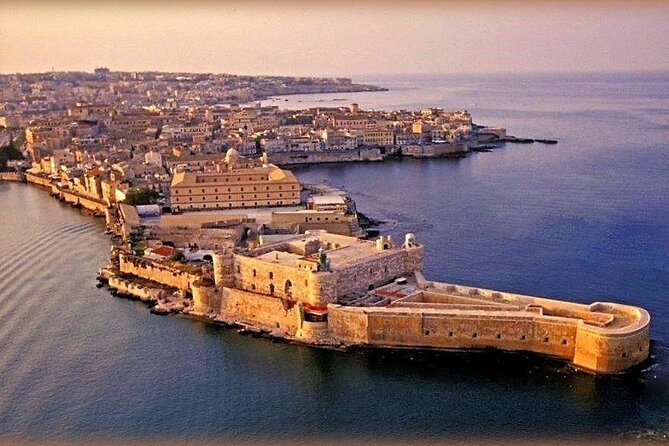
Ortigia is where this day starts to click. It’s the island heart of Syracuse, and the itinerary funnels you to the classics without turning the experience into a rushed sprint.
Here’s what you can expect to see in Ortigia:
- Fonte Aretusa: a standout coastal freshwater spring.
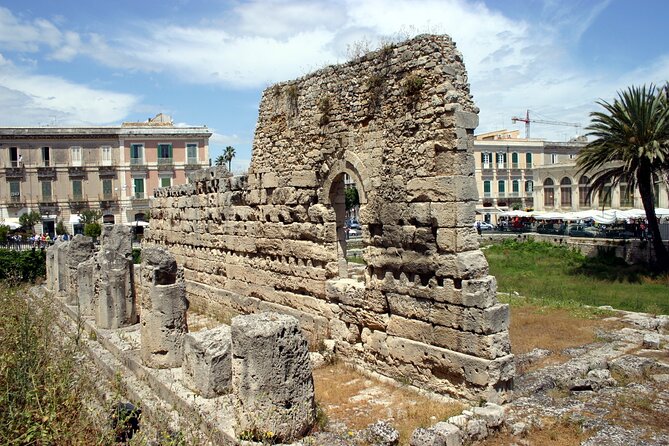
- Temple of Apollo: one of the oldest Doric temples in Sicily, with dramatic ruins you can really feel in your photos.
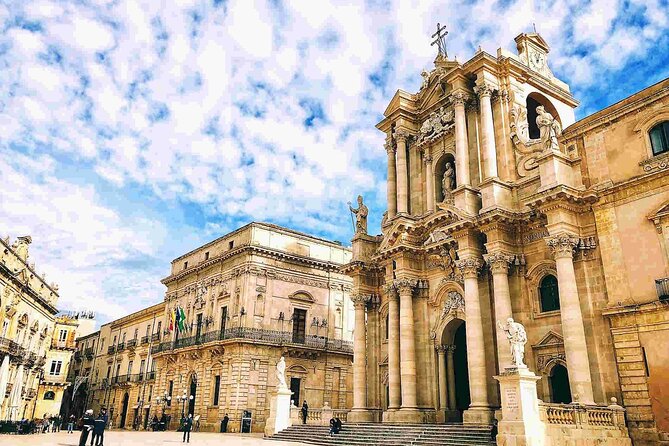
- Cathedral of Syracuse: the city’s main religious landmark, set in the atmosphere of a lived-in historic center.
What I like about this lineup is the mix. You get natural beauty (Fonte Aretusa), ancient architecture (Temple of Apollo), and then the layered Sicilian identity of the cathedral area. You’re not just ticking boxes—you’re moving through different eras in a short radius.
Do also consider this: Ortigia is popular. If your tour day happens to coincide with a busy time, your enjoyment will depend on how you use your time. When you arrive, take a moment to get your bearings, then aim for the waterfront walks early so you’re not stuck fighting crowds later.
Syracuse beyond Ortigia: Neapolis and the “Dionysius ear” moment
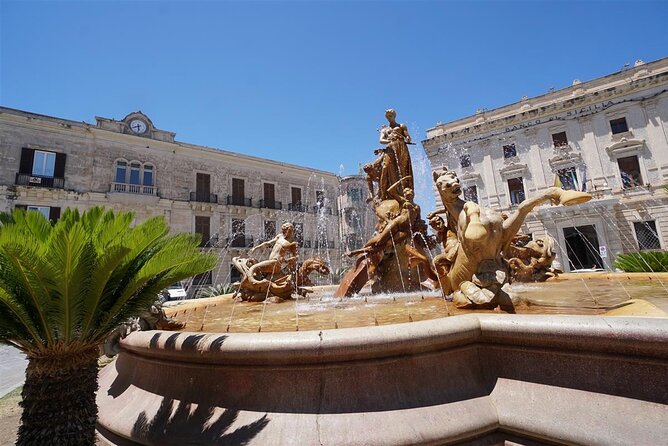
Syracuse proper gets a bonus option: the Archaeological Park of Neapolis if you wish. This is where you can extend the ancient story beyond Ortigia’s center.
One review-specific detail that helps you picture the vibe: you might run into stops connected to the grotto nicknamed Dionysius’ ear and see remains of the Apollo Temple. That matches the theme you’re already seeing in Ortigia—the mix of Roman-era siege history and Greek architectural echoes—just with more “archaeology texture” underfoot.
This optional add-on matters because it changes the day’s feel. If you’re the type who likes stone, shadows, and layout details (not just scenic views), Neapolis is often the part that lingers in your mind afterward. If you’re more about walking streets for atmosphere, you may prefer to keep your energy in Ortigia and skip extra sites.
My practical advice: if you’re even slightly curious about ancient engineering and how the terrain shaped defense, ask your driver-guide what’s feasible with your time. You’re on a private schedule, so your decision can be more flexible than on a fixed-group bus day.
Noto’s Baroque streets: why the 1693 rebuild still shapes the city
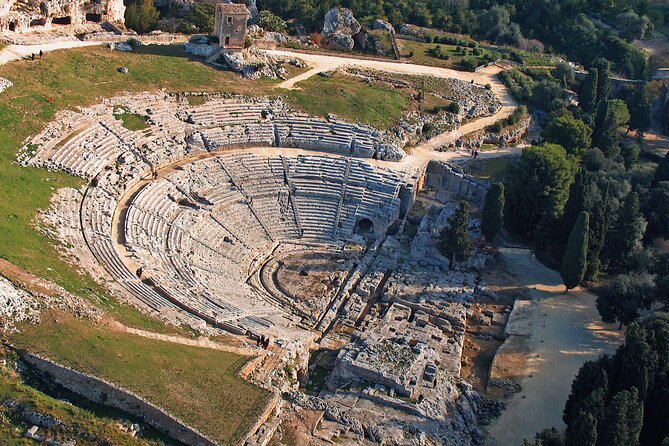
Then you switch gears—Noto. If Ortigia is about coastal drama and Greek-Roman traces, Noto is about Baroque style you can walk through.
The itinerary highlights two big ideas:
- Noto is famous for Baroque architecture
- The town was rebuilt after the 1693 earthquake, so much of what you see reflects that restoration era
In plain terms, that rebuild shows up in the way the historic center looks unified and intentionally designed. It’s not random old buildings. It reads like a town rebuilt with style in mind.
You’ll focus on the Cathedral of Noto, plus time to explore other key parts of the center. In one guide description from experience, people were taken to spots like the theater and town hall, which helps round out the architecture beyond just one church façade.
Two tips to get the most from your short time:
- Don’t try to do Noto like a museum. Do it like a stroll. The beauty is in how buildings frame streets and light.
- Wear shoes you can trust. Noto’s charm is walking between viewpoints and streets, not sitting.
Food and local flavor stops: Modica chocolate and almonds, plus a reality check
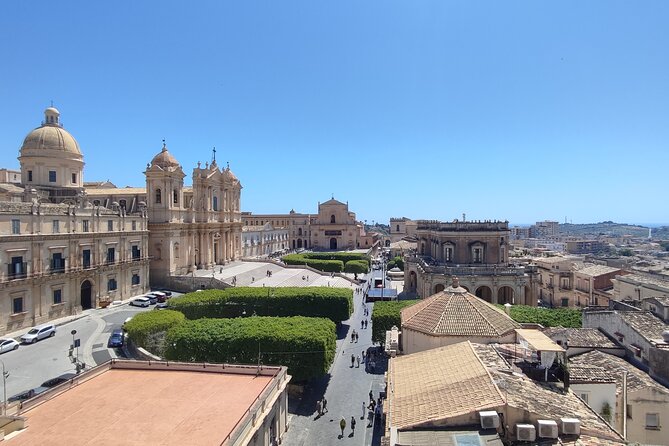
This tour doesn’t position itself as a full food tour, but it does point you toward local flavors in Noto—specifically Modica chocolate and excellent almonds.
I like including those suggestions because they’re not just souvenirs. They’re real Sicilian treats with a strong identity. If you grab a small sample, you’ll feel more connected to the place, and it’s easy to do in the time you have.
Still, here’s the reality check. If you’re offered a quick lunch option during the day, watch your choices. One experience included a visit to a food stop that felt overpriced for what it was. Your best strategy is simple: if you want a meal, plan for it either by choosing a place with good local pricing signals or by asking your guide what area makes sense and what to expect.
A particularly good move in Ortigia: look for a waterfront lunch where you can combine food with the sea views. You’ll get the atmosphere without turning the whole day into a gamble.



Your guide-driver can make or break the day
This is the part you can’t predict from a headline. The tour works best when your guide-driver is tuned in, clear, and willing to answer questions.
Two names pop up in the experiences you’ll hear people talk about:
- Manuel: described as friendly, on time, professional, and full of useful tips. People also highlight that he gave plenty of time to explore and helped with questions.
- Gabriele: praised for being attentive and knowledgeable, with a good sense of what to see in the right order.
The contrast also shows why this matters. On one day, a guide switch made the experience feel more like a private driver plus site stops, with less storytelling. The difference wasn’t about the sites—it was about the human layer that turns “we went there” into “I understood what I was seeing.”
How you can protect yourself:
- Ask questions as you arrive, especially in Ortigia.
- If you want more context at specific stops, tell your driver early in the day.
- Treat the day as flexible. If something feels too rushed, ask if you can adjust.
Value and price: what $240.28 per person is really paying for
At $240.28 per person, this tour isn’t a budget bus day. So you should evaluate it like one.
Here’s what you’re paying for, based on what’s included:
- Private transport with pickup offered
- Only your group participates
- A structured route between Syracuse and Noto
- Stops set as admission ticket free on the itinerary highlights
- The practical side: time management, getting you to the right places, and helping with decisions on the ground
That means the best value comes when you would otherwise struggle with logistics: finding parking, coordinating timing, or moving between two cities efficiently. If you can easily hire a driver yourself, you might not save money. But if you want a guided, smooth day where someone keeps the schedule realistic and helps you avoid wasted time, the price can start to make sense.
One more practical note: this experience is commonly booked about 31 days in advance. If your trip is in a busy season or you’re traveling with a tight schedule, book early so you’re not stuck choosing another day.
Time breakdown: is 4 hours in Ortigia enough?
The itinerary gives you about 4 hours for Syracuse and around 2 hours for Noto. That usually works because Ortigia is walkable and the main sites are concentrated.
But one real consideration: some people want more time in Ortigia once they’re there. It can feel like the day moves on right when the island is really delivering views and street life.
If you fall into the I-want-extra-time category, here are smarter ways to manage it:
- Spend your first half of Syracuse going for the anchor sights (Fonte Aretusa, Temple area, Cathedral).
- Then save a chunk of time for wandering with no agenda—just coffee, a slow walk, and photos.
- If you’re offered an optional Neapolis extension and you’re short on time, decide early. Don’t wait until the last hour.
You don’t want to end the day thinking you should have traded one stop for more wandering. The schedule is flexible enough to adjust, but not endless.
Pickup and practical logistics that keep the day easy
Pickup is a big quality-of-life factor here. You can choose the pick-up location, and the driver shows up at the location you specify at the chosen time. That’s especially helpful in Sicily, where different neighborhoods can make meeting points annoying.
The tour uses a mobile ticket, which is simple on the day. And since it’s listed as most travelers can participate, it’s not presented as something overly technical or limited—though you should still expect walking in historic centers.
Also factor in weather. The tour requires good weather. If it’s canceled due to poor conditions, you’ll be offered a different date or a full refund, which is reassuring.
Is this tour for you? Quick match guide
This experience fits best if you:
- Want a private day that connects two famous Sicilian stops efficiently
- Like mixing ancient sites (Ortigia) with Baroque walking (Noto)
- Prefer practical guidance and flexible exploration time over a long, lecture-style tour
- Value pickup convenience so you don’t lose time fighting transport
It’s less ideal if you:
- Want a deep, nonstop, museum-level narration at every stop
- Hope to spend half a day in Ortigia without any schedule pressure
- Get grumpy when the experience depends heavily on who your driver-guide is on the day
Should you book this private day trip?
Yes, I’d book it if you’re using it as a smart sampler: Ortigia for classic Syracuse atmosphere and Noto for Baroque architecture you can walk and photograph fast. The private pickup and concentrated sights make the day efficient, and the admission approach keeps costs from ballooning.
If you’re the type who wants slower pacing and lots of “just one more street,” consider booking and then planning extra independent time in Ortigia for a second visit window. This tour is a strong first encounter, not a full day-long takeover of either city.
FAQ
How long is the Private Tour of Syracuse, Ortigia and Noto?
The tour runs about 6 to 8 hours, with an approximate 4 hours for Syracuse/Ortigia and about 2 hours for Noto.
What does the tour cost?
The price is $240.28 per person.
Is pickup included, and can I choose where to be picked up?
Yes. Pickup is offered, and you can choose the pick-up location. A driver will show up at the location you specify at the selected time.
Is this a private tour?
Yes. It’s private, so only your group participates.
Are admission tickets included for the stops?
The itinerary highlights are listed as admission ticket free.
Do I need a paper ticket?
No. The tour uses a mobile ticket.
How far in advance should I book?
On average, it’s booked about 31 days in advance, so booking earlier is a good idea.
Is there a weather requirement?
Yes. The experience requires good weather. If it’s canceled due to poor weather, you’ll be offered a different date or a full refund.
What is the cancellation policy?
Free cancellation is available. You can cancel up to 24 hours in advance for a full refund.
Is the tour accessible for most travelers?
Most travelers can participate, based on the experience information provided.
How do guides handle added history or a more guided experience?
The tour includes a local driver setup with history sharing. If you want a licensed guide, that can be requested and paid separately.