REVIEW · SANTORINI
Private Cultural Villages Sightseeing & Akrotiri Excavations
Book on Viator →Operated by Santorini Road Trips · Bookable on Viator
Four hours, and Santorini feels less crowded. This private tour blends quieter villages with the world-famous Akrotiri excavation, so you see more than the usual postcard stops in one smooth day; I also like the hotel or cruise pickup and the easy pacing. The one thing to plan for: your driver won’t be allowed to guide inside Akrotiri, so you’ll rely on the site’s setup and you may want a licensed on-site guide if you want extra explanation.
I love tours that trade bus parking lots for narrow streets and stone alleys, and this one does that. With an air-conditioned van, bottled water, and live commentary, the day stays comfortable even when Santorini is cooking.
In This Review
- Key highlights you’ll feel right away
- Why Santorini’s quieter villages beat the usual rim stops
- Private pickup and a 4–5 hour schedule that actually works
- Stop 1: Pyrgos, Santorini’s oldest hilltop village with Venetian castle vibes
- Stop 2: Megalochori’s traditional streets and cave houses carved into stone
- Stop 3: Emporio’s Castelli of Emporio and pirate-era planning
- Stop 4: Akrotiri Archaeological Site, the Bronze Age town under volcanic ash
- The van ride experience: comfort, live commentary, and smart timing
- Price and value: what you’re really paying for
- Guide quality makes or breaks a cultural day
- Tips to make the day smoother (and more photogenic)
- Should you book this private villages and Akrotiri tour?
- FAQ
- How long is the private cultural villages and Akrotiri tour?
- Is Akrotiri admission included?
- Will I be picked up from my cruise ship or hotel?
- What if I’m a cruise passenger and need the cable car?
- Is this tour truly private?
- Can the driver guide inside the Akrotiri excavations?
- What is included in the tour price?
- Is there free cancellation?
Key highlights you’ll feel right away
- Private, door-to-port pickup so you’re not timing yourself with cable cars and crowds
- Pyrgos, Megalochori, and Emporio: the kind of villages most itineraries skip
- Akrotiri’s Bronze Age town with preserved buildings and frescoes you can actually walk past
- Comfort first: air-conditioned deluxe van plus water for a half-day outing
- Guide storytelling that turns village architecture into a real sense of place (names like Mike, George, Sakis, Vasilis, and Panagiota come up often)
Why Santorini’s quieter villages beat the usual rim stops

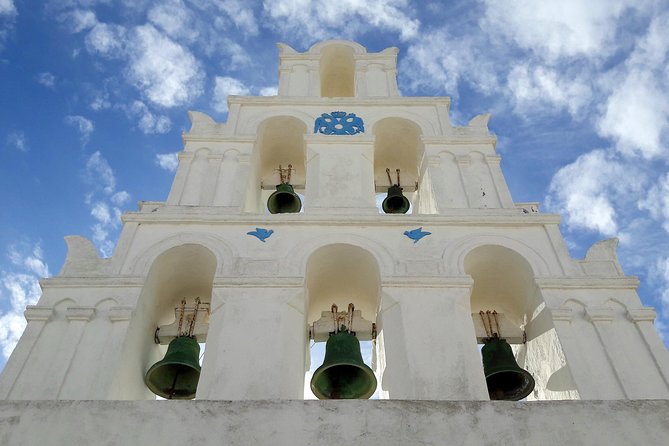
Santorini gets famous for a reason, but the most photogenic parts also get crowded fast. This tour flips the script: you start with hilltop and village Santorini—stone lanes, bell towers, and the practical ways locals lived with volcanic ground.
The best part is how the day has a theme. You’re not bouncing randomly between viewpoints; you’re moving through places shaped by Venetian rule, pirate worries, and the realities of building on the caldera’s volcanic rock.
You can also read our reviews of more tours and experiences in Santorini.



Private pickup and a 4–5 hour schedule that actually works
You’ll begin and end at your cruise ship or hotel (or the airport/ferry meeting point if you’re traveling that way). That matters, because Santorini is a maze of viewpoints, cable cars, and tight streets—showing up on your own can waste time before the sightseeing even begins.
This experience runs about 4 hours (often described as a 4–5 hour private outing), and the pace matches that. You get focused time in each place—enough to wander and take photos, not so much that you feel stuck waiting.
One small planning note: you should have a moderate physical fitness level. You’ll be walking village streets and paths, and a few stops are on uneven ground.
Stop 1: Pyrgos, Santorini’s oldest hilltop village with Venetian castle vibes
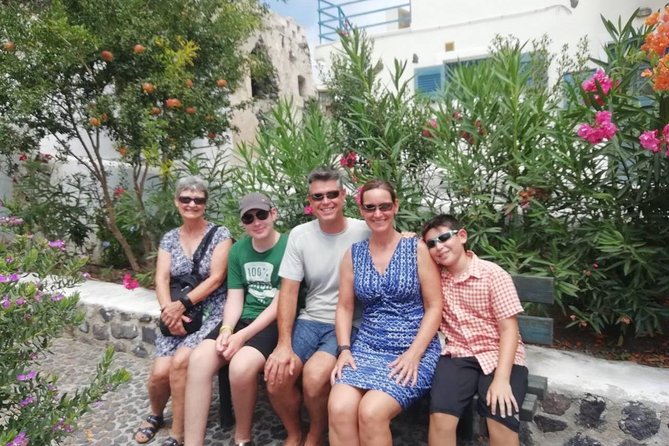
Pyrgos starts the day in a strong way because it feels like history first, views second. The village is built on a hill and is often described as Santorini’s historic monument, with a 16th-century Venetian castle setting the tone.
What you’ll enjoy here is the layout. Pyrgos is known for its fortification-like feel: small alleys, circular roads, and cave-like homes with balconies and pebbled paths. Around it, you’ll also see vineyards and those classic blue-domed churches that people love—except here you get more breathing room while looking for them.
How to enjoy the stop: go slow through the alleys. In Pyrgos, the charm isn’t one big view—it’s the texture of lanes, the small doors, and the way the village climbs.
Stop 2: Megalochori’s traditional streets and cave houses carved into stone
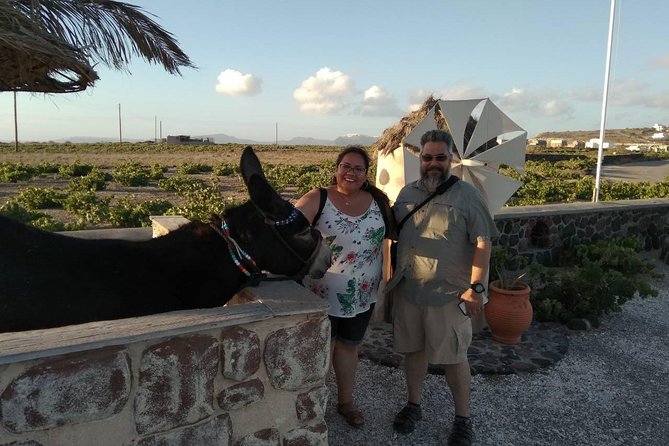
Next comes Megalochori, a village many visitors miss because it’s not on the main rim circuit. It’s one of Santorini’s most picturesque traditional settlements, with Cycladic houses dug into volcanic rock—so you can actually see how the island’s geology shaped daily life.
Here you’ll notice details like bell towers and churches with blue domes, plus the underground cave homes that gave people shelter and practicality. It’s also a great place to reset your day with something simple, like a Greek coffee at the pebble-stoned square, and just watch local life go by.
The value of this stop: it’s the moment when Santorini starts to feel like a home, not a backdrop. Even if you’re mostly here for photos, the cave houses change what you understand about the island.
Stop 3: Emporio’s Castelli of Emporio and pirate-era planning

Emporio (often associated with the Castelli of Emporio) is where the story shifts into defense and trade. During the Venetian occupation, Emporio functioned as a commercial center, and in medieval times locals built houses close together in narrow streets to shield themselves from pirates.
That’s why the castle area feels so different from the open-rim villages. You get compact walking paths, closely packed architecture, and that sense of a community designed for safety. The castle structure dates to the mid-15th century, and exploring it gives you a clearer picture of how power and risk shaped stone and street plans.
One drawback to consider: like most village stops, your time is limited (about 45 minutes). If you fall in love with Emporio’s lanes and want longer, Akrotiri can still be the main event, but don’t expect an all-day wander here.






Stop 4: Akrotiri Archaeological Site, the Bronze Age town under volcanic ash
Then you reach the star of the show: Akrotiri Archaeological Site. This is a prehistoric settlement around 4,000 years old, famous for being wiped out by a major volcanic eruption and then preserved under volcanic ash.
Walking through Akrotiri feels like stepping into a plan that was already built for multi-level living. You can see walls and streets, 3-story buildings, and well-preserved frescoes. There’s also mention of an elaborate drainage system—because even a city that age clearly cared about water.
Important planning detail: your guide/driver isn’t allowed to provide guidance inside the excavations. That means you’ll rely on the site’s own explanations, and if you want more interpretation, you may hire one of the licensed archaeology guides available there.
How I’d time this stop: treat the first part as orientation and the second part as curiosity. Spend a bit of time soaking in the scale, then return to details like wall layouts and painted surfaces.
The van ride experience: comfort, live commentary, and smart timing
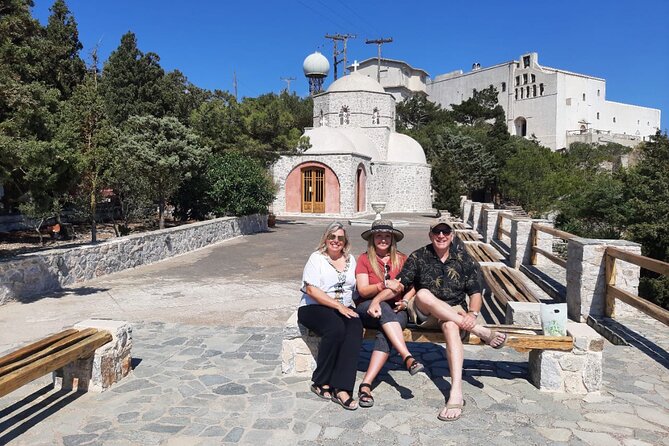
Between stops, you’re in an air-conditioned deluxe van with bottled water. That sounds basic, but on Santorini it changes how much you actually enjoy each stop. You’re not spending your energy overheating, and you’re not hunting for parking or walking long distances between sites.
You also get maps and live commentary, in English, so the driving isn’t just transit. The commentary helps you read what you’re seeing—why villages are where they are, why the architecture looks the way it does, and how the island’s history fits together.
One more plus: the tour is private, meaning it’s only your group. You’re not squeezed around a dozen strangers while trying to read signs or take a photo.
Price and value: what you’re really paying for
At $217.69 per person for about 4 hours (often described as 4–5 hours), the price feels fair for a private half-day that includes meaningful extras.
Here’s what you’re getting that helps justify the cost:
- Hotel/port pickup and drop-off (huge on cruise days)
- Private air-conditioned transportation
- Experienced local driver/guide plus live commentary and maps
- Free admission to Akrotiri (so you don’t pay the main ticket cost separately)
What’s not included:
- For cruise passengers, cable car tickets are optional at €10 per person if needed for access.
Also, this tour averages booking well in advance (about 84 days). That’s a sign that people are planning their days carefully on limited cruise-port windows.
Value bottom line: you’re paying to trade crowd-management stress for a smoother itinerary and better village access.
Guide quality makes or breaks a cultural day
This is one of those tours where the guide can turn architecture and ruins into stories you remember. In the experiences shared, island guides such as Mike, George, Sakis, Vasilis, Panagiota, Alex, and Tasos show up for their mix of pacing and context.
A couple patterns appear again and again:
- Local pride: guides connect the places to real life and family stories.
- Flexibility: the schedule can bend to match your group’s needs.
- Comfort and timing: some guides even handle cruise delays by waiting longer than you’d expect, which is a big deal when your ship controls the clock.
If your top goal is to understand what you’re seeing (not just collect views), a strong guide is the best investment you can make.
Tips to make the day smoother (and more photogenic)
A few practical moves help:
- Wear shoes you trust on uneven stone lanes and volcanic paths.
- Bring water and plan for sun, especially since Akrotiri includes outdoor walking areas before you get inside explanations.
- If you’re cruising, consider that meeting points can be specific; you’ll want to confirm where your guide will be waiting based on your ship timing.
- For Akrotiri, if you care deeply about archaeology, consider arranging a licensed site guide so you get extra interpretation inside the excavations.
Should you book this private villages and Akrotiri tour?
Book it if you want Santorini that feels lived-in: Pyrgos, Megalochori, and Emporio plus Akrotiri, all without spending your day in the biggest crowds. It’s also a great fit if you’re on a cruise or short stay and you don’t want to wrestle transportation between scattered stops.
Skip it (or at least adjust expectations) if you’re hunting for a long, leisurely museum-style day at Akrotiri. You get about an hour there, so this works best as a focused hit-and-learn outing, not as a deep archaeologist retreat.
FAQ
How long is the private cultural villages and Akrotiri tour?
It lasts about 4 hours on average, and it can run about 5 hours as a private journey.
Is Akrotiri admission included?
Yes. Admission to the Akrotiri Archaeological Site is included (free admission).
Will I be picked up from my cruise ship or hotel?
Yes. The tour offers hotel/port pickup and drop-off. Cruise passengers meet at the top of the cable car exit with your name on a sign.
What if I’m a cruise passenger and need the cable car?
Cable car tickets are not included. They are optional and cost €10 per person for cruise passengers.
Is this tour truly private?
Yes. It is a private tour/activity, and only your group participates.
Can the driver guide inside the Akrotiri excavations?
No. The driver/guide is not allowed to guide within Akrotiri’s excavations. If you want a guided explanation inside, you can hire a licensed archaeology guide at the site.
What is included in the tour price?
Included items are bottled water, an experienced local driver/guide, private transportation in an air-conditioned deluxe van, maps and live commentary, free Akrotiri admission, and hotel/port/airport pickup and drop-off.
Is there free cancellation?
Yes. You can cancel up to 24 hours in advance for a full refund.