REVIEW · PALMA DE MALLORCA
Palma de Mallorca : Private Custom Walking Tour with A Guide
Book on Viator →Operated by Guydeez · Bookable on Viator
Palma gets more sense when someone points out what matters. This private, custom walking tour helps you read the city at street level, with a guide who can tailor the pace and focus, plus a lineup built around major landmarks like the Banys Àrabs and Palau de l’Almudaina. I also like that you’re not stuck in a rigid route, since the tour can run from 2 to 8 hours depending on what you want to slow down for.
One thing to keep in mind: meeting points and guide styles can vary, so you’ll want to be extra clear on where you start and what you expect from the walk.
In This Review
- Key things that make this tour work in Palma
- Why a private custom walk is a smart way to start in Palma
- Price and logistics: what $84.02 covers (and how to get your money’s worth)
- Placa de Cort: the civic heart where Palma’s story starts
- Santa Eulalia church: faith, identity, and a 1931 cultural stamp
- Banys Àrabs: Muslim architecture you can actually feel in the stone
- Reial Convent de Sant Francesc: medieval power, Gothic cloisters, and quiet corners
- Plaça Major: where you switch from monuments to everyday Palma
- Palau de l’Almudaina: royal residence and the alcázar mindset
- What to ask your guide before you start
- Guide quality and communication: the downside you should plan around
- Who this Palma private walking tour is best for
- Should you book this private custom walking tour?
- FAQ
- How long is the Palma private custom walking tour?
- Do I get picked up from my hotel or the cruise terminal?
- What sights are included in the walk?
- Are entrance fees included?
- Is food or drinks part of the tour price?
- Is this a private tour?
- What language is the guide?
- Can I cancel for a full refund?
- Are service animals allowed?
Key things that make this tour work in Palma
- Private and custom: You can steer the route toward photos, quieter side streets, or more story time.
- A smart mix of eras: Muslim architecture at the Arab Baths, then the medieval convent, then royal power at La Almudaina.
- Free-entry stops: The major listed sights come with free admission for this experience, so your money goes toward the guide, not ticket booths.
- Pickup from your base: If you’re staying in Palma, the guide meets you at your hotel; cruise passengers get a convenient city-center option.
- Guide flexibility shows up fast: In past tours, guides like Cristina, Marion, Alex, and Hamid have been praised for adapting around your interests and even weather.
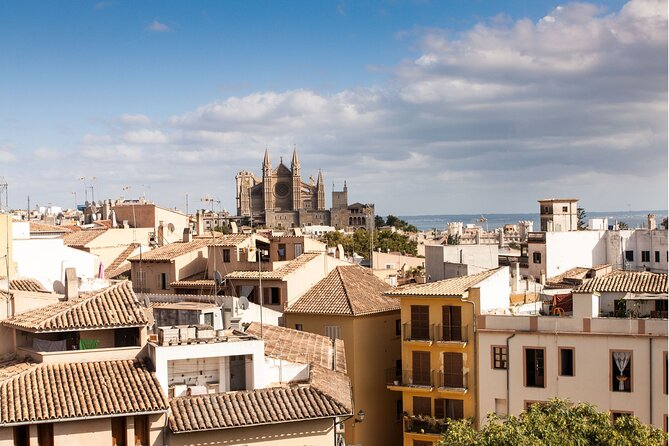
- A walking city, not a car tour: You’re on foot in the historic core, where you can actually notice details you’d miss from a bus window.
Why a private custom walk is a smart way to start in Palma
Palma de Mallorca is a city of short streets and sudden views. If you try to do it like a checklist, you miss the rhythm: where the locals linger, how the churches sit against older streets, and how the royal and religious buildings anchor the whole layout. A private custom tour is a good fix because you can ask for exactly what you care about—architecture, stories, photo stops, or simple orientation so you don’t feel lost later.
This also matters because the route can stretch from 2 to 8 hours. That range is useful. On a tight schedule, you can focus on the key highlights with breathing room. On a longer day, you can slow down for churches, cloisters, and those small lanes where Palma really feels like Palma.
You can also read our reviews of more tours and experiences in Palma de Mallorca.

Price and logistics: what $84.02 covers (and how to get your money’s worth)
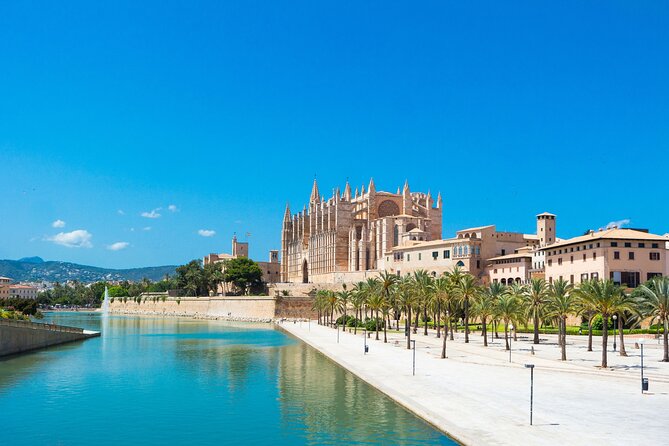
At about $84.02 per person, this isn’t a “cheap sightseeing” option. It’s more like you’re paying for two things: a dedicated guide and a walk that you can shape. You’re also getting pickup offered (hotel in Palma or a cruise terminal meet-up option), plus mobile ticketing and an English-speaking guide.
So here’s the value question you should ask yourself: do you want help turning sights into context? If yes, a private guide is where the money goes. If your goal is only to pass by monuments with minimal talking, you may feel the cost more than you expect—some reviews have mentioned that the knowledge level and engagement can vary by guide.
Practical tip: message your expectations early. If you want photo time, say so. If you want shorter breaks, say so. Guides who have worked with families and teens (like Marion, who adjusted for a younger pace and photography) tend to do best when you clearly set the tone from the start.
Placa de Cort: the civic heart where Palma’s story starts
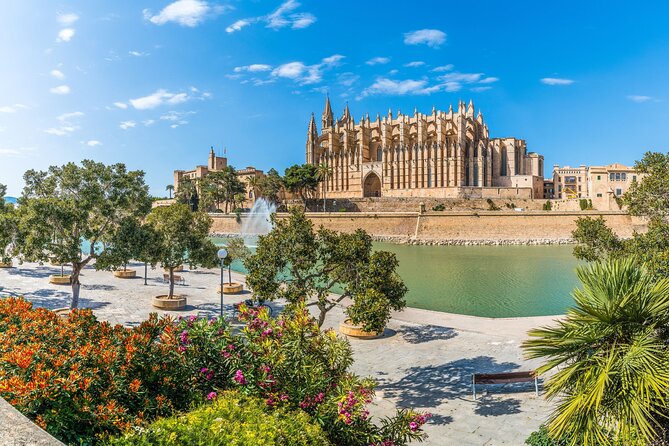
Your walk begins around Placa de Cort, the central square tied to Palma’s city hall. Even if you’ve never studied the town’s past, a square like this gives you a map in your head. You can see how streets funnel toward the center, and how the civic buildings create the city’s “home base.”
The square’s name points to the old Catalan term Cort, where the city’s court used to meet. That’s one of those details that makes you look twice: you start noticing that Palma’s layout wasn’t random. It evolved around power—legal, political, and later royal and religious.
If you’re trying to get your bearings fast, this first stop is a smart move. It’s central enough that you’ll recognize it later, but it also sets up what comes next: the religious side of the city and the monuments that radiate outward.
Santa Eulalia church: faith, identity, and a 1931 cultural stamp
From Placa de Cort, you head toward La Iglesia parroquial de Santa Eulalia, a Catholic church devoted to Eulalia of Barcelona. This is also listed as a Bien de Interés Cultural since 1931, which means the building has official protection because of its cultural value.
Why I like this stop for first-timers: it adds meaning to the skyline. Churches in Palma aren’t just religious stops; they’re landmarks that help you understand where you are. The saint connection to Eulalia of Barcelona also helps you see the Balearic Islands as part of a wider Mediterranean story, not a totally separate world.
One consideration: if you prefer a tour that focuses mostly on exteriors and quick photo moments, you might want to tell your guide ahead of time. Some guides have been described as more history-heavy, and others adapt their pace toward the group. A short request like I prefer more street-level context can steer the tone.
Banys Àrabs: Muslim architecture you can actually feel in the stone
Next up is Banys Àrabs, the Arab Baths on Can Serra street. This is one of Palma’s most emblematic monuments linked to Muslim architecture. Even if you don’t read architectural details, you’ll get the sense of how space was designed for rituals of cleanliness and cooling down in a different climate logic than later Christian Europe.
This stop is also valuable because it interrupts the usual “church and palace” pattern. Palma’s Old Town layers cultures in the same walking footprint, and the Arab Baths are a direct reminder that Mallorca’s past was shaped by different rules and different aesthetics.
Timing note: the tour schedule lists about 30 minutes here. That’s usually enough to notice key features and let the guide explain what you’re seeing without turning it into a long museum session. If you’re the kind of person who loves photos, ask your guide where to stand for the best angles—some guides (like Alvaro in past tours) have been praised for helping guests take good pictures during the walk.


Reial Convent de Sant Francesc: medieval power, Gothic cloisters, and quiet corners
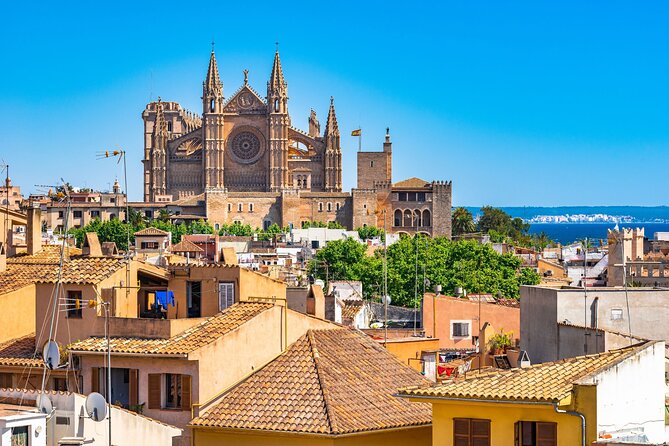
Then you reach Reial Covent de Sant Francesc, the Convent of San Francisco. The complex includes a minor basilica, cloister, and attached buildings. Construction began at the end of the 13th century, and the Gothic cloister was declared a National Monument on February 4, 1881.
This stop works well because it gives you a change of mood. After open squares and dense streets, a cloister area often feels like a pause button. Even if you’re not a hardcore architecture fan, the guide can help you connect the Gothic style to the era’s priorities: order, sacred space, and the kind of institutional building that lasts.
A practical expectation: the schedule lists about 30 minutes for this stop. If you want more quiet time inside chapels or around cloister spaces, a private tour helps because you can spend a bit longer and cut time elsewhere.
One note for style: some guides have been described as focusing heavily on history. If that’s your thing, great. If you want a mix—stories, then a quick walk-through—tell your guide early. People have specifically praised guides like Alex for letting guests have moments to themselves in church areas while still keeping the narrative going.
Plaça Major: where you switch from monuments to everyday Palma
Plaça Major is a central square near other landmarks like the church of San Miguel and the Principal theater. This is the kind of place that makes the tour feel real, not just like a museum route.
In a guided walk, a square like this is helpful because it’s where you regroup. You can look up, check your phone photos, and reset before moving on to royal power at La Almudaina. It also helps you learn Palma’s “everyday geometry”: where people cross, where the light lands, and where the best street-level views usually are.
Because the tour keeps things flexible, this square can serve different roles depending on what you want. If you like people-watching, take a few extra minutes. If you’d rather keep it moving, you’ll still get context without losing momentum.
Palau de l’Almudaina: royal residence and the alcázar mindset
Finally, the walk lands at Palau de l’Almudaina, the Royal Palace of La Almudaina. It’s one of the official residences of the Spanish royal family and is categorized as an alcázar, meaning a fortified palace.
This last stop gives the city a big-picture frame. After churches and baths, you can see how power works differently. Religious buildings shape belief and community life. Royal palaces shape governance, security, and official visibility. And because it’s an alcázar, you can often feel the fortress logic in the way the structure sits and how the space is arranged.
The schedule lists about 40 minutes here, which is usually enough to cover the essentials: what the palace is, why it matters, and what to notice from where you’re standing. If you’re a fan of photos, this is the time to ask for the best angle for pictures in front of the cathedral or palace areas—guides have been praised for helping guests get strong shots.
What to ask your guide before you start
To get the best version of this tour, I’d go in with a few clear priorities. Private tours work because the guide can react, but they need cues from you.
- Tell them your preferred balance: more architecture, more stories, or more free time for photos.
- Mention any pacing needs. Some guides have been noted for walking slowly and taking breaks for elderly guests.
- If you want a food moment, ask. Drinks and food aren’t included, but guides have helped with practical suggestions and even reservations at local spots such as Cellar Pages in past tours.
- If you’re visiting on a day with crowds or ceremonies, ask how the guide handles timing around events. There’s been at least one case of a wedding party at the cathedral area, and timing mattered.
Guide quality and communication: the downside you should plan around
This tour has a strong overall rating, but the details matter. A few negative experiences point to two weak spots you can protect yourself from:
1) Meeting-point confusion. Some guests reported unclear instructions involving map pins or the wrong meeting location, leading to delays and extra costs like taxi rides. Your move: double-check the exact start landmark and pin before you leave, and give yourself buffer time.
2) Guide fit. Some people felt the guide was disengaged or not delivering the depth they expected. Others complained about limited inside access or about the tour being too history-heavy for their group. Your move: set expectations early. If you want you must go inside parts of churches or cloisters, ask. If you want more conversation and less lecture, say so.
In a private tour, you have more control than you think. The best guides (including locals praised in past tours such as Cristina, Mimi, Marion, Tiara, and Alex) use flexibility as a strength, not an excuse.
Who this Palma private walking tour is best for
This is a great fit if you fall into one of these categories:
- First-timers in Palma who want a clean orientation and memorable context fast.
- People who hate rigid itineraries, and want the guide to adjust timing, breaks, or photo stops.
- Families (including teens). Guides have been praised for making the stories land and for adding short pauses.
- History-and-architecture fans who will enjoy the shift from Arab Baths to medieval convent to royal palace.
It may be less ideal if you’re expecting a “museum blitz” with guaranteed deep interior access everywhere, or if you mainly want to check buildings off quickly with minimal explanation. Also, if you’re sensitive to delays, take extra care with meeting-point clarity.
Should you book this private custom walking tour?
I’d book it if you want Palma to make sense in your head, not just in your camera roll. The combination of Banys Àrabs, the medieval convent complex, central squares, and the alcázar-style La Almudaina gives you a strong cross-section of the city’s identity without requiring extra ticket spending.
I’d think twice if you’re the type who needs everything to run like clockwork from the exact first minute, or if you dislike long story lectures. If you do book, protect yourself with one simple step: confirm the exact meeting point and tell the guide your priorities in one message. If the guide matches your style, this kind of private walk is one of the easiest ways to fall for Palma.
FAQ
How long is the Palma private custom walking tour?
The duration runs from 2 to 8 hours (approx.), depending on how you customize the experience.
Do I get picked up from my hotel or the cruise terminal?
Yes. Pickup is offered if you’re staying in Palma, and the tour can meet you at your accommodation. If your hotel is outside the city, the meeting point shifts to a convenient city-center location. Cruise terminal pickup is also offered.
What sights are included in the walk?
The listed stops are Placa de Cort, La Iglesia parroquial de Santa Eulalia, Banys Àrabs, Reial Covent de Sant Francesc, Plaça Major, and Palau de l’Almudaina.
Are entrance fees included?
The listed admission for these stops shows free admission tickets, and the tour includes the guided experience. Food and drinks are not included.
Is food or drinks part of the tour price?
No. You can take a break if you want, but drinks or food are not included.
Is this a private tour?
Yes. It’s a private tour/activity, and only your group participates.
What language is the guide?
The tour is offered in English.
Can I cancel for a full refund?
Yes. You can cancel for a full refund up to 24 hours before the experience start time. If you cancel less than 24 hours before, the amount paid is not refunded.
Are service animals allowed?
Yes. Service animals are allowed.