REVIEW · LANZAROTE
North Lanzarote: The Work of César Manrique
Book on GetYourGuide →Operated by Canary Trip Booking · Bookable on GetYourGuide
Manrique turns nature into art on this north Lanzarote route. I especially love the César Manrique Foundation with its volcanic bubble-like shapes and the Cueva de los Verdes cave experience that feels like stepping into Earth’s engine. One possible drawback: the day is packed, so a couple of stops can feel short if you want to linger.
You’ll also get a practical mix of “why Lanzarote looks like Lanzarote,” from the old capital Teguise to plant-focused places like the Cactus Garden and the aloe museum. If you’re picky about timing, plan your priorities early, because the itinerary moves from one highlight to the next.
Language can matter. The tour runs with live guides in English, German, and French, and I’d keep an eye on comprehension if you choose French—one guide I saw mentioned had a strong accent, which can make details harder to catch.
In This Review
- Key highlights worth your attention
- North Lanzarote’s “Manrique first” philosophy
- Tahiche: stepping into César Manrique’s volcanic imagination
- Teguise and the view over El Valle de las Mil Palmeras
- Cueva de los Verdes: a cave that actually feels like Earth
- The Cactus Garden and Aloe Museum: plants with a lesson
- Guatiza prickly pears, cochineal dye, and an old quarry
- Price and timing: does $101 feel fair for an 8-hour day?
- Guide quality and language: what to watch before you pick a language
- Practical tips so the day feels smooth
- Who this tour is best for
- Should you book North Lanzarote: The Work of César Manrique?
- FAQ
- How long is the tour?
- What’s included in the price?
- Do I need to buy tickets in advance?
- What places will I visit?
- Is lunch provided?
- Will I be picked up from my hotel?
- What languages are available for the guide?
- Is the tour wheelchair accessible and are pets allowed?
Key highlights worth your attention
- César Manrique Foundation in Tahiche: volcanic forms that make the art feel grown, not placed
- Cueva de los Verdes: an unforgettable walk through a cave shaped by volcanic eruptions
- Cactus Garden: more than 1200 cactus species in a setting that feels like a living science lesson
- Teguise (old capital vibes): paved lanes and plazas that help you picture the island before modern tourism
- Aloe Museum + Guatiza: learn the plant basics, then connect it to dye production from prickly pears
- A natural-art stop at an old quarry: Manrique’s idea that beauty can follow the land’s logic
North Lanzarote’s “Manrique first” philosophy
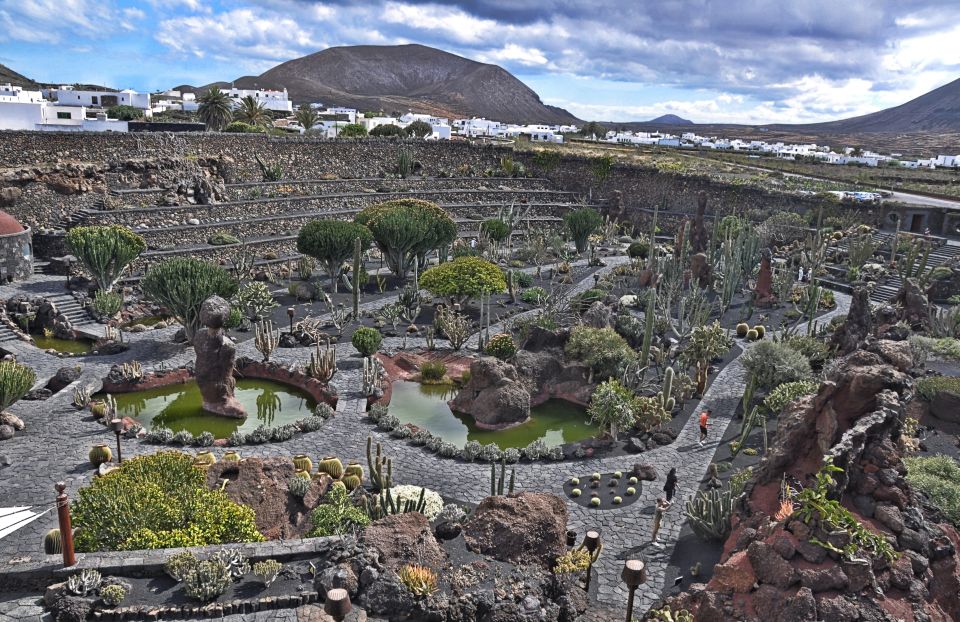
This is the kind of day tour that makes sense if you want depth without renting a car. It’s built around one key idea: César Manrique didn’t treat nature like something to decorate. He treated it like the starting point, then designed art to work with volcanic geology, light, and materials already on the island.
The route also gives you balance. You don’t just chase photos. You walk through a cave, you “tour” a garden like a mini-botany lesson, and you spend time in Teguise to remember that Lanzarote has long been a human island, not only a volcanic one.
The good news for first-time visitors: most of the big, recognizable stops are here. The reality check: it’s still a full day, so you’ll spend less time at each site than you would if you were going slowly on your own.
You can also read our reviews of more tours and experiences in Lanzarote.



Tahiche: stepping into César Manrique’s volcanic imagination
Your day’s artistic anchor is the César Manrique Foundation in Tahiche, housed in the artist’s home. Even before you “go looking,” you feel the concept: this is architecture that respects the island’s raw edges. The most striking moment people talk about is the way the property incorporates volcanic formations, including those bubbly, volcanic textures that look like the island’s past fossilized in place.
If you’re the type who likes to understand why something feels the way it does, this stop delivers. It’s not only collections and gallery rooms. It’s also the way the building interacts with outdoors—light and stone do a lot of the storytelling.
The value here is twofold. First, you’re visiting a true Lanzarote origin story: the artist was born on the island, and his work is inseparable from it. Second, you get context for everything else you’ll see later. After Tahiche, the cave and quarry stops feel less random and more like parts of the same artistic system.
Teguise and the view over El Valle de las Mil Palmeras
Before you get deep into geology and plants, the tour gives you a human history moment in Teguise, the island’s old capital. You’re guided through old streets and historical plazas, the kind of walk where you start noticing details you’d otherwise miss—how buildings sit, how lanes curve, and how the town’s layout supports everyday life.
On the drive toward Haría, you also get a viewpoint over El Valle de las Mil Palmeras—the valley of the thousand palm trees. Even if you don’t count palms, the point is clear: north Lanzarote has a different rhythm than the coast. This is where the island’s interior life shows up in the landscape, and it helps you make sense of why people settled where they did.
One practical note: there have been complaints about time being either too short or unevenly distributed across towns. So if you love old towns and can’t stop looking at plazas and shopfronts, you may want to mentally flag what you want to do first (quick photos vs. longer wandering).
Cueva de los Verdes: a cave that actually feels like Earth
Then the tour turns underground at Cueva de los Verdes. The experience is built around an idea that’s hard to photograph: the cave’s interior is formed by volcanic activity, creating space you can’t create with normal human construction.
You’re guided to see how the cave looks inside—an “indescribable” feeling is exactly how most people would describe it, because the scale and texture don’t behave like a normal tourist tunnel. The walk gives you a sense of what “volcanic time” looks like when it becomes physical.
Why this stop is worth your time: it doesn’t rely only on pretty formations. It also tells a story through the geology you’re seeing. And because you’re traveling by bus between stops, the cave is one of your best chances that the day stays memorable rather than purely logistical.
If you’re traveling with kids or you’re someone who gets bored easily, the cave tends to hold attention. It’s a change of scenery and a change of pace at the exact moment the day could otherwise feel like a checklist.
The Cactus Garden and Aloe Museum: plants with a lesson
Next up are two plant-focused stops that work well together: the Cactus Garden and the Aloe Museum.
At the Cactus Garden, you’re not just seeing a few dramatic specimens. You’re exploring a collection that includes more than 1200 species of cactus. I like this because it turns a simple “pretty garden stop” into something you can actually learn from. You start noticing shapes, adaptations, and the way these plants handle Lanzarote’s dry conditions—without needing a lecture for every detail.
A quick reality check though: the cactus stop can feel like it has to fit into the tour’s overall timeline. Some people wished for extra minutes. If you’re the kind of person who reads labels and likes to compare varieties, you might feel a little rushed.
Then it’s on to the Aloe Museum. Here, the emphasis shifts from variety to usefulness. You learn about the benefits of aloe vera, which is a practical connection because aloe is one of those plants people associate with the Canary Islands—but it helps to understand why it’s valued and how it’s used.
If you’re traveling for “what’s unique,” the combination works. Cactus says: survive here. Aloe says: treat and use what survives here. Together, they show how plants fit daily life and local knowledge.





Guatiza prickly pears, cochineal dye, and an old quarry
In Guatiza, the tour focuses on prickly pears and the way they connect to a specific kind of production: cochineal, the natural dye made from these plants. This is a fascinating detail because it gives you a more surprising side of Lanzarote agriculture—something beyond souvenirs and scenery.
Then comes a stop at an old quarry associated with Manrique’s vision. The big idea: he didn’t treat the quarry as a scar to hide. He shaped it into a place where nature and art share space and attention.
This part of the day is a good reminder that Manrique’s work isn’t only about indoor exhibitions or famous buildings. It’s about rethinking “infrastructure” and “industrial leftovers” as potential stages for design and nature.
If you like photo locations, this is a strong one. The textures and angles tend to look good in every light, because you’re working with volcanic surfaces rather than smooth manufactured walls.
Price and timing: does $101 feel fair for an 8-hour day?
At about $101 per person for roughly 8 hours, this tour isn’t a “cheap it and see” deal. But it’s also not overpriced for what you’re getting.
Here’s the value math I’d use:
- You’re paying for guided transport via an air-conditioned bus
- Multiple paid entries are included (Cueva de los Verdes, Cactus Garden, César Manrique Foundation)
- You get lunch included
- You also skip ticket lines at at least the cave and key attractions
When you compare this to buying entrances one by one and paying for private transport, the price becomes more reasonable—especially if you don’t want the hassle of coordinating north Lanzarote on your own.
Timing is the one trade-off. Since the stops are many, you’re going to move often. The day is best if you’re happy to see highlights and keep a good pace, not if you want a slow “sit and watch the world” itinerary.
Guide quality and language: what to watch before you pick a language
The tour relies on the guide to tie everything together. That’s where you feel the difference between a bus trip and a real experience.
One guide, Juan Carlos, was described as kind and smiling, but with difficulty communicating French clearly due to accent and comfort with the language. That suggests a smart strategy for you: choose the language you’ll understand best, and don’t assume your guide will match your expectations perfectly.
Also, because pickup points can vary by hotel area, it’s worth being ready a bit early. There have been moments where people had the wrong rendezvous details and almost missed the bus. Simple fix: double-check your exact pickup info and treat the meeting time as firm.
Practical tips so the day feels smooth
A few small choices can make this tour more enjoyable.
- Wear comfortable shoes. You’ll be on paved streets in Teguise and walking inside/outside attractions.
- If you hate rushing, set your priorities before you board: Tahiche and Cueva usually come up as the core experiences, and you can treat cactus and aloe as the “deep learning” portion.
- Bring a plan for photos: volcanic textures and garden labels both tempt you to linger, but the itinerary is timed.
- Know the limits: buses are not adapted for wheelchair users, and pets aren’t allowed.
If you want the best balance, arrive curious. Ask questions when you can. Guides often explain the why behind the what, especially around Manrique’s idea of fusing art with the island’s natural structure.
Who this tour is best for
This works really well if:
- you want a north Lanzarote sampler with major Manrique-related stops
- you like variety: town, cave, gardens, and agriculture
- you prefer guided context over independent driving
It might not be the best match if you:
- want a long, slow day at just one place
- strongly prioritize one specific stop (like cactus) and need lots of time
- are very sensitive to language clarity and prefer near-perfect comprehension
Should you book North Lanzarote: The Work of César Manrique?
If you’re visiting Lanzarote for the first time and you want to understand what makes the island feel different—this is a strong choice. The tour ties together Manrique’s art and volcanic nature in a way that makes the stops feel connected, not random. With tickets and lunch handled for you, it’s also a good value for an eight-hour guided day.
I’d book it if your goal is to see the highlights and learn the key connections between plants, geology, and design. I’d hesitate only if you know you hate time pressure or you want extended stays at specific sites.
If you’re aiming for a memorable, efficient north Lanzarote day with an artist’s-eye view, this one fits.
FAQ
How long is the tour?
The tour lasts 8 hours.
What’s included in the price?
It includes an air-conditioned bus, an official guide, tickets to Cueva de los Verdes, Cactus Garden, and the César Manrique Foundation, plus a visit to the Aloe Museum, lunch, and travel insurance for the trip duration.
Do I need to buy tickets in advance?
Tickets are included for the main stops, and the tour offers skip-the-ticket-line service.
What places will I visit?
You’ll visit key north Lanzarote sights including Tahiche (César Manrique Foundation), Cueva de los Verdes, Cactus Garden, Teguise, the Aloe Museum, and stops connected to prickly pears/cochineal dye and a quarry linked to Manrique.
Is lunch provided?
Yes. Lunch is included.
Will I be picked up from my hotel?
Pickup is included, though you may not be picked up exactly at your hotel. The supplier confirms the exact pickup point and time after booking.
What languages are available for the guide?
The live tour guide is available in English, German, and French.
Is the tour wheelchair accessible and are pets allowed?
The buses are not adapted to wheelchair users, and pets are not allowed.