REVIEW · MOOREA
Moorea: Aquablue Helmet Underwater Walking Experience
Book on GetYourGuide →Operated by Aquablue Moorea · Bookable on GetYourGuide
A walk under Moorea’s lagoon sounds unreal. The Aquablue underwater helmet walk lets you see reef fish and stingrays without scuba training, and it’s designed for beginners. I especially like that no experience is needed, and that the whole thing stays calm and guided.
If you’re bringing family, it’s a great choice because you get a close-up marine moment in a small group, not a chaotic tour. One drawback: it’s not for everyone—pregnancy, asthma, back or neck issues, and heart/pulmonary conditions can’t join (or need a doctor’s note).
In This Review
- Key Highlights You’ll Care About
- Moorea’s Underwater Helmet Walk: The Simple Way to See the Lagoon
- Getting There: Pier or Hotel Pickup, Then the InterContinental Start
- The Lagoon Stops: Motu Fareone vs Papetoaï (Why It Can Vary)
- Safety First: Helmet Air, No Certification, and a Signed Waiver
- Your Underwater Walk: What 30 Minutes at 12 Feet Feels Like
- Stingray Feeding Moment: The Part Kids Remember
- What You’ll See: Reef Fish and Coral Heads in Daylight
- Equipment and What to Bring (So You Don’t Waste Time)
- Duration and Pace: Why 150 Minutes Doesn’t Mean 150 Minutes Underwater
- Price and Value: Is $103 Worth It?
- Who This Is For (and Who Should Skip It)
- Practical Tips That Make the Experience Easier
- Should You Book the Aquablue Moorea Helmet Walk?
- FAQ
- Do I need scuba certification to do the Aquablue helmet walk?
- How long do I spend underwater?
- How deep is the underwater portion?
- What does the price include?
- What should I bring with me?
- What about food and drinks?
- Who cannot participate?
Key Highlights You’ll Care About
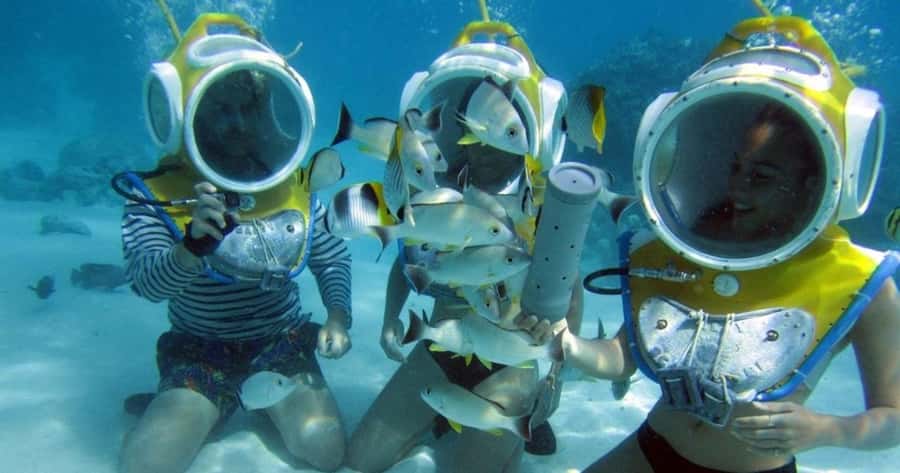
- Helmet air from the boat: You breathe through a helmet and stay connected by an air hose.
- 30 minutes underwater: Your guided time is about half an hour at roughly 12 feet.
- Stingrays up close: Your guide helps you feed them for a gentler, more personal encounter.
- Small group size: Limited to 8 participants, so you aren’t lost in the crowd.
- Pickup and transport included: From pier or your hotel, plus the short boat ride to the lagoon area.
- Reef-friendly footwear rules: Bring water shoes or wear reef-safe footwear (no flip-flops).
Moorea’s Underwater Helmet Walk: The Simple Way to See the Lagoon
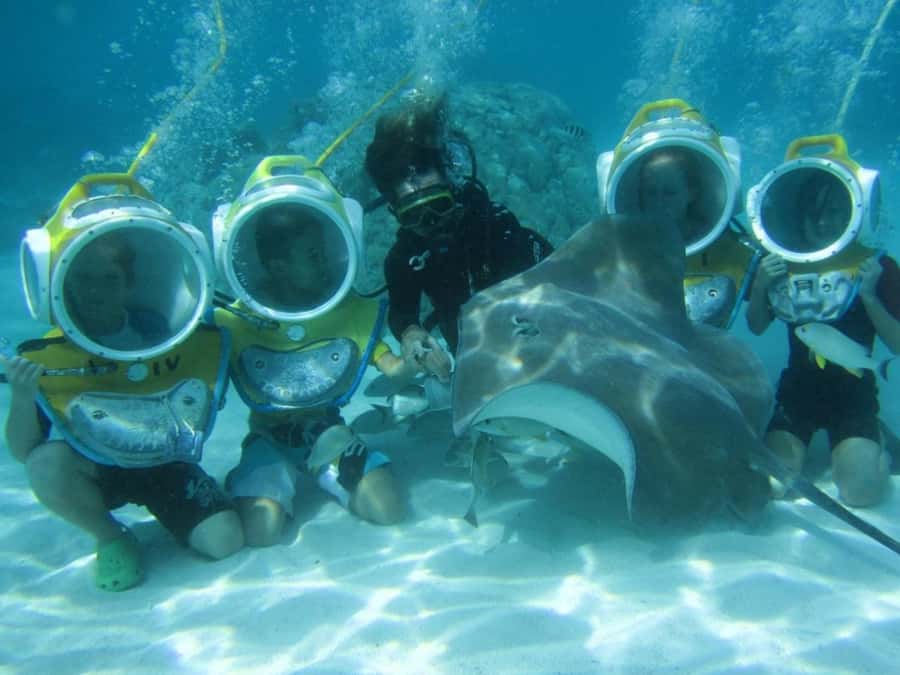
This is one of those Moorea activities that feels techy, but the goal is very human: you want to watch the marine life up close, without wrestling scuba gear or committing to a full certification. You’ll step into the lagoon in a wetsuit and water shoes, then gear up with the helmet that provides air from the boat.
What makes it practical is the design. You’re at a shallow enough depth that daylight reaches you, and the air system keeps things steady. You don’t need prior snorkeling skill beyond being comfortable in and around the water.
The payoff is the same reason people come to Moorea in the first place—seeing fish behavior at close range. Expect sightings like triggerfish, butterflyfish, groupers, and parrotfish, along with coral heads glowing in the daylight.
You can also read our reviews of more tours and experiences in Moorea.

Getting There: Pier or Hotel Pickup, Then the InterContinental Start
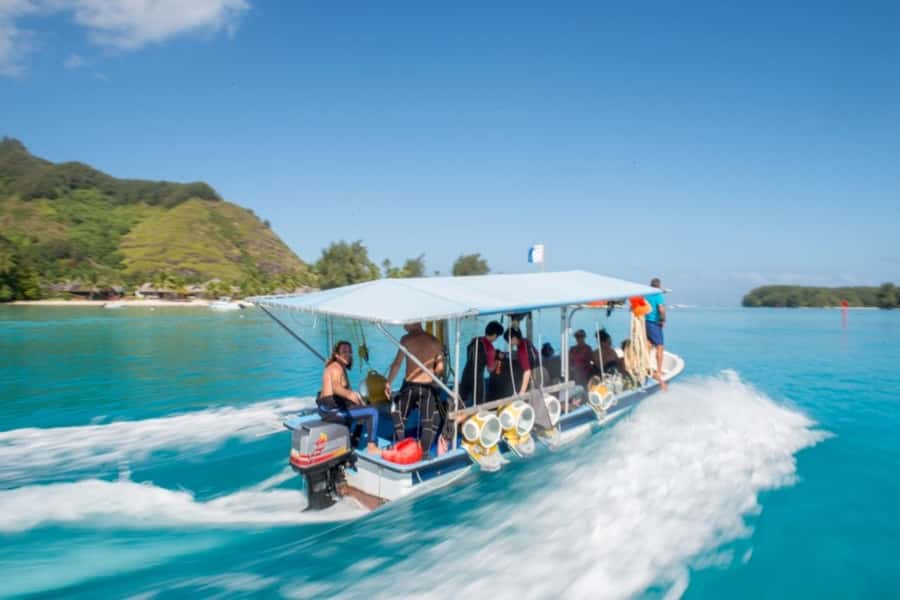
Your day starts with an organized pickup. The tour includes transportation from the pier or your hotel, and it also works if you’re staying on the main road around Moorea via bus pickup. If you’re driving, you can come directly to Aquablue Moorea (it’s easiest if you confirm the pin on your map app).
After pickup, you’ll head to the Aquablue meeting spot at the InterContinental Moorea Resort & Spa. You’ll get a short orientation there before you’re fitted out for the water.
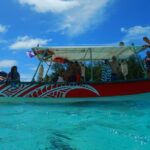
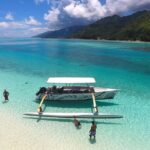
Then comes the short boat ride. Plan on about 10 minutes by vessel to reach the lagoon area where you’ll anchor and enter the water.
The Lagoon Stops: Motu Fareone vs Papetoaï (Why It Can Vary)
You won’t just be taken to one fixed point. Depending on the sea and weather, the anchor drops off either near Motu Fareone or in the calmer waters of Papetoaï.
This is worth paying attention to because it affects how smooth the day feels. When conditions are calmer, people tend to relax faster, and the whole experience goes more smoothly from helmet-on to first steps. When it’s choppier, the instruction and pace matter even more, since you’ll still be learning how the air hose setup works while you’re fresh in the water.
Either way, you’re in Moorea’s lagoon—this is a shallow, clear-water style of experience rather than a long open-ocean run.
Safety First: Helmet Air, No Certification, and a Signed Waiver
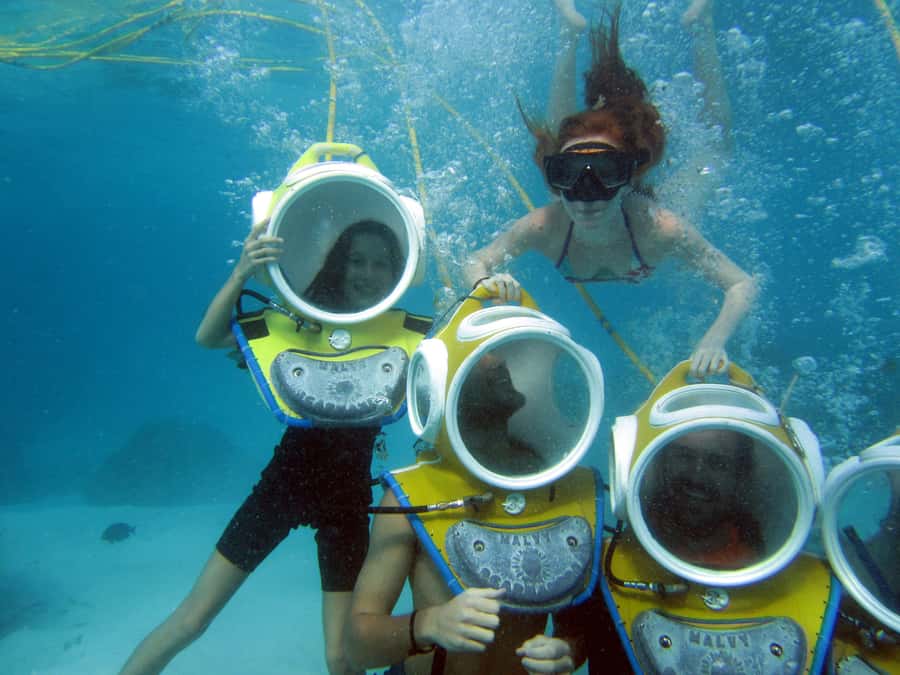
Before you enter, you get a safety briefing. You’ll receive clear instructions on procedures and how to use the helmet system while you’re connected to the boat’s air supply.
The helmet setup is simple. The helmet goes on your head right before you enter the water, and it comes off as you exit. You’ll also wear a wetsuit and water shoes, which helps with comfort and footing.
One non-negotiable step: you must sign a waiver. This is tied to the operator’s insurance rules, so don’t plan to “wing it” or assume you can skip paperwork.
Your Underwater Walk: What 30 Minutes at 12 Feet Feels Like
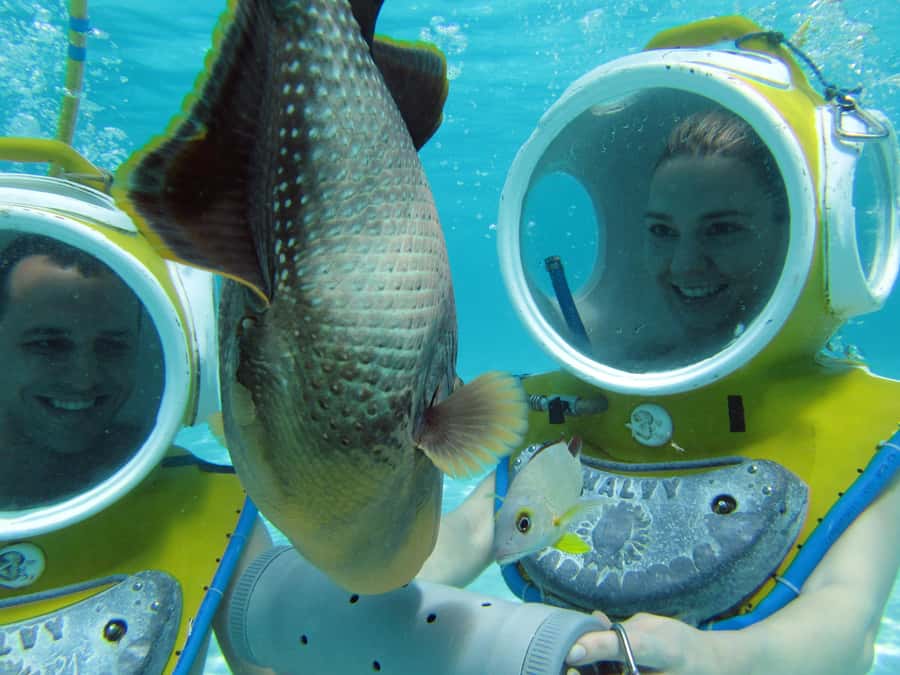
Once you’re geared up, you’ll enter the water with an instructor supervising you. You’ll go down to about 12 feet, which is shallow enough for visibility and big enough to feel like you’ve truly left the surface.
You’re not alone with your thoughts underwater. You’re guided and you stay connected to the boat’s air supply via a hose. That means there’s no scuba tank to manage, no gas planning, and no learning curve that belongs to certified diving.
It also means you should think of this as a slow, controlled underwater stroll. You’re there to watch fish behavior and take in the coral heads and colors, not to swim miles or chase thrills.





Stingray Feeding Moment: The Part Kids Remember
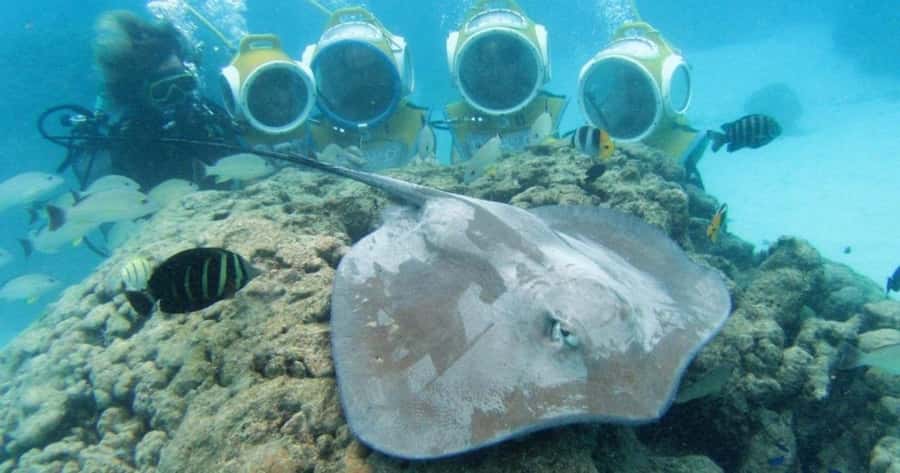
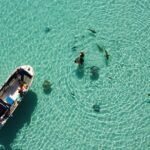
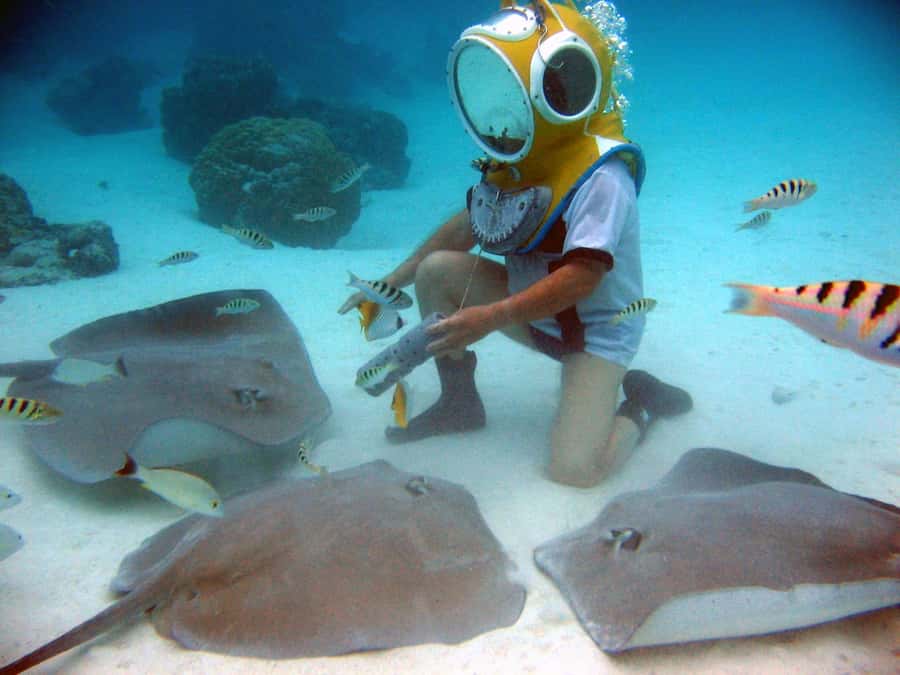
The stingray encounter is the headline for a reason. Your guide feeds the rays, and that creates a calm, predictable moment where you can see them up close.
This is where the whole “helmet walk” format shines. Since you’re breathing through the helmet and staying at a consistent shallow depth, you can focus on watching rather than thinking about gear.
If you’re traveling with kids, this is also the kind of moment that turns into an instant souvenir memory. Even if the day is a little rainy, the routine and supervision keep things on track.
And for anyone who usually wears glasses, the setup is designed to let you participate even if you’re not used to underwater viewing. The team helps make sure you’re comfortable and safe in the process, including during helmet setup and monitoring.
What You’ll See: Reef Fish and Coral Heads in Daylight
At your depth, you’ll get good natural light underwater. You’ll often see a mix of reef fish—triggerfish, butterflyfish, groupers, and parrotfish are specifically listed as common encounters.
You’ll also see coral heads. This matters because reef fish don’t just float in space. They weave around structure, and coral heads are the “neighborhood” that makes fish-watching more interesting than just looking at random swimming shapes.
If you like photography, this is one of the more practical ways to shoot underwater scenes without complicated equipment. Just keep your expectations realistic: you’ll be moving slowly, and your main goal is to see what’s around you, not capture a studio-perfect shot.
Equipment and What to Bring (So You Don’t Waste Time)
The tour provides a wetsuit and water shoes if you don’t have yours. That’s a big help on a trip where luggage space is precious.
Still, you’ll need to bring a few basics:
- Swimwear (you wear it under your cover-up)
- Towel
- Sunscreen
- Water shoes (reef or water shoes are best; no flip-flops)
I’d add one practical tip: get your footwear sorted before you go. If you arrive in flip-flops, you may have to scramble for the right replacement, and you’ll lose that first calm phase where everyone’s still getting oriented.
Duration and Pace: Why 150 Minutes Doesn’t Mean 150 Minutes Underwater
The full experience is 150 minutes, but you’ll spend about 30 minutes underwater. The rest of the time is transportation, fitting out, orientation, and the controlled entry and exit.
That pacing is part of the value. You get enough time below the surface to feel like you actually explored, but not so much that it becomes exhausting or rushed. It’s a sweet spot for families and for first-timers.
Also, the small group size—limited to 8 participants—helps the instructors keep a close eye on everyone and manage the flow.
Price and Value: Is $103 Worth It?
At about $103 per person, you’re paying for more than a “look at fish” activity. You’re paying for:
- guided underwater time (about 30 minutes)
- an instructor monitoring and supervising you
- transport from pier or hotel
- the helmet-air system experience
- wetsuit and water shoes support (if needed)
Food and drinks aren’t included, so plan to grab something before or after. Still, when you factor in the guided instruction, the gear, and the transportation, it’s a straightforward spend for a unique Moorea activity.
The best value is for people who want the underwater experience but don’t want the learning curve or equipment baggage of scuba-style activities.
Who This Is For (and Who Should Skip It)
This experience is described as beginner-friendly. It does not require scuba certification, and you don’t need snorkeling experience beyond being comfortable on and in the water.
It’s listed as suitable from age 6, which is impressive for an underwater activity. That said, this is still an aquatic environment with equipment and procedures, so follow the instructor’s guidance closely.
Important medical restrictions:
- pregnant women
- people with pulmonary or cardiac issues (a medical certificate may be required in some cases)
- reduced mobility
- back and/or neck problems
- asthma
If any of these apply to you, don’t assume you can “tough it out.” The operator’s requirements are there for safety.
Practical Tips That Make the Experience Easier
A few habits will make your helmet walk feel smoother from the first minute:
- Wear reef or water shoes with a secure fit.
- Put on sunscreen before you go, not after you’re wet and in a hurry.
- Bring a towel you can wrap up with right away at the end.
- Listen carefully during the safety briefing, because the air hose connection is part of how everything stays easy and controlled.
If you’re going with kids, this is the kind of activity where calm cooperation matters. Short, clear instructions from your guide help everyone move together and stay comfortable.
And yes, rain can happen. Even if the weather looks messy, the structure of the activity still keeps things moving.
Should You Book the Aquablue Moorea Helmet Walk?
If you want a real underwater viewing experience in Moorea without scuba training, this is an excellent match. The combination of a helmet-air system, shallow depth, and a guided stingray moment makes it feel like an event, not just a short stop.
I’d especially recommend it if you’re traveling with family and you want something memorable that doesn’t depend on being an expert swimmer. The small group size also helps with comfort and attention.
Skip it if you’re dealing with any of the medical restrictions listed above, or if you know you’re likely to struggle with wetsuit comfort and being connected to the air hose system.
If you’re on the fence, the “easy to start” nature is the key: no scuba certification is required, and the day is paced so first-timers aren’t overwhelmed.
FAQ
Do I need scuba certification to do the Aquablue helmet walk?
No. The experience is designed for people with no prior scuba certification. You should just be comfortable on and in the water.
How long do I spend underwater?
You’ll spend about 30 minutes underwater as part of the guided underwater tour.
How deep is the underwater portion?
The underwater walk happens at approximately 12 feet.
What does the price include?
It includes the 30-minute guided underwater tour, a professional instructor, transportation from pier or hotel, and water shoes if you don’t already have them.
What should I bring with me?
Bring swimwear, a towel, sunscreen, and reef or water shoes (no flip-flops).
What about food and drinks?
Food and drinks are not included, so plan to eat before or after your tour.
Who cannot participate?
Pregnant women and people with pulmonary or cardiac issues, reduced mobility, back/neck problems, or asthma are not able to do the tour unless they show a medical certificate from a physician. You’ll also need to sign a waiver before the experience.