REVIEW · SICILY
Last minute Palermo Walking Tour and Street Food
Book on Viator →Operated by Cavallaro Fabrizio · Bookable on Viator
Palermo rewards people who slow down. This short 3-hour walk pairs classic Sicilian bites with major landmarks, so you get the city’s look and its flavor in one go.
Two things I really like: the small group size (up to 14) and the way the guide links food to local history while you’re on the move. One thing to consider: the pace is fast and there’s plenty of talking—if you prefer quiet sightseeing, you might find it a bit more narration than you expected.
In This Review
- What you taste and why it matters
- A possible drawback: expect a guided lecture vibe
- Key takeaways before you go
- A 3-hour Palermo first-day plan with street food and landmarks
- Starting at Quattro Canti: the best place to orient fast
- Piazza Olivella: the calm start near the Salinas area
- Teatro Massimo: a quick look at Italy’s big opera presence
- Teatro dell’Opera dei Pupi: Palermo puppetry as living culture
- Capo Street Market: Arabic-heritage stalls and your built-in snack plan
- Dainotti’s da Arianna: friggitoria-style street food, sit-and-watch style
- Via Beati Paoli: the secret-sect lore stop (and it’s fun)
- Palermo Cathedral: multiple eras, one guided visit
- Quattro Canti: Baroque crossroads worth seeing twice
- What’s included (and how the $60.07 becomes value)
- Getting the most from the experience: small-group habits
- Who should book this Palermo street food and history walk?
- Should you book this Palermo tour?
- FAQ
- How long is the Palermo walking tour?
- What does the tour cost?
- Is the tour offered in English?
- What food and drinks are included?
- Where do I meet the group?
- Where does the tour end?
- Is Palermo Cathedral included?
- What’s the maximum group size?
- What if I’m traveling by cruise ship?
- FAQ
- What is the cancellation policy?
- Do I need admission tickets for every stop?
- Is confirmation guaranteed right away?
- Is a minimum number of people required?
- What ticket type will I receive?
What you taste and why it matters
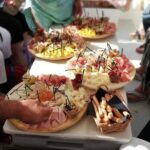
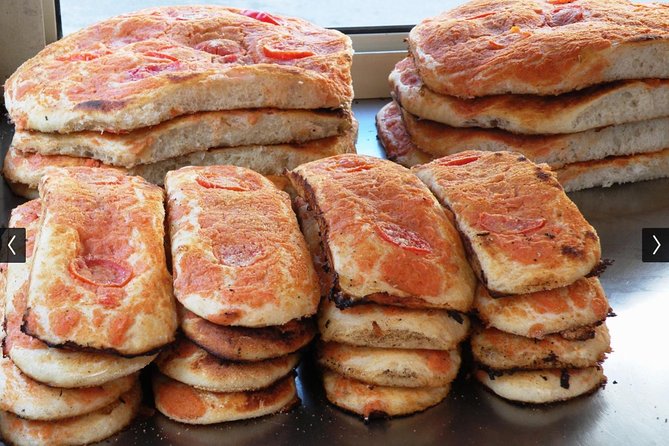
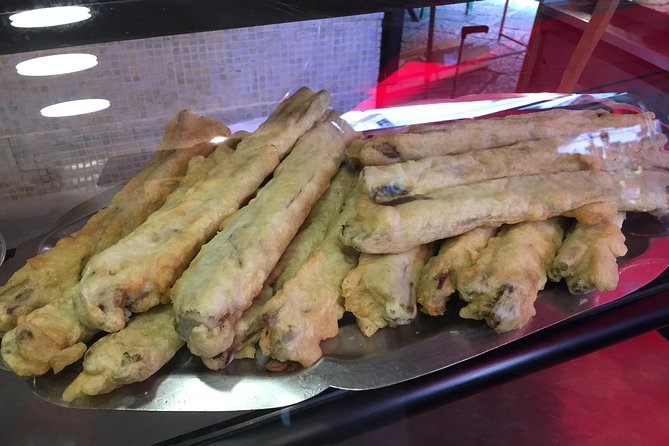
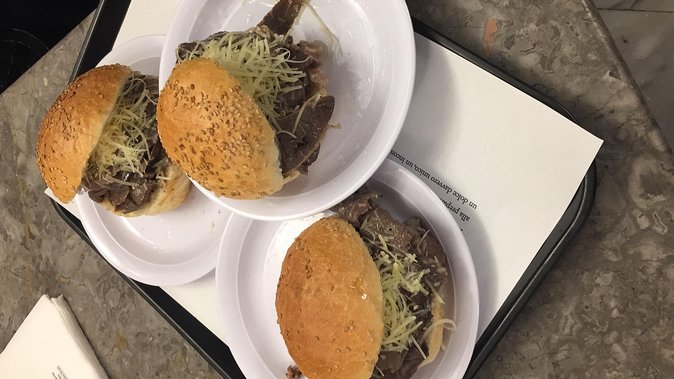
This isn’t just sampling random snacks. You’ll work through Palermo’s street-food logic, from savory starters like sfincione to fried favorites like panelle and the beloved arancine. The guide also brings in the bigger story of Sicily and Palermo as you pass the sights—so the food feels earned, not tacked on.
A possible drawback: expect a guided lecture vibe
The tour is designed around the guide’s storytelling, and that can mean you spend more time listening than you might on a self-paced walk. Also, the group size is small, but it still may include people of very different ages, so plan on a bit of movement and crowd energy in the markets.
You can also read our reviews of more tours and experiences in Sicily.

Key takeaways before you go
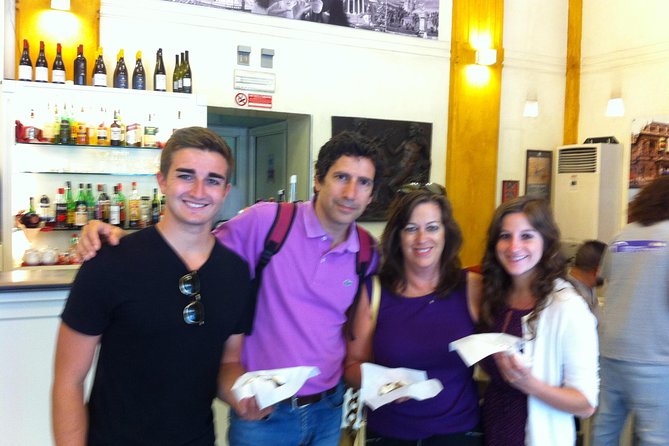
- Small group feel helps you get answers as you walk and taste.
- Real Sicilian street food like sfincione, panelle, and arancine, not generic tourist bites.
- Capo Market time gives you context for what you’re eating and where it comes from.
- Landmarks with purpose: Teatro Massimo, Palermo Cathedral, and Quattro Canti aren’t just photo stops.
- Good first-day value when you want orientation plus snacks in one afternoon.
A 3-hour Palermo first-day plan with street food and landmarks
If you’re in Palermo for a short time, this tour makes practical sense. You get a compact route through the oldest core of the city, plus food stops that actually teach you how Palermo eats. It’s the kind of experience that helps you understand what you’ll notice later on your own—street markets, religious architecture, and the city’s layered culture.
The timing is also friendly. It starts at 10:30 am and runs about 3 hours (give or take). That’s long enough to feel like a full experience, short enough that you still have energy for lunch or a second walk after.
Starting at Quattro Canti: the best place to orient fast
You meet at Quattro Canti (Piazza Vigliena), Via Maqueda. This is a strong start point because it sits right where multiple “main streets” cross—so even if you’ve never been here, you can quickly build a mental map.
From a comfort point of view, it’s a solid meeting location: it’s well connected to public transit, and the tour’s end is close by. The walk finishes in front of Ruvolo Bar, about 50 meters from Quattro Canti, which makes it easy to continue exploring without feeling stranded.
Piazza Olivella: the calm start near the Salinas area
The first stop is Piazza Olivella, just in front of the Salinas Archeologic Museum. This is a “warm-up” moment—free time, minimal friction—so you can get oriented before the tour leans into bigger sights and the market rhythm.
In a walking tour, the first 10 minutes matter. A good early start helps you stop worrying about directions and start paying attention to details—street layouts, architecture style, and the flow of people around you.


Teatro Massimo: a quick look at Italy’s big opera presence
Next comes Teatro Massimo Vittorio Emanuele. The tour doesn’t just name-drop it; it frames why it’s important: it’s described as Italy’s largest lyric theater building, one of the largest in Europe, and third in architectural scale after the Opéra National in Paris and Vienna’s Staatsoper.
You’ll spend about 15 minutes here. Admission to go inside isn’t included, so if you want deeper access, you’d need to handle that separately. Still, even from the outside, it helps to place Palermo in the same cultural league as other major European cities. It’s also a useful contrast against the street-food world you’ll hit soon.
Teatro dell’Opera dei Pupi: Palermo puppetry as living culture
Then you’ll visit Teatro dell’Opera dei Pupi, a puppetry tradition founded in Palermo in 1973. This stop is shorter, about 10 minutes, and admission is not included.
Why I like this kind of stop: it reminds you that Palermo isn’t only about cathedrals and ruins. The city still supports performing arts rooted in local identity. Even if you don’t go inside for a show, you’ll see how Palermo’s creative traditions keep moving forward.
Capo Street Market: Arabic-heritage stalls and your built-in snack plan
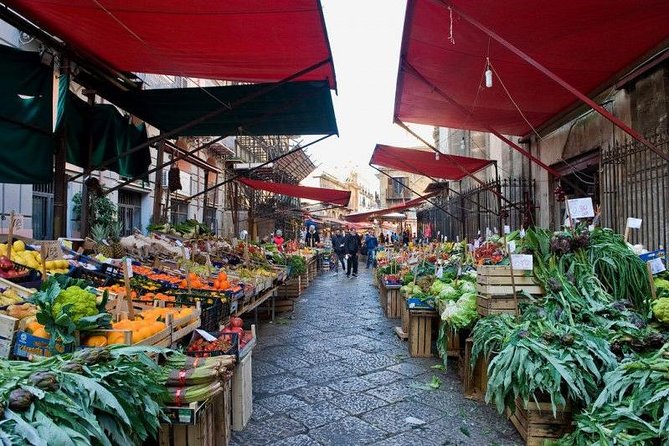
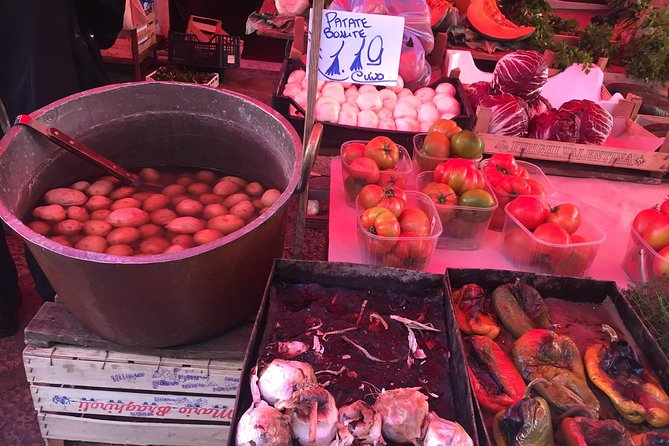
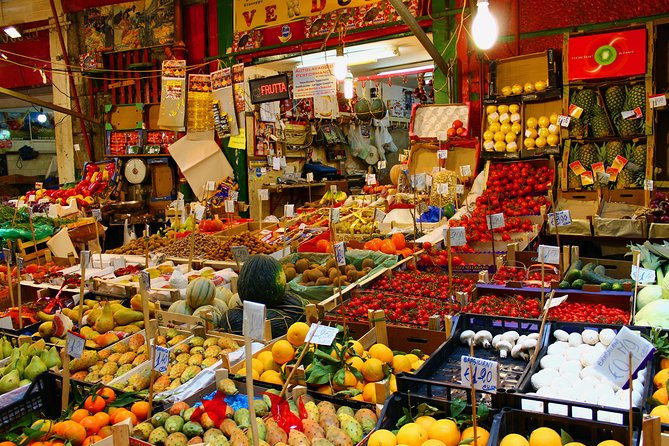
Now we hit one of the tour’s biggest reasons to book: Capo Street Market. This market is described as one of Palermo’s four main Arabic-heritage street markets. The stalls spill over with fruit, vegetables, meat, and fish, arranged in a way that feels almost choreographed.
You’ll spend about 45 minutes here, and the time matters. In a market like this, you need a little breathing room to actually understand what you’re looking at. You’ll get a guided walkthrough so the snack stops don’t feel random. Instead, you start to connect ingredient choices to what’s “normal” here.
Practical note: markets can be lively and narrow. Wear shoes you don’t mind getting slightly dirty, and stay close to the group through the busier sections.
Dainotti’s da Arianna: friggitoria-style street food, sit-and-watch style
Right after Capo, the tour takes you to Dainotti’s da Arianna, described as a top friggitoria (street fried-food shop) in Palermo. You’ll sit along the street in the middle of the market atmosphere—so you’re not just eating in a separate room. You get the real soundtrack.
This is another 45-minute stop, and it’s one of the best parts of the route if you enjoy learning by doing. The guide’s commentary turns what you’re tasting into a mini lesson. You’re not only thinking, Wow, that’s good—you’re also learning the why behind the flavors and the food culture that shaped them.
If you’re a foodie, this is where you’ll probably feel the most satisfied. If you’re less into fried foods, stick with the items the guide recommends first; they’re chosen to represent Palermo’s core flavors.
Via Beati Paoli: the secret-sect lore stop (and it’s fun)
Between the market and the cathedral, you’ll make a short stop on Via Beati Paoli, a street associated with an ancient Palermo secretive group tied to names like I Vendicosi and dates reaching into the 16th, 17th, and possibly 18th centuries.
It’s only about 10 minutes, with free time attached, so don’t expect this to replace a deep-history museum visit. But as a palate cleanser, it works. You’ll hear story-based context about how legends and power lived in Palermo alongside everyday life.
This is also one of those stops that makes the entire tour feel more human. Palermo’s history isn’t only stone buildings. It’s also people, rumors, and the kinds of stories that traveled through neighborhoods.
Palermo Cathedral: multiple eras, one guided visit
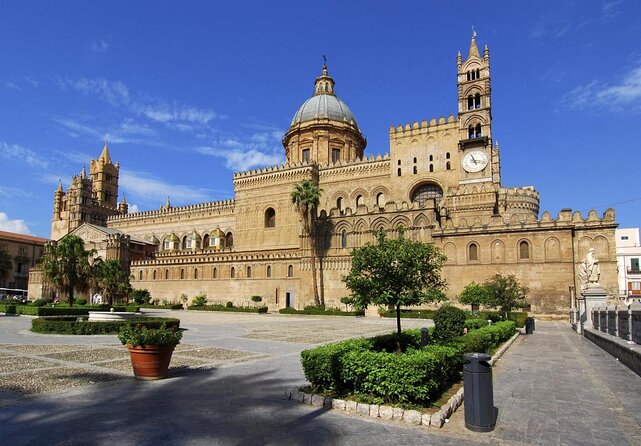
The next big anchor is Cattedrale di Palermo. The tour frames it as the cathedral of the Roman Catholic Archdiocese of Palermo, dedicated to the Assumption of the Virgin Mary.
What makes the cathedral stop especially worth your time is the explanation you get about its structure: it’s an architectural complex shaped by different styles due to a long history of additions, alterations, and restorations—including work done as late as the 18th century.
You’ll spend about 15 minutes, and while ticket admission is listed as free for this stop, the guided visit is included. For me, that’s the value: short time inside is still useful when someone points out what changed over time and what to notice.
Quattro Canti: Baroque crossroads worth seeing twice
Finally, you end back in the Quattro Canti area. This is a Baroque square (officially Piazza Vigliena), laid out between 1608 and 1620 by the Viceroys, designed by Giulio Lasso and Mariano Smiriglio at the intersection of two major streets: Via Maqueda and Corso Vittorio Emanuele.
You’ll spend only about 10 minutes during the tour’s loop, but it’s a classic “scale reference” for Palermo. Once you understand where you are in the city’s street geometry, you start noticing how the rest of the old center connects.
Even if you’re heading out afterward for lunch, it helps to end here because you can easily continue in multiple directions without thinking too hard.
What’s included (and how the $60.07 becomes value)
At $60.07 per person (about 3 hours), you’re not just paying for walking. The package includes:
- Food tasting
- Drinks (water, Coca Cola, beer)
- Local guide
- Bottled water
- Visit of the Cathedral of Palermo
In practical terms, this is what turns the price into value. Street food is often cheap per item, but it adds up fast when you’re buying multiple things on your own. Here, the tastings are bundled, and you also get a guided explanation that helps you understand what you’re eating and why Palermo does it this way.
Also, the route combines multiple “main sights,” some of which are quick looks with outside time. You’re not paying extra for every single thing—your money largely goes into guiding plus the tasting portion.
Getting the most from the experience: small-group habits
This tour runs with a maximum of 14 travelers, and that size is a real advantage. In a market, in a cathedral, or on narrow streets, a very small group makes it easier to stay together and ask questions without repeating yourself.
Here are the habits that make it work:
- Show up a few minutes early so you start relaxed at Quattro Canti.
- Bring cash or a card for anything you choose to buy later (souvenir photos are available to purchase, but not included in the tour).
- If you’re sensitive to crowds, know Capo Market is lively by nature. Stay patient and follow the guide’s pace.
- Come hungry, but don’t assume everything will be fried. The guide typically builds a balanced tasting flow so you can sample key signatures.
Who should book this Palermo street food and history walk?
This is a strong fit if you want a first-day orientation plus real food. It also suits you if you like guides who connect what you taste to the city’s bigger story—opera theaters, puppetry traditions, Baroque squares, and a cathedral with layered architecture.
You may want to rethink it if:
- You prefer self-guided sightseeing with minimal talking.
- You’re traveling with someone who gets tired from walking and market crowds quickly.
- You want long interior time in major buildings. Here, some stops are more exterior/time-limited, and admission for certain sites is not included.
Should you book this Palermo tour?
I’d say yes if you’re planning a short stay and you want to spend your time wisely. For $60.07, you get guided context, a structured route, and multiple tastings with drinks—plus a cathedral visit that’s hard to replicate without a local who knows what to point out.
It’s also a good “confidence builder.” After this walk, you’ll understand where to go next, what foods to seek on your own, and how the city’s street layout ties into its history.
If your travel style is more quiet and museum-like, consider how much narration you’re willing to tolerate. But for most people chasing both flavor and insight in a short window, this is one of the most practical ways to get started in Palermo.
FAQ
How long is the Palermo walking tour?
It lasts about 3 hours.
What does the tour cost?
The price is $60.07 per person.
Is the tour offered in English?
Yes, it is offered in English.
What food and drinks are included?
The tour includes food tasting and drinks such as water, Coca Cola, and beer, plus bottled water.
Where do I meet the group?
You meet at Quattro Canti, Via Maqueda, 90133 Palermo PA, Italy.
Where does the tour end?
The tour ends back in the Quattro Canti area, in front of Ruvolo Bar, about 50 meters from Quattro Canti.
Is Palermo Cathedral included?
Yes. The tour includes a visit of the Cathedral of Palermo.
What’s the maximum group size?
The tour has a maximum of 14 travelers.
What if I’m traveling by cruise ship?
If you arrive by cruise ship, you must provide your ship name, docking time, disembarkation time, and re-boarding time. You can also ask for a free pickup in front of the IBIS Hotel in Via Francesco Crispi 230 at 10:00 am.
FAQ
What is the cancellation policy?
You can cancel for a full refund if you cancel at least 24 hours before the experience start time.
Do I need admission tickets for every stop?
Not all stops include admission. Some sights list admission as not included, while others are listed as free.
Is confirmation guaranteed right away?
Confirmation is received within 48 hours of booking, subject to availability.
Is a minimum number of people required?
Yes. There is a minimum of 2 people per booking.
What ticket type will I receive?
You’ll receive a mobile ticket.