REVIEW · CRETE
Knossos & lasithi plateau villages,Zeus’s cave,&olive oil Mill
Book on Viator →Operated by Luxury Crete Tours · Bookable on Viator
Olive oil, Zeus, and Knossos in one long day. I love how this route ties everyday Cretan life to ancient myth, and I also like that you get real food-and-farming stops plus a small group feel. The main thing to consider is that Zeus Cave can be closed depending on timing, so check dates before you plan your day.
This is a drive-through-the-mountains type of excursion, not a sit-in-a-bus-and-rush-betweens experience. Pickup is built in from the Heraklion area, and the schedule is designed to work with cruise returns, but you’ll still want to be ready when pickup happens.
It’s good value for the price because tastings and drinks are included, yet you should budget for extra costs like Knossos entry and lunch. Bring layers too, because even in warmer months, mountain stops can feel cold, especially around the cave and in the shade.
In This Review
- Key highlights before you go
- A day that stitches Crete together: olives, villages, Zeus, and Knossos
- Omalia Olive Press: modern machines, old traditions, and a tasting
- Lasithi Plateau windmills: why the plateau matters
- Krasi’s Platanus tree and stone lanes: a village stop with real character
- The Aposelemis dam viewpoints and a monastery pass
- Mochos village: church, square, and an unhurried hour
- Psychro Cave of Zeus (Diktaean Cave): steps, stalactites, and the Mantle of Zeus
- Knossos Palace at the end: self-guided time and when an official guide helps
- Lunch at Tzanakis Michael: what’s included and what you pay for
- Price and logistics: where the value really comes from
- Who this tour fits best, and who should think twice
- Should you book this Crete day tour?
- FAQ
- What’s included in the price?
- Is lunch included?
- Are entrance fees for Knossos included?
- Is the Zeus Cave entrance included?
- How hard is the walk to Zeus Cave?
- What happens if I’m on a cruise?
- Where does pickup happen for cruise passengers?
- How many people are in the group?
Key highlights before you go
- Omalia Olive Press: watch modern and traditional olive oil production, then taste it with coffee and raki.
- Lasithi Plateau windmills: see the historic water-pumping windmill landscape from up on the plateau.
- Krasi’s old streets: short walks in authentic village lanes with a famously large Platanus tree and an aqueduct.
- Psychro Cave of Zeus: a dramatic cave visit with a cool interior, illuminated chambers, and the famous Mantle of Zeus formation.
- Knossos at the end: self-guided time at the palace site, with an option to add a licensed guide for extra charge.
A day that stitches Crete together: olives, villages, Zeus, and Knossos
This outing is built around a simple idea: Cretan culture isn’t just ruins and museums. It’s also how people grow olives, move water, build stone villages, and tell stories that still echo through the landscape.
What makes the day especially satisfying is the balance. You start with something hands-on and local, then move into mountain history and village life, and you finish with one of Crete’s big-name ancient sites. It’s not “everything everywhere,” so you get enough time at the key moments rather than constantly sprinting.
You should also know what kind of day it is physically. You’ll handle short walks and viewpoints throughout, and Zeus Cave involves a moderate uphill approach plus stairs down into the cave area. If you’re the type who likes comfortable shoes and a steady pace, you’ll do fine.
You can also read our reviews of more tours and experiences in Crete.
Omalia Olive Press: modern machines, old traditions, and a tasting
The day starts at Omalia Olive Press, where you’ll see how olive trees and olives connect to Crete, past and present. The emphasis here is practical: how olives get processed, how oil is produced today, and how that craft used to work before modern equipment.
This stop isn’t just a quick photo stop. You get about an hour, which is enough time to understand the process and ask questions through the English-speaking driver-guide. You’ll also get included drinks and tastings as part of the experience, so you’re not just watching. You’re sampling what the factory is talking about.
Two things I like about this first stop:
- It gives you a baseline for the rest of the day. When you later see villages and mountain agriculture, olive culture makes more sense.
- The tasting approach feels connected rather than gimmicky. Olive oil isn’t treated like a souvenir product; it’s treated like part of everyday life.
Lasithi Plateau windmills: why the plateau matters
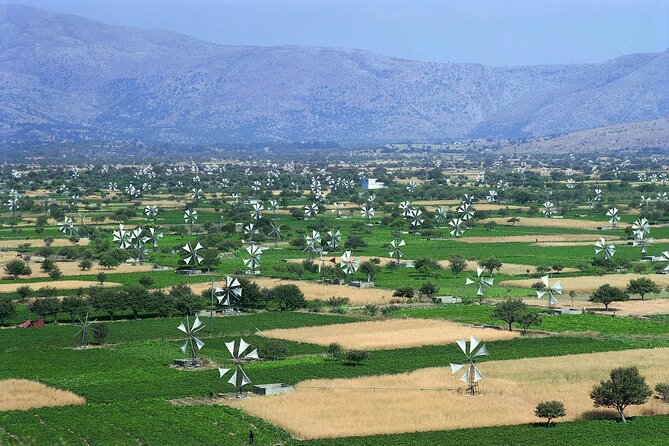
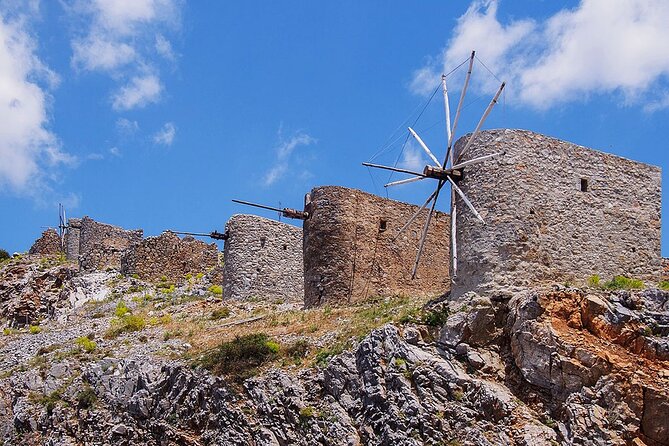
Next comes the Windmills of Lasithi Plateau, a stop that’s short but memorable. These are the old windmills that used to pump water from underground up to where people needed it for crops.
That detail matters. Water management is one of those invisible forces behind agriculture, especially in places where summers can be dry. Seeing the windmills helps you understand why mountain communities invested in mechanical solutions instead of relying on rainfall alone.
You’ll have around an hour here, plus time for viewpoints. It’s the kind of stop where you pause more than you rush. If you like photos, this is one of the easiest places to slow down without feeling you’re wasting time.
Krasi’s Platanus tree and stone lanes: a village stop with real character
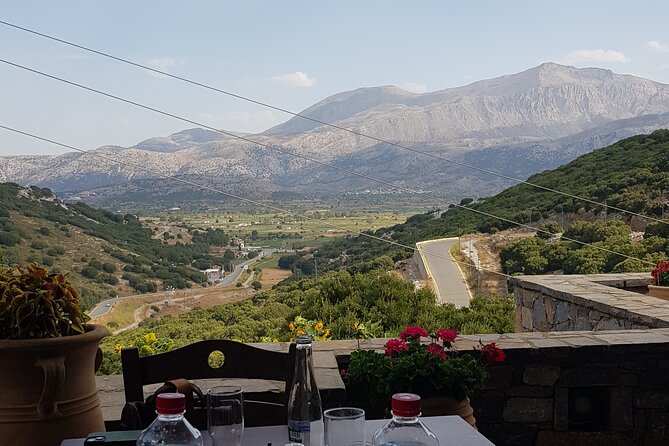
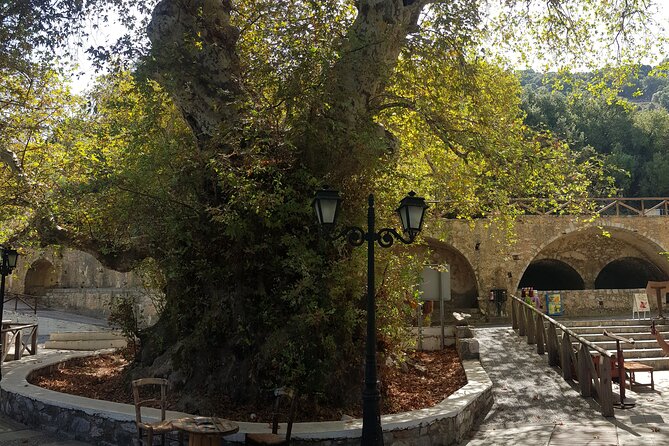
Then you shift into village mode at Krasi, stopping for about half an hour. You’ll walk the stone-paved narrow streets and see traditional Cretan architecture up close. This is one of those small stops that feels bigger than its time slot because it’s about atmosphere, not just sights.
The centerpiece is the oldest and biggest Platanus tree on the route. It’s the kind of landmark you can’t really “get” from a brochure. You have to stand near it, notice the scale, and take in how the tree anchors the village feel.
You’ll also see an old aqueduct nearby, which adds another layer to the day’s theme: water systems. After the windmills and the dam-area viewpoints, the aqueduct helps you connect the dots in your head.
Practical note: half an hour sounds brief, but the streets are walkable and the village pace fits a relaxed group schedule.
The Aposelemis dam viewpoints and a monastery pass

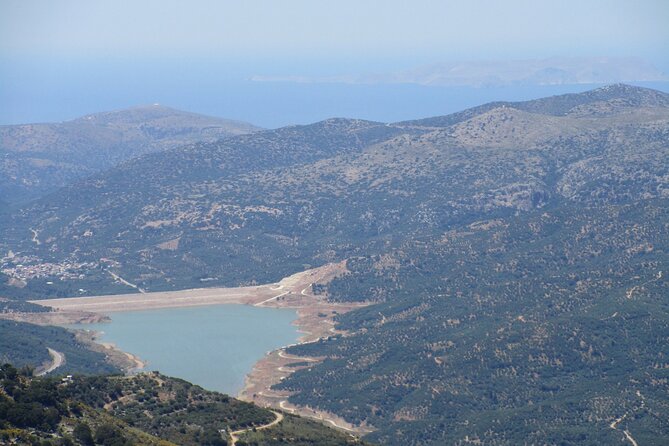
You’ll pass near the Aposelemi dam for quick views and photos, with only about five minutes here. Think of it as a scenery break, not a full stop.
After Krasi, the itinerary also includes a brief pass by an old monastery. It’s short, roughly seven minutes, but it gives you that classic Crete feel of stone religious sites set into the mountains.
If you tend to hate rushing, don’t panic. The tour doesn’t give you big walking burdens at every single stop. It concentrates the walking more heavily at the Zeus Cave visit, while other points are designed for quick orientation and scenic refresh.


Mochos village: church, square, and an unhurried hour
At Mochos, you get about an hour to explore an old village with a beautiful church and main square. This is the kind of place where you can step out, walk a bit, and watch life happen around the center.
I like this stop because it breaks the ancient-heavy rhythm. Up to this point you’ve had agriculture and plateau history. Mochos gives you the human scale again: architecture you can see up close, village streets, and a central place where people gather.
If you want to buy something small to snack on later, this is also a good moment. The day continues onward, but you’re given enough time here to breathe.
Psychro Cave of Zeus (Diktaean Cave): steps, stalactites, and the Mantle of Zeus
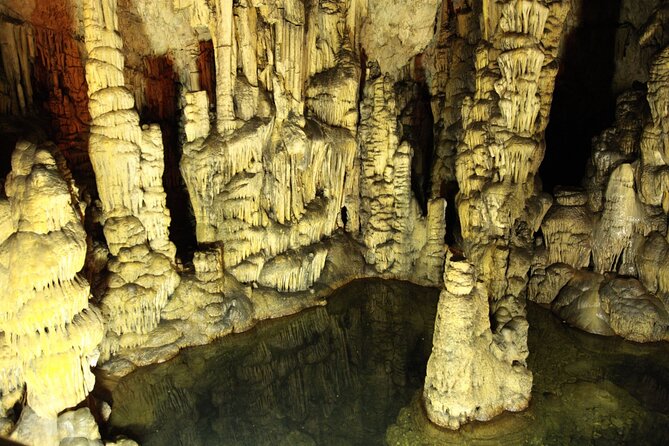
Here’s the star stop, and it deserves your planning attention: the Cave of Zeus, also known as the Psychro Cave or Diktaean Cave. Your visit is about an hour underground, but the whole cave part includes extra movement.
Before you enter the cave, you’ll face:
- A moderate uphill hike of around 10 to 15 minutes to reach the entrance
- About 180 steps down into the cave area, with handrails
There’s also an option to go up by a traditional donkey ride instead of the paved path. That choice depends on the day and what’s operating, so you’ll want to listen to your guide on the spot.
Inside, the cave is illuminated in multiple chambers with dramatic stalactites and stalagmites. The big wow moment is the Mantle of Zeus, a curtain-like stalactite formation hanging over an underground lake area.
Two practical tips here:
- Wear shoes with grip. The steps down matter more than your ability to “walk fast.”
- Bring something light for warmth. Caves tend to feel cooler, and a cooler mountain day can make you appreciate layers.
Also, be aware of timing. Zeus Cave is listed as closed until April and further notice, so double-check the exact status for your travel dates. If it’s closed, your guide may substitute parts of the plan, but you’ll want flexibility either way.
Knossos Palace at the end: self-guided time and when an official guide helps
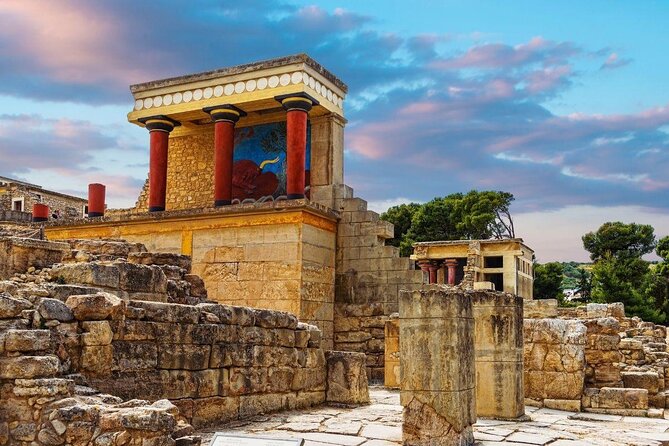
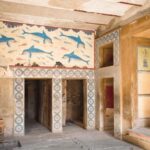
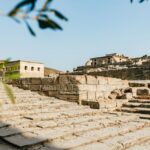
The final major sight is the Palace of Knossos. You’ll get about an hour there. Entrance fees are extra, so you should plan on paying for the site entry yourself.
You can explore on your own, and the tour also offers an option to arrange an official licensed tourist guide inside Knossos for an added charge. That’s worth considering if:
- You want the palace explained in a structured way
- You’re interested in how the site fits into Minoan history and mythology
- You don’t want to worry about signage or where to look next
If you prefer freedom, self-guided time can work well with an hour, especially if you like walking at your own pace. Either way, the timing here matters because the day finishes with drop-off back to your meeting point.
One more thing: because your visit comes after the mountain portion, you’ll want to pace yourself earlier. If you spend the day rushing, Knossos can feel like one more task instead of the big finale.
Lunch at Tzanakis Michael: what’s included and what you pay for
Lunch is built into the schedule at a local restaurant: Tzanakis Michael. You’ll have around 1 hour 30 minutes there.
Here’s the trade-off:
- Drinks and some tastings are included earlier in the day
- Lunch itself is not included, so you’ll pay for your meal
The upside is that the lunch stop is meant to feel local rather than generic. If you want vegetarian options, the tour experience includes that as a possibility, and it’s usually helpful to know in advance.
If you’re hungry by then, that’s normal. You’ll be moving through several village and scenic points, and the cave stop can make you feel extra snacky afterward.
Price and logistics: where the value really comes from
At $109.42 per person, this is not a budget coach excursion. The value comes from what’s packaged in: transportation plus an English-speaking driver-guide, plus included water and coffee and the key tastings (including olive oil and raki).
That matters because you’re paying for a full-day routing problem:
- pickup and drop-off from the Heraklion area
- multiple stops across mountains and villages
- a guided narrative that connects the stops rather than treating them as unrelated boxes
You still need to budget for extras:
- Knossos entrance (20 euros for adults, half price for kids)
- Zeus Cave entrance (not included)
- Lunch (not included)
If you’re traveling with a cruise schedule, timing is everything. The tour notes that for late departures (later than 09:00 am from cruises), your guide may adjust the program and you might skip one or two sites to ensure you’re back on time. My advice is simple: plan to be flexible with the order and keep your expectations realistic.
Also, the group size is capped at a maximum of 10 travelers. That smaller number is part of why stops feel more personal and why your guide can manage timing better than a large bus tour.
Who this tour fits best, and who should think twice
This works especially well if you:
- Want small-group attention and an English-speaking driver-guide who connects the dots
- Like agricultural and village culture as much as archaeology
- Enjoy scenic driving through mountain areas
- Want a full day without constantly planning transport between sites
It’s not ideal if you:
- Hate stairs and uphill walking. Zeus Cave involves both, even with handrails.
- Need guaranteed access to Zeus Cave. It can be closed until April and further notice.
- Have a very strict budget once you add entrance fees and lunch.
Family note: the tour format has included children-friendly handling, with guides keeping the day interactive. If your kids do fine on uneven streets and a cave visit with stairs, it can be a good day out.
Should you book this Crete day tour?
I’d book it if your ideal Crete day looks like this: olives and oil-making first, mountain history and village walking next, then the big ancient names at the end. The included tastings and the small-group feel make it feel more grounded than a rushed checklist tour.
Before you commit, do two quick checks:
- Confirm whether Zeus Cave is open for your travel dates, since closures can happen.
- Plan for add-ons: Knossos entrance and Zeus Cave entrance, plus lunch on site.
If those boxes are fine, this is a strong way to see a slice of Crete that many people miss when they only stay on the coast.
FAQ
What’s included in the price?
The tour includes liability insurance, water and coffee, and tastings such as olive oil and raki. It also includes an informative English-speaking driver-guide and pickup and drop-off from the Heraklion area (or from the cruise port for cruise passengers).
Is lunch included?
No. Lunch at Restaurant Tzanakis Michael is scheduled, but the meal itself is not included.
Are entrance fees for Knossos included?
No. Knossos entrance is not included in the tour price. The stated adult fee is 20 euros, and kids get half price.
Is the Zeus Cave entrance included?
No. The Cave of Zeus (Psychro Cave) admission is not included. You’ll pay the cave entrance separately.
How hard is the walk to Zeus Cave?
There is an uphill hike of about 10 to 15 minutes to the entrance, described as moderate. After reaching the entrance, there are about 180 steps down to the cave area with handrails.
What happens if I’m on a cruise?
If the tour starts later than 09:00 am for cruises, you may have to skip one or a couple sites to get back to the ship on time. Your guide adjusts the program based on priorities to help with timing.
Where does pickup happen for cruise passengers?
For cruise passengers, the guide meets you at Heraklion port holding a sign with your name at the shuttle drop-off point.
How many people are in the group?
This tour is capped at a maximum of 10 travelers. Pickup is available for shared group areas in and around Heraklion, and there’s also a private option.