REVIEW · CRETE
Guided Walking Tour in Chania
Book on Viator →Operated by Free Tour Expert · Bookable on Viator
Chania feels best after the sun starts to soften. This guided walk strings together real neighborhood texture—craft shops, working streets, and landmark churches—then finishes with sea-air views at the Old Venetian Harbor. I liked how the tour keeps you moving at a human pace, with short stops that still give you something to look for.
Two things I especially enjoy: first, the craft stop choices are smart, starting with Skalidakis Cretan Knives and then sliding into the leather focus of Skridlof. Second, the variety is the point—the route moves from places of worship (including the Holy Catholic Church of the Assumption of the Blessed Virgin Mary and the Church of Agios Nikolaos) to Ottoman-era architecture at Küçük Hasan Mosque, before you hit the harbor. One drawback to consider: if you want a big-story, character-driven experience, the pace may feel like a quick tour of highlights rather than a slow, deep chat.
In This Review
- Key highlights before you go
- The best part: a 5:00 pm stroll with clear landmarks
- Skalidakis Cretan Knives: why this stop makes the whole walk feel local
- Skridlof Street: leather shopping without getting lost in it
- The Assumption Church and Agios Nikolaos: a calmer pause in the middle of streets
- Old Venetian Harbor: the payoff for your feet
- Küçük Hasan Mosque: seeing Ottoman-era influence in everyday Chania
- What the pace feels like (and how to get the best out of it)
- Price and value: is $32 worth it?
- Who should book this tour—and who should skip it
- Should you book this guided walking tour in Chania?
- FAQ
- FAQ
- How much does the Guided Walking Tour in Chania cost?
- How long is the tour?
- What time does the tour start?
- Where is the meeting point?
- Does the tour end back at the meeting point?
- How many people are in the group?
- Is the tour in English?
- Are there admission fees at the stops?
- Can I cancel for a full refund?
Key highlights before you go
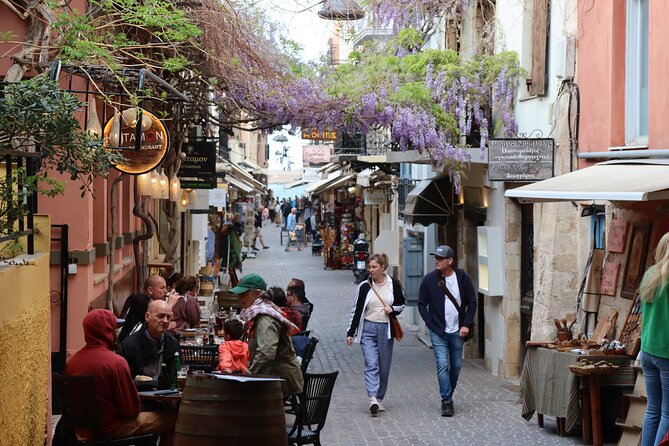
- Skalidakis Cretan Knives: a focused look at Cretan knife craftsmanship and design variety
- Skridlof Street (Street of Leather): practical browsing for belts, bags, shoes, and jackets
- Assumption Cathedral area: a calm moment for architecture + quiet observation
- Old Venetian Harbor viewpoints: classic waterfront photos without needing extra planning
- Küçük Hasan Mosque: a clear Ottoman-era layer in the middle of today’s streets
- Small-group feel: capped at 15 people, so questions don’t get lost
The best part: a 5:00 pm stroll with clear landmarks
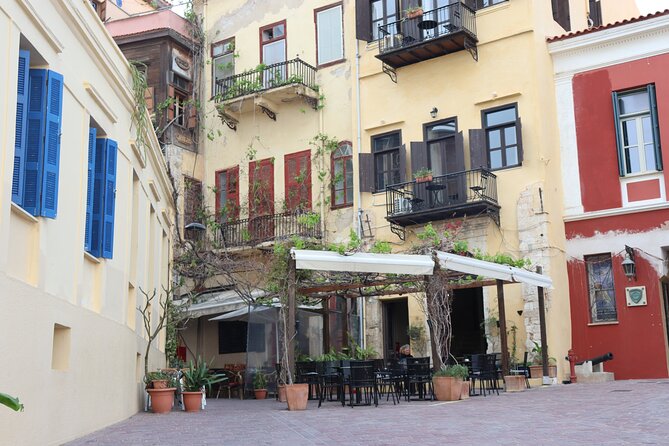
A 5:00 pm start is a gift in Chania. The light is often softer, crowds tend to thin a bit compared with peak daytime, and you’re not trying to do your walking tour under harsh midday sun. The route is designed around a tight loop—your walk starts at Venizelos GravesAgorastaki 4, Chania 731 33, Greece, and you end back at the same meeting point.
The small group size (maximum 15) matters more than you’d think. When a guide has fewer people to herd, you get better chances to ask questions at the exact moment a building, street, or shop detail catches your eye. And since it’s offered in English with a professional guide, it’s easier to turn the “I see it” moment into “I get why it’s here.”
Still, do remember one theme from real-world feedback: some people find the tour too straightforward—more like a readable overview than a lively narrative. If you’re the type who loves lots of spontaneity and story time, go in knowing this is a structured walking tour with planned stops.
You can also read our reviews of more tours and experiences in Crete.


Skalidakis Cretan Knives: why this stop makes the whole walk feel local
The first meaningful stop is the knife district around Skalidakis Cretan Knives. This is where the tour earns its keep. Instead of launching you straight into postcard sightseeing, it starts with a craft many visitors only see as souvenirs—here, you’re encouraged to notice design choices, styles, and what makes a knife feel distinct.
Even if you’re not buying anything, this is a good place to slow down. Look at differences in shape and finish. Notice how Greek craftsmanship branding shows up in the display. You’ll also get a feel for how niche shopping in Chania works: people don’t just pass through; they browse with purpose, comparing options the way you’d compare shoes.
Tip for getting more out of it: if you do plan to buy, treat the first stop as your warm-up. Ask questions early about materials and practical use, so you don’t get swept into a later impulse buy when you’ve already fallen in love with a specific blade style.
Skridlof Street: leather shopping without getting lost in it
Next up is Skridlof Street, also called the Street of Leather. This is one of those places where you can wander for an hour and still not see everything, but the tour keeps it anchored with a time window so you don’t overthink it.
What I like about this stop is that it’s not random. You get a focused segment devoted to leather goods: bags, shoes, belts, jackets. The shops line the alleys with products you can realistically compare—size, style, quality feel—and decide what fits your suitcase strategy and budget.
There’s also a smart mindset shift here: don’t go looking for one perfect “souvenir.” Go looking for what will actually live well at home. A belt is easier to size than a jacket. Shoes are higher risk unless you’re sure about fit. If you’re browsing, treat it like learning: ask what’s leather, what’s lined, and how it wears, then compare two or three shops before you commit.
Potential consideration: if you don’t like shopping areas at all, this is the stop most likely to feel like an interruption. The tour works best if you enjoy looking at goods and learning how local crafts get sold.
The Assumption Church and Agios Nikolaos: a calmer pause in the middle of streets
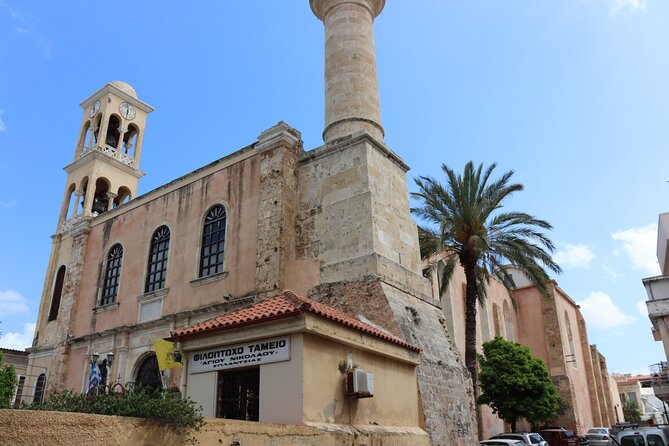
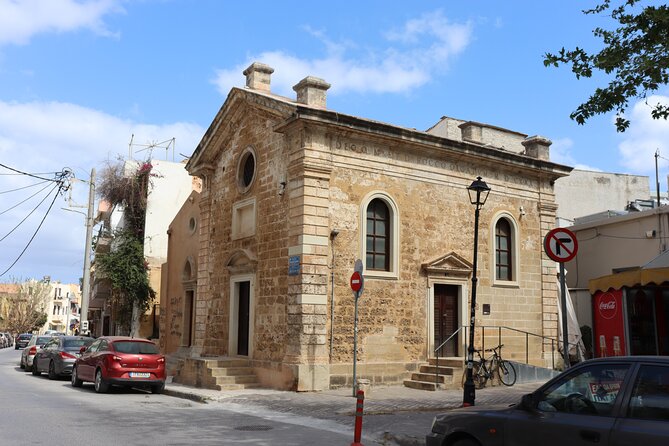
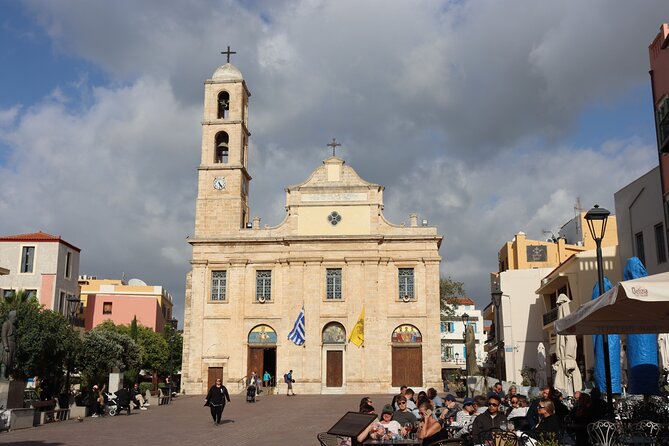
The walking route then shifts into places of worship—first the Holy Catholic Church of the Assumption of the Blessed Virgin Mary (Cathedral of Saint Mary of the Assumption), and later the Church of Agios Nikolaos.
These stops add balance. You spend the earlier part of the walk among shops and trade-focused streets. Then the tour gives you a quieter pocket where the details are about design, stonework, and the atmosphere rather than merchandise.
What you can take away without overthinking: pay attention to how churches sit within a lived-in city. They aren’t museum backdrops. They’re part of daily life and spiritual routine, which changes how you experience the surrounding streets. Even if you just spend a short moment inside or at the entrance, it helps you reset your eyes for the next turn.
Practical note: dress and behavior matter in churches. If you’re not sure what’s expected, cover shoulders and follow any posted guidance. Keep your phone use respectful, and don’t block doorways.
Old Venetian Harbor: the payoff for your feet
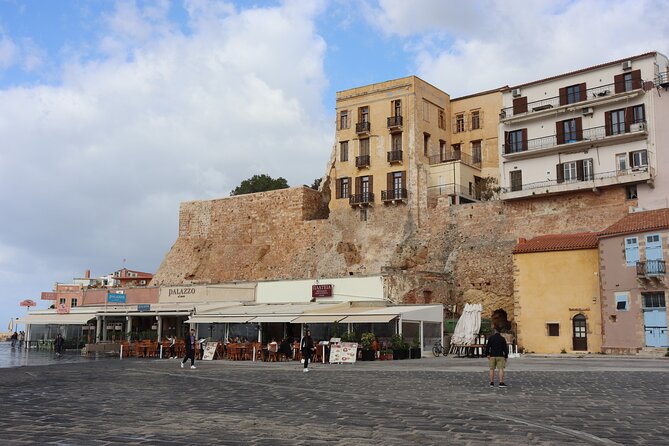
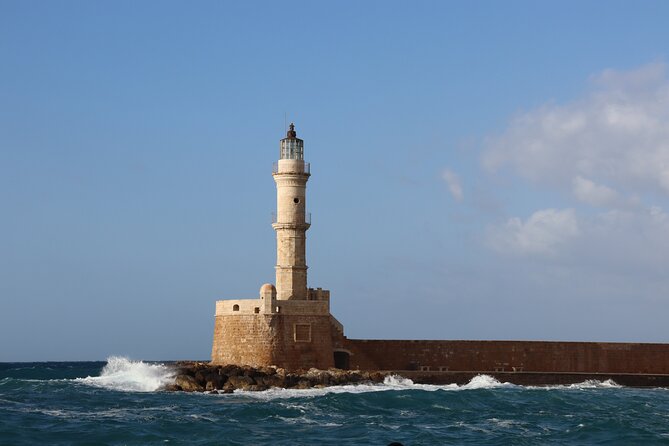
After the craft and church stops, you reach the Old Venetian Harbor. This is the kind of location where your brain finally goes, Ah—so that’s why I walked.
You get cobblestone paths, waterfront views, and classic Chania’s-sea-front energy. The guide’s context helps here because it turns scenery into something you can read: maritime routes, trading history, and the way Venetian structures shaped the harbor’s look. Even if you don’t go into every structure, the overall feel is unmistakable.
This is also where you can make the tour practical for yourself. The harbor area is full of easy photo angles and nearby cafes, so even if you’re not extending the day, you can end your walk with a drink or a short snack.
Quick self-check: if you mainly came for views and photos, make sure you arrive with enough energy left for this last stretch. The tour is time-boxed, and the harbor is the best place to slow down for pictures.


Küçük Hasan Mosque: seeing Ottoman-era influence in everyday Chania
One of the more meaningful cultural stops is Küçük Hasan Mosque. This is your Ottoman-era layer—an architecture reminder that Chania didn’t develop in one single cultural lane.
What makes this stop valuable is how it contrasts with the churches you see earlier. Within one walk, you’re comparing religious architecture across different time periods and cultural influences. It’s not about arguing who influenced what; it’s about recognizing that Chania is layered, not stuck in one chapter.
Even if you only take in the exterior and immediate surroundings, you’ll still get something: a clearer sense of the city’s multicultural past and how that past still shows up on the street.
Consideration: because this is an active place of worship, use a respectful voice and keep your visit brief if there are worship activities. You’re there to observe, not to treat it like a photo studio.
What the pace feels like (and how to get the best out of it)
The tour runs about 2 hours and moves through a sequence of stops that are each roughly around 20 minutes. That structure is great for first-timers because you see a lot without needing to plan. It’s also why the tour can feel “just enough” for some people and too quick for others.
From a “will I enjoy this?” angle, your preferences decide the outcome:
- If you like guided orientation—so you can later explore on your own—you’ll probably love this pacing.
- If you expect long, deep storytelling or lots of extra detours, you may find it feels like a highlight reel.
The tour includes a professional guide and is offered in English. You’ll also use a mobile ticket, which is convenient if you don’t want paper. The group stays small (up to 15), and the start point is near public transportation, which helps if you’re connecting from another part of town.
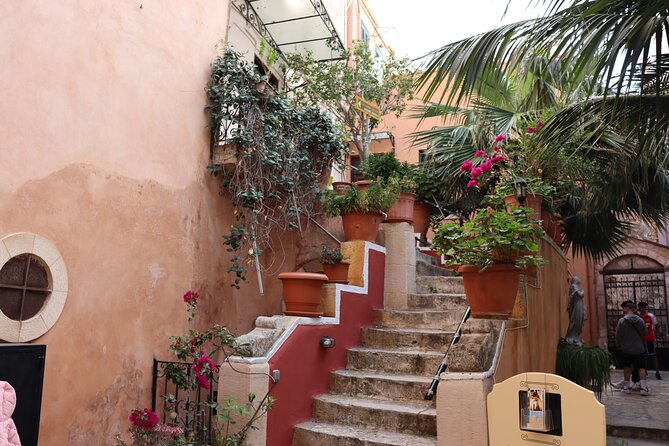
What to bring: comfortable shoes are non-negotiable here. The walk is in Chania’s older street layout, and cobbles can add up. Bring water if you run warm, and plan to recharge after the harbor.
Price and value: is $32 worth it?
$32 per person for a guided walking tour in Chania is not “cheap,” but it’s not outrageous either—especially if you value a guide to help you connect the dots. You’re paying for time efficiency, English interpretation, and a structured route that hits several major themes: crafts (knives and leather), religious landmarks (Catholic and Orthodox churches), and two different cultural/architectural influences (Ottoman mosque, Venetian harbor).
Here’s the value logic I’d use:
- If you plan to self-walk anyway, a guide can still save you from wandering aimlessly. The route points you to specific places in a sensible order.
- If you like to understand what you’re seeing, you’ll likely feel it’s worth the fee.
- If you mainly want free-form wandering with no structure, you could do this route on your own—though you’d lose the “why this matters” context that makes the stops click.
Based on what’s listed for these specific stops, admission tickets are indicated as free for each stop in the walk. That helps keep your total out-of-pocket costs predictable. (Still, any personal shopping is on you.)
Who should book this tour—and who should skip it
This is a good match if you:
- want a short, organized way to understand central Chania without spending hours researching
- enjoy craft-focused stops (especially knives and leather)
- like mixing religious landmarks with waterfront views in one evening
You might skip it if you:
- want a long, talky narrative with lots of backstory and extra time at each site
- dislike shopping streets entirely (Skridlof is a major part of the experience)
- are hoping for a fully flexible route with lots of detours
Should you book this guided walking tour in Chania?
If you’re doing Chania for the first time and you want a simple evening loop that covers craft, architecture, and harbor scenery, this tour is an easy yes. I’d book it if you enjoy seeing multiple sides of a city in two hours and you’re happy with a structured pace.
Just go in with realistic expectations: it’s a highlight walk with planned stops, not an all-day story marathon. And if you’re the type who needs deep, extended commentary to feel “brought to life,” you may want to pair this with your own free exploration afterward—starting near the harbor, where the city is most fun to wander at your own speed.
FAQ
FAQ
How much does the Guided Walking Tour in Chania cost?
It costs $32.00 per person.
How long is the tour?
The tour lasts about 2 hours.
What time does the tour start?
The start time is 5:00 pm.
Where is the meeting point?
The tour starts at Venizelos GravesAgorastaki 4, Chania 731 33, Greece.
Does the tour end back at the meeting point?
Yes, the activity ends back at the meeting point.
How many people are in the group?
The maximum group size is 15 travelers.
Is the tour in English?
Yes, the tour is offered in English.
Are there admission fees at the stops?
The listed stops show admission ticket free.
Can I cancel for a full refund?
Yes. You can cancel up to 24 hours in advance of the experience for a full refund.