REVIEW · AZORES
Faial Island: Unique boat tour to the Capelinhos volcano
Book on GetYourGuide →Operated by Capelinhos Ocean Tours · Bookable on GetYourGuide
The sea makes Capelinhos feel brand-new. This is a boat tour designed to show you the Azores coast the way land never can, with a close-up view of the Capelinhos volcano plus key landmarks like Elephant Rock and volcanic cliffs. It’s one of those trips where your brain goes quiet, because the rock and coastline look different at sea level.
I love two things most. First, the route is built around specific coastal spots you can’t really reach on foot, from grottoes and cliffs to quiet bays right along the volcanic coast. Second, the guide-led narration makes the scenery easier to understand, including the island’s geology and what you might spot in the water. One heads-up: the sea in the Azores isn’t always calm, so the ride can feel bouncy, and the operator notes it’s not suitable for young children and not recommended for pregnant women.
In This Review
- Key reasons this Capelinhos tour is worth your time
- Why seeing Capelinhos from the water changes everything
- Getting started at Horta Marina: what happens before you go
- The coast route: seven stops that read like a story
- Horta Marina area: the baseline for your island tour
- Porto Pim Bay: the whale-hunter’s coast
- Ponta Furada caves and coastal rock features
- Varadouro Bay: cliffside nesting grounds
- Capelinhos up close: Elephant Rock, volcanic grottoes, and the lighthouse museum
- Wildlife moments: what you might spot and how to handle it
- The boat ride realities: sea conditions, protective gear, and motion
- What to wear and bring (so you stay comfortable)
- Price and value: is $88 a good deal on Faial?
- Who this tour fits best
- Should you book Capelinhos Ocean Tours?
- FAQ
- How long is the tour from meeting to finishing?
- Where do we meet in Horta?
- Is there a toilet on the boat?
- Is this tour suitable for pregnant women or young children?
- What languages are the live guides?
- What should I bring, and is there anything I can’t bring?
Key reasons this Capelinhos tour is worth your time
- A full sea-level view of Capelinhos: you get close to the volcanic coast, not just a distant shoreline photo.
- Seven named coastal highlights planned for what you’ll actually see from the water.
- Elephant Rock and grottoes: classic landmarks passed at a distance that feels hands-on.
- Guides like Kamila and skipper Chris focus on calm, clear explanations and onboard comfort.
- Marine life sightings are possible (dolphins, whales, turtles), depending on conditions.
- Weather-flexible planning with protective clothing, but you still need to respect Azorean sea conditions.
Why seeing Capelinhos from the water changes everything
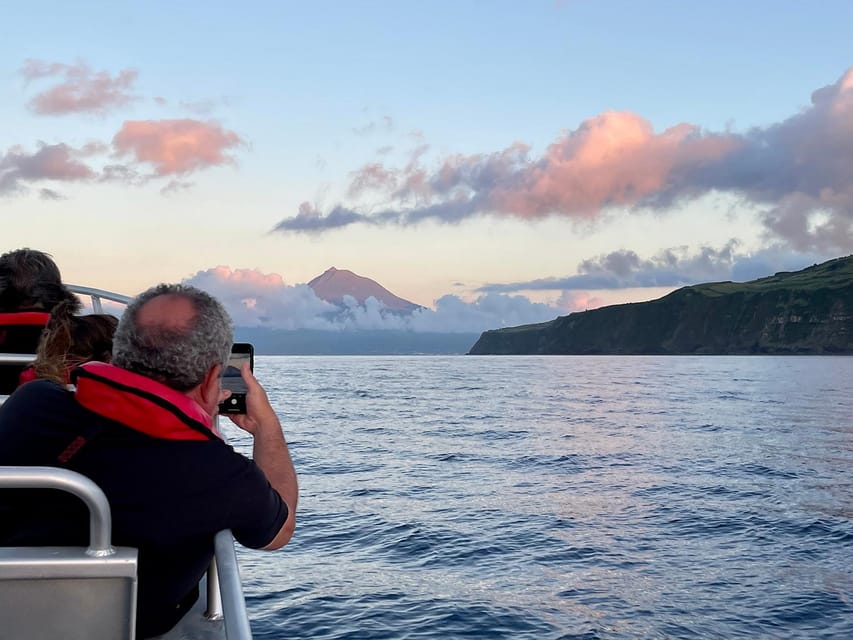
Capelinhos is Faial’s “how did this happen?” story, and the boat angle matters. From land, you tend to look at rock shapes and shorelines from afar. From the sea, you’re suddenly judging scale: cliff faces, cutouts, and volcanic textures that only make sense when you see them close and in motion.
This tour is also more than a one-note volcano trip. You move along the coast with stops tied to what Faial has been through and what it’s become—historical points near Horta, natural sites along the west and south coasts, and the volcanic lighthouse area where the story is now preserved as a museum. The ending panoramic view gives you a final mental map of the island, so the trip feels like a coherent story instead of random sightseeing.
You can also read our reviews of more tours and experiences in Azores.
Getting started at Horta Marina: what happens before you go
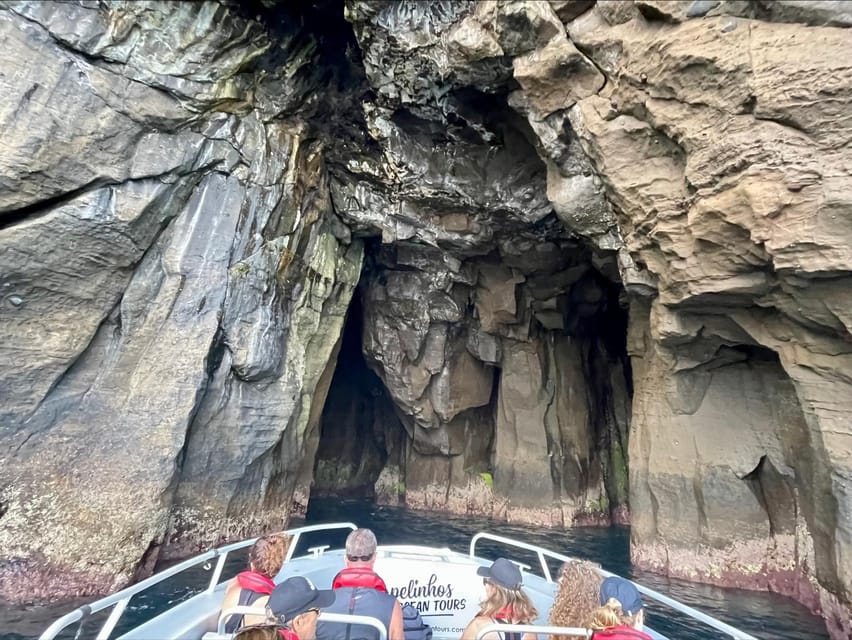
You meet at the Capelinhos Ocean Tours office in the Horta marina, in the new building in the Maritimo-Turistica area, downstairs near pontoon F. The operator says there’s no need to arrive super early, because after you check in you’ll handle ticketing and then go into a briefing.
Plan for the total time to run long in a good way. You’ll have a safety briefing (about 45 minutes) and then the sailing portion is listed as 3 hours, with extra time for a short “what we’ll visit” + safety walkthrough on board (often 30–45 minutes). So from meeting to return, think roughly 3h30 to 4 hours.
The small comfort note: there’s no toilet on the boat, but you can use public restrooms before the tour. Azores weather is changeable too, so you’ll want to be ready to layer up without fuss.
The coast route: seven stops that read like a story
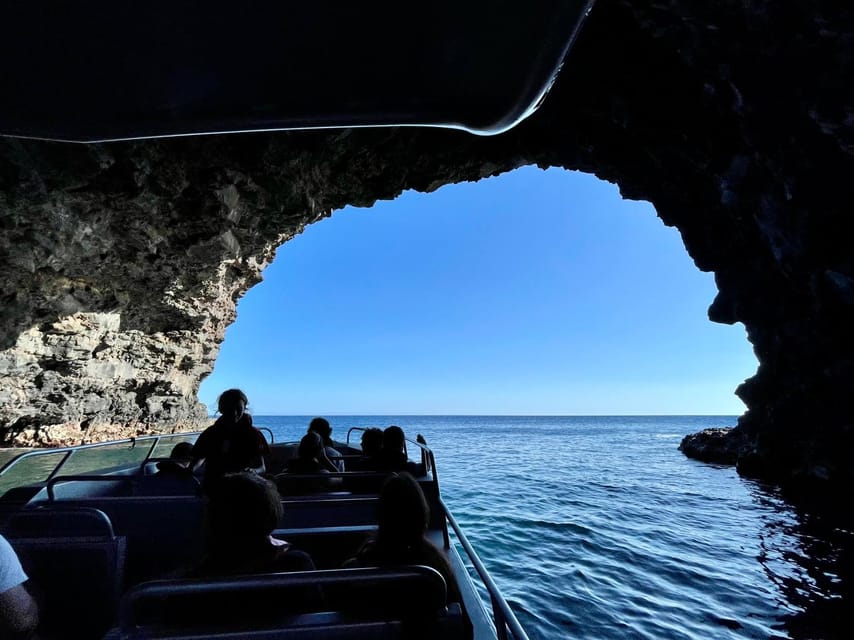
This tour is organized around seven coastal attractions, and each one fits a different part of Faial’s character. The point isn’t just to pass by them—it’s to show them as they look from the sea, where caves, rock types, and cliff geometry show up clearly.
Horta Marina area: the baseline for your island tour
You start with the historical Marina Horta viewpoint. This is useful because it anchors you. Before you move into more volcanic terrain, you get a feel for how the harbor and coastline connect, so later sights click faster.
Even if you’ve already wandered Horta on foot, this is the chance to connect streets and viewpoints to actual water routes. It’s easier to understand why Faial’s coast mattered historically once you’re looking at it from the waterline.
Porto Pim Bay: the whale-hunter’s coast
Next comes Porto Pim Bay, described as the whale-hunter’s bay. If you like human history that’s tied directly to geography, this is the kind of stop that makes sense. It’s not a museum stop; it’s the coast itself doing the explaining.
From the water, you can see how the shoreline frames the bay and where conditions might have mattered for older sea activity. It’s one of those “history lives in the shape of the coast” moments.



Ponta Furada caves and coastal rock features
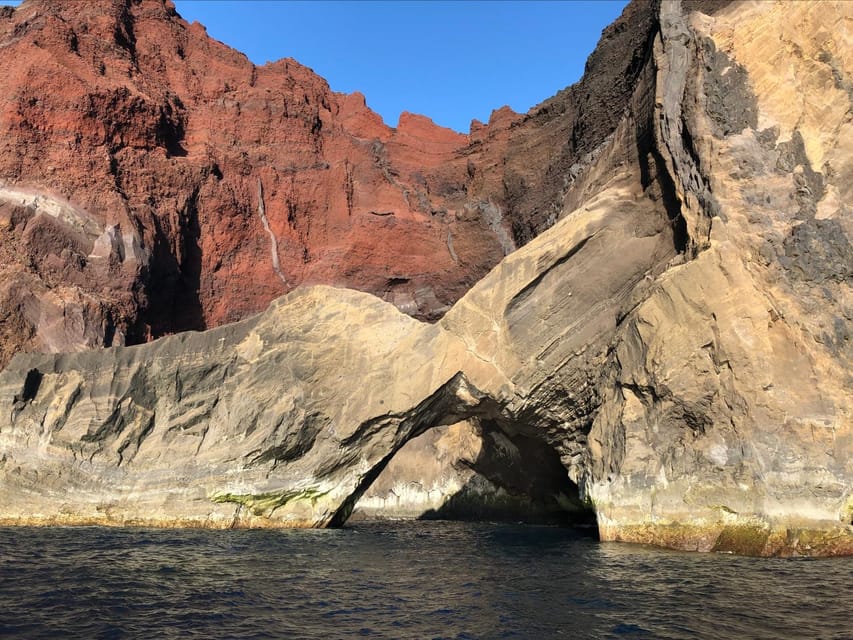
Then you move toward the caves of Ponta Furada. Caves are the kind of thing you can miss entirely from land, because angles block your view and you don’t get a sense of how deep openings sit within cliffs. From the sea, you’re positioned where the rock gives context instantly.
You’ll also pass trachyte rock formations near Morro de Castelo Branco. The tour focuses on how these rocks show up along the coast, and that’s the main value of traveling by boat here: your brain can connect the “look” to the island’s volcanic story while you’re still on the move.
Varadouro Bay: cliffside nesting grounds
Varadouro Bay is where the tour shifts from “volcanic features” to “what lives here.” The operator highlights cliffside nesting grounds, which means you’re paying attention to vertical rock lines and ledges, not just the shoreline.
This is a good reminder that the Azores are active ecosystems, not just scenery. If wildlife is moving around, this is the kind of area where you’ll understand why the coastline matters.
Capelinhos up close: Elephant Rock, volcanic grottoes, and the lighthouse museum
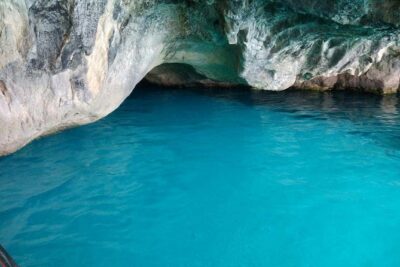
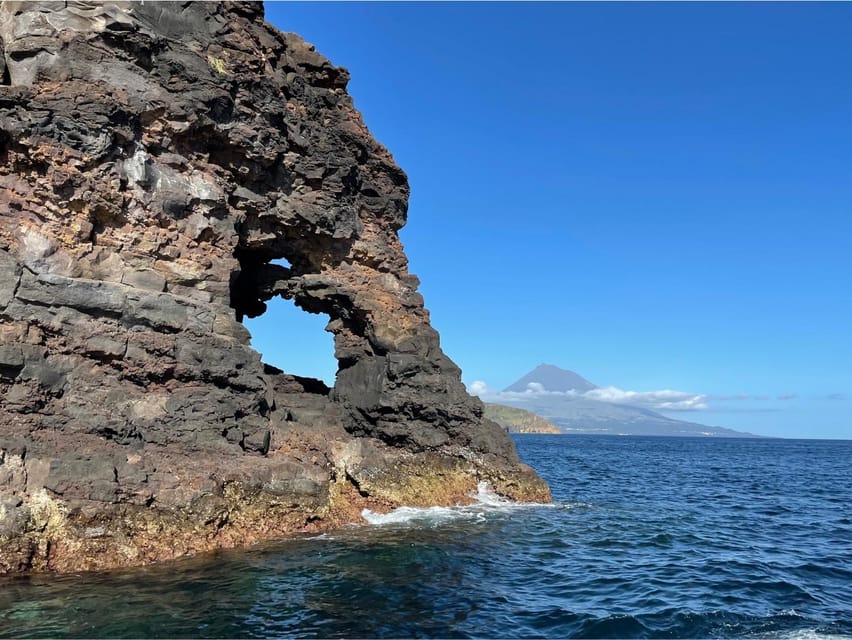
Now for the main act: the Capelinhos volcano coastline, shown from the water with stops timed for what you can see best. The route includes grottoes, towering cliffs, and serene bays, plus the iconic Elephant Rock.
Elephant Rock is one of those landmarks that’s famous because it looks like something specific. But the real payoff is scale and positioning. From the boat, you can see how it sits against the volcanic coast rather than just floating in your memory as a “photo spot.”
The tour also includes the reborn Capelinhos volcano lighthouse, now a museum. That matters because it turns the volcanic story from “what happened” into “what we learned and how we remember.” You’re not just staring at the coast—you’re ending at a place that explains the meaning of the landscape.
On the return leg, you also get a panoramic ocean view of Faial’s entirety. That final sweep helps you connect earlier sightings into one mental map. It’s a practical wrap-up: you’ll look back at the island with a better sense of where everything sits.
Wildlife moments: what you might spot and how to handle it
The operator says you might spot marine wildlife such as dolphins, whales, and turtles. That’s never a guarantee—this is the ocean, not an aquarium—but it’s part of what makes Faial feel special. When animals show up, it usually does so in quick bursts, so it helps if you stay ready to look up and out without digging for your phone.
A practical tip: keep your sunglasses handy and your camera secured. If the boat is moving, your hands will be busier than you expect, and you’ll want to stay safe. The guide will also direct attention when something is spotted, and you’ll get more from the sight if you follow their pointing rather than guessing where to aim.
The boat ride realities: sea conditions, protective gear, and motion
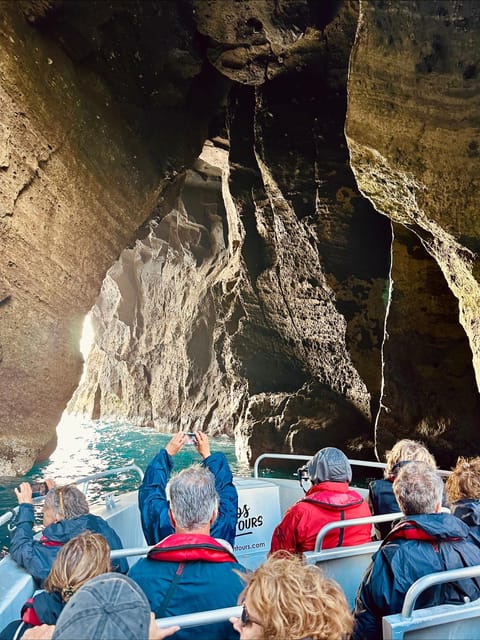
This is where you should plan smart. The tour includes protective clothing during bad weather and a mandatory life jacket. Those are not tiny details—they’re the difference between “fine, cool experience” and “why did I think this was a good idea.”
The operator also notes that the sea is never totally calm. That’s why it’s not suitable for young children and not recommended for pregnant women. If you’re generally prone to motion sickness, consider bringing what you normally use for boats, and dress in layers so you can adjust when wind changes.
One review note to keep in mind: on at least one departure, the regular boat was broken down and a smaller zodiac was used instead. That meant the ride felt a bit more “working” and visibility wasn’t as easy. That’s not something you can control, but it’s a realistic way to think about boat size and comfort if conditions or equipment change.
What to wear and bring (so you stay comfortable)
Bring a windbreaker, sunglasses, sunscreen, and comfortable clothes. Add weather-appropriate layers, because Azorean conditions can turn quickly. The tour provides protective clothing in bad weather, but you’ll still be happier if your base layers are comfortable.
On footwear, avoid high heels. And on onboard behavior, keep it simple: no smoking or vaping, no weapons or sharp objects, no littering, and no alcohol in the vehicle. The operator also lists no speakers, no firework or explosive substances, and no making fire. If you like a clean ride with minimal chaos, these rules help keep the experience focused.
Also: the meeting place is in the marina area, so give yourself time to park, walk, and find the office entrance without rushing.
Price and value: is $88 a good deal on Faial?
At $88 per person for about a 3-hour cruise (plus briefing time that brings it closer to 3h30–4h total), this is not a “cheap afternoon.” But I think it’s good value if you want the volcano and the coast from the only angle that really matters: sea level.
You’re paying for two things you can’t easily replicate on your own: a guided route tied to specific coastal features, and access to the parts of the coastline that land routes simply don’t give you. The tour also includes skipper + live guide time and protective gear, which matters when conditions shift.
If your top priority on Faial is coastal views from “close and real,” then this $88 spend makes sense. If your goal is mostly to see Capelinhos from shore and you don’t mind a longer day of walking instead, then a boat may feel like overkill.
Who this tour fits best
This is a strong match for:
- People who want Capelinhos up close and enjoy geology or “how the coast got shaped.”
- Families who can handle boat time comfortably (the operator says it’s a great time for the whole family, but also flags that young kids aren’t suitable).
- Wildlife lovers who are okay with it being conditional and weather-dependent.
It’s not a great match if:
- You’re pregnant (not recommended by the operator).
- You’re traveling with very young children (not suitable).
- You’re expecting a calm, smooth ride. Even with the best planning, the ocean has its own schedule.
Should you book Capelinhos Ocean Tours?
I’d book this if you’re the type of traveler who likes your “wow” to come from perspective, not just from distance. Seeing Elephant Rock, grottoes, volcanic cliffs, and the Capelinhos lighthouse museum from the sea is the kind of experience that sticks because it’s physical—you can feel the scale.
Before you commit, pick your dates with weather in mind. The operator notes sea and weather can change, and if the tour can’t safely run, they’ll inform you and try to offer a postponement on the nearest possible date. Also remember that there’s a minimum number of participants (6), so try not to plan this as your only option on Faial.
If you want a single “must-do” that turns Capelinhos into a full storyline instead of a coastline photo, this is that choice.
FAQ
How long is the tour from meeting to finishing?
The boat cruise is listed as 3 hours, and you’ll also have safety briefing time before you go. The operator notes total time is usually around 3h30 to 4 hours including the extra briefing.
Where do we meet in Horta?
You meet at the Capelinhos Ocean Tours office in the Horta marina, in the new building in the Maritimo-Turistica area, downstairs near pontoon F.
Is there a toilet on the boat?
No. There are public restrooms available to use before the tour.
Is this tour suitable for pregnant women or young children?
The operator says it is not suitable for young children and is not recommended for pregnant women, since the sea is never totally calm.
What languages are the live guides?
The live tour guide is offered in English and Polish.
What should I bring, and is there anything I can’t bring?
Bring a windbreaker, sunglasses, sunscreen, comfortable clothes, and weather-appropriate clothing. Avoid high-heeled shoes, smoking or vaping, and anything that could be unsafe such as weapons or sharp objects. The operator also lists no alcohol/drugs and no speakers onboard.