REVIEW · SARDINIA
Discover Scuba diving in Villasimius
Book on Viator →Operated by Archeo Diving · Bookable on Viator
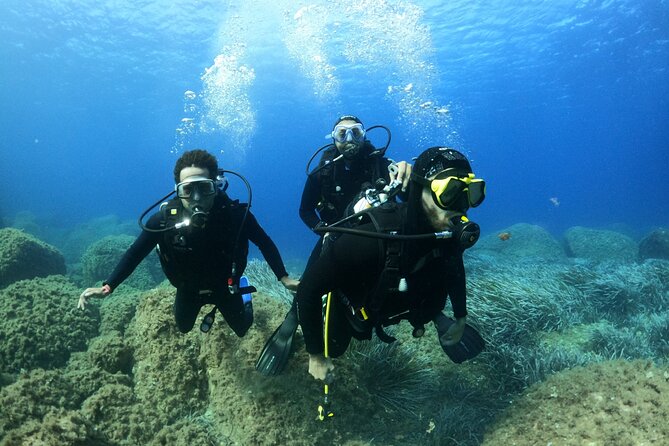
Breathe underwater without a certification. That’s what makes this Sardinia experience so appealing: you get step-by-step scuba air training and then a 30-minute shallow 5-meter session in the Marine Protected Area of Capo Carbonara. You start with a short theory lesson, fit the equipment, practice in a sheltered basin, then head out by inflatable boat to see real marine life close to the surface.
Two things I like a lot are the close attention during training and the setting itself. The team uses a teaching style that’s especially reassuring for first-timers, with instructors including Michael and help from Wendi mentioned in the feedback, plus a small group limit of 4 travelers. The main thing to consider is that this experience depends on good marine weather, and if conditions are poor you may need to switch dates or request a refund.
In This Review
- Key highlights before you go
- Getting oriented at Porto Turistico di Villasimius
- The 4-hour flow: theory, basin practice, then a shallow 5-meter session
- Capo Carbonara’s protected waters: where you might swim
- Marine life at shallow depth: Posidonia to barracuda
- Gear basics (ARA and SCBA) without the fear factor
- What’s included, what costs extra, and why the price can make sense
- Who this experience fits best—and who should pause
- Should you book this shallow scuba air session in Villasimius?
- FAQ
- How long is the experience?
- What depth do you reach?
- Do I need a diving qualification license?
- How long is the underwater part?
- Where does the activity take place?
- What marine life can I expect to see?
- What’s included in the price?
- What is not included?
- What happens if weather is bad?
- Can I bring a service animal?
Key highlights before you go
- Up to 5 meters maximum for a calm, first-timer-friendly session
- Short theory + real water practice starting at Spiaggia del Riso
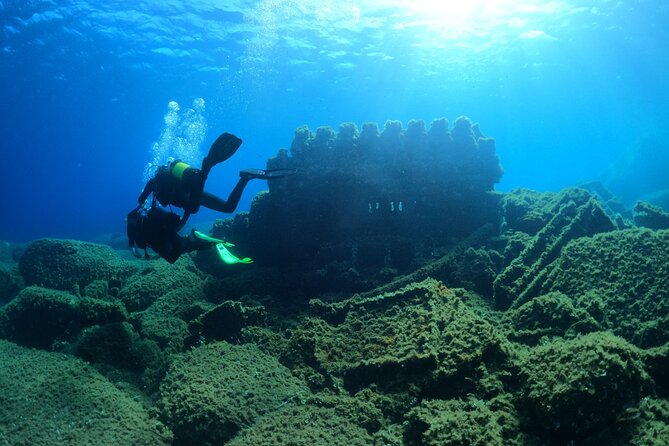
- Marine Protected Area focus around Capo Carbonara and Isola dei Cavoli
- Small group (max 4) means you get more hands-on guidance
- Snacks and soda included so you’re not scrambling before/after
- Equipment provided (cylinder, regulators, and buoyancy jacket/kit)
Getting oriented at Porto Turistico di Villasimius
Most activities here start right at Porto Turistico di Villasimius (Via Degli Oleandri, 09049 Villasimius CA). That’s handy because you’re not hunting down a random office in the center of town, and it keeps the whole outing tied to the coast.
From there, your group moves through the day in a logical order: first you learn what you’re using and how to use it, then you test everything in controlled conditions. That matters because scuba air work is less about athletic ability and more about comfort with the gear and your breathing rhythm.
The whole day runs about 4 hours total, but you’re not spending that time on a long lecture. The theory is described as short, then you get into practice—starting in a delimited basin—before heading out for the open-water portion.
You can also read our reviews of more tours and experiences in Sardinia.
The 4-hour flow: theory, basin practice, then a shallow 5-meter session
Here’s the rhythm you should expect, based on how the experience is structured.
First comes a short theoretical lesson with your guides. You’ll learn the purpose of the SCBA system and the basic safety concepts you’ll need once you’re underwater. Even if you’ve never tried it, this step helps you connect the “how” to the “why,” so the equipment makes sense instead of feeling mysterious.
Next, you’ll move to equipment use and fit, with the kind of instruction that’s aimed at first-timers. The air kit is described clearly: the cylinder provides your air supply, the regulator controls airflow underwater, and the jacket (used for buoyancy control) helps you float safely. You also learn what to expect from autonomy—on average about 1 hour, depending on how your breathing settles in.
Then comes the testing ground: a sheltered, delimited basin at Spiaggia del Riso. Think of it as the “try it for real but keep it simple” stage. Doing this before open waters is a big deal, because it lets you get comfortable with breathing, posture, and basic buoyancy without the pressure of open sea conditions.
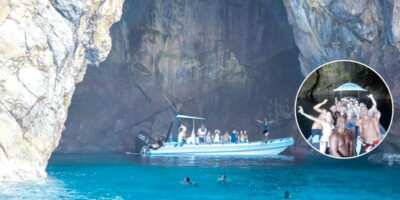
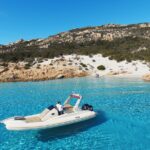
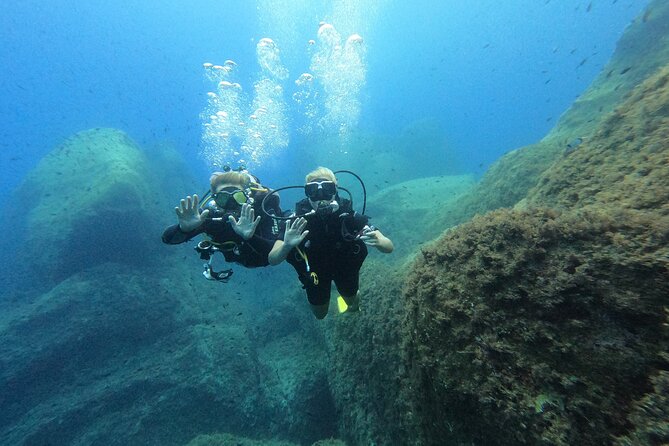
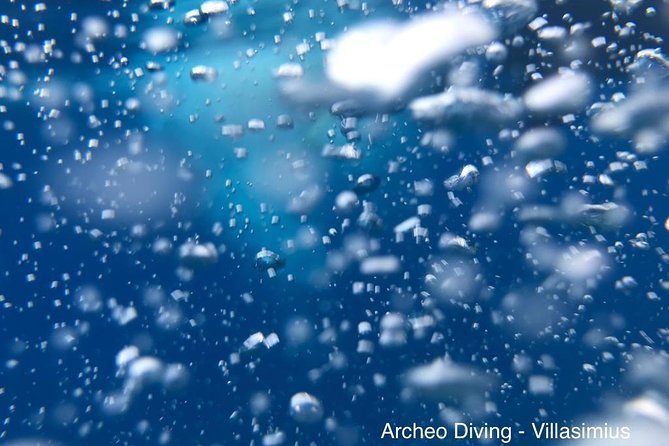
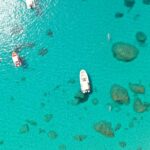
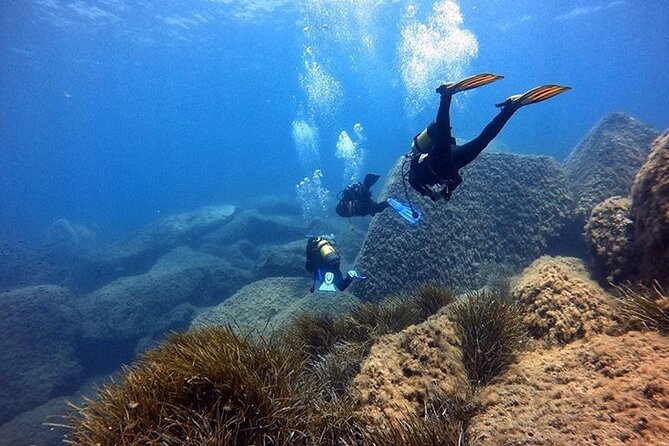
Finally, you head out by inflatable boat into the Marine Protected Area (AMP). The experience includes a real underwater session lasting around 30 minutes, with a maximum depth of 5 meters. That shallow cap is key for beginners: you’re close enough to stay calm and focused, and you’re not fighting depth while you’re still learning gear habits.
After the open-water portion, you return to the meeting point to finish the day.
Capo Carbonara’s protected waters: where you might swim
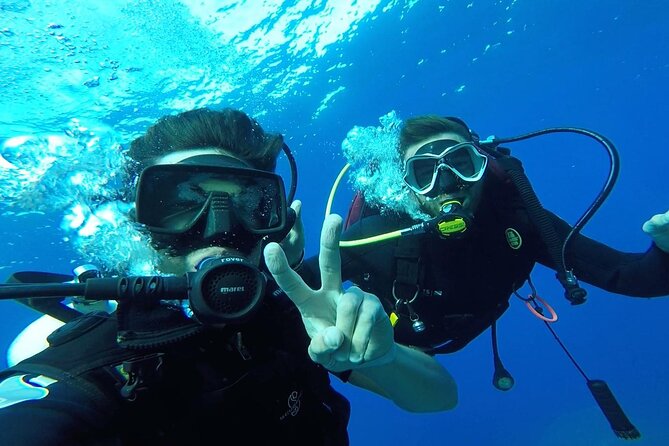
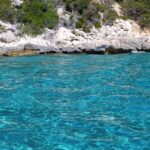
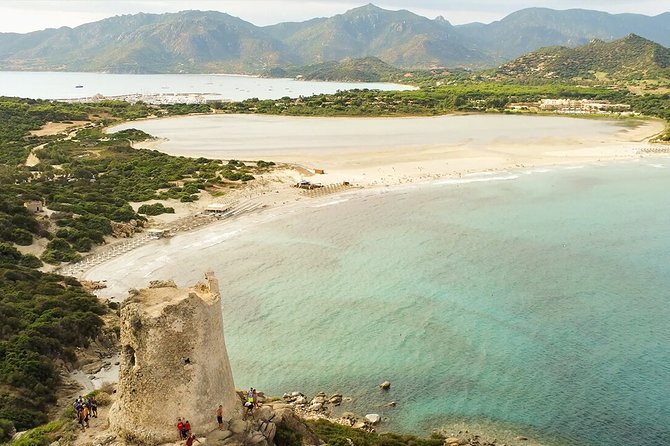
This is not just “go to the sea and see fish.” The day is built around the Marine Protected Area of Capo Carbonara, which is described as extending from Capo Boi to Serpentara, with its heart around Isola dei Cavoli.
What’s especially interesting is how the protected zones work. The information notes that only divers are allowed access to certain zones (the A areas), while B areas are highlighted as places rich in marine life. Practically, that means the trip is aimed at waters where you’re more likely to find a mix of species—and you’re doing it under conservation rules, not in some random spot.
Your exact location may shift based on sea conditions. You might spend time around Isola dei Cavoli, and the plan also mentions alternative points such as the rock of S. Caterina or Cava Usai if conditions make them a better match. If you’re the type who hates rigid itineraries, this flexibility can actually be a plus: you’re following the day, not forcing your way into one spot regardless of the weather.
One more practical detail: the day includes both a sheltered basin and open water. That mix usually helps your brain “learn the underwater world” gradually—first controlled, then naturally adventurous.
Marine life at shallow depth: Posidonia to barracuda
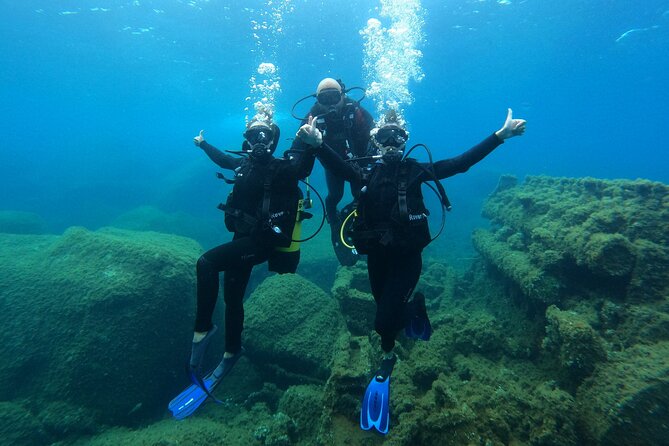
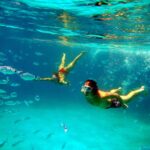
At around 5 meters, you’re in a sweet spot for first-timers. It’s shallow enough that you can stay relaxed, but deep enough that you can actually appreciate the underwater landscape and the animals living in it.
The experience highlights Posidonia oceanica, the seagrass that plays a big role in Mediterranean marine ecosystems. Seeing it in person is one of those moments that changes how you think about “just water.” It’s part habitat, part shelter, and a real indicator of a healthy marine area.
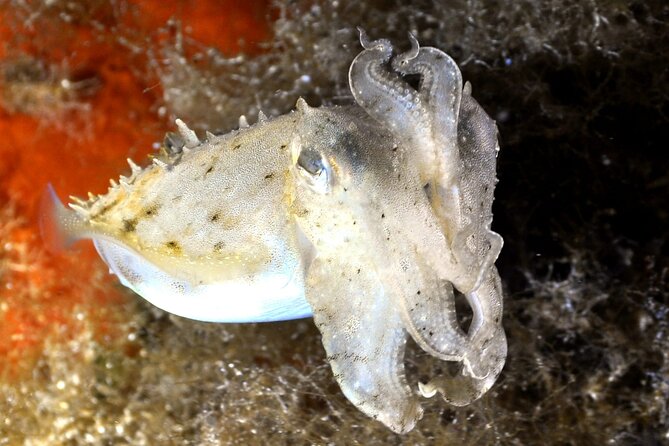
You’ll also be watching for a mix of fish—from smaller species you’ll spot by eye to bigger shapes that appear when you slow down. The named animals include:
- Damselfish (Chromis chromis), described as small and magical
- Grouper (Epinephelus marginatus), listed as larger fish
- Barracuda (Sphyraena viridensis), described as fearsome but harmless
In a beginner outing, naming these species is useful because it sets expectations. It also helps you look with purpose instead of just staring at the water and hoping something swims by.
Gear basics (ARA and SCBA) without the fear factor
If the words SCBA and ARA feel technical, that’s normal. The experience is designed to make the jargon practical.
Your “air breathing apparatus” (ARA) is explained as a set of equipment:
- Cylinder for your air supply
- Regulators (the underwater breathing unit)
- Jacket for buoyancy and floating support
That jacket part matters more than most first-timers expect. Buoyancy is what helps you feel balanced, not tangled. With the max depth limited to 5 meters, your body can focus on breathing and calm movement rather than survival-level control.
Autonomy is also part of the safety picture: you’re told the average autonomy is about 1 hour, with the reminder that it depends on how fast you breathe. For me, that’s a good way to frame expectations. It’s not pretending everyone will breathe the same. It also encourages you to treat your air supply as something you manage, not something you ignore.
One more comfort point from the feedback: the instruction style is described as patient, and in at least one case it was helpful for someone who was nervous before starting. That’s exactly what you want with gear-based experiences—clear steps and calm communication when your body is still learning.
What’s included, what costs extra, and why the price can make sense
The price is listed as $106.64 per person, with an average booking window around 15 days in advance. On paper, that can sound like “not too expensive,” but the real question is: what are you getting for that money?
Here’s the value case:
- All fees and taxes included
- Snacks and soda/pop included, so you’re covered for basic refreshment
- Scuba equipment use included, meaning you don’t have to rent gear separately
- A structured beginner-friendly flow (theory, basin practice, then shallow open water)
What’s not included:
- Action cam
- Instructor video
Those add-ons can be worth it if you want a keepsake, but they’re not required to get the core experience.
The small group size (max 4 travelers) also affects value. Smaller groups usually mean less waiting, more direct coaching, and faster help if something feels off—especially during the early part of the session when your brain is learning the new breathing rhythm.
Who this experience fits best—and who should pause
This outing is specifically recommended for people without a diving qualification license (Open Water Diver). If you’re curious but intimidated by certification requirements, this is built for that exact moment.
It also mentions that most travelers can participate, and service animals are allowed. So if you’re planning a visit with a companion animal, that’s a point in your favor.
The main considerations are practical, not dramatic:
- Good weather is required. This is a sea-based activity, so cancellations due to poor conditions can happen.
- Your underwater portion is designed to be short and shallow, with 30 minutes at a maximum depth of 5 meters. If you’re chasing long bottom time, this isn’t aimed at that.
If you have strong anxiety about being underwater, it helps to know the instruction is described as patient and supportive. You’ll still want to be honest with your guides during the briefing so they can match pace to your comfort.
Should you book this shallow scuba air session in Villasimius?
I’d book it if you want an experience that feels like training you can actually understand. The combination of short theory, practice in a sheltered basin at Spiaggia del Riso, and then a controlled 5-meter maximum open-water session is a smart pathway for first-timers.
I’d think twice if you’re only interested in long underwater time or you’re traveling at a time when weather is often rough, since the activity requires good conditions. Also, if you’re hoping for lots of cinematic extras, remember that action cam and instructor video are not included.
If your goal is simple: breathe air underwater, see real marine life in Capo Carbonara, and feel guided from start to finish—this one fits the bill.
FAQ
How long is the experience?
It runs for about 4 hours.
What depth do you reach?
The maximum depth is 5 meters.
Do I need a diving qualification license?
This experience is recommended for people who do not have the Open Water Diver qualification.
How long is the underwater part?
You complete a real underwater session lasting about 30 minutes.
Where does the activity take place?
There is theory at the scuba center, practice in a delimited basin at Spiaggia del Riso, and open waters access from an inflatable boat in the Capo Carbonara Marine Protected Area.
What marine life can I expect to see?
The experience mentions plants like Posidonia oceanica and fish such as grouper, damselfish, and barracuda.
What’s included in the price?
Snacks, soda/pop, all fees and taxes, and use of scuba equipment are included.
What is not included?
An action cam and an instructor video are not included.
What happens if weather is bad?
The experience requires good weather. If it’s canceled due to poor weather, you’ll be offered a different date or a full refund.
Can I bring a service animal?
Yes, service animals are allowed.