REVIEW · CRETE
Crete: Sightseeing Day Trip with Cooking Lesson and Lunch
Book on GetYourGuide →Operated by Safari Experts Crete · Bookable on GetYourGuide
One day. Several very Crete moments.
This 4×4 route through Embasa gorge and the hands-on cooking and ceramics are the kind of combo that turns a simple sightseeing day into a practical, memorable hit. You’ll also get farm food, olive oil tasting, and that surreal dam story—but one thing to note is that the cooking instruction can feel a bit time-compressed, so the lunch won’t win a Michelin battle for everyone.
I really like how the guides bring the day to life. Names you might hear include Nikos and Mike, Mario and George, Nico, Vagelis, and Marios—each one focused on making the route make sense, from how Cretans live to how the landscape and farming connect. If you’re choosing this as your one best “get out of the beach bubble” day, it delivers.
The pacing is fast, but the stops land. You’ll spot the 2000-year-old plane tree in Krasi, learn from an olive oil factory visit with sampling, and watch how the Aposelemis dam reshaped whole villages—then top it off with pottery you can actually take home.
In This Review
- Quick hits before you go
- Hotel pickup and the real 4×4 experience in Crete
- Potamies farm: goat milking and fresh dairy that actually tastes local
- Aposelemis dam: the submerged village of Sfendili and the bird-filled wetland effect
- Embasa gorge 4×4 dirt roads: mountain views plus herb picking
- Lassithi plateau: cooking lesson with step-by-step guidance and a wood-oven style lunch
- Ceramics workshop on the plateau: making a ceramic piece you can take home
- Krasi: plane trees, aqueduct square, and the 2000-year-old moment
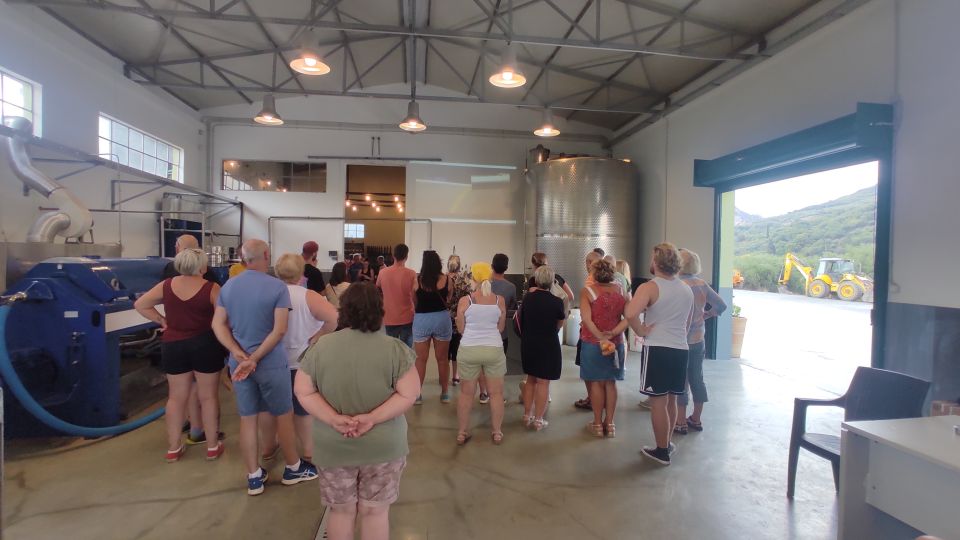
- Olive oil factory tour: tasting samples after learning extraction basics
- Price and value: does $108 per person make sense for 8 hours?
- Who should book this Crete day trip (and who might skip it)
- Best way to get the most out of the day
- Should you book this Crete cooking and pottery day trip?
- FAQ
- Where does hotel pickup happen?
- How long is the tour?
- What’s included in the price?
- What languages are available for the live guide?
- What should I bring?
- Can I cancel for a full refund?
Quick hits before you go
- Embasa gorge off-road driving on dirt roads, with mountain views and a chance to pick local herbs
- Farm morning in Potamies including goat milking and tasting products made from fresh milk
- Aposelemis dam and the submerged village story (Sfendili) with bird-filled wetland views
- Lassithi plateau ceramics workshop where you create your own ceramic piece
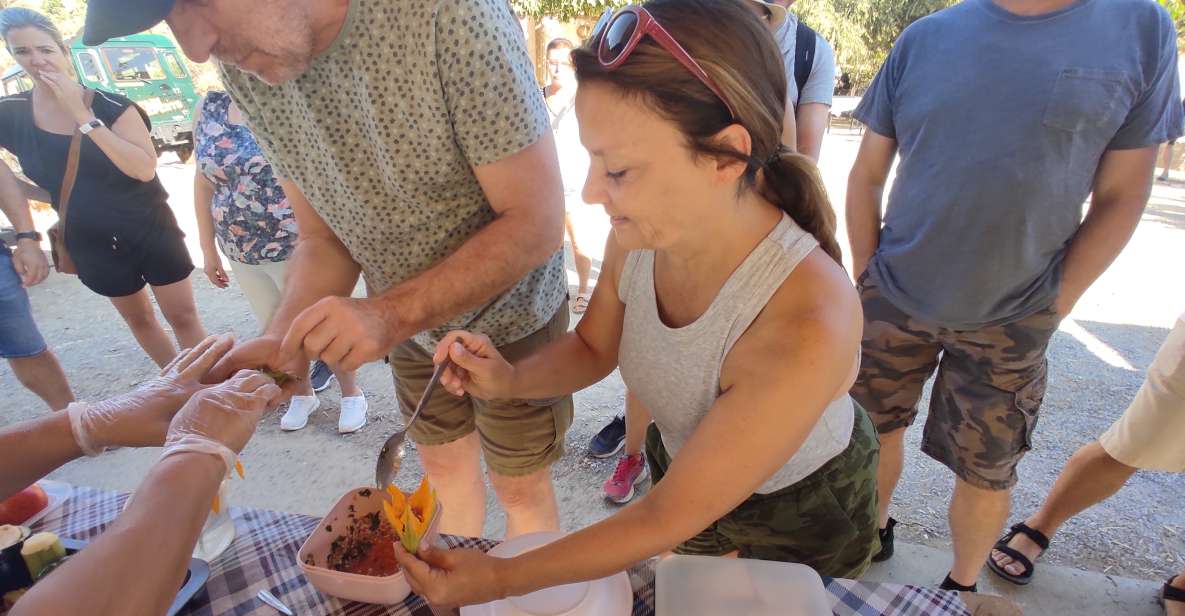
- Cooking lesson with step-by-step guidance using pure ingredients and local products
- Olive oil factory tour plus samples to understand extraction, not just taste it
Hotel pickup and the real 4×4 experience in Crete
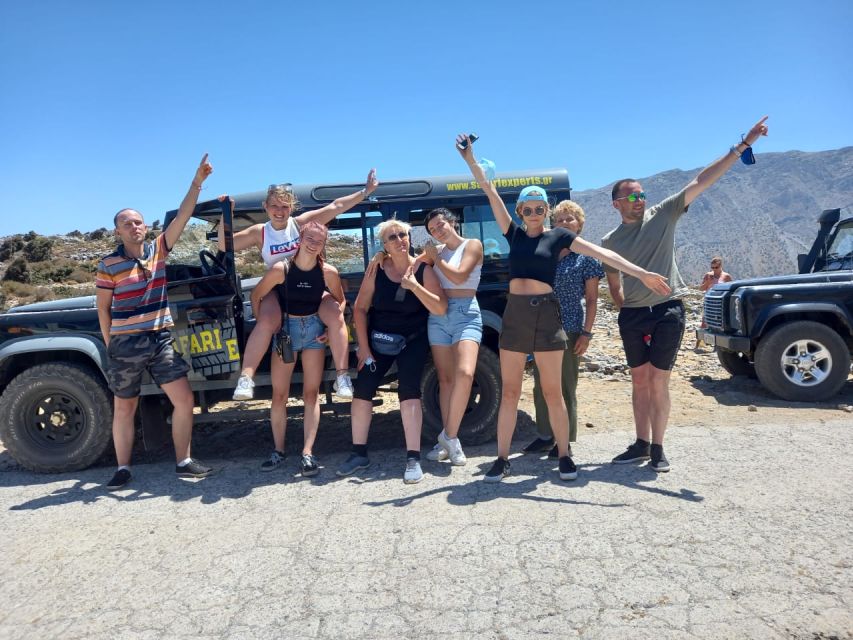
This is one of those tours that starts strong because you don’t have to solve transport on your own. Pickup runs from Analipsi, Heraklion, Hersonissos, or Sisi, and you meet your driver in your hotel lobby about 15 minutes early. The vehicle is a Land Rover Defender or 4×4 Mercedes Vito (fully A/C), which matters on Crete’s hotter days and also makes the long day feel less like punishment.
Once you’re loaded, you’ll notice the big difference between a regular bus tour and this style. You’re doing real terrain driving—not just pulling up for photos. That means more movement, more jolts, and more chances to see rural Crete beyond the main roads. If you get car sick easily, it’s worth thinking twice, because this route includes dirt road segments through the gorge of Embasa.
Guides also play a role in how the day feels. Several guides described in the experience are funny and fast-moving, and that energy is a big part of why people say this was one of their best days. You’ll be learning while riding, and you’ll likely feel guided even during the scenic stretches.
You can also read our reviews of more tours and experiences in Crete.
Potamies farm: goat milking and fresh dairy that actually tastes local
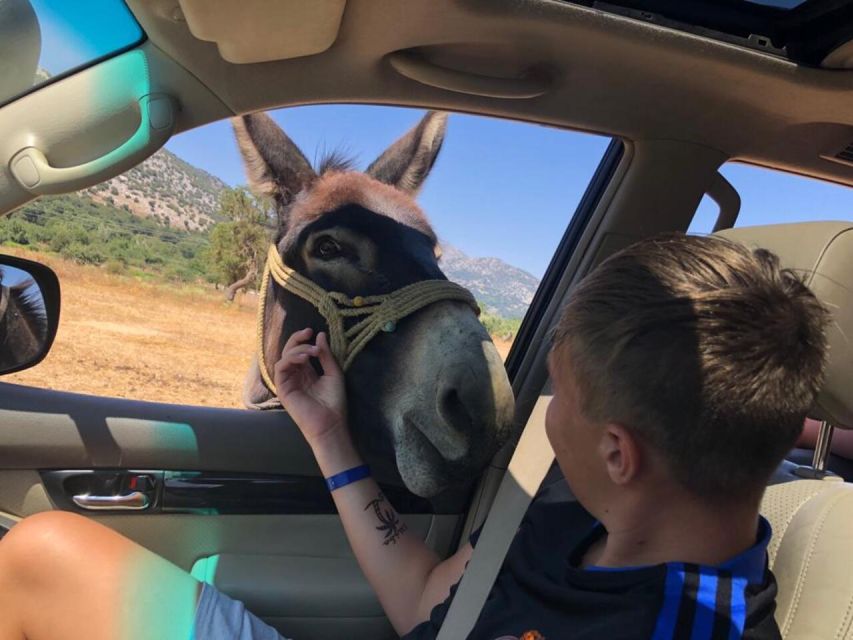
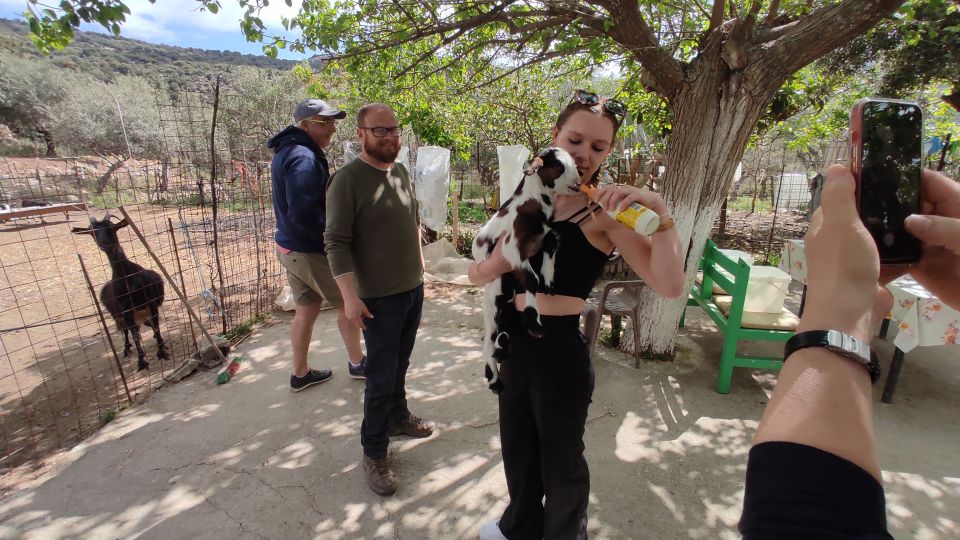
The farm stop in Potamies is where the tour becomes hands-on. You’ll head into rural Cretan life and watch a farmer milk goats, then you’ll taste products made with that milk. This isn’t just a quick “look and go” moment. It’s set up as an experience that connects food to people and routine—the kind of thing you can’t replicate at home by reading menus.
What I like about a farm stop like this is that it resets your expectations. Instead of trying to cram ancient sites into every hour, you start with the basics: where ingredients come from, and how everyday work turns into flavor. If you’re even mildly interested in food culture, this is a strong anchor point for the rest of the day.
Practical tip: wear comfortable shoes you don’t mind getting a little dusty, especially if you’re walking near farm areas. Even though the day is “one big outing,” you still want footwear that won’t make you grumpy halfway through the goat-milking part.
Aposelemis dam: the submerged village of Sfendili and the bird-filled wetland effect
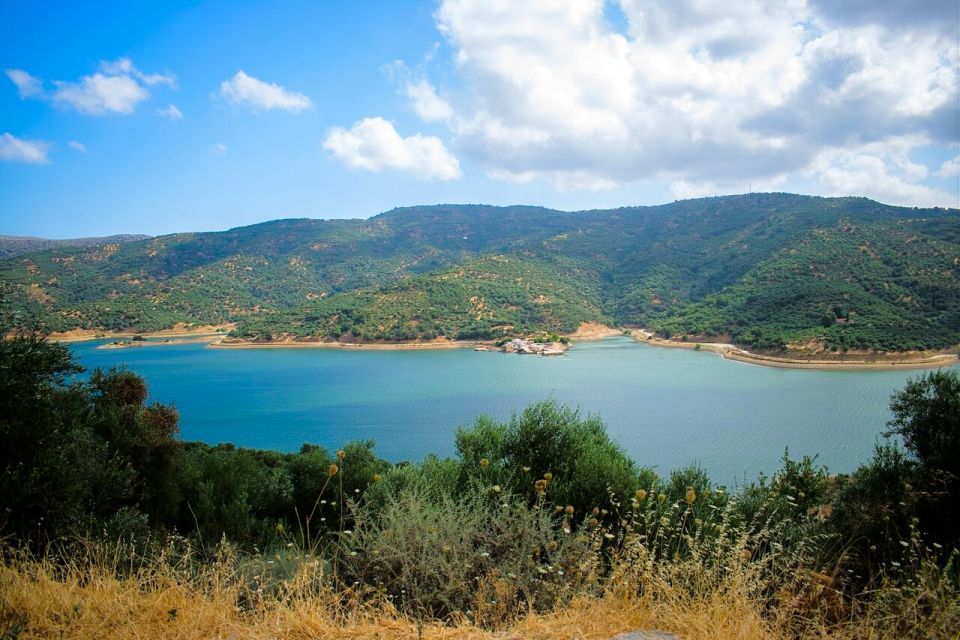
After the farm, the tour swings toward the engineering side of Crete with the dam of Aposelemis, described as the island’s largest water supply project. The emotional hook here is the human story: you’ll see the site where the village of Sfendili is submerged beneath the dam’s waters.
This stop is powerful because it’s not just a viewpoint. You’re seeing a landscape that changed through planning and power, with a visible consequence that still shapes what’s there today. And because the wetland area supports birds, you’ll likely get that extra “wow” moment from nature doing its thing around the water.
If you’re hoping for a purely scenic photo stop, you’ll still get that. But what makes this stop valuable is the context—how the dam functions and what was lost (and what came back in a different form) after the area flooded.
Embasa gorge 4×4 dirt roads: mountain views plus herb picking
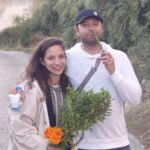
Now comes the off-road portion people remember. The route goes uphill on dirt roads through the gorge of Embasa, and you’ll take in mountain views while moving through a more rugged part of the island. This is also where the tour gives you a small chance to interact with the environment: you might have the opportunity to pick local herbs.
This is a good part of the day to mentally prepare for movement. Dirt roads mean dust, bumps, and frequent shifting of position just to enjoy the view. The upside is that it feels like you’re traveling through Crete, not just looking at it.
If you’re coming from the Heraklion beach corridor, this gorge segment is often the “oh wow, that’s why people do 4×4 tours” moment. It’s also one of the most authentic-feeling transitions from rural work (the farm) to rural tradition (cooking, ceramics, olive oil).
Lassithi plateau: cooking lesson with step-by-step guidance and a wood-oven style lunch
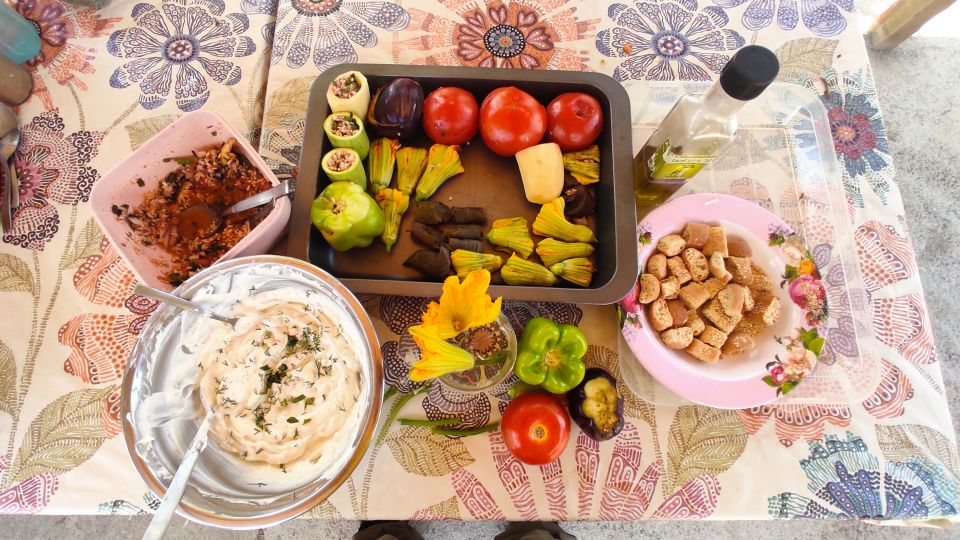
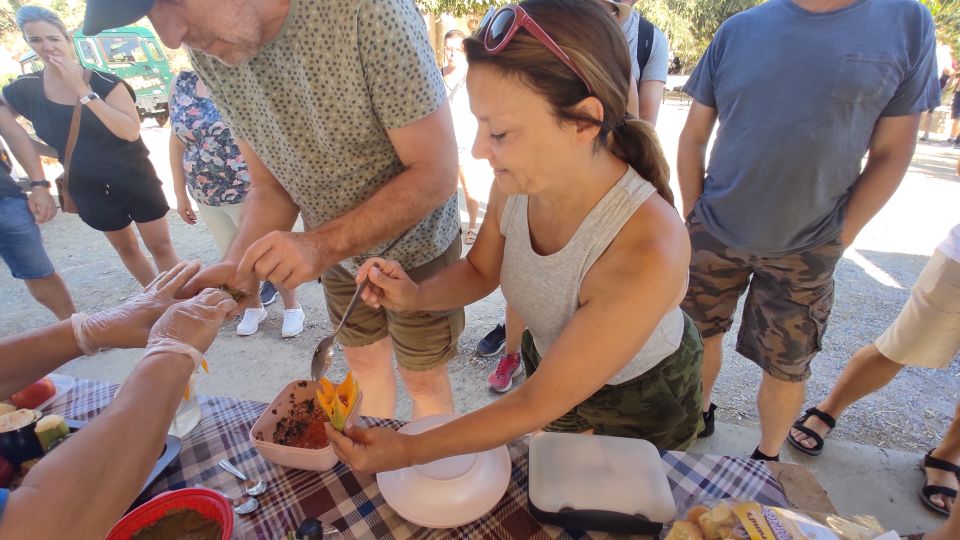
The biggest “you do stuff” block lands on the Lassithi plateau area. You’ll go to a pottery workshop there, but before or alongside that, you’ll also experience a Cretan cooking lesson with step-by-step instructions. The promise here is practical: you’ll prepare dishes from pure ingredients and local products.
This matters more than it sounds. A cooking demo that’s just someone talking from the sidelines doesn’t teach you how to recreate flavors. Here, the structure is built around you following along and learning a process. That said, one fair caution: the cooking time can feel a little limited if you’re hoping for a long, slow class where you fully master multiple dishes. Some people found the demonstration portion under-delivering and the main meal not as strong as expected. So set your expectations accordingly: think instruction + sampling, not a full culinary bootcamp.
Lunch is served at a local cafeteria, and it’s described as being baked in a wood oven. That’s exactly the kind of detail that usually affects real taste—wood-oven cooking tends to add character to bread and savory dishes, even when the meal is simple. Expect a rustic feel, plus wine and water included.
My advice: if cooking is a priority, come hungry and don’t treat this as a substitute for a dedicated food tour. The value is in the combo—ingredients, local technique, and a meal that reflects how the day’s theme works together.



Ceramics workshop on the plateau: making a ceramic piece you can take home
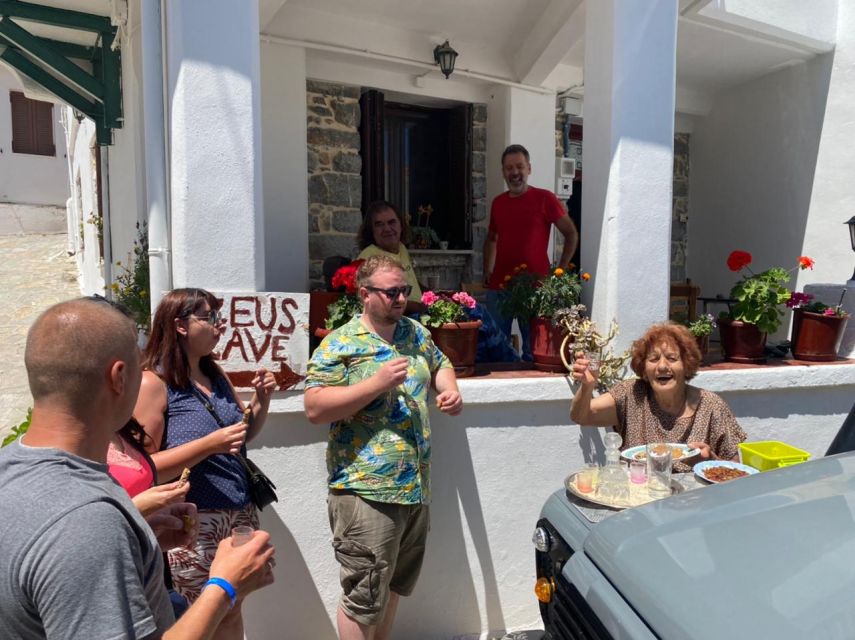
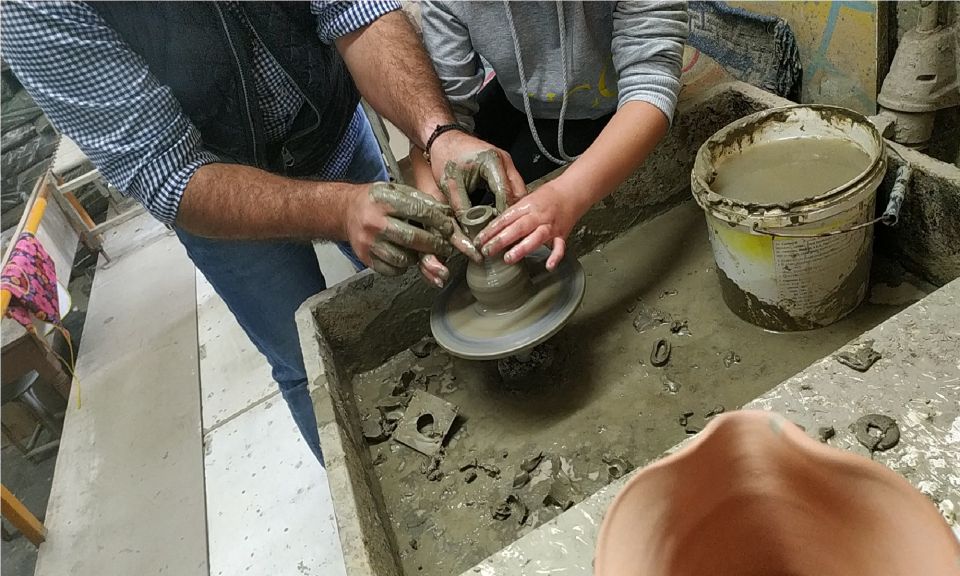
Next, the tour heads to a pottery workshop to uncover the secrets of Cretan ceramic art. This is where the day turns from learning about food to making a tactile souvenir. You’ll create your own ceramic masterpiece with guidance from the workshop staff.
What’s smart here is the timing. By the time you reach the ceramics activity, you’ve already had the farm experience and the mountain drive. Your head is in Cretan mode. You’re more open to the idea that craft and food belong to the same cultural system—both are built through repetition, local materials, and patience.
One thing to keep in mind: “make your own piece” doesn’t always mean you’ll take a fully fired item immediately, and the details of timing aren’t specified here. Still, you should plan for the practical side of a hands-on class—long sleeves if you can, and an easy-to-clean daypack. If you’re flying with limited luggage space, consider whether you’ll need secure packing for anything you produce.
Krasi: plane trees, aqueduct square, and the 2000-year-old moment
The day finishes with a walk through Krasi, a picturesque village stop that hits a different kind of Cretan pride. You’ll see a square with an 18th-century aqueduct plus centuries-old plane trees. The headline is the oldest plane tree in Crete, reported as over 2000 years old.
This stop works because it slows you down. After goats, gorge roads, and workshops, you get a chance to stand still and take in scale. A tree that old changes your sense of time. It also gives you something easy to photograph without needing special angles, because the setting does the work.
If you like moments with a clear visual payoff, this is one. It’s also a good “wrap-up” location—quiet enough to process what you learned and not feel like you’re rushing again for the next activity.
Olive oil factory tour: tasting samples after learning extraction basics
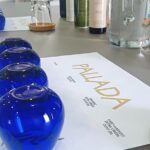
The olive oil segment is both practical and fun. You’ll do a tour of an olive oil factory, learn how olive oil is produced and how extraction works, and then try oil samples before heading back.
This is a key value point. Olive oil tastings can become flavor guessing games if you don’t understand the process. Here, the factory tour gives you a frame, so the tasting feels like learning rather than just consuming. If you’ve ever wondered why oils taste different beyond “good” or “not,” this kind of tour can make those differences click.
Also, it closes the loop. Earlier you learned about milk and herbs. Now you’re learning about another staple ingredient that shows up in everyday meals. By the time you’re tasting samples, you’ll likely be thinking about how the day’s ingredients connect to what you’ll cook or order later.
Price and value: does $108 per person make sense for 8 hours?
At $108 per person for an 8-hour day, the value depends on what you want most: a packed “taste of Crete” or a slow, deep dive into one theme. You’re paying for four things at once:
- Transportation in a 4×4 vehicle for a route that includes dirt-road gorge driving
- Structured instruction: cooking lesson and pottery workshop
- Included meals and drinks: Cretan lunch plus wine and water
- Multiple “culture inputs”: farm visit, dam site context, olive oil factory tour, and Krasi’s historic plane tree setting
If you’re trying to cover food, craft, and countryside in one day without managing logistics, this price can feel fair. The potential downside is that the day is full, which means some elements may feel shorter than you’d personally wish—especially the cooking portion for people who expected more time or a more substantial meal.
My take: it’s best as your one main countryside day if you want variety and you enjoy being active. If your top priority is a long, in-depth cooking class, you may want to treat the cooking part as the start of your food-learning—not the final destination.
Who should book this Crete day trip (and who might skip it)
I think this fits well if you:
- Want a one-day countryside plan from the Heraklion area
- Like hands-on experiences—especially cooking and ceramics
- Enjoy road-trip style sightseeing with off-road driving and frequent short stops
- Care about real ingredients (goat milk products, herbs, and olive oil)
I’d consider skipping or swapping if you:
- Get car sick or hate long, bumpy stretches
- Want a very quiet, slow travel pace with lots of personal time at each stop
- Expect the cooking lesson to be long and detailed enough to fully replace a dedicated cooking school
There’s also a group-flow reality. One review-style concern described the activities as feeling like multiple groups passing through quickly. The tour still gets solid ratings, but if you’re the kind of person who thrives on breathing room, you may feel the schedule tight.
Best way to get the most out of the day
Here’s how you make the day feel worthwhile, even when you’re moving fast.
Wear comfortable shoes and bring a hat and sunglasses—you’ll be outdoors, in sun, and on rougher paths. The tour is clear that smoking isn’t allowed and you shouldn’t expect drinks or food in the vehicle, so plan your water habits. You’ll have water included, but if you’re sensitive to heat, you’ll still want to sip regularly.
When you’re at the farm, pay attention to what you’re tasting and not just the spectacle of goat milking. And at the olive oil factory, take a moment with each sample—your goal is to connect the taste to the process you just saw.
Finally, go in with a mindset of variety. This isn’t just sightseeing. It’s a stitched-together day of craft, cooking, and rural life, held together by that off-road 4×4 driving through Embasa gorge.
Should you book this Crete cooking and pottery day trip?
If you want one strong “Crete countryside” day with real experiences—goat milking, a cooking lesson, and a ceramics workshop—this is a strong pick. The guide talent seems to be a big part of why people rate it so highly, and the combination of stops means you’re not stuck doing the same type of activity for eight straight hours.
My call: book it if variety + hands-on activities is your priority, especially if you’re based around Analipsi, Heraklion, Hersonissos, or Sisi and you want someone else to handle the route. Skip it if you hate busy schedules or you want a long, slow cooking class above all else.
FAQ
Where does hotel pickup happen?
Pickup is offered from Analipsi, Heraklion, Hersonissos, or Sisi. You’ll be waiting in your hotel lobby about 15 minutes before your scheduled pickup time.
How long is the tour?
The day trip lasts 8 hours.
What’s included in the price?
The tour includes hotel pickup and drop-off, cooking lessons, pottery lessons, a 4×4 vehicle tour, Cretan lunch, and wine and water.
What languages are available for the live guide?
Live guides are available in Dutch, English, French, German, Greek, and Russian.
What should I bring?
Bring comfortable shoes, sunglasses, and a hat.
Can I cancel for a full refund?
Yes. You can cancel up to 24 hours in advance for a full refund.
—
If you tell me your base (Analipsi, Heraklion, Hersonissos, or Sisi) and your travel month, I can help you decide whether this is the right day to schedule based on heat and what else you’ll likely want to do on Crete.