REVIEW · SAO MIGUEL
Azores Marine Birdwatching Expedition w/ Biologist Guide
Book on Viator →Operated by Azores Whale Watching TERRA AZUL · Bookable on Viator
Seabirds close up? Yes, in the Azores. This Sao Miguel marine birdwatching outing takes you by fast Zodiac RIB to known colonies and then offshore where you can track active seabird behavior with expert direction.
Two things I really like: you’re not just looking out a window—you’re given binoculars (Opticron 8×42) and guided by a team that knows where colonies form. And you get a real “biologist-style” approach, including a safety briefing, careful sea handling, and field imagery/data collection during the ride.
One thing to consider: this is weather-dependent, and nature won’t follow a schedule. The tour also can’t guarantee specific species at a specific time, because wild animals do what wild animals do.
In This Review
- Key highlights at a glance
- Why Sao Miguel is such a good place to bird-watch at sea
- The Zodiac RIB experience: small group, fast access, real sea time
- Morning setup: briefing, safety, and how the guide finds birds
- Stop 1: Islet of Vila Franca do Campo and colony viewing that feels hands-on
- Offshore pelagic birdwatching: how VHF lookouts improve your odds
- Bird species you might spot: shearwaters, terns, storm-petrels, gannets, and more
- Gear and safety: what’s included, what’s on you
- Price and value: under $60 for a morning at the edge of bird habitat
- Conservation-minded birding: why the careful approach matters
- Timing, weather, and what to wear for a calm morning that isn’t guaranteed
- Who this Sao Miguel marine bird trip is best for
- Should you book this Azores marine birdwatching expedition?
- FAQ
- How long is the Azores marine birdwatching expedition?
- How many people are on the boat?
- Where does the tour start?
- What bird species might I see?
- What’s included, and what should I bring?
- Is pickup offered from hotels or elsewhere?
- Are there any age limits or weather requirements?
Key highlights at a glance
- Up to 9 people on a Zodiac RIB, which keeps the birding experience personal
- Opticron 8×42 binoculars included, so you can actually focus on ID
- Islet of Vila Franca do Campo for close views of marine bird colonies
- Offshore pelagic searching guided by inland lookouts using VHF radio
- Careful approach near animals, with guidance aimed at strong environmental standards
- Impermeable top + life vest included, plus insurance
Why Sao Miguel is such a good place to bird-watch at sea
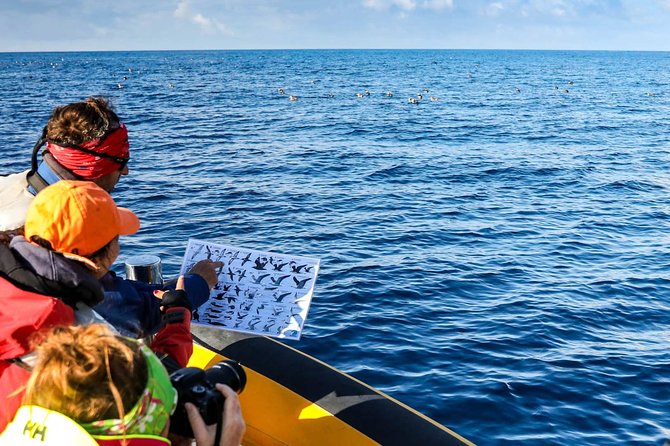
Sao Miguel sits in a sweet spot for marine life. You’re not just chasing birds from land—you’re doing the more effective thing: getting out to where birds feed, nest, and circle for hours without caring about your itinerary.
This particular format matters because it pairs two different birding modes. First you visit a known colony area, where the birds’ routine makes spotting easier. Then you shift offshore to search for seabirds at sea, where your odds depend more on timing, weather, and smart navigation.
You can also read our reviews of more tours and experiences in Sao Miguel.


The Zodiac RIB experience: small group, fast access, real sea time
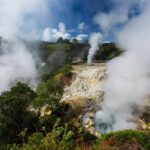
You’ll be on a Zodiac RIB (a rigid inflatable boat) with a maximum of 9 travelers. That small number isn’t just a comfort perk—it helps with spotting. When the group is tight and the guide can manage viewpoints, you actually get repeated chances to see birds clearly.
The boat ride is built for getting close when conditions allow. That matters for marine birdwatching because many seabirds don’t hang around at far distance. Instead of “way out there, maybe you’ll spot something,” the approach is to reach the working zone carefully and let you watch behavior rather than just silhouettes.
Morning setup: briefing, safety, and how the guide finds birds
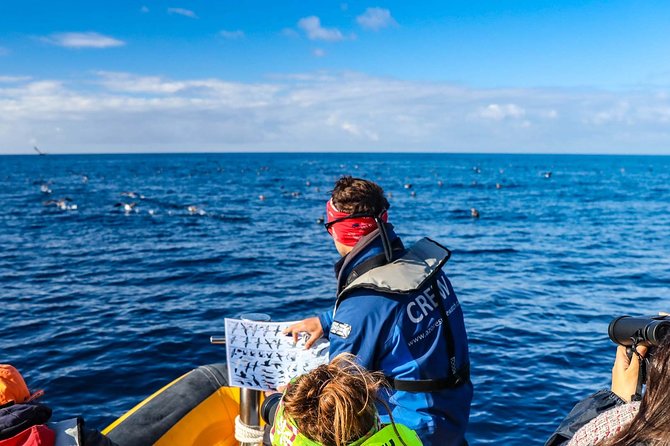
The tour starts with a short briefing. Expect a quick intro to the birds you’ll likely see locally, plus onboard safety and how to move/position yourself during the run.
Then you meet the crew at Azores Whale Watching TERRA AZUL, Marina de Vila Franca do Campo and follow the guide and skipper to the boat. The time is set so you’re back by around 11:00, so you get a focused morning instead of turning the day into a half-scheduled sea adventure.
One detail I appreciate: you’re not sent out with vague instructions. The team uses inland lookouts and communications (VHF radio) to guide where to go first at higher speed. That reduces guesswork and helps you spend more of the 3 hours actually watching birds.
Stop 1: Islet of Vila Franca do Campo and colony viewing that feels hands-on
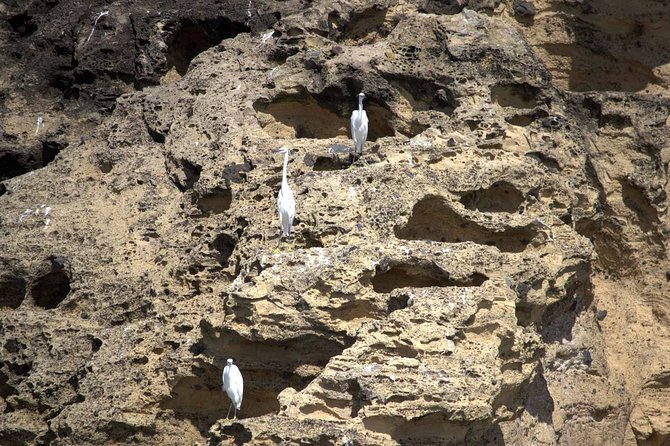
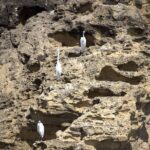
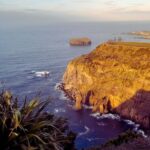
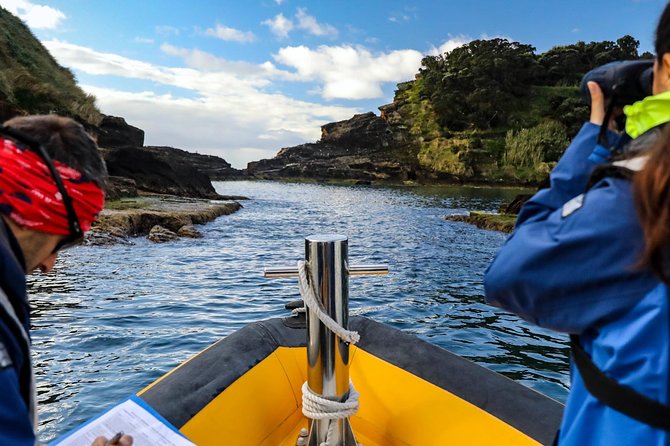
Your first big target is the Islet of Vila Franca do Campo. This is where marine bird colonies gather, and where provided binoculars really earn their keep.
Here’s what makes this stop practical: colonies concentrate activity. You can often pick up the shape and behavior of different species faster because multiple birds are in the same “stage” at once. And since you’re approaching by boat, you have a better chance of seeing how birds interact—things like movement patterns, spacing, and flight direction.
You’ll also see shorebirds and other wildlife during this portion. That mix is useful because some days you’ll get a “main show” and “support acts,” and either way you get more than one kind of wildlife moment.
Offshore pelagic birdwatching: how VHF lookouts improve your odds
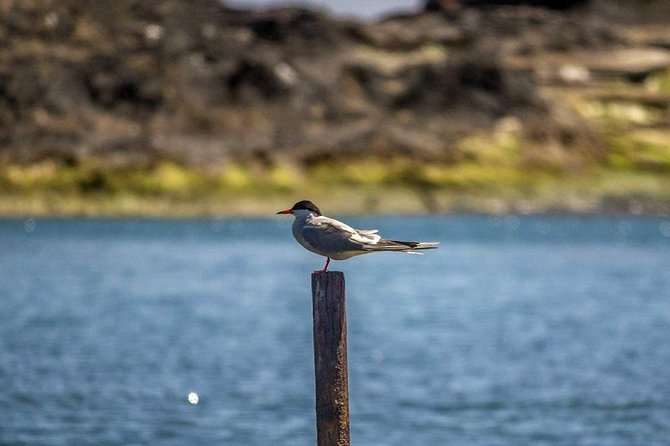
After the colony stop, you head out to sea to look for seabirds and wild animal behavior. This is the part most people imagine when they think of birding in the open ocean—and it’s also the most variable.
The expedition runs with a clear system. Lookouts inland help provide directions via VHF radio, and the boat may travel at higher speed at the start to reach the right area. Then the guide helps you refine the approach, keeping you informed while looking for birds and maintaining a careful distance.
This “find fast, then focus” rhythm is a big deal. Birds can move quickly in pelagic zones, and if you waste time drifting in the wrong spot, your morning ends before your best sightings. The whole setup is designed to stretch your time on the water into useful viewing.


Bird species you might spot: shearwaters, terns, storm-petrels, gannets, and more
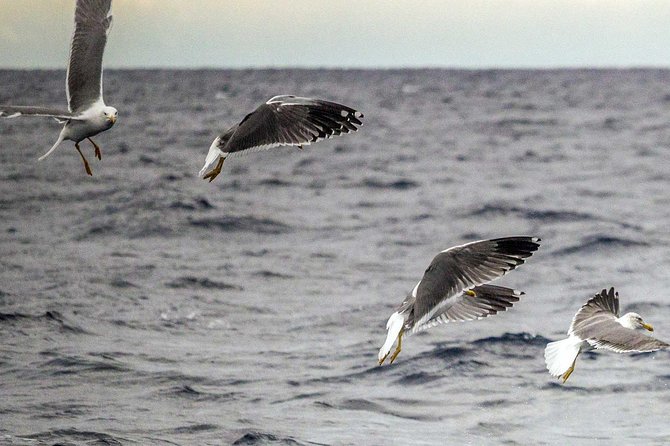
You shouldn’t expect identical sightings on every trip. The tour itself is upfront that you can’t control animals in the wild, and specific species can’t be guaranteed. Still, the expedition’s known targets give you a realistic roadmap for what to watch for.
Here’s a strong list of species you may encounter during the run:
- Cory’s Shearwater and Barolo Shearwater
- Common Tern and Roseate Tern
- Yellow-legged Gull
- Bulwer’s Petrel
- Wilson’s and Madeiran Storm-petrels
- Bridled Tern and Sooty Tern
- Great Shearwater, Leach’s Storm-petrel, Manx Shearwater, and Sooty Shearwater
- Northern Gannet
- Arctic species (listed as Arctic) and Skuas
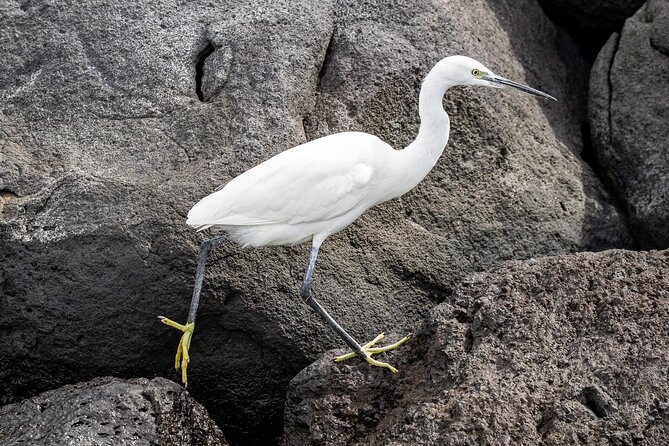
- Buzzards, Turnstones, Sanderlings, Little Egrets, Whimbrels, and more
Even if you don’t nail every ID, you can still learn a lot from what the guide points out. Binoculars help you separate birds by silhouette, wing shape, and flight style—then the guide layers in the details so you don’t just see birds, you understand them.
Also, if you’re lucky, you may get a guide from the team who’s been called out as very knowledgeable and personable—one name you might hear is Sona. A strong guide can turn a “good day” into a “good day with context.”
Gear and safety: what’s included, what’s on you
This tour includes a lot of the hard-to-manage stuff:
- Opticron 8×42 binoculars
- Impermeable top and life vest
- Insurance
- A wildlife guide and an experienced skipper
- Zodiac RIB boat (up to 9 each)
What’s not included: personal water supply.
So pack like you’re going to be outside for a couple hours in marine conditions. Bring your own water, sunscreen, and chapstick. Camera-wise, bring what helps you zoom, and protect your personal gear from salt spray and splash.
And even though you’re given protective clothing for the ride, still plan for temperature swings. Warm clothing is recommended because sea air can feel sharper than you expect.
Price and value: under $60 for a morning at the edge of bird habitat
At $58.81 per person for about 3 hours, you’re paying for access, expertise, and boat time. The price isn’t just “a ride”—it includes the core tools (binoculars), the safety gear (life vest and impermeable top), and the crew needed to navigate and keep environmental standards in check.
You’re also paying for the guide’s job: finding colonies, directing you to where seabirds are likely to be active, and helping you interpret what you’re seeing. That’s where value usually lives in wildlife tours. If you care about birding more than just sightseeing, the guidance and binoculars do real work for your morning.
The only obvious downside in value terms is also the most honest one: you can’t guarantee particular species. If your goal is a single “must-see” bird on a strict schedule, you might prefer a more flexible plan. But if you’re open to what shows up, this format is a strong use of time in Sao Miguel.
Conservation-minded birding: why the careful approach matters
This is described as a high conservational risk activity. In plain terms: you’re close to wildlife, which means good behavior and careful distance matter.
The guide is expected to ensure the best environmental and conservation standards during the tour. You’ll also likely notice a difference in how the approach is explained—maintaining distance, approaching carefully, and keeping people oriented for viewing without crowding or disruptive movement.
There’s also a research angle. The guide may collect field imagery and data while you’re out there. That’s not just extra paperwork—it’s part of how marine bird science keeps improving, and it reinforces that this isn’t casual “chase birds, snap photos, leave.”
Timing, weather, and what to wear for a calm morning that isn’t guaranteed
This expedition is set for a morning start (around 8:00 am) and typically returns by about 11:00. Because you’re out on open water, weather becomes the boss. The tour requires good weather.
So dress for changing conditions:
- warm layers (sea air can bite),
- sunscreen and chapstick (sun + wind),
- and secure camera/phone gear (salt spray is real even when seas are calm).
One practical tip: eat light before you go. The tour allows light food, but you’ll be happier if your stomach isn’t fighting the boat motion.
Who this Sao Miguel marine bird trip is best for
This works especially well if you:
- love wildlife where you can see behavior, not just a distant bird-shaped dot,
- want a guided ID assist rather than self-guiding your way into frustration,
- and like the mix of colony birding plus offshore pelagic searching.
Most people can participate, and the tour allows service animals. The main limitation listed is no children under age 4, so it’s more of an adult-focused outing (or older kids with patience for a boat morning).
If you’re very seasick-prone, you might still want to think carefully. The data here confirms there are sea segments and a Zodiac ride, but it doesn’t provide motion-preference details beyond clothing and gear. When in doubt, plan for comfort and ask the operator what conditions usually look like.
Should you book this Azores marine birdwatching expedition?
I’d book it if you want a short, high-focus morning on Sao Miguel that mixes colony viewing and offshore seabird searching. The small group size (max 9), the included binoculars, and the biologist-led approach are a great match for anyone who values practical birding and not just a quick photo stop.
Skip or reconsider if you have zero flexibility around species. Nature won’t guarantee sightings, and weather can affect the outing. But if your goal is learning, watching, and getting up close when conditions cooperate, this is a strong way to spend a sea morning in the Azores.
FAQ
How long is the Azores marine birdwatching expedition?
It runs for about 3 hours (approx.), with a return time around 11:00.
How many people are on the boat?
The Zodiac RIB experience has a maximum of 9 travelers.
Where does the tour start?
You meet at Azores Whale Watching TERRA AZUL, Marina de Vila Franca do Campo 4, 9680-187 Vila Franca do Campo, Portugal.
What bird species might I see?
You might see Cory’s and Barolo Shearwater, Common and Roseate Terns, Yellow-legged Gulls, Bulwer’s Petrel, multiple storm-petrels, Bridled and Sooty Terns, Great Shearwater, Northern Gannets, Arctic species, Skuas, Buzzards, Turnstones, Sanderlings, Little Egrets, Whimbrels, and others.
What’s included, and what should I bring?
Included are Opticron 8×42 binoculars, a wildlife guide, an experienced skipper, Zodiac RIB boat, impermeable top and life vest, and insurance. Bring your own personal water supply, plus sunscreen and warm clothing.
Is pickup offered from hotels or elsewhere?
Pickup is offered, but it’s subject to availability and the pickup time comes from the operator based on your booking.
Are there any age limits or weather requirements?
There are no children under age 4. The experience requires good weather, and if it’s canceled due to poor weather you’ll be offered a different date or a full refund.