REVIEW · BORA BORA
Aqua Safari Introductory Helmet Dive (Underwater Walk)
Book on Viator →Operated by Aqua Safari Helmet Dive · Bookable on Viator
Want to walk underwater in Bora Bora? This underwater helmet walk turns the lagoon into a guided “look-you-actually-see-it” experience, with you spending about 30 minutes around a coral garden at roughly 3 meters (10 feet) while an instructor keeps everything safe and calm.
I love how smoothly the whole thing is run: you get fitted with the gear, get a real safety briefing, and your head stays dry inside the helmet. I also like that your guide uses a high-definition camera to capture your walk underwater, so you’re not stuck hunting for the perfect shot when you should be watching the fish.
One drawback to plan around: it’s not a land-locked activity. If the lagoon conditions aren’t right, the experience may need a different time or date, and the price will feel steep if you compare it to a basic snorkeling outing.
In This Review
- Key things to know before your helmet walk
- Why Bora Bora’s underwater helmet walk beats snorkeling
- Before You Get in: gear fitting, safety briefing, and ear comfort
- The boat ride and lagoon drop-off (what happens between the dock and the reef)
- Inside the helmet: what the 30-minute underwater walk feels like
- The fish and coral you’ll actually notice (including stingrays)
- Photos in HD: the real souvenir value (and how to get the best ones)
- Price and value in Bora Bora terms
- Tips that make the walk smoother (and more fun)
- Who should book this, and who might reconsider
- Should you book this underwater helmet walk?
- FAQ
- How deep does the underwater walk go?
- Do I need to swim or snorkel to join?
- How long is the activity, and how much time is underwater?
- Is pickup available?
- Do you take photos during the helmet walk?
- What group size should I expect?
- Where does the tour start and end?
Key things to know before your helmet walk
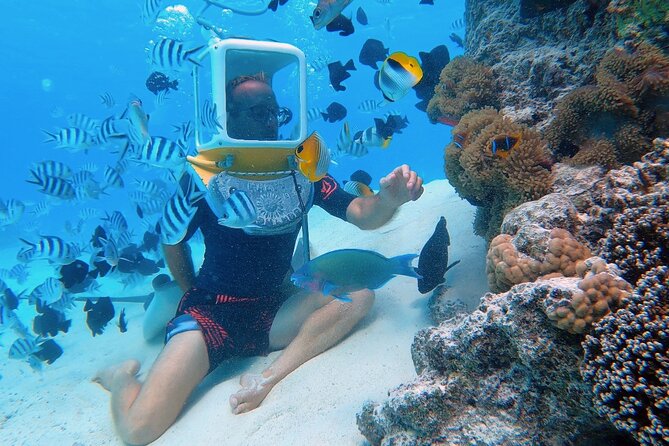
- No swimming or snorkeling skills required (even non-swimmers can join)
- About 30 minutes underwater, at roughly 3 meters deep
- Rope-bounded area helps you stay close and avoid going too far
- Instructor photo capture in HD, with souvenir photos offered at the end
- Small groups, up to 12 travelers, so attention stays personal
- Fish-feeding is optional (bread/bananas), and it can bring wildlife closer
Why Bora Bora’s underwater helmet walk beats snorkeling
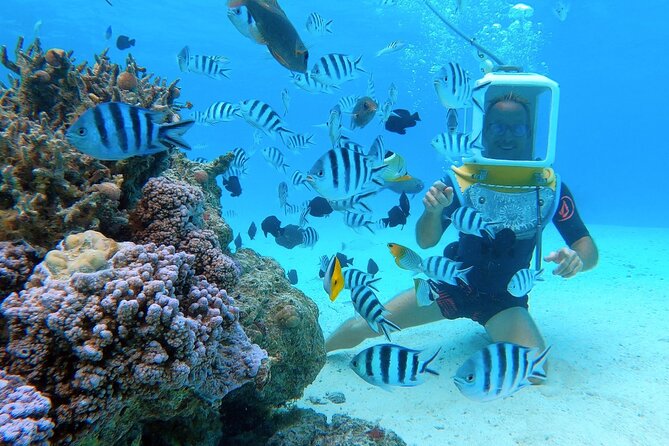
I get why this tour grabs attention: it’s basically Bora Bora, but upgraded for people who want the fish-and-coral close-up without the usual snorkeling hassles. With the helmet, you’re not dealing with breathing through gear, aiming your face mask, or wrestling with “where is the reef?” thoughts.
The best part is that your experience is structured. You’re not just dropped into the water. You’re guided down, kept within a marked area, and escorted while you look around for coral, tropical fish, and the reef-life that makes the lagoon famous. If you’ve ever tried snorkeling and spent half your time fighting buoyancy or visibility, this can feel like cheating—in the best way.
Also, this is not a “big scary swim.” The underwater portion is shallow, around ten feet, and the environment is controlled. One reviewer even noted how the walk felt like an underwater wonderland because fish swarmed close while they were just walking.
You can also read our reviews of more tours and experiences in Bora Bora.

Before You Get in: gear fitting, safety briefing, and ear comfort
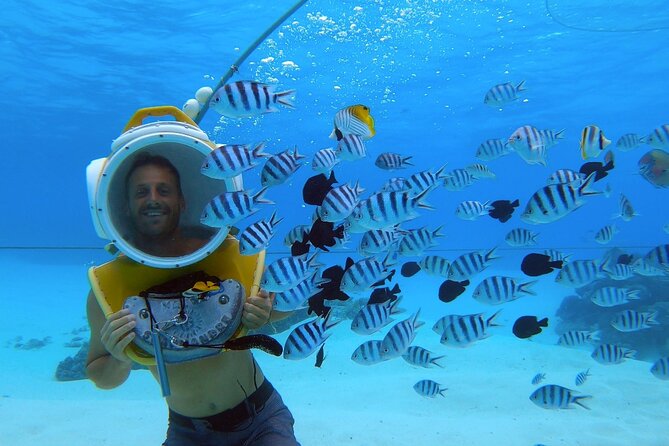
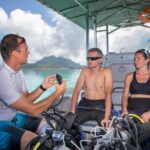
You’ll start with the practical stuff: equipment setup and a clear safety briefing. The goal is simple—get you comfortable before you ever go under. Guides help you understand how to breathe and what to expect while you’re wearing the helmet.
If you’re nervous about going underwater, you’ll likely feel better quickly. Multiple comments highlight how the staff checks in during the process and keeps the vibe reassuring. People who don’t normally feel confident in open water often say they were able to relax once the team walked them through the steps.
A couple of small comfort tips are worth taking seriously:
- Expect some potential ear pressure when you descend. Chewing gum was specifically recommended by one solo rider to help with ear popping.
- Your peripheral vision can be limited inside the helmet. Plan to move your head more than you would in air so you don’t feel “trapped” looking straight ahead.
And yes, your head stays dry inside the helmet, which is a big deal if you hate the idea of getting water in your hair or if you just want the underwater part without the usual snorkel-and-wetsuit drama.
The boat ride and lagoon drop-off (what happens between the dock and the reef)
Most departures start at the Ferry and Boat Point (the listing gives coordinates: F6VX+53X) and you’ll be brought back there at the end. Pickup is also offered, and that can simplify your day if you’re staying in a resort with an on-site dock.
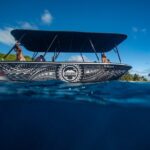
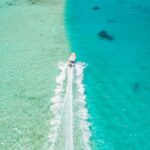
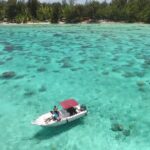
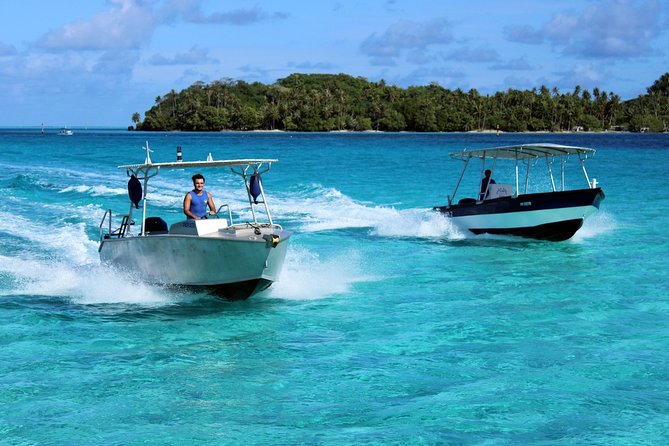
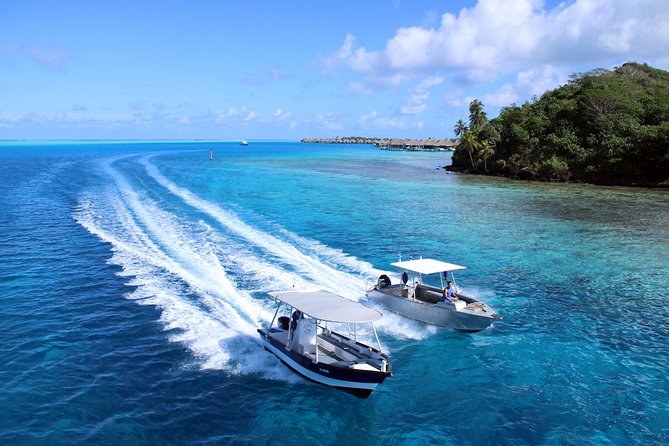
The water transfer matters more than people think. It’s part of the overall “day plan” and gets you to the right section of Bora Bora’s lagoon without you trying to figure it out on your own. Several reviews describe the boat portion as scenic, and at least one person said the ride felt well organized with everything already set up when they arrived.
Once you reach the site, you’re ready for the real moment: the guided descent and the underwater walk. One reviewer noted the fenced/roped area was clearly marked so you couldn’t wander too far, which also helps keep the experience calm and beginner-friendly.
If you’re prone to motion sickness, keep in mind you’ll be on a boat in lagoon conditions, but nothing in the info suggests it’s an extreme ride—more a smooth transfer to the snorkeling-adjacent area.
Inside the helmet: what the 30-minute underwater walk feels like
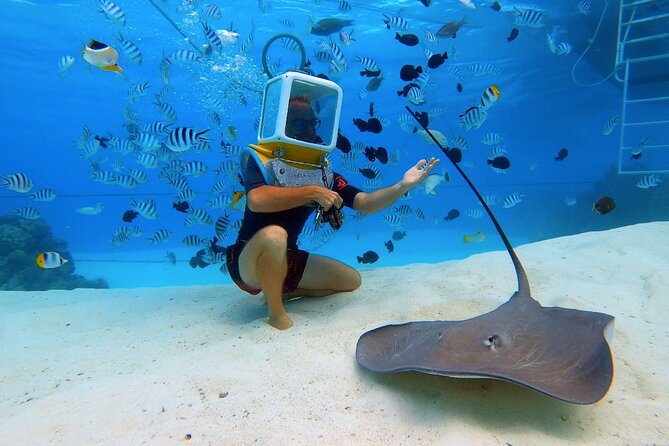
Here’s the core experience: after the briefing, you go down in a special helmet and walk underwater for about 30 minutes. Depth is typically around 3 meters (about 10 feet)—shallow enough that you can look around and focus on wildlife rather than survival instincts.
Your guide escorts you, and you move at a relaxed pace. The walk happens on sand within a coral garden area, so you’re not constantly scrambling over rocks. You’ll be able to see fish at close range because the reef-life is right there, not hundreds of feet away.
You also get a safety net. The area is roped off, so you’re not drifting into unknown zones. If there’s wind or slight current, you’ll likely be instructed to hold the rope to avoid being pulled around. That’s exactly how one group described it: they held onto the rope to avoid drag and stayed steady while wildlife came close.
One pleasant surprise for nervous first-timers: breathing under the helmet was described as completely normal by at least one rider, which reduces that “I can’t breathe” fear that stops many non-swimmers from trying snorkeling.
The fish and coral you’ll actually notice (including stingrays)
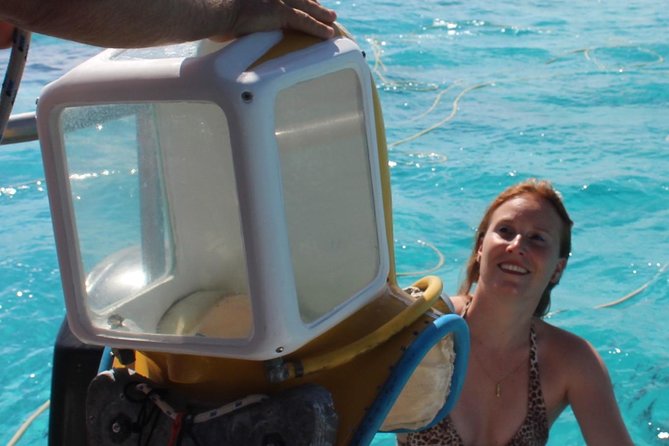
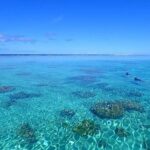
The lagoon is the star, and the walk brings you face-to-face with it. You’re surrounded by coral reef structure, sand, and the kind of fish you normally only catch glimpses of while snorkeling.
Expect to look for:
- Parrot fish, butterfly fish, and clown fish
- Moray eels (you might spot movement near the coral)
- Stingrays (often a highlight, sometimes very close)
- Plus other tropical reef fish that shift in and out as you move
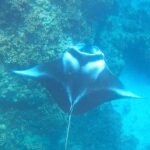
The stingray part deserves a sentence of its own. A few reviews specifically mention a familiar stingray the guides know well—one described it almost like a trained companion that would approach and hang nearby. Even when the ray is just “around,” it’s still a huge wow moment because you’re not trying to chase it with goggles.
Also, fish can become more active when food is nearby. Some boats offer an optional bag of bread/bananas to attract fish. One reviewer called it optional and said it was helpful if touching fish felt a little spooky, which is a reminder: fish may come close, and you’ll be more likely to see them feeding and weaving around you than you would on a typical reef swim.




Photos in HD: the real souvenir value (and how to get the best ones)
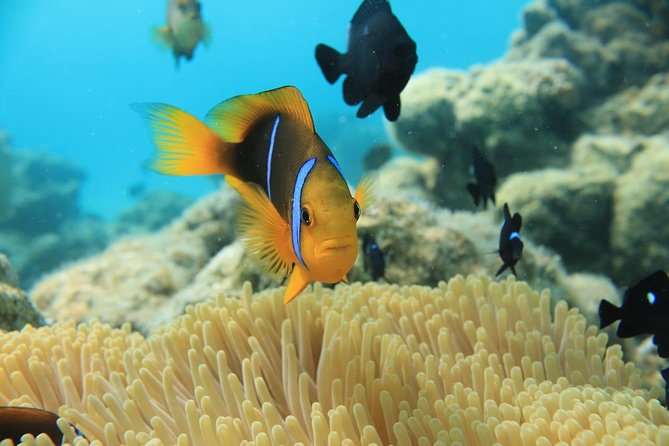
The tour includes an instructor taking photos during your underwater walk using a high-definition camera. At the end of the activity, the souvenir photos are offered for purchase.
For many people, this is the difference between “cool memory” and “I can prove it happened.” When you’re underwater in a helmet, your ability to use your own camera is limited. So letting your guide handle the photos is smart value—especially if you’re traveling with family or you want a clear shot of your walk without messing with waterproof gear.
One review even said the photo package felt worth the money. Another mentioned that after reviewing the images, they purchased the great photos right on the boat. That’s convenient because you don’t have to wait days and wonder if you’ll actually get your hands on the best shots.
If you want extra coverage, one commenter suggested bringing a GoPro or a waterproof camera. That’s a solid add-on if you’re comfortable taking your own gear into the water. Otherwise, let the team do the heavy lifting.
Price and value in Bora Bora terms
At $158.76 per person, this isn’t a budget activity. It’s also not pretending to be one. What you’re paying for is the full package: guided instruction, a controlled shallow underwater walk, the helmet system, boat transfer, and the HD photo capture.
It also offers something many alternatives can’t: it’s designed for people who don’t swim well, don’t snorkel comfortably, or have never done scuba. One reviewer chose it specifically for someone who wears glasses and struggles with snorkeling equipment, and the helmet solution was what made it work.
You can think of the price like this:
- If you only want a quick fish sighting, you might feel it’s overkill.
- If you want a guided, beginner-safe way to experience Bora Bora underwater, the structure and attention make it feel more justified.
There was one note that someone found it over expensive, which I respect. But when an activity removes fear, replaces uncertainty with clear guidance, and gives you a real “walk on the reef” moment, the value often clicks—especially for families and first-timers.
Tips that make the walk smoother (and more fun)
A few practical things can make your helmet walk feel easier and more enjoyable:
- Read and follow the pickup timing message (if you don’t, you might miss the exact window even if the team is on time).
- Bring gum if you’re ear-pressure sensitive. It’s a small thing, but it helped one person reduce discomfort.
- Expect limited peripheral vision inside the helmet. Keep your curiosity by moving your head. Treat it like a slow underwater “pan” instead of a normal sideways glance.
- Hold the rope if wind or current picks up. It’s there to keep your pace comfortable and safe.
- If fish feeding is offered, consider it optional but useful. It can bring more wildlife into view, especially if you want close-up moments.
Guides also play a big role in how smooth the experience feels. Names that came up across comments include Tama, JP, Eliza, Demi, Rémi, Frédéric, Sebastian, Neven, Nicholas, Séverine, and Tama Nanu. The consistent theme: they explain things clearly, help with nerves, and focus on making you comfortable inside the helmet process.
Who should book this, and who might reconsider
This helmet walk is ideal if you fall into one (or more) of these buckets:
- You want close fish-and-coral viewing but you don’t want the stress of snorkeling gear or learning buoyancy.
- You or someone in your group doesn’t swim well, is anxious in open water, or gets overwhelmed by underwater equipment.
- You’re traveling with kids and want something that feels controlled, with trained staff and a roped area.
It’s also a great “in-between” choice if you love snorkeling but aren’t ready for deeper scuba-style outings. The walk gives you a true underwater moment without a steep learning curve.
Who might reconsider? If you’re extremely price-sensitive and you mainly want a quick see-fish experience, the cost might feel like too much compared with cheaper lagoon activities. And if you’re traveling during a period when weather can affect conditions, you may need flexibility in your schedule.
Should you book this underwater helmet walk?
I’d book it if you want a safe, structured way to see Bora Bora’s lagoon life up close—especially if swimming, snorkeling, or scuba gear feels stressful. The combination of shallow depth, roped-in area, and guides who keep you calm is exactly what makes it work for first-timers.
I’d think twice if you’re only looking for a casual splash-and-see moment or you have zero flexibility for lagoon conditions. Still, if you’re going to spend Bora Bora money on one “wow” underwater experience that you’ll actually enjoy (not dread), this is one of the most direct ways to get there.
FAQ
How deep does the underwater walk go?
You’ll walk at a depth of around 3 meters, which is about 10 feet.
Do I need to swim or snorkel to join?
No. The experience is designed so you don’t need to know how to swim, snorkel, or scuba.
How long is the activity, and how much time is underwater?
The tour is about 2 hours total (approx.), with around 30 minutes spent underwater.
Is pickup available?
Pickup is offered, and the activity can also start at the Ferry and Boat Point.
Do you take photos during the helmet walk?
Yes. Your instructor uses a high-definition camera to take photos during the walk, and the souvenir photos are offered at the end.
What group size should I expect?
The maximum group size is 12 travelers.
Where does the tour start and end?
It starts at the Ferry And Boat Point (F6VX+53X, Bora-Bora, French Polynesia) and ends back at the same meeting point.