REVIEW · TENERIFE
Whale Watching Eco-Adventure from Costa Adeje
Book on Viator →Operated by Whale Watch Tenerife · Bookable on Viator
If you want whales without the loud chaos, go small. This 2-hour whale and dolphin trip from Costa Adeje focuses on the Teno-Rasca Marine Protected Area with an intimate boat setup.
I like the small-group feel and the science-first hosting. You’re on a max 10 travelers eight-meter rigid hull inflatable, with live commentary from biologist staff plus a hydrophone so you can listen under the water while you scan the surface.
One thing to consider: it runs only with favorable weather, and there are guest restrictions (including kids under 3 and people with certain mobility/back/neck or medical considerations), so check fit before you book.
In This Review
- Key Points You’ll Feel Right Away
- Costa Adeje Whale Watching in the Teno-Rasca Marine Protected Area
- The 2-Hour Plan: What Happens on the Water
- The 8-Meter RIB Setup: Why Small Makes a Difference
- Biologist-Led, Hydrophone-Backed Wildlife Watching
- What You Might See: Pilot Whales, Dolphin Types, and Bonus Wildlife
- Meeting at Puerto Colón Marina (Pantalán 3, Costa Adeje)
- Price and Value: Is $72.56 Worth It?
- Who Should Book, and Who Should Skip This One
- Small Practical Moves That Help You Enjoy It More
- Should You Book Whale Watch Tenerife from Costa Adeje?
- FAQ
- How long is the Whale Watching Eco-Adventure from Costa Adeje?
- Where does the tour meet in Costa Adeje?
- What languages do the guides speak?
- Is food and drink included?
- Does the tour include photos?
- What happens if weather is bad?
Key Points You’ll Feel Right Away
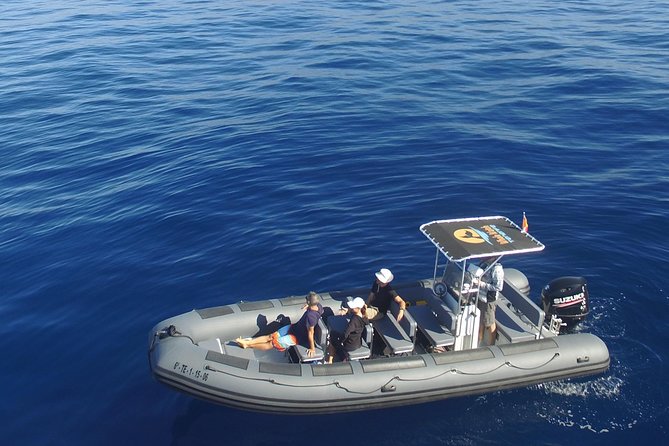
- Small 8-meter RIB, max 10 travelers: more attention, more shared viewing time, less crowding.
- Biologist-led trip with live commentary: you’re not just spotting animals, you’re learning what you’re seeing.
- Hydrophone listening onboard: you can hear whale and dolphin sounds while you watch.
- Free emailed photos of marine life: a nice souvenir you don’t have to capture yourself.
- Eco-friendly approach in a protected area: built around respectful wildlife viewing rather than aggressive closeness.
Costa Adeje Whale Watching in the Teno-Rasca Marine Protected Area
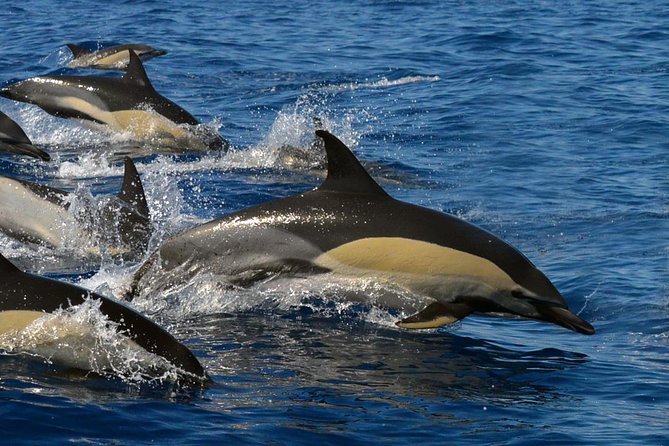
Costa Adeje is packed with things to do, but this one is built around a simple idea: let cetaceans do cetacean things. The tour heads to the Teno-Rasca Marine Protected Area by boat, where whales and dolphins live their day-to-day lives in a monitored environment.
What I like about this setup is how the experience is designed to be both educational and practical. You get live commentary from a biologist staff, and the boat is custom made for whale watching—so you’re not squeezed onto some big, choppy cattle car of a vessel.
Also, you’re not just chasing sightings. The hydrophone means you can hear calls and clicks as part of the experience, turning the trip into more than a quick scan-and-go moment. If you care about why whales do what they do, this is the kind of detail you’ll appreciate.
You can also read our reviews of more tours and experiences in Tenerife.
The 2-Hour Plan: What Happens on the Water
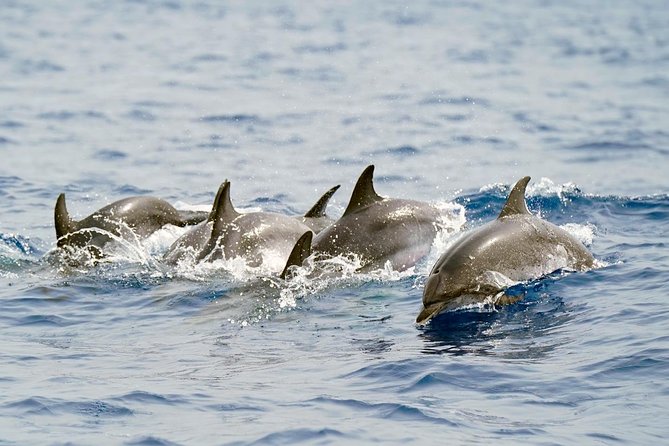
This is an approximate 2-hour outing. It follows a straightforward pattern: meet at the marina, get onboard, then spend the main time searching for whales and dolphins in the marine protected area while your guides explain what’s going on.
The tour’s centerpiece stop is essentially the whale-watching work itself (often labeled Stop 1: Whale Watch Tenerife). In real terms, that means you’ll:
- Look for whales and dolphins on the surface.
- Learn how to tell species apart as you spot them.
- Listen through the hydrophone while animals are active.
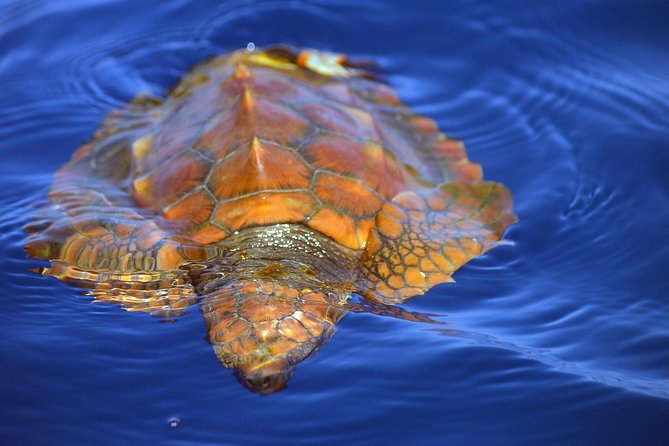
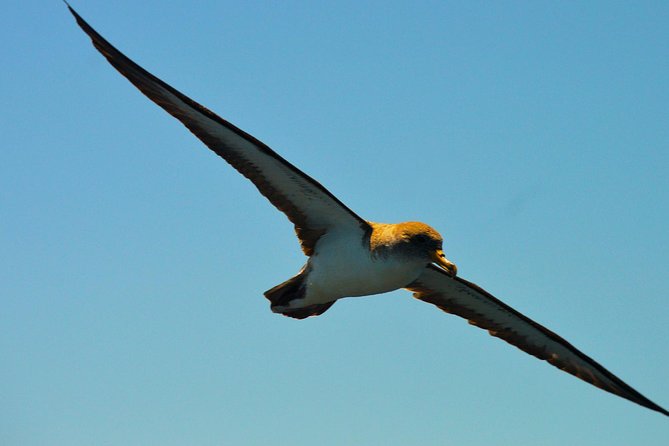
Sightings aren’t guaranteed, but the species people often mention include pilot whales and multiple dolphin types (such as bottlenose and spotted/Atlantic spotted). Some outings also include extra wildlife moments like sea turtles and Portuguese Man o’ War—those are great surprises when they show up.
One more smart part of the timing: because the boat is small and geared for this kind of outing, the team can focus on actually being out there observing rather than wasting a lot of time on logistics.
The 8-Meter RIB Setup: Why Small Makes a Difference
You’re not on a huge sightseeing ship. You’re on an eight-meter rigid hull inflatable, which matters more than it sounds.
A smaller boat tends to change the feel in three ways:
- Closer viewing angles: you’re positioned where you can actually see behavior, not just spot fins from far away.
- Fewer interruptions: with a max of 10, conversations with the biologist staff are easier and you hear the explanations.
- More controlled, respectful maneuvering: the whole approach is built for watching without piling on pressure.
In the reviews tied to this trip, people repeatedly call out the same theme: the boat and approach feel less invasive than larger operations. The guides also emphasize that they work to avoid stressing animals, and you’ll often notice that when they slow down, reposition carefully, and explain what they’re doing.
If you’re sensitive to cramped spaces or rougher sea conditions, this is something to think about before you go—small boats can feel more “in motion” than big ones. The trade-off is that you get a much more intimate whale-watching experience.
Biologist-Led, Hydrophone-Backed Wildlife Watching
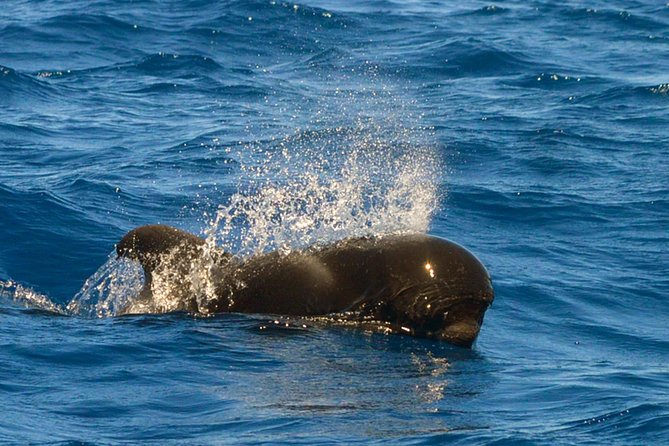
The tour is led by biologist staff and includes live commentary on board. That’s a big deal because whale watching becomes way more satisfying when you understand what you’re looking at.
Two parts of this are especially worth your attention:
1) The hydrophone
Instead of only visual spotting, you get an underwater microphone experience—so you can listen to whales and dolphins as part of the tour. It helps you connect sounds to behavior, and it gives the trip a layer that many boat outings skip.
2) Free photo follow-up
You receive free photos of the cetaceans and marine life by email after the tour. That means even if your phone misses the moment (happens constantly with fast surfacing), you still get a decent record of the highlights.
Guides you might encounter include people like Ion and John, who are described as friendly, passionate, and clearly focused on sharing real info—not just doing a generic spiel. Monie is also mentioned as part of the guiding team on some departures. Language support is covered too: English and Spanish.
What You Might See: Pilot Whales, Dolphin Types, and Bonus Wildlife
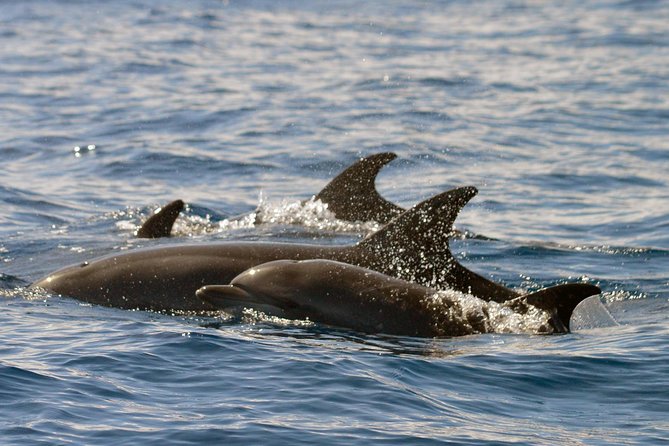
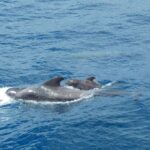
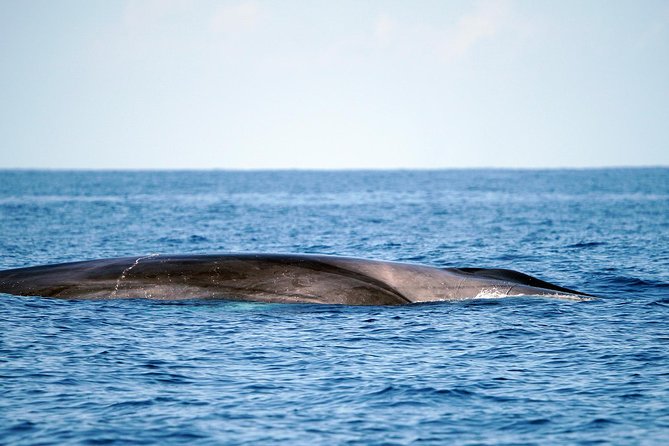
The headliners are whales and dolphins. The trip is commonly associated with pilot whales, and people also mention several dolphin experiences—sometimes multiple types in the same outing.
Here are some examples of what can happen on these trips:
- Multiple groups of pilot whales
- Dolphins such as bottlenose and spotted/Atlantic spotted types
- A sea turtle sighting on some outings
- Extra surface-life like flying fish
- Portuguese Man o’ War appears occasionally as an added surprise
It’s still wildlife, so sightings can vary. But the pattern is consistent: if animals are around, the small boat and guiding style help you maximize what you actually notice—behavior, group movement, and interaction patterns.

Meeting at Puerto Colón Marina (Pantalán 3, Costa Adeje)
You meet at Whale Watch Tenerife, Puerto Colón Marina, Pantalán Number 3, 38660 Costa Adeje, Santa Cruz de Tenerife, Spain. The tour returns to the same meeting point.
A couple practical notes that matter for a smooth start:
- You get a mobile ticket.
- Confirmation is automatic, and if the trip needs to change due to weather or not enough guests, the provider calls to arrange an alternative.
The meeting point is also described as near public transportation, which is useful if you don’t want to rely on taxis right before departure.
Price and Value: Is $72.56 Worth It?
At $72.56 per person for about 2 hours, the value mostly comes from what’s included, not what’s just nice to have.
What you’re paying for that other tours often charge extra for:
- Live commentary from biologist staff
- Hydrophone listening during the outing
- Free photos sent by email
- All local taxes included
What’s not included (so plan on it):
- Food and drinks. You can bring your own food and non-alcoholic drinks.
If you care about learning while you watch and you want a souvenir that doesn’t depend on your camera skills, this price starts to look more reasonable. The small group size also helps justify it—10 spots means more attention and a more controlled viewing style, which is hard to fake on cheaper, larger-deck tours.
Who Should Book, and Who Should Skip This One
This trip is listed as suitable for most travelers, but there are clear guest restrictions. Don’t assume you’ll be able to join if you’re on the edge of these categories.
The tour doesn’t accept:
- Infants and children under 3 years
- Pregnant people
- People with back or neck problems
- People with mobility problems
- People with recent surgeries
- Anyone over 130 kg
If you’re in any of those groups, it’s worth choosing a different Tenerife whale option designed for your needs.
This is also a good match if you:
- Want a small-group experience (max 10)
- Prefer respectful wildlife viewing
- Like the idea of science-led explanations and hydrophone listening
- Want photos emailed afterward
Small Practical Moves That Help You Enjoy It More
A few details can make your day easier:
- Have your mobile ticket ready for boarding.
- Since the trip depends on favorable weather, be flexible with your schedule—plan around it.
- Bring food and non-alcoholic drinks if you want snacks during the outing (they’re not included).
- Expect guided hosting in English and Spanish, so you can comfortably follow along even if your Spanish is rusty.
And one mindset tip I’d borrow from how these trips are run: go in expecting you might not hit everything every time. When you do see whales and dolphins, the payoff feels huge.
Should You Book Whale Watch Tenerife from Costa Adeje?
I’d book this trip if you want whale watching that feels intentional: small boat, biologist-led explanations, hydrophone listening, and free wildlife photos afterward. The eco-friendly, respectful approach described for this company is exactly the kind of detail that turns a quick excursion into a meaningful experience.
I’d pass (or at least shop carefully) if you fall under the restrictions for age, pregnancy, or mobility/back/neck concerns, or if you know you won’t handle a smaller 8-meter RIB style ride.
If your schedule allows and your body is a fit, this is a strong choice for seeing pilot whales and dolphins in Tenerife without turning the ocean into a loud parade.
FAQ
How long is the Whale Watching Eco-Adventure from Costa Adeje?
It lasts about 2 hours.
Where does the tour meet in Costa Adeje?
You meet at Whale Watch Tenerife, Puerto Colón Marina, Pantalán Number 3, 38660 Costa Adeje, Santa Cruz de Tenerife, Spain. It ends back at the meeting point.
What languages do the guides speak?
Guides speak English and Spanish.
Is food and drink included?
No. Food and drinks are not included, but you can bring food and non-alcoholic drinks.
Does the tour include photos?
Yes. The tour includes free photos of the wildlife, sent by email after the trip.
What happens if weather is bad?
The activity depends on favorable weather. If it’s canceled due to poor weather, you’ll be offered an alternative date or a refund. Confirmation is automatic, and if rescheduling is needed, the provider calls to arrange an option.