REVIEW · TENERIFE
Tenerife: Teide Stargazing with an Astrophysicist
Book on GetYourGuide →Operated by A donde vamos hoy · Bookable on GetYourGuide
The night sky at Teide feels personal. This Teide National Park stargazing with a certified local astrophysicist uses a small group (max 10) and a high-end telescope so you get focused viewing and real science talk, not just hand-waving. I love how the guide turns constellations and modern research into stuff you can actually picture, and I love that you get telescope views of major targets like the Moon and planets. One catch: mountain weather can shut it down.
You meet at the Parador de Cañadas del Teide and the session runs about 1.5 hours. It usually runs on Tuesdays and Fridays, and you’ll get a laser-guided intro plus a lantern for dark-sky safety on the walk between stops. English and Spanish are available, and the guide keeps the pace friendly for both first-timers and serious stargazers.
In This Review
- Key things you’ll notice fast
- Why Teide National Park is such a strong stargazing choice
- Meeting at Parador de Cañadas del Teide: what the start feels like
- The telescope time: 20 cm (8-inch) viewing, step by step
- What you learn under the stars: constellations, myths, and astrophysics
- What you might see: Moon, planets, clusters, and nebulae
- Weather and comfort on Teide nights: plan for cold and possible cancellations
- Price and value: is $47 fair for this kind of night?
- Who should book, and who might not love it
- Should you book Tenerife Teide Stargazing with an astrophysicist?
- FAQ
- Where does the Teide stargazing tour meet?
- How long is the experience?
- What languages are offered?
- Is this tour suitable for children?
- Do I need my own transport to the meeting spot?
- What should I bring for a night on Teide?
Key things you’ll notice fast
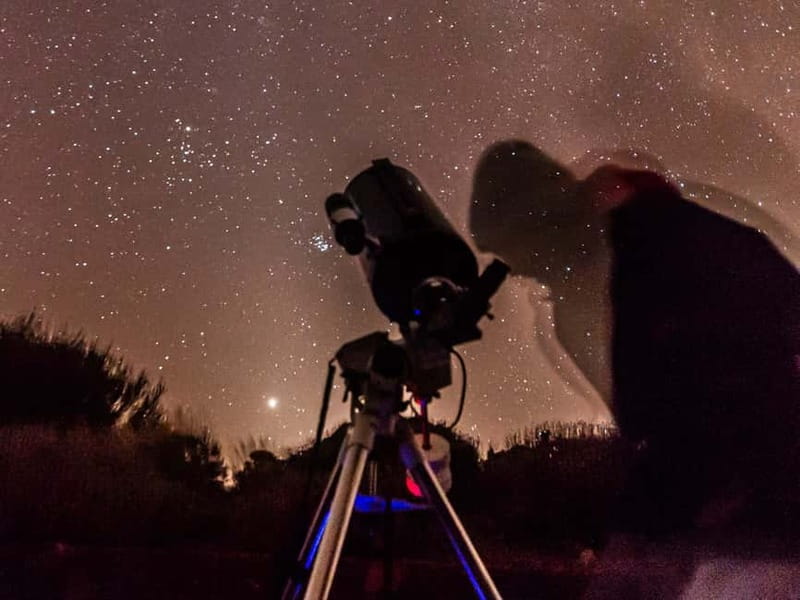
- Small group viewing (max 10) keeps questions from getting swallowed by the dark
- Certified astrophysicist guide blends science, myths, and hands-on telescope help
- A 20 cm (8-inch) telescope is the main event for close-up Moon and planet watching
- Laser guidance and a lantern make it easier to follow what you’re aiming at
- Likely highlights include Jupiter and Saturn, plus deep-sky targets like clusters and nebulae
- Teide weather rules the night, so layers and flexibility matter
Why Teide National Park is such a strong stargazing choice
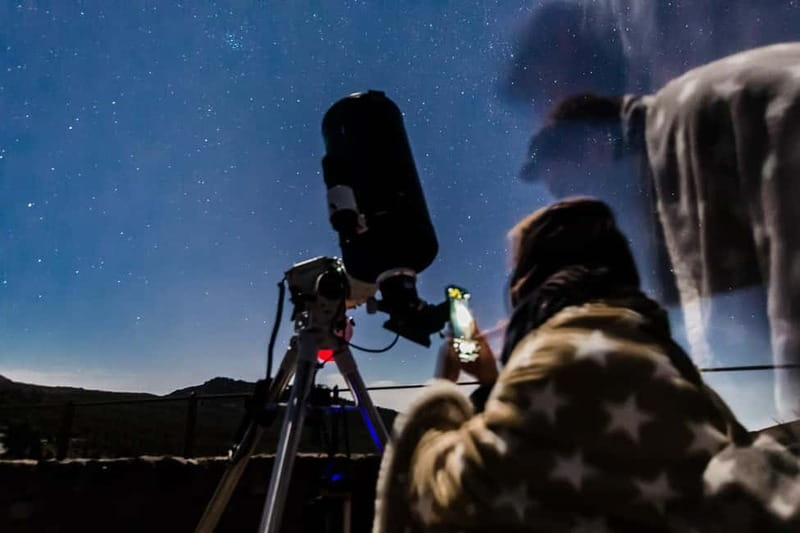
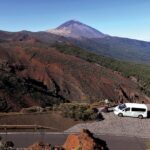
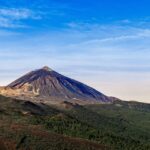
Teide sits high, and high altitude helps. You typically get clearer, darker skies than you will at sea level, and the air often feels steadier when the wind behaves. That matters because stargazing is not just about seeing stars. It’s about seeing detail—the kind of sharp views where Jupiter’s companions or Saturn’s rings feel close enough to study.
The setting also keeps you in the right frame of mind. Teide National Park is not a city. It’s quiet, and you can actually pay attention to what’s above you without bouncing between lights. That’s why even a short 1.5-hour session works: you focus, aim, watch, and learn.
I also like that the tour is designed around the equipment and the sky. It’s not only a lecture. You’re expected to look, and the guide helps you understand what you’re seeing while you’re seeing it.
You can also read our reviews of more tours and experiences in Tenerife.
Meeting at Parador de Cañadas del Teide: what the start feels like
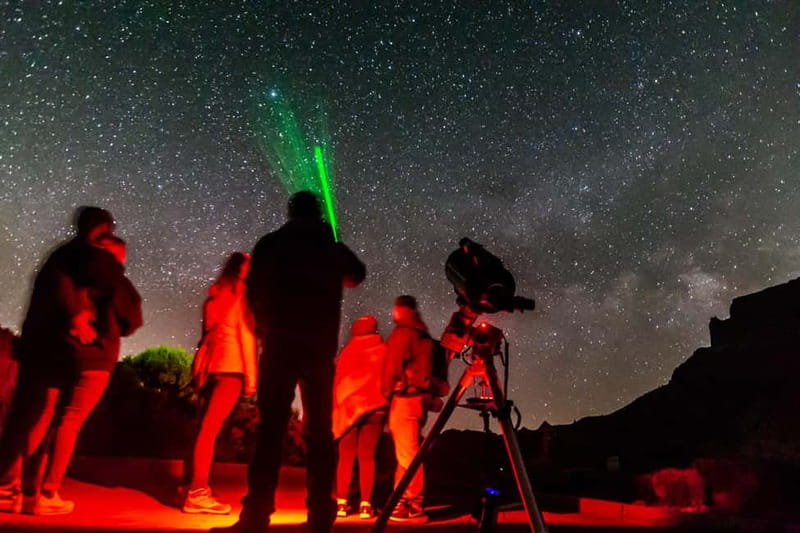
Most nights begin at the Parador de Cañadas del Teide, right at the hotel entrance or outdoor patio. This is a practical meeting point because it’s a known landmark, and it puts you near where the night-sky viewing is planned.
When you arrive, the guide typically gets everyone oriented with a quick, calm plan for the evening. You’ll get laser-guided help to connect the sky above to the targets you’ll later see through the telescope. This saves time and prevents the usual problem: people stare up, point at everything, and never figure out what they’re actually tracking.
Because it’s a small group, you can ask simple questions and still get a meaningful answer. If you’re traveling with someone who’s new to astronomy, this is a big plus. The guide can keep the vibe friendly while still aiming at real targets.
You should plan to get there on your own schedule. Transport isn’t included, so having your own car (or arranging a taxi) is the easiest path to the meeting spot.
The telescope time: 20 cm (8-inch) viewing, step by step
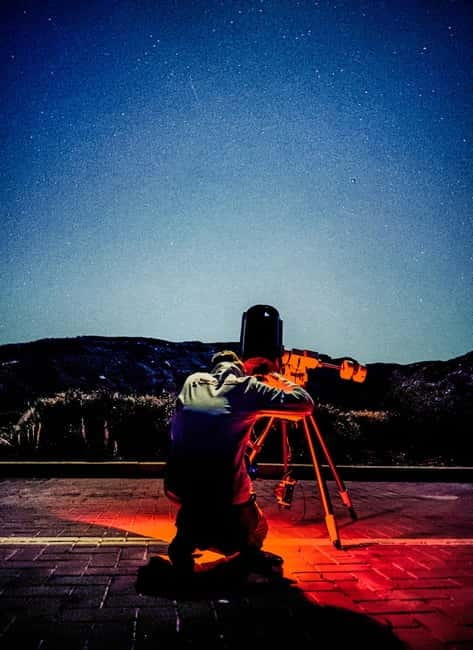
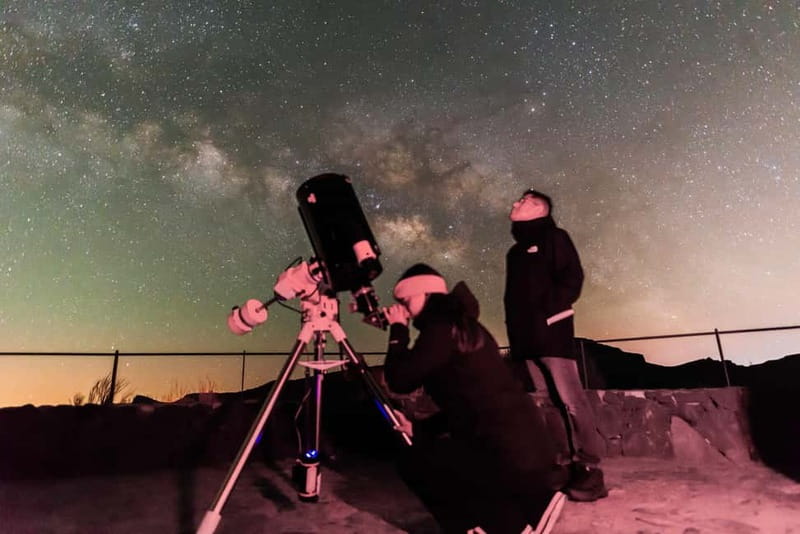
The heart of the experience is the 20 cm (8-inch) telescope. That’s not a gimmick scope meant for vague bright dots. It’s the size you need for satisfying views of the Moon’s surface features and for planet observations that feel worth the effort.
One thing I really appreciate about this tour style is that it tends to explain the telescope setup before the first big look. You’re not just shown an eyepiece and told to enjoy it. You learn what’s being adjusted and why. That makes your viewing feel like participation rather than passive watching.
The guide also seems to manage the session so everyone gets a turn and understands the target. In practice, that means you’re getting the “what you’re seeing” and “how to interpret it” in the moment. People reported that the guide took time to ensure everyone followed along, including first-timers and people who asked questions that were clearly not basic.
What you’ll likely notice through the scope:
- The Moon can look dramatically textured, not just bright
- Jupiter and Saturn become more than just points
- Certain deep-sky targets show as fuzzy but unmistakable shapes
And yes, conditions matter. If the sky is steady and dark enough, the telescope delivers the kind of view that makes you look twice.
What you learn under the stars: constellations, myths, and astrophysics
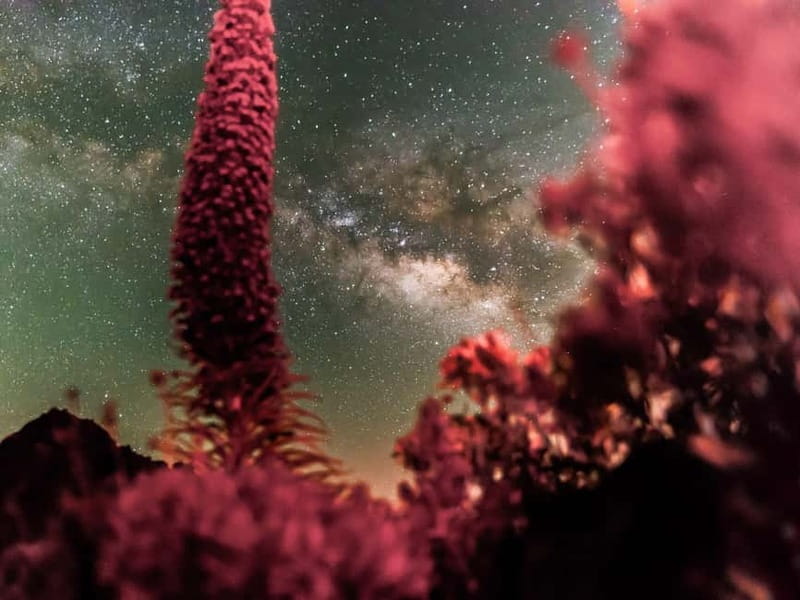
This is where the tour becomes more than sightseeing. The guide blends constellation stories with real astrophysics context—so you don’t only memorize star patterns, you understand why they matter.
You can expect mythology tied to the sky. That’s useful because it gives your brain a hook for remembering. When the guide connects a pattern to a story, it becomes easier to find again later, even without help.
At the same time, the astrophysicist angle adds a modern layer. People describe the explanations as science-forward but still fun, with a sense of humor that keeps it from feeling like homework. If you want a deeper understanding of how astronomers think—how they interpret light, how they categorize objects—this kind of guide-led tour is a strong fit.
A nice bonus: the guide can adapt to the group’s level. Families reported that the explanations worked for children, while adults still got enough depth to feel satisfied. That balance is rare, and it’s part of why the group size stays small.
What you might see: Moon, planets, clusters, and nebulae
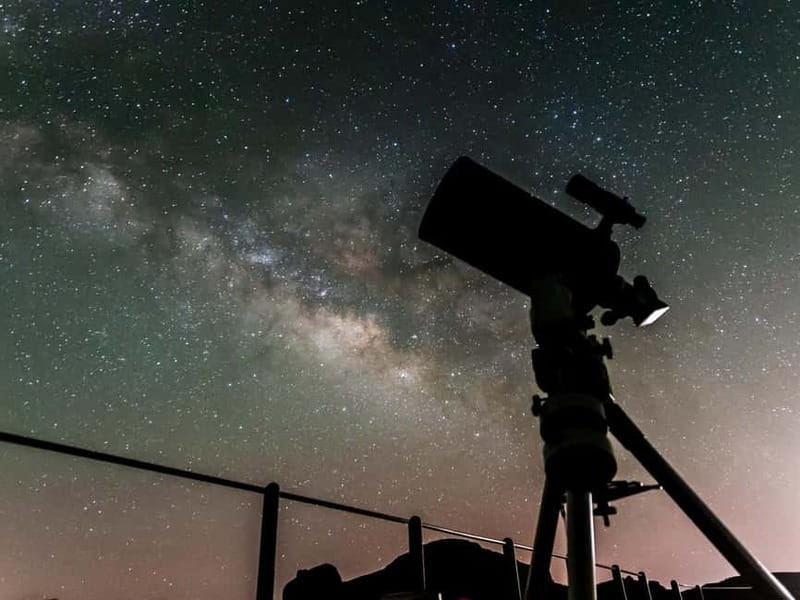
The Moon often becomes the evening’s anchor. Through the telescope, its craters and surface details can look surprisingly crisp when conditions cooperate. You’ll also get a sense of how Earth’s Moon fits into the larger sky, not as an isolated bright object but as a predictable visitor.
Planets are a major draw in Tenerife’s clear nights. Based on what people have seen with this tour format, common targets include:
- Jupiter, often with visible companions through the telescope
- Saturn, including the rings and moons when viewing conditions allow
- Sometimes Neptune, which is harder to spot on your own without the right setup
Deep-sky objects are another big part of the evening. People have reported seeing star clusters, including “family of stars,” plus binary systems and a reflection nebula. There’s also mention of a false binary system—an example of how the guide uses real sky objects to show how astronomy can be both beautiful and a bit tricky.
Even if you don’t catch every target on a given night, the guide’s approach helps you learn how to interpret what you see. That’s how the experience stays valuable when the sky shifts or clouds roll in.
Weather and comfort on Teide nights: plan for cold and possible cancellations
Teide is a high-mountain location, and the comfort gap between what you expect and what you’ll feel can be big. You’ll be outside, and nighttime temperatures can drop sharply.
The tour notes different clothing guidance by season:
- October to March: temperatures around 0–4ºC
- April to September: temperatures around 10–15ºC
In plain terms: bring real warmth. Thermal layers, warm shoes, and a jacket that blocks wind are your best friends. Also bring water, since you’re out for 1.5 hours and you’ll feel cold faster when you’re dehydrated.
The other weather reality is the one you should take seriously: the activity may be canceled due to weather conditions. That can happen for safety reasons on the mountain. The good part is that you get a refund if the operator cancels, but you still need to have flexible plans.
If you hate uncertainty, stargazing is not the activity to pick as a hard appointment. If you’re okay with a Plan B, Teide is a fantastic place to try.
Price and value: is $47 fair for this kind of night?
At $47 per person for about 1.5 hours, you’re paying for three things:
- A trained astrophysicist and certified guide who can explain what you’re seeing
- A real 20 cm (8-inch) telescope (not a toy scope)
- A small group format (max 10) that keeps the evening interactive
That combination is what makes it feel like value. A cheaper stargazing event might give you a basic talk and a quick view through whatever equipment is available. Here, the guide’s role is central—people consistently mention that questions are welcomed and that explanations meet you where you are.
You’ll also want to factor in what’s not included: transport, plus food and drinks. If you’re already driving to Teide, the out-of-pocket cost stays simple. If you need a taxi, that’s your main extra budget item.
For $47, the main test is whether you want to understand the sky as you watch it. If your answer is yes, this is a solid buy.
Who should book, and who might not love it
This tour fits best if you:
- Like astronomy but don’t want to figure it out alone
- Prefer small groups and direct Q&A
- Want both myth and science in the same night
- Enjoy the idea of seeing planets and deep-sky objects through a larger telescope
Age matters here. The tour says it’s not suitable for children under 8, and it also notes that the mountain conditions may make it less appropriate for kids under 7–9. That doesn’t mean kids can’t love stargazing. It means the parents job is planning for cold and patience.
One more practical factor: you need to get to the meeting point yourself. If you don’t drive and you don’t want to arrange a taxi, this may feel like extra effort.
If you’re looking for a casual walk with easy entertainment only, you might still enjoy it—but this is built around learning and telescope viewing, so it rewards curiosity.
Should you book Tenerife Teide Stargazing with an astrophysicist?
I’d book it if you want a focused night-sky experience with real guidance. The small group size, the certified astrophysicist, and the 20 cm (8-inch) telescope make it feel like you’re getting time with the sky, not just a look at it.
I’d think twice if your schedule is rigid or if you can’t handle cold mountain conditions. Weather can cancel the tour, and you’ll be outside in real nighttime temperatures.
If you’re flexible and you want to leave understanding the sky a bit better than when you arrived, this is one of the more satisfying ways to spend a Tenerife night—especially because you’re not stuck guessing what you’re seeing.
FAQ
Where does the Teide stargazing tour meet?
You meet at the entrance or outdoor patio of the Parador Cañadas del Teide Hotel, Las Cañadas del Teide, 38300, Santa Cruz de Tenerife.
How long is the experience?
The tour lasts 1.5 hours.
What languages are offered?
The guide runs the tour in English or Spanish.
Is this tour suitable for children?
It is not suitable for children under 8 years old, and it also notes that it may not be appropriate for kids under 7–9 due to high-mountain conditions. Babies under 1 year are not suitable.
Do I need my own transport to the meeting spot?
Transport is not included, so you need your own car or you can arrange a taxi to reach the meeting location.
What should I bring for a night on Teide?
Bring comfortable shoes and warm clothing. The tour also recommends thermal layers for cold conditions, plus water. Dress for the weather, and wear warm shoes.