REVIEW · TENERIFE
PADI Open Water course in Playa de las Americas
Book on Viator →Operated by Aqua-Marina Dive Centre · Bookable on Viator
Learning scuba basics in Tenerife feels like cheating.
In Playa de las Américas, you get a tight, beginner-friendly path to a real PADI Open Water certification with qualified instructors and all the gear handled for you. I like that the plan is structured: online prep first, then hands-on skills in calm water, then open-water training when you’re ready. One thing to note up front: you’ll need a health questionnaire, and some medical conditions can limit participation.
What I really like is how much is bundled into the price. You’re not paying extra for the dive equipment or the certification fees—those are included, along with local taxes. If you’re trying to budget for learning scuba without surprise add-ons, that’s a big deal.
The only real drawback is time and logistics. This is a fast 3-day course (about 5–6 hours on the training days), and food and drinks aren’t included. Also, you shouldn’t plan to fly within 24 hours of your water sessions.
In This Review
- Key highlights at a glance
- Playa de las Américas and the PADI Open Water goal
- Course rhythm: online theory, skills day, then Open Water sessions
- Day one setup: pool or sheltered bay skills practice
- Days 2 and 3: boat + shore training for real-world confidence
- What’s included in the $504.41 price (and what that saves you)
- Meeting point and pickup: where your day starts
- Safety and fitness notes you should take seriously
- What to pack and how to stay comfortable
- Who this course is best for (and who should rethink it)
- Should you book the PADI Open Water in Playa de las Américas?
- FAQ
- FAQ
- How long is the PADI Open Water course in Playa de las Américas?
- What time does the course start?
- Where do I meet the instructors?
- Is pickup available from my hotel?
- Do I need to do any theory before arriving?
- What happens on the first day?
- What happens on days two and three?
- Is all scuba equipment provided?
- Are certification fees included in the price?
- What’s not included in the course price?
- Is it safe to fly soon after the course?
Key highlights at a glance
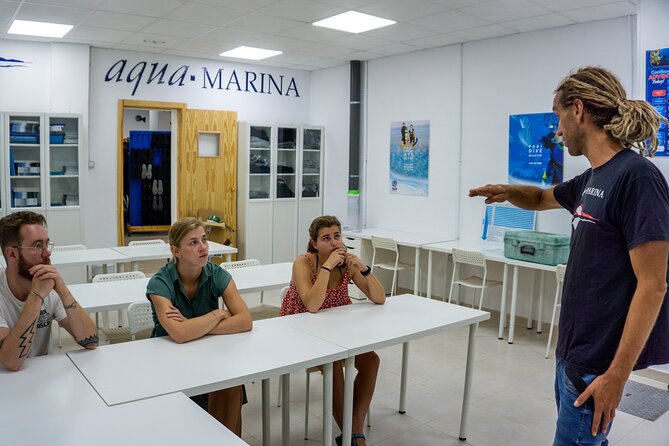
- Online theory before you arrive so you spend more time practicing and less time studying
- Confined-water skills in a pool or sheltered bay on day one
- 4 Open Water sessions across days two and three, mixing boat and shore practice
- Equipment and certification fees included, which makes the price feel more predictable
- Small group size (max 6) for more individual attention during skills work
- Pickup available on request if you don’t want to deal with transport day-to-day
Playa de las Américas and the PADI Open Water goal
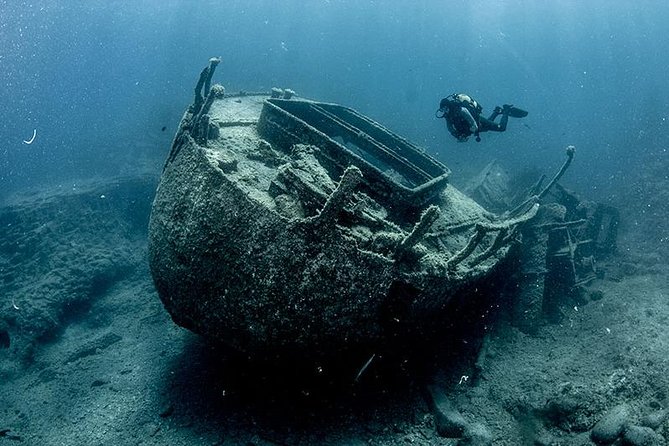
If you want scuba training that actually turns into a credential, the PADI Open Water format is one of the clearest options. Instead of “come watch and maybe go in the water,” you follow a set progression: learn the fundamentals, practice controlled skills, then apply them in open-water conditions.
Playa de las Américas is a practical base for this. You’re in a tourist hub, so you can usually sort out your day-to-day easily, and the course logistics are set up for short, efficient training blocks. Your day starts at 9:00 am and typically runs 5–6 hours on the training days, which helps a lot if you don’t want your vacation swallowed by half-finished plans.
A small but meaningful detail: the max group size is 6 travelers. In a course like this, fewer people means fewer bottlenecks while instructors reset gear, explain technique, or help you troubleshoot something small (like buoyancy control) before it becomes a bigger issue later.
You can also read our reviews of more tours and experiences in Tenerife.
Course rhythm: online theory, skills day, then Open Water sessions
This course is built around momentum. You won’t show up fully blank. Before you start, you complete online theory in your own time. That matters because it reduces the amount of classroom-style time once you’re in Tenerife.
Then the course splits into two phases:
1) Day one: confined-water practice (either a pool or a sheltered bay)
2) Days two and three: four Open Water sessions total, with a mix of boat and shore training
By the time you reach those open-water sessions, you’re not just trying things randomly. You’re applying what you learned in skills practice. That progression is what helps beginners get confident faster.
Day one setup: pool or sheltered bay skills practice
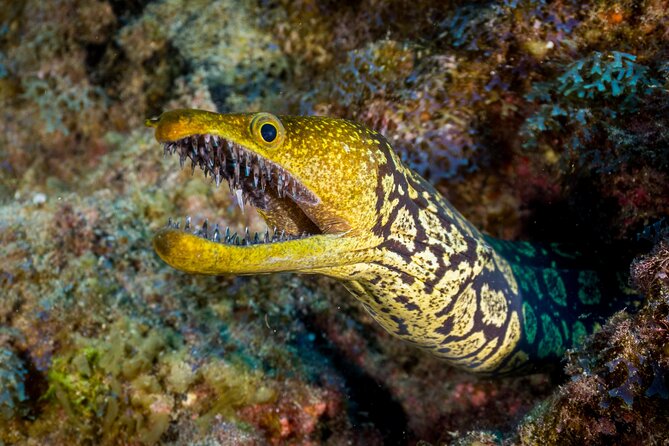
Day one is where your comfort level gets built. You’ll spend time in confined water—either a pool or a sheltered bay. The point is simple: practice core techniques in a controlled setting where things are calmer and the surface is close.
Expect a lot of “do this, then do it again until it feels normal” work. This is the day for skills that can feel awkward at first, like mask fit, regulator handling, buoyancy basics, and learning how to move calmly underwater. If you’ve never done scuba before, this is also the day where you learn how to stop panicking and start breathing like a human.
A useful detail for your planning: day one is still part of your training schedule that runs about 5–6 hours, so treat it as a real activity day. Bring the energy for repetition. If you’re tired, the skills can feel harder than they need to be.
Days 2 and 3: boat + shore training for real-world confidence
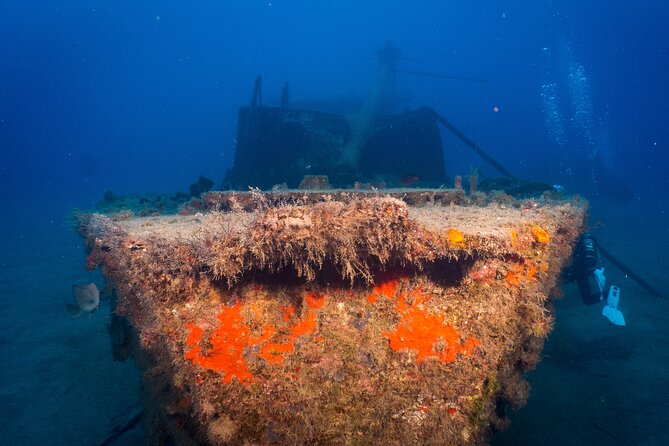
Days two and three are where the course clicks into certification mode. You complete 4 Open Water sessions across these two days, with a mix of boat and shore formats.
Why this mix matters: boat sessions usually mean you focus more on technique while you’re transported to the training area. Shore sessions often require a bit more teamwork and awareness right at the start and end—getting ready and managing entry and exit more precisely.
You’ll likely spend a longer portion of these days underwater than on day one, but the training still stays structured around skills you’ve already practiced. The best part is that by this point you’re not just checking off boxes. You’re learning how the equipment behaves and how you stay relaxed while conditions are less controlled than a pool.
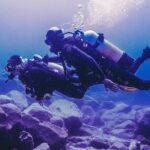
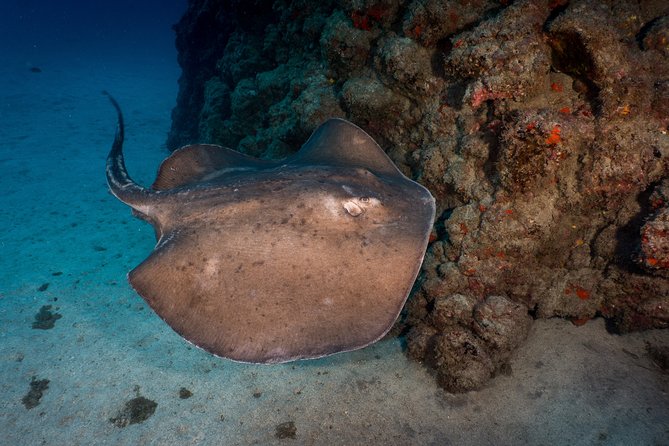
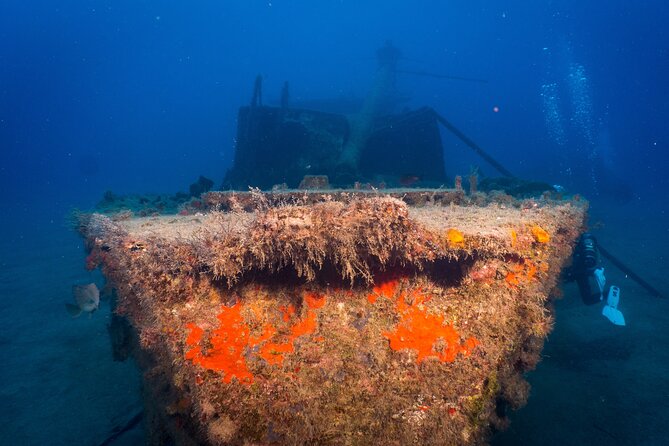
If your goal is to see underwater life while learning real technique, this is the sweet spot. The course is designed to combine both: certification training plus the fun part of being underwater with guidance.
What’s included in the $504.41 price (and what that saves you)
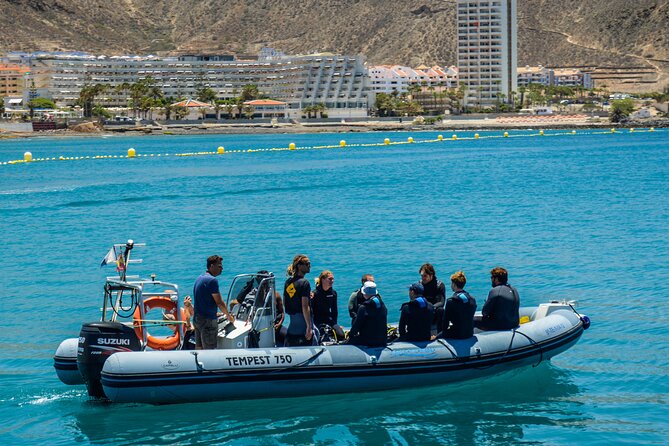
At $504.41 per person for a 3-day PADI Open Water course, the value isn’t just that it’s a “package.” It’s that key costs are included up front:
- All dive/scuba equipment
- Certification fees
- Local taxes
Those inclusions matter because they remove common vacation budget surprises. Many short training options look cheaper until you add equipment rentals and certification paperwork. Here, you get clarity: what you pay is what you plan around.
What’s not included is also clear: food and drinks. So you’ll want to eat before you start, or budget for meals near the meeting area and during breaks. If you’re prone to getting hangry (I’ve met people like this), plan for fuel. Being hungry makes skills training feel harder.
Also, confirmation is handled through booking. You’ll receive confirmation unless you book inside 1 day of travel, in which case confirmation comes as soon as possible, based on availability. That’s a small detail, but it helps when you’re scheduling last-minute.

Meeting point and pickup: where your day starts
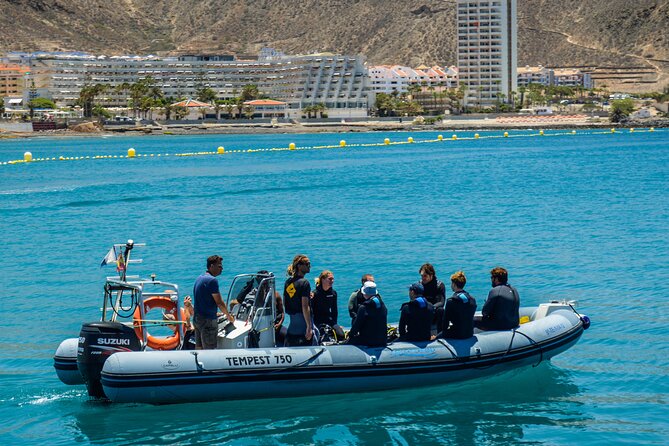
The meeting point is at Paseo Verode / P.º Verode, 38660 Playa de la Américas, Santa Cruz de Tenerife, Spain with a start time of 9:00 am. The activity ends back at the meeting point.
If you don’t want to think about transport, hotel pickup is available on request. That matters because a smooth morning sets the tone for the rest of the day, especially on day one when you’re learning equipment basics and you don’t want extra stress.
You’ll also get a mobile ticket, which is handy if you prefer to travel light and keep everything on your phone.
Safety and fitness notes you should take seriously
Scuba training is fun, but it’s still health-and-safety dependent. Before you dive in the training sense, you’ll complete a health questionnaire. If you have certain pre-existing medical conditions—examples given include asthma and heart conditions—you may not be cleared to participate. When in doubt, ask your doctor.
The course also asks for moderate physical fitness. That doesn’t mean “you need to be an athlete.” It means you should be comfortable with the physical demands of gear handling, getting in and out of the water, and staying focused for several hours.
Timing is another big one. Diving within 24 hours before flying is not recommended. If your Tenerife trip includes a flight soon after, plan your schedule so the course happens with enough buffer time.
What to pack and how to stay comfortable
The course includes equipment, so you don’t need to bring scuba gear. Still, you should pack like you’re going to be in and out of the water, multiple times over multiple days.
A smart approach:
- Wear clothing you can get wet if needed.
- Bring a towel and a change of clothes for afterward.
- Expect sun exposure. Even if the session is short, you’re in Tenerife and you’ll likely be outside before and after.
Also, because food and drinks aren’t included, you’ll want to think about snacks and hydration for between parts of the day. A simple plan can save you from feeling drained right when you need steady attention.
Who this course is best for (and who should rethink it)
This 3-day PADI Open Water course is a great fit if:
- You’re a beginner and want a structured path to certification
- You want qualified instruction without bringing your own gear
- You prefer small groups (max 6)
- You’d like both skills training and the chance to see underwater scenery
It may not be the best fit if:
- You have a medical condition that could affect clearance (check the health questionnaire guidance and talk to your doctor)
- You’re planning to fly shortly after the course
- You need long, unhurried pacing and lots of extra downtime (this is a multi-day schedule with 5–6 hour training days)
Should you book the PADI Open Water in Playa de las Américas?
I’d book this course if you want a straightforward route to PADI Open Water with fewer hidden costs. The combination of equipment + certification fees included makes it feel like a real deal, not a “starting price” that grows once you’re already committed. Add in the small group size and the mix of confined-water skills plus open-water sessions, and you get a sensible learning arc.
Before you reserve, do a quick reality check:
- Make sure you can commit to the full 3-day schedule.
- Complete the online theory in advance so day one goes smoothly.
- Plan food and drinks for training days.
- If you have any health questions, don’t wing it—use the health questionnaire and talk to a clinician if needed.
If all that checks out, this is the kind of course where you finish with confidence, not just a stamp in a booklet.
FAQ
FAQ
How long is the PADI Open Water course in Playa de las Américas?
It’s listed as a 3-day course (approximately 3 days), with training days that normally run 5–6 hours.
What time does the course start?
The start time is 9:00 am.
Where do I meet the instructors?
The meeting point is Paseo Verode / P.º Verode, 38660 Playa de la Américas, Santa Cruz de Tenerife, Spain.
Is pickup available from my hotel?
Yes. Hotel pickup can be arranged on request.
Do I need to do any theory before arriving?
Yes. Each student needs to complete online dive theory in their own time.
What happens on the first day?
The first day is spent practicing skills in confined water, either in a pool or a sheltered bay.
What happens on days two and three?
On days two and three you complete 4 Open Water sessions in total, with a mix of boat and shore sessions.
Is all scuba equipment provided?
Yes. All dive equipment is included.
Are certification fees included in the price?
Yes. Certification fees are included in the price.
What’s not included in the course price?
Food and drinks are not included.
Is it safe to fly soon after the course?
Diving less than 24 hours before flying is not recommended, and you’re required to complete a health questionnaire prior to diving.