REVIEW · TENERIFE
Tenerife: Sunset and Stargazing at Teide National Park
Book on GetYourGuide →Operated by DAS Experience Tenerife SL · Bookable on GetYourGuide
Teide National Park has a way of turning an evening into a memory. This small-group sunset-and-stargazing experience lets you watch the sun drop behind the islands, then learn the sky with a laser pointer and a 12-inch Dobsonian telescope—plus a free professional photo at the end. I especially love the mix of big views and hands-on astronomy, guided by people like Peter and Phil, who make the constellations feel easy.
The other thing I really like is the altitude and dark-sky setting: you’re about 1,400 meters up, above a lot of haze, so the stars don’t feel like an afterthought. I also appreciate the weather plan—if it’s too windy or cold up high, the guides adjust and you still get a strong night-sky session. One thing to consider: it gets properly cold, and there are no toilets near the stargazing spots.
In This Review
- Key things I’d prioritize before you book
- Why this Teide sunset + stargazing format works
- Sunset over the islands: Cava, lava views, and a cloud-sea moment
- What happens after sunset: moving when conditions allow
- The guided sky lesson: lasers, myth, and finding real targets
- The telescope time: what you can realistically spot
- The free photo: getting a starry portrait without the hassle
- VIP vs self-drive: choose based on your comfort with driving and cold
- VIP pickup (south coast only)
- Self-drive (your car, your meeting point)
- Price and value: what $47 buys for 3–4 hours
- What to pack so the night stays fun (not miserable)
- Who should book this Teide stargazing experience
- Should you book: my quick decision guide
- FAQ
- What is the duration of the Tenerife sunset and stargazing tour?
- Do we visit Mt. Teide itself during this experience?
- What is included in the tour price?
- Is there a restroom available at the stargazing locations?
- What can I expect to see in the night sky?
- Can the tour be affected by weather?
Key things I’d prioritize before you book
- Cava at sunset, not after the fact: you get a glass of Spanish sparkling wine as the colors change over the islands.
- Polaris and Andromeda taught the practical way: you’ll learn how to spot them using Ursa Major and Pegasus.
- A real telescope setup (12-inch Dobsonian): you’re not just looking up at stars; you’re actually observing.
- Weather-smart flexibility: the group may stay at the lower viewpoint if conditions turn rough.
- Free astrophotography portrait: you’ll take home a professional-style image under the stars.
- Two ways to join—VIP pickup or self-drive: your night stays smooth or you can do it your own way.
Why this Teide sunset + stargazing format works
This tour pairs two experiences that Tenerife does well: sunset views over the island chain, and sky viewing in conditions that many places can’t match. You’re not stuck doing one thing for hours. You get the warm, colorful sky while the sun is still there, then the scene flips to darkness and the universe becomes the main event.
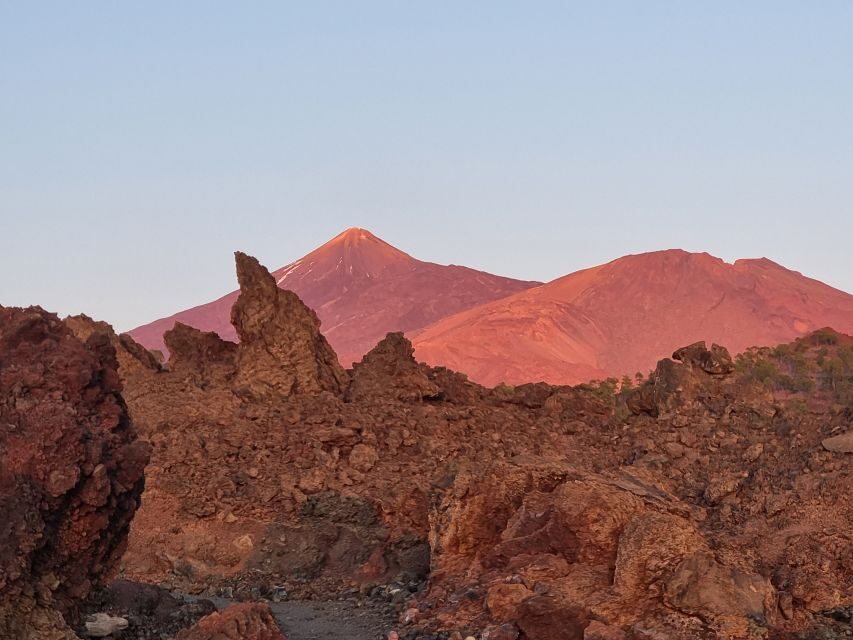
I also like that you’re staying at public viewpoints (not hiking up Mt. Teide). That matters because it keeps the experience accessible without turning it into a strenuous outing. And because you’re at higher elevation, you typically get a clearer shot at both the cloud sea effect and the stars once the sun is gone.
One more practical advantage: the night-sky session isn’t treated like filler. It’s structured—guides point things out with lasers, teach you how to find key objects, and then you get observing time through the telescope.
You can also read our reviews of more tours and experiences in Tenerife.
Sunset over the islands: Cava, lava views, and a cloud-sea moment
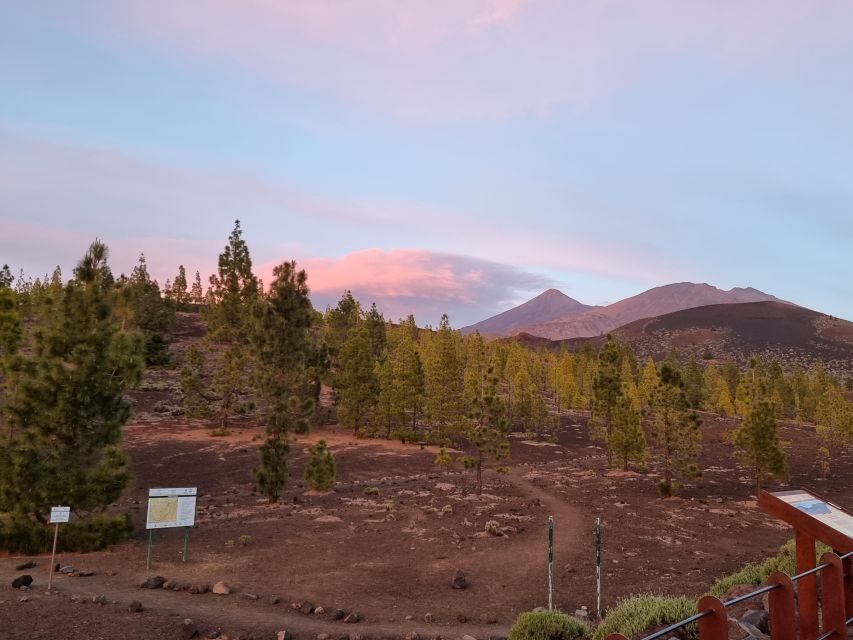
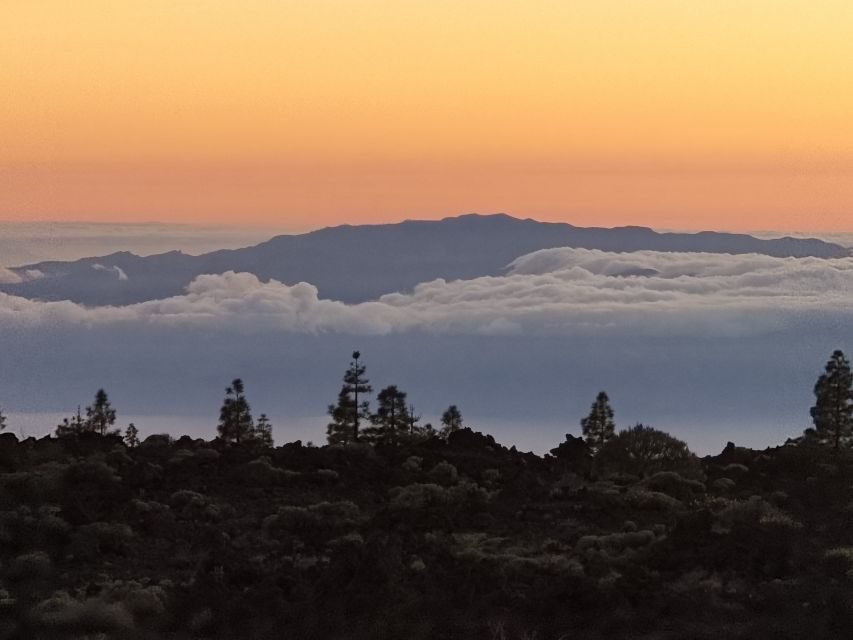
The sunset portion is built around a viewpoint at roughly 1,400 meters, and it’s positioned for serious island panoramas. As the sun goes down, you’ll see the sky change over La Gomera, La Palma, and El Hierro—and that timing is everything. Every sunset is different, and the guides will steer the group to the best angles for watching the colors roll in.
What makes this feel special is the volcanic setting. The viewpoint area is right by a lava flow tied to the island’s eruptive history—an eruption mentioned in the log of Christopher Columbus in 1492. That connection isn’t about being overly historical; it’s about grounding you in the fact that Tenerife’s scenery is not random. It’s the product of fire and time.
Then there’s the simplest, easiest joy: a glass of Cava (or a non-alcoholic drink). It’s not a huge party moment. It’s a nice way to toast the changing sky while you’re standing in crisp air with wide views.
A real-world tip: in the reviews, people repeatedly call out how quickly the temperature can drop once the sun is gone. So I’d plan to treat the sunset like the “warm start,” not the whole cold-proof strategy.
What happens after sunset: moving when conditions allow
Right after the first viewpoint and photo moment, the guides shift the plan depending on weather. If it’s too windy, cloudy, or cold up high, they may decide to stay at the lower viewpoint so you’re still comfortable and the session remains worthwhile.
If conditions do cooperate, the group may transfer to another stargazing spot after sunset. That flexibility is valuable because it protects the whole night-sky goal. Clear skies and stable viewing beat a “go big no matter what” approach every time.
In other words: you’re not just buying astronomy. You’re buying a night that’s designed to survive weather.
The guided sky lesson: lasers, myth, and finding real targets
Once the stars come out, this tour becomes a guided “how to read the sky” session. You’ll use laser pointers plus storytelling to learn what you’re looking at. The guides explain how to locate Polaris (the North Star) using the Ursa Major asterism, then how to find the Andromeda galaxy using the Great Square of Pegasus.
They also weave in Greek mythology while they’re teaching the constellations. It’s not museum-style. It’s the kind of context that makes names stick, so you’re not just hearing a list of objects.
I find this matters for two reasons:
- You don’t have to be an astronomy person to understand what you’re seeing.
- After the tour, you can look up again later and actually recognize things.
This is where guides like Roland and Peter show up in the experience in a very practical way: good guiding turns “I saw stars” into “I can point to things.” And in multiple accounts, the laser explanations plus the telescope time are the big difference between this and casual stargazing.
The telescope time: what you can realistically spot
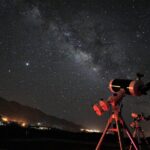
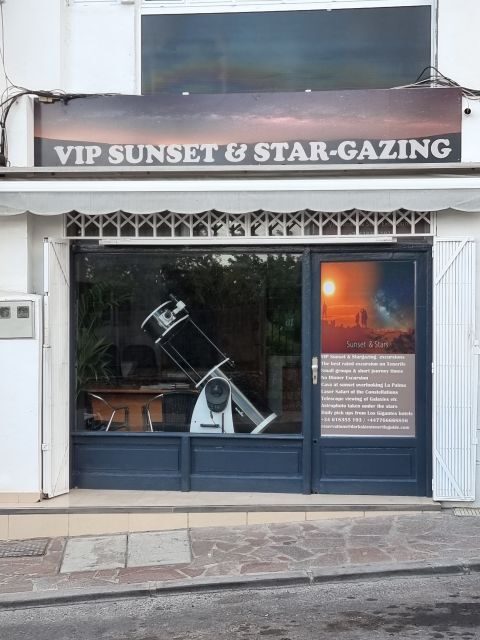
The telescope setup here is a 12-inch Dobsonian, which is a serious step up from small handheld optics. A Dobsonian is designed for lots of light gathering, and that shows when you’re trying to see faint targets—especially from darker sites away from heavy street lighting.
Depending on the time of year, the tour targets different favorites. The tour data specifically notes options like:
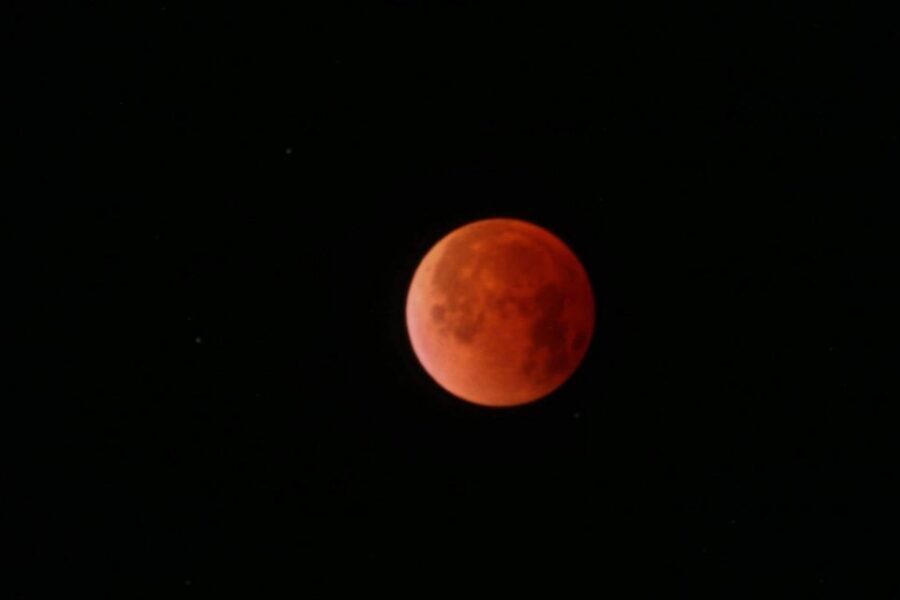
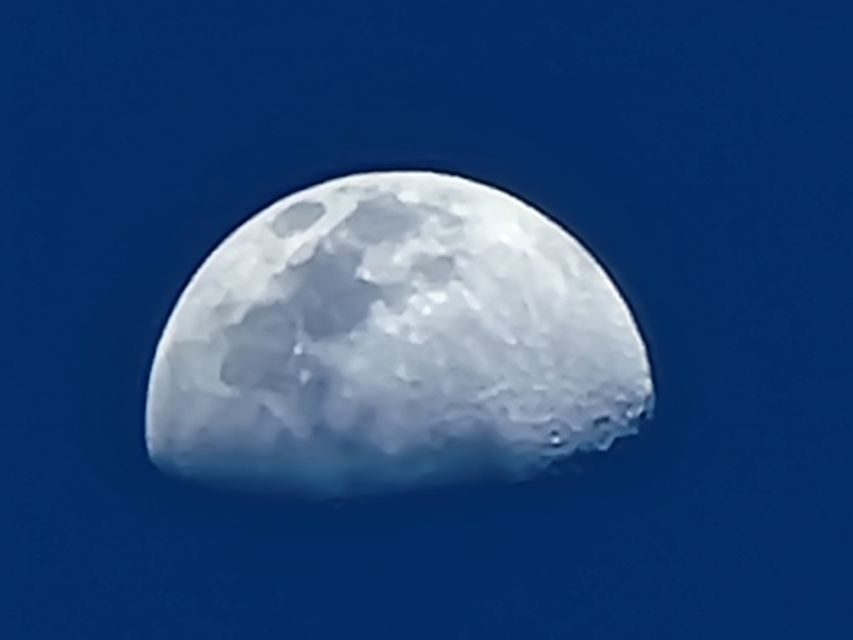
- The Moon as the main subject on the days before and around full moon.
- Planets when they’re visible, including Saturn’s rings and the Galilean moons around Jupiter (noted for summer and autumn months).
- Deep-sky showpieces like the Pleiades (Seven Sisters) in winter.
You may also see things like the Milky Way mentioned in real experiences. That’s the kind of “wow” moment that’s hard to manufacture with words. If the sky is clear and the moon isn’t washing things out too much, your eyes really do start picking out detail.
One small caution: if you’re going on a very moon-bright night, some deep-sky targets may be harder. The guides adjust what they prioritize, but the sky conditions still drive the results.
The free photo: getting a starry portrait without the hassle
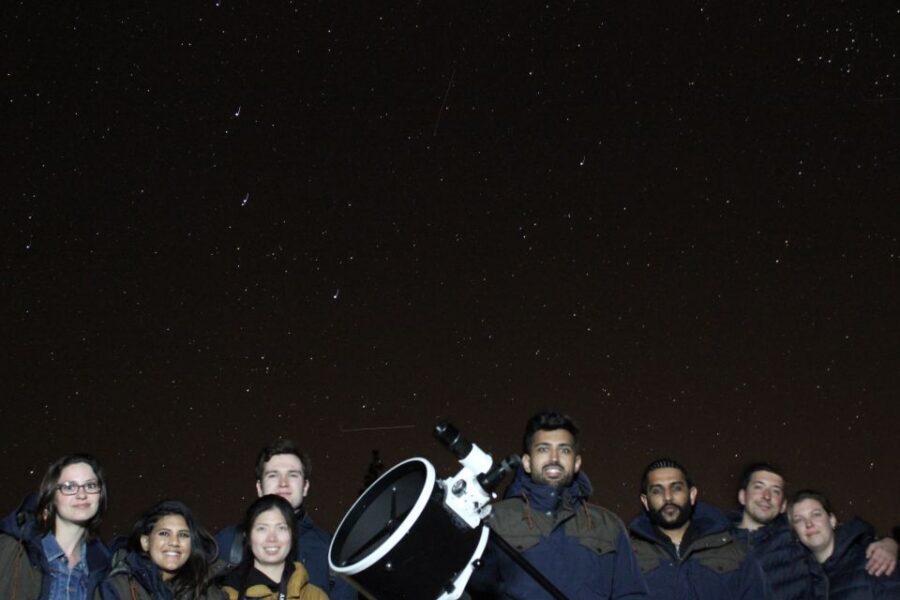
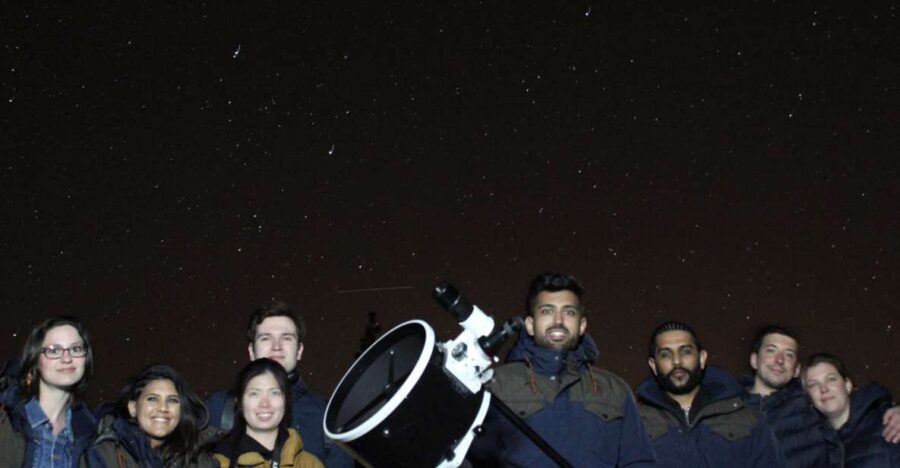
One of the best value pieces here is the photo you take home. The guides take individual astrophotography photos using professional techniques—free of charge—and those images are designed to show you against a blanket of stars.
In practice, this solves a common problem: you want a decent shot under the sky, but setting up the right settings and timing is not easy in cold, wind, and darkness. Here, you focus on enjoying the night, and someone else handles the camera work.
If you’re picky about photos, you’ll still appreciate it. Multiple people mention the quality and how the photo becomes the souvenir you actually look at later.
VIP vs self-drive: choose based on your comfort with driving and cold
You have two ways to join.
VIP pickup (south coast only)
If you pick the VIP option, you get pickup and drop-off from your accommodation (or a close meeting point). This is limited to the South of Tenerife, generally between El Médano and Los Gigantes. Drop-off can include places like Golf del Sur, Playa Paraíso, Costa Adeje, El Médano, Playa de las Américas, Los Cristianos, Los Abrigos, and Acantilados de Los Gigantes.
This is the easiest route if you:
- don’t want to drive on mountain roads at night,
- are arriving late in the day,
- or prefer a straightforward, door-to-door plan.
Self-drive (your car, your meeting point)
With self-drive, you drive to the meeting point (normally Mirador de los Poleos) and then follow the guides after sunset to the stargazing location. You’ll want to arrive early because there can be multiple cars at the first stop and parking can be tight.
Self-drive can be a good option if:
- you’re comfortable driving up and around the mountain area in the evening,
- you want flexibility,
- and you’re not relying on pickup timing.
Either way, the guide team controls the timing and observational plan. Your job is just to arrive and stay warm.
Price and value: what $47 buys for 3–4 hours
At about $47 per person for a 3–4 hour outing, you’re paying for more than a bus ride with telescope photos at the end.
Here’s what you’re getting that typically costs extra elsewhere:
- structured guiding with lasers and clear “how to find it” explanations
- access to a 12-inch Dobsonian for real viewing time
- Cava included (or a non-alcoholic drink)
- warm jackets for the VIP option
- a free professional astrophotography portrait
For me, the biggest value signal is the photo. Many astronomy nights are cheap until you add what you actually want as a memory. Here, the memory comes built-in.
If you hate cold weather and think you’d be too uncomfortable to stay outside, that’s the main reason the value might not land. Dress for the temperature, and it starts to feel like a bargain.
What to pack so the night stays fun (not miserable)
Even in winter, Tenerife nights can feel seriously cold up high. Reviews consistently warn that people underestimate it, so don’t treat this like a mild “wrap a cardigan” situation.
Bring:
- warm clothing and a proper jacket
- long sleeves and long pants
- comfortable shoes (you’ll be standing and walking a bit)
- layers (a long-sleeved shirt plus a warm top helps)
- long pants and warm footwear
And two comfort notes that aren’t optional:
- There are no toilet facilities at or near the stargazing locations.
- You might get wind once the sun is down, so having wind-resistant layers helps.
If you’re altitude-sensitive, this is not a fit. The tour isn’t suitable for people with altitude sickness.
Who should book this Teide stargazing experience
This is a strong choice if you want:
- a memorable sunset with genuine viewpoints,
- guided astronomy that teaches you what you’re seeing,
- and a telescope session that isn’t rushed.
It’s also a nice pick for couples and small groups because the experience is built around time at viewpoints and hands-on viewing. One review even praises the VIP setup for being small and efficient, which is what you want when you’re standing in the cold and hoping the sky delivers.
If you don’t like cold, or you’re hoping for a purely relaxed evening with no instruction, you might prefer a gentler sunset-only option. But if you’re curious, this tour turns curiosity into something you can use later—like finding Polaris by yourself.
Should you book: my quick decision guide
If you’re in Tenerife and you care about both the view and the stars, I’d book this. The combination of a well-timed sunset, telescope observing, and a free astrophotography photo makes it feel like more than a basic excursion.
Book VIP if you want convenience and warm-jacket support, and you’re staying on the south side. Pick self-drive if you like having your own schedule and you can handle mountain roads. Either way, show up ready for cold air, because that’s the one practical trade-off that can make or break the experience.
FAQ
What is the duration of the Tenerife sunset and stargazing tour?
The tour lasts about 3 to 4 hours, depending on the starting time and how the night goes with weather.
Do we visit Mt. Teide itself during this experience?
No. The stargazing is done from public viewpoints where it is allowed by local authorities, not on Mt. Teide. Cable car and the Teide Observatory are not included.
What is included in the tour price?
The tour includes stargazing with a starlight-certified guide, the guest photo taken with astrophotography techniques, and a glass of Cava (or a non-alcoholic drink). Pickup and drop-off are included only if you select the pickup option.
Is there a restroom available at the stargazing locations?
No. There are no toilet facilities at or near the stargazing locations.
What can I expect to see in the night sky?
What you see depends on the season and visibility. The Moon can be the main object around full moon, and planets like Saturn and Jupiter may be visible in certain months. The tour also mentions targets like the Pleiades in winter.
Can the tour be affected by weather?
Yes. If guides consider conditions adverse (high wind, clouds, or low temperatures), they may decide to stay at the lower viewpoint, which is still considered perfect for stargazing.