REVIEW · TENERIFE
Teide National Park: Stargazing Experience
Book on Viator →Operated by Discover Experience · Bookable on Viator
Teide’s night sky can feel unreal. This Teide National Park stargazing session is a clear-skies front row seat plus telescope time led by an astronomer guide, and it’s great for first-timers and kids. One catch: it can be chilly on the mountain, and what you see depends on the night’s timing and conditions.
This is a small-group experience (max 20) that runs about 1 hour 20 minutes. You’ll start with guided sky explanations, then move to telescope viewing of standout objects like the Moon and planets, with extra astronomy facts to keep it fun and understandable. Guides through Starlight Guides include people like Miguel, Óscar, and Adri, based on recent feedback.
Because this is a stargazing tour, you’ll want to plan for the basics: bring warm layers, and make your way to the meeting point on your own since transport isn’t included. If you’re really chasing one specific planet, know that astronomy is more timing than wishful thinking.
In This Review
- Key things that make this Teide stargazing tour work
- Teide National Park and the kind of dark sky you came for
- The 7:30pm start at Mines of San Jose (and why timing matters)
- How the astronomer guide teaches the sky (without making it feel like class)
- Telescope time: seeing Saturn, Jupiter, the Moon, and nebulae
- The astrophotography telescope: watching the view become an image
- Price and value: what you get for $42.33 per person
- What to wear and expect during a mountain night
- Who this Teide stargazing tour fits best
- Should you book this Teide National Park stargazing tour?
- FAQ
- FAQ
- How long is the Teide National Park stargazing experience?
- What time does the tour start, and where do we meet?
- Is admission to Teide National Park included?
- What will I be doing during the tour?
- What languages are available?
- Is it suitable for children?
- What happens if the weather is bad?
Key things that make this Teide stargazing tour work
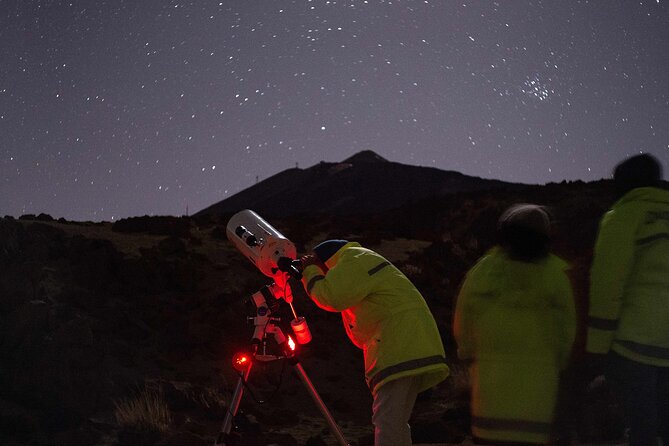
- Naked-eye sky lesson first, then telescopes, so you get oriented fast
- Small group (20 max), which helps you ask questions and see what the guide points out
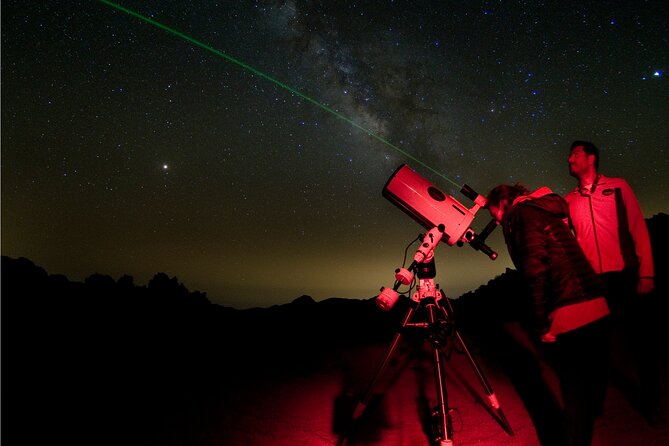
- Telescopes + an astrophotographic telescope, turning what you view into photo-worthy moments
- Laser guidance to help you find targets across constellations and bright objects
- Standout targets you might see like Saturn, Jupiter, the Moon, nebulae, and the Milky Way
- Weather-dependent schedule, with a backup date or full refund when skies don’t cooperate
Teide National Park and the kind of dark sky you came for
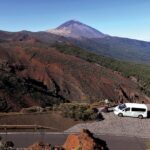
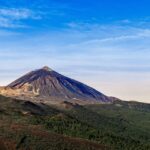
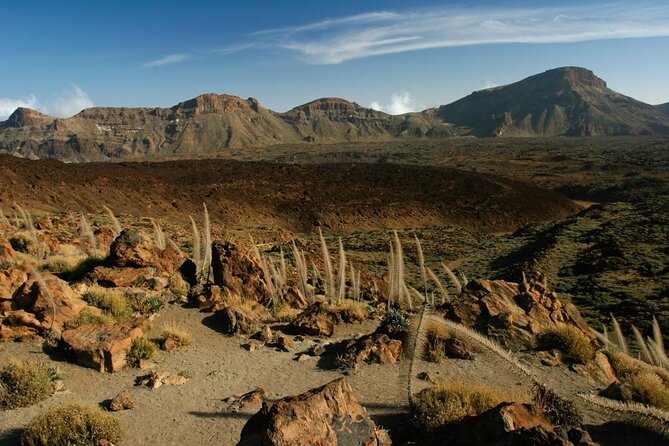
Teide National Park is popular for one simple reason: the night sky looks good here. The combination of Tenerife’s mountain setting and reduced light makes it much easier to spot stars—and sometimes the Milky Way with your bare eyes. That matters, because the best stargazing tours don’t just show you through glass; they teach you how to use your eyes first.
The natural surroundings also help. One thing I like about this kind of night tour at Teide is that the scenery isn’t something you have to “ignore” while you wait for the stars. You get the mountain atmosphere and the sky lesson at the same time, so the hour-and-a-bit feels like one continuous experience rather than a quick stop-and-go.
You can also read our reviews of more tours and experiences in Tenerife.
The 7:30pm start at Mines of San Jose (and why timing matters)
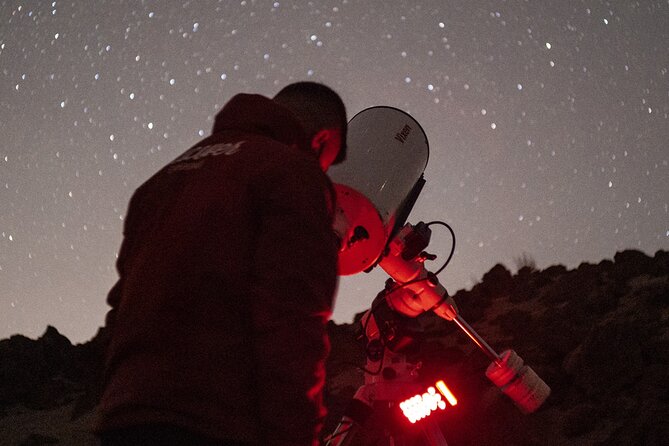
The tour meets at Mines of San Jose, 38300, Santa Cruz de Tenerife and starts at 7:30pm. Expect the evening to be part of the experience—darkening skies, then the real observing shift once the lights and your eyes adjust.
Here’s the practical part: transport isn’t included, so you’ll need your own plan to get there and back. The tour ends back at the meeting point, which is easy to remember, but it also means you should build buffer time so you don’t rush.
Also, plan for cold. Multiple reviews call out that it gets chilly during the presentation, even if you’re thinking “light sweatshirt weather.” Bring a warm jacket, and if you run cold, add extra layers. You’ll enjoy the show more if you’re not busy shivering through it.
How the astronomer guide teaches the sky (without making it feel like class)
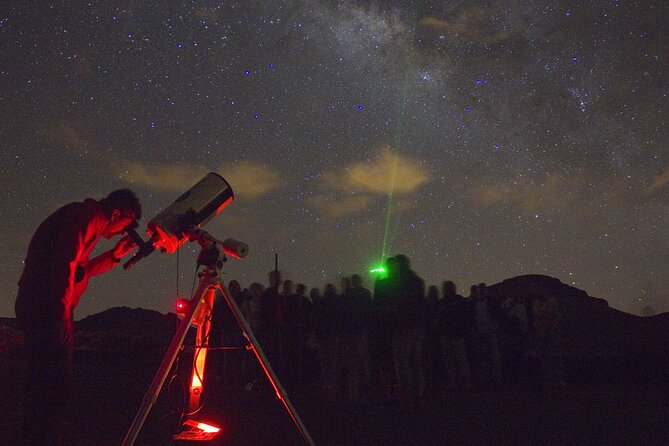
The session starts with a sky talk from Teide National Park. The guide walks you through what you can see with the naked eye—stars, planets, constellations, and interesting facts about the universe. Then you observe telescope targets selected for that night.
What I like here is the pacing: you’re not handed a telescope and told to guess what you’re looking at. You get orientation first. The guide uses tools like a laser to name targets and help you locate them quickly. That turns “random stars” into a map you understand.
This is also designed for mixed experience levels. The tour is suitable for people of all ages and for different levels of astronomy knowledge. That flexibility is helpful if you’re traveling with kids, friends who hate technical jargon, or someone who just wants a memorable night under the stars.
One caution: if you’re already an amateur astronomer with a strong background, you might find the explanations more basic than you expect. Still, the observing location and the guided pointing can make it worthwhile even if you know some of the basics.
Telescope time: seeing Saturn, Jupiter, the Moon, and nebulae
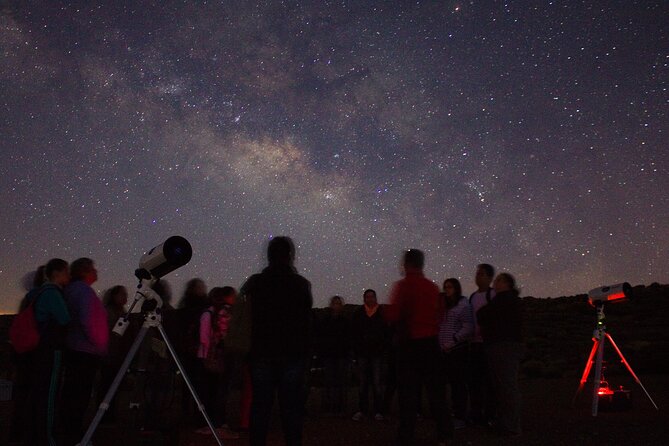
After the naked-eye explanation, the tour shifts into observing through telescopes. This is usually the part that clicks for people. You go from guessing which bright dot is which to seeing something with shape, detail, and that wow factor that’s hard to get from phone photos.
From the feedback, the most frequently loved views include:
- Saturn (often listed as a highlight)
- Jupiter
- The Moon
- The Andromeda Galaxy
- Nebulae through the telescope
- The Milky Way as a star field you can recognize without equipment
Your exact targets can vary by night. One review even mentions hoping for planets but missing the timing. That’s not a bad sign—it’s the reality of astronomy. The sky rewards patience and timing more than anything else.
A smart way to enjoy telescope time: listen closely to what the guide says before you look, then compare what you see at the telescope to what you just learned for the naked eye. It helps everything stick.
The astrophotography telescope: watching the view become an image
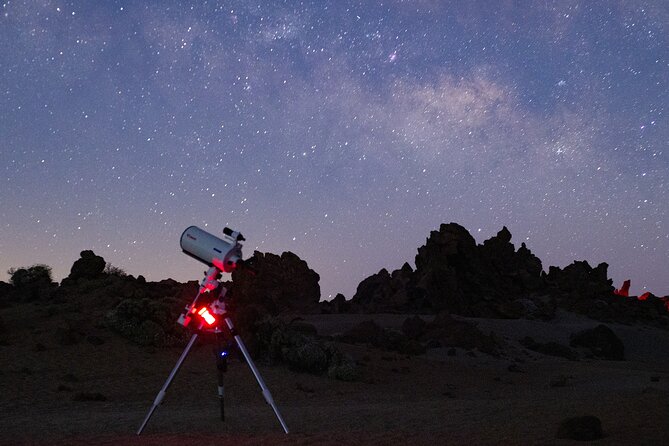
This tour includes an astrophotographic telescope. In plain terms, that’s for turning what you observe into images—so you don’t just get a memory in your head. You get a visual record that matches what you’re seeing at the eyepiece.
The tour data doesn’t spell out every detail of how those images are handled, but the intent is clear: use astronomy tech that goes beyond casual viewing. If you enjoy taking pictures, this is one of the reasons the experience feels more modern than old-school star parties.
If you’re traveling with teens or kids, the photo angle usually helps too. It turns stargazing into something interactive. You look, you learn, and you can connect the night sky to an actual output instead of only a blurry “I saw stars” recollection.
Price and value: what you get for $42.33 per person
At about $42.33 per person, this isn’t a cheap dinner-level add-on, but it also doesn’t try to be a premium private astronomy expedition. The value comes from what’s included for a short, focused block of time:
Included with the tour:
- Stargazing explanation at naked eye
- Telescope observation
- Use of an astrophotographic telescope for imaging
- A professional astronomical guide through Starlight Guides
- Insurance during the tour
- Admission ticket included for the session
Not included:
- Dinner
- Transport
That mix is pretty fair. You’re paying for a guided astronomy night at a prime observing spot, plus the equipment and guide time. If you’re already planning to be in Tenerife anyway, this is a straightforward way to “buy” access to dark-sky observation and guidance without needing your own telescope or astronomy setup.
What to wear and expect during a mountain night
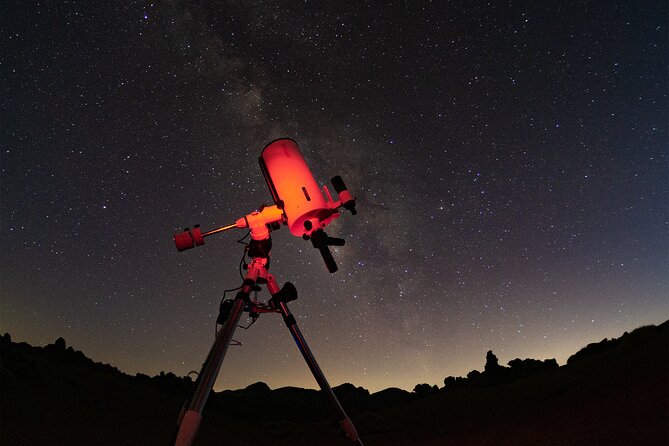
This is the part that most people underestimate. The Teide area can be cold after sunset, and multiple reviews specifically warn to dress warmer than you think. Don’t show up with only a sweatshirt.
A good strategy:
- Wear warm layers you can keep on during the presentation
- Bring a jacket you’d be comfortable wearing outdoors for a while
- If you feel cold easily, pack extra warmth (think scarf/hat/gloves style items if you have them)
The weather also matters. This experience requires good weather. If it’s canceled due to poor conditions, you’ll be offered a different date or a full refund. That’s exactly what you want in a stargazing product, because clouds and wind can ruin visibility quickly.
Who this Teide stargazing tour fits best
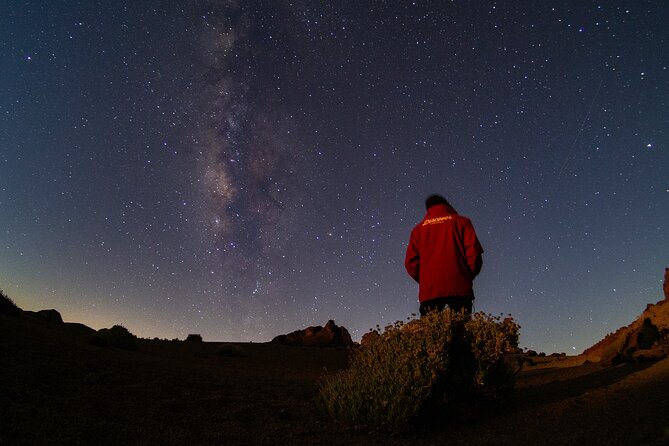
I’d put this tour on the “easy yes” list for:
- First-time stargazers who want direction, not guesswork
- Families (including kids), since it’s built to work across ages and knowledge levels
- People who like Q&A and want an astronomer guide to answer questions
- Anyone who wants to see the night sky from one of Tenerife’s top observation areas
It might be less ideal if:
- You’re already deep into amateur astronomy and crave advanced equipment sessions
- You’re coming with only one goal (for example, a specific planet on a specific night) and you don’t want the uncertainty that comes with real skies
For most visitors, though, the “naked eye first, telescope second” structure is the sweet spot. You walk away understanding more than you arrived knowing.
Should you book this Teide National Park stargazing tour?
If you want a guided, small-group stargazing night at Teide that’s built for beginners and families, I’d book it. The strongest reasons are the format and the guide-led flow: you learn the sky, you use tools like a laser to find targets, and then you get telescope views of famous objects people come for (Saturn, Jupiter, the Moon, and more).
Just go in with the right expectations. Dress for the cold, plan your own transport to Mines of San Jose, and accept that what you see depends on the night. If you can handle those two realities, you’ll likely end the evening with that rare feeling that the universe is both huge and instantly understandable.
FAQ
FAQ
How long is the Teide National Park stargazing experience?
It’s approximately 1 hour 20 minutes.
What time does the tour start, and where do we meet?
The start time is 7:30pm. The meeting point is Mines of San Jose, 38300, Santa Cruz de Tenerife, Spain.
Is admission to Teide National Park included?
Yes. Admission ticket is included in the tour.
What will I be doing during the tour?
You’ll start with an astronomy explanation using the naked eye, then you’ll observe interesting objects through telescopes. An astrophotographic telescope is also used.
What languages are available?
The tour is offered in English. Some reviews note that Spanish may be possible depending on the guide.
Is it suitable for children?
Yes, it’s suitable for people of all ages, and children must be accompanied by an adult.
What happens if the weather is bad?
This experience requires good weather. If it’s canceled due to poor weather, you’ll be offered a different date or a full refund.