REVIEW · CORFU TOWN
Taste of Corfu town
Book on GetYourGuide →Operated by DESTINYcfu Travel Agency · Bookable on GetYourGuide
Food turns Corfu Town into a story. A short, guided stroll where koum kouat and olive oil tastings do half the teaching, while the other half is the city’s layered history—Venetian, British, and everything in between. One note: since it’s mostly walking, you’ll want comfy shoes and a light rain layer if weather shifts.
I like how the tour mixes tastes with sights, so you don’t just see Corfu—you understand why it looks the way it does. I also like the focus on real local products, which makes the hour feel useful even if you’re only in town briefly. The only drawback I’d watch for is time: with just one hour, it can’t cover every corner in depth, so it works best if you want highlights plus flavor.
In This Review
- Key things I’d circle before you go
- Koum Kouat and Olive Oil: The taste-first way to learn Corfu Town
- Your 1-hour walking route through Corfu Town’s big icons
- Church of Saint Spiridon: why this stop is more than a landmark
- Liston and the Palace of Saint George and Michael: power, protection, and style
- Venice, Paris, and Valletta echoes: spotting copies in the streets
- The coffee and ice cream question when you only have one hour
- Price and value: what $35 gets you in a short, small group
- Languages, guide quality, and what to expect from the group pace
- Wheelchair accessibility and practical comfort tips
- Who this tour fits best (and who should skip it)
- Should you book the Taste of Corfu Town tour?
- FAQ
- How long is the Taste of Corfu Town tour?
- Where does the tour meet?
- How much does it cost?
- What tastings are included?
- Which sights are part of the tour?
- Is there a live guide, and what languages are offered?
- What’s the group size?
- Is the tour wheelchair accessible?
- Can I cancel for a refund?
- Is there a pay-later option?
Key things I’d circle before you go
- Koum kouat tastings that help you connect a snack to Corfiot life
- Olive oil tasting tied to the island’s everyday food culture
- Church of Saint Spiridon as a history anchor, not just a photo stop
- Liston and the grand-gentle feel of a Venetian-influenced streetscape
- Palace of Saint George and Michael to see power and protection in stone
- Spotting copies and art references that turn the streets into a living museum
Koum Kouat and Olive Oil: The taste-first way to learn Corfu Town
If you like travel where the senses do the heavy lifting, this is your kind of tour. Corfu Town can feel like a lot at once—streets, facades, churches, squares—but the tastings give you a simple starting point. Instead of collecting facts, you collect impressions: sweet fruit liqueur flavors, then a more savory, grounded taste through olive oil.
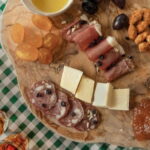
The tour includes a koum kouat tasting and an olive oil tasting, which is a smart combo. Koum kouat (a Corfiot specialty) gives you something personal and memorable, because it’s distinct from what most people eat at home. Olive oil, on the other hand, is the island’s everyday staple—so it helps you understand how Corfu’s food culture stays practical and local, not fancy and distant.
You’ll also get a guided thread that links what you’re tasting to where you are in the city. That’s the real value: the flavors aren’t random. They’re used to explain how Corfu became the kind of place where Italianate architecture, Greek traditions, and long foreign influences share the same streets.
You can also read our reviews of more tours and experiences in Corfu Town.



Your 1-hour walking route through Corfu Town’s big icons
This tour is designed to be compact: about one hour with a small group (up to 10 people). That short format is ideal if you’re visiting Corfu Town for a day, arriving on a cruise, or just trying to get oriented fast.
The meeting point is outside the hotel Arcadion. From there, you’ll walk through the most important parts of the center, with enough time to see landmarks without feeling rushed every five minutes. Since it’s a walking tour, you’ll want to plan for uneven pavement and a bit of uphill/downhill depending on the exact route your guide uses.
What makes the pacing work is that the stops aren’t just landmarks; they’re teaching moments. You’ll be pointed toward key city features like Liston, the Church of Saint Spiridon, and the Palace of Saint George and Michael, and you’ll learn why those locations matter historically. Even in an hour, you leave with a mental map that makes it easier to explore on your own afterward.
Church of Saint Spiridon: why this stop is more than a landmark
The Church of Saint Spiridon is one of those Corfu Town sights that people photograph because it’s famous—but the best part is understanding what you’re looking at. On this tour, the church is treated as a central piece of the island’s identity, tied to local devotion and long-standing community life.
Here’s how to get more out of the visit: slow down for details your guide points out, especially where you can connect the building to the broader timeline of Corfu. Even if you’re not a big church-history person, this stop can still work because it’s visually strong and historically relevant.
A quick practical tip: if you want the best photos, pay attention to the timing your guide suggests. Churches often have moments when entrances or interior access are limited, and you’ll get more value if you don’t rush your shots.
Liston and the Palace of Saint George and Michael: power, protection, and style
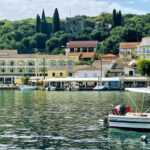
Two of the most enjoyable parts of Corfu Town to walk through are Liston and the area connected to the Palace of Saint George and Michael. Think of this as Corfu’s “old grandeur” layer—streets that feel formal, buildings that look like they were meant to impress, and spaces that shaped daily life for centuries.
Liston has that elegant, promenade-style feel that comes from long European influence. Your guide helps you see it with context: what sort of city it was, who these spaces were for, and how Corfu absorbed foreign tastes without losing its local character. It’s a great stop if you like architecture and urban design, because it’s a living streetscape you can still use today—walk it slowly and look up often.
Then there’s the Palace of Saint George and Michael, which adds another angle. Instead of focusing only on style, this stop connects to governance and protection—how power was organized and displayed. I like this pairing because it gives you balance: you see the social stage (Liston), then you see the institutional “why” behind the city’s layout.
If you’re the type who usually skips palaces because you think they’ll be dry, don’t. The value here is not just the building itself—it’s the way your guide ties the palace to the island’s long historical shifts.
Venice, Paris, and Valletta echoes: spotting copies in the streets
One of the coolest surprises in this tour is the way Corfu Town carries references to other cities. You’ll be shown spots where the city holds copies of famous architectural and art elements, and that turns the walk into a game you can play later on your own.
You’ll hear about a copy of the Rivoli of Paris, and you’ll also spot an icon Triumph of Venice linked to artists Tintoretto and Veronese. Even if you don’t recognize every art reference by name, your guide explains what to look for and why Corfu chose to echo these big cultural signals.
Another reference comes through with the copies of the palaces of Valletta. That’s a big deal for how you’ll read the city afterward: Corfu Town stops feeling like a random collection of old buildings and starts feeling like a deliberate, connected Mediterranean statement.
Why this matters for you: once you learn what the guide is pointing at, you’ll walk through the center after the tour with different eyes. You’ll spot the “why” behind the look of the streets, which makes independent sightseeing more satisfying.




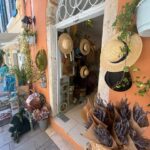
The coffee and ice cream question when you only have one hour
This tour includes time where you’ll get direction about excellent stops, including a spot associated with one of the best coffee experiences and a place known for top ice cream. You won’t have time to turn it into a long sit-down, but you’ll leave with smarter choices.
Here’s how I’d use this: after the tour, pick one—coffee or ice cream—based on what you actually crave, then go straight to the recommended area. If you try to do both immediately, you’ll feel rushed and you’ll miss the rhythm of the city.
Also, remember you’ll already taste koum kouat and olive oil during the walk. If you’re sensitive to strong flavors, consider choosing ice cream afterward if you want something cooler and sweet, rather than another intense taste right away.
Price and value: what $35 gets you in a short, small group
At $35 per person for about one hour, you’re paying for three things: a guide, concentrated orientation, and tastings. It’s not a bargain in the sense of “free wandering,” but it’s also not overpriced if you treat it like a smart entry ticket to Corfu Town.
The guide component matters because Corfu Town is full of details that are easy to miss if you’re just walking. Even with a map, you might not connect Liston, Saint Spiridon, and the Palace of Saint George and Michael into one coherent story. The guide’s role is to give you the connective tissue fast.
The tastings are the most practical value. You’ll sample koum kouat and olive oil, meaning you get something you can remember later—not just pictures. That’s especially useful if your trip is short and you’re trying to build a sense of place with limited time.
The small group (up to 10 people) is also a value point. In a group that size, your guide can keep the pace human and still handle questions without turning the tour into a lecture line.
Languages, guide quality, and what to expect from the group pace
The tour runs with a live guide in English, German, Slovak, Czech, and Italian. That’s a real quality-of-life factor. When you can understand the story clearly, you notice more details—especially in historic areas where the differences between periods can blur if the explanation is weak.
Guides have a reputation for being prepared and friendly. One guide named Nina stands out in the feedback as someone who combines strong city knowledge with good communication and a positive mood. On top of that, there’s mention of help finding a suitable time when weather looked changeable—so if you’re flexible but want to avoid wasted afternoons, this setup helps.
As for pace: it’s short, so expect steady movement. You’ll get time at stops, but this is not a sit-and-stare tour. It’s more like: look, taste, learn, move.
Wheelchair accessibility and practical comfort tips
This tour is wheelchair accessible, which is important in older city centers where sidewalks can be uneven. If you use a wheelchair, it’s worth confirming with the operator that your group’s specific route works well for your needs, but the activity is listed as accessible.
For everyone else, the biggest practical challenge is comfort. Plan for:
- walking on cobblestones or uneven surfaces
- short stretches of standing near sights
- quick transitions between stops
Wear shoes you trust, and if you’re traveling in shoulder seasons, bring a light layer. An hour passes quickly, but weather can still change how much you enjoy standing outside churches and squares.
Who this tour fits best (and who should skip it)
This tour is a great fit if you:
- have limited time in Corfu Town and want highlights
- love food-focused sightseeing (not just architecture)
- want a quick historical orientation for future self-guided walks
- enjoy small-group tours where the guide can adapt
It may not fit you as well if you:
- want a deep, hour-by-hour history lecture
- prefer wandering without structure
- dislike tastings and would rather spend the hour purely on buildings
If you’re more of a “slow museum” traveler, you can still enjoy this, but plan to follow up with your own longer explorations afterward. Think of this as the warm-up, not the whole workout.
Should you book the Taste of Corfu Town tour?
Book it if you want a fast, flavorful way to understand Corfu Town. The mix of koum kouat and olive oil tastings with major sights like Saint Spiridon, Liston, and the Palace of Saint George and Michael makes the hour feel earned. You’ll also leave with specific cultural references—copies of famous city features and art icons—that make the streets more interesting after you’re done.
Skip it only if you’re already sure you want a self-guided wandering day with no structure at all. In that case, you might be better off building your own route. But if you want value from time, this tour is one of the smarter ways to start.
FAQ
How long is the Taste of Corfu Town tour?
It lasts about 1 hour.
Where does the tour meet?
The meeting point is outside the hotel Arcadion.
How much does it cost?
The price is listed as $35 per person.
What tastings are included?
The tour includes koum kouat tasting and olive oil tasting.
Which sights are part of the tour?
Highlights include the Church of Saint Spiridon, Liston, and the Palace of Saint George and Michael.
Is there a live guide, and what languages are offered?
Yes. The tour has a live guide and is offered in English, German, Slovak, Czech, and Italian.
What’s the group size?
It’s a small group limited to 10 participants.
Is the tour wheelchair accessible?
Yes, it’s listed as wheelchair accessible.
Can I cancel for a refund?
Free cancellation is available up to 24 hours in advance for a full refund.
Is there a pay-later option?
Yes. You can reserve now and pay later.