REVIEW · SANTORINI
Santorini: Experience Akrotiri with a Licensed Tour Guide
Book on GetYourGuide →Operated by DIMA GEORGIA · Bookable on GetYourGuide
You can walk Santorini’s Bronze Age streets. Akrotiri is one of the world’s best-preserved prehistoric towns, buried by volcanic ash around 1600 B.C., and a licensed guide helps you decode what you’re seeing floor by floor.
I love how the tour turns the site into a real walking experience, with paved streets and squares plus the kinds of details you’d miss on your own. I also love the way Georgia uses tablet photos to show wall-painting scenes and how the buildings likely looked when they were whole.
One watch-out: the entrance fee (€20 per person) is not included, so your total cost rises once you add your group size (and transfers aren’t included either). Also, it’s a 70-minute walk through archaeological paths, so comfortable shoes matter.
In This Review
- Key things I’d plan around
- Meeting Your Licensed Guide at Akrotiri’s Entrance (and Starting Fast)
- 70 Minutes at Akrotiri: Why This Tour’s Length Works
- The Paved Streets and Squares: The City Layout Clicks
- Multi-Story Buildings: Kitchens, Toilets, and Everyday Life
- Built for Function: Spotting the Drainage System
- Wall Paintings, Explained with Tablet Photos
- How the Tour Connects Akrotiri to Atlantis Theories
- Why a Private Licensed Guide Makes Akrotiri Feel 10x Clearer
- Price and Value: What $198 Really Buys You
- Timing Tips: Getting the Most from a 70-Minute Walk
- Who This Akrotiri Tour Fits Best (and Who Might Skip)
- Should You Book the Akrotiri Experience With a Licensed Tour Guide?
- FAQ
- How long is the Akrotiri guided tour?
- Where do I meet the guide?
- Is the entrance fee included?
- Does the tour include skip-the-ticket line?
- What language is the tour guide?
- Is this a private tour?
- Is the tour wheelchair accessible?
- What should I bring?
- Are food and drinks allowed during the tour?
- What is the cancellation policy?
Key things I’d plan around
- Meet your guide at the site entrance (across from the cashier) and start smoothly with skip-line access
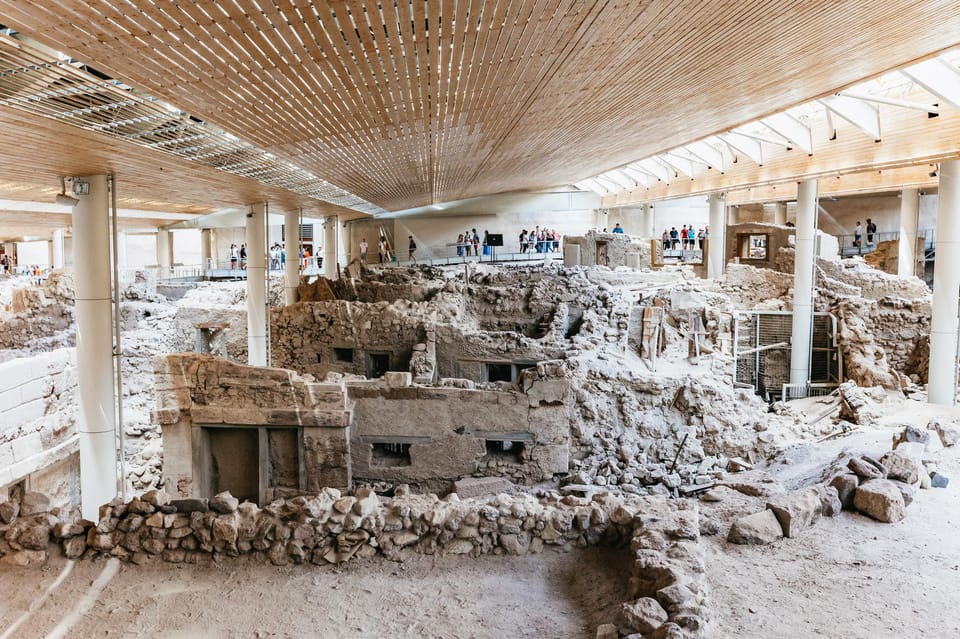
- A 70-minute guided circuit focused on how people lived: streets, squares, and multi-level building complexes
- Real “daily life” clues like kitchens, toilet facilities, and a drainage system
- Wall-painting context with photos on a tablet, so you understand what’s missing and why it matters
- Atlantis theories in plain language, connected to what researchers think they see at Akrotiri
- Private group pace, ideal for questions, kids, or history nerds who want time at each stop
Meeting Your Licensed Guide at Akrotiri’s Entrance (and Starting Fast)
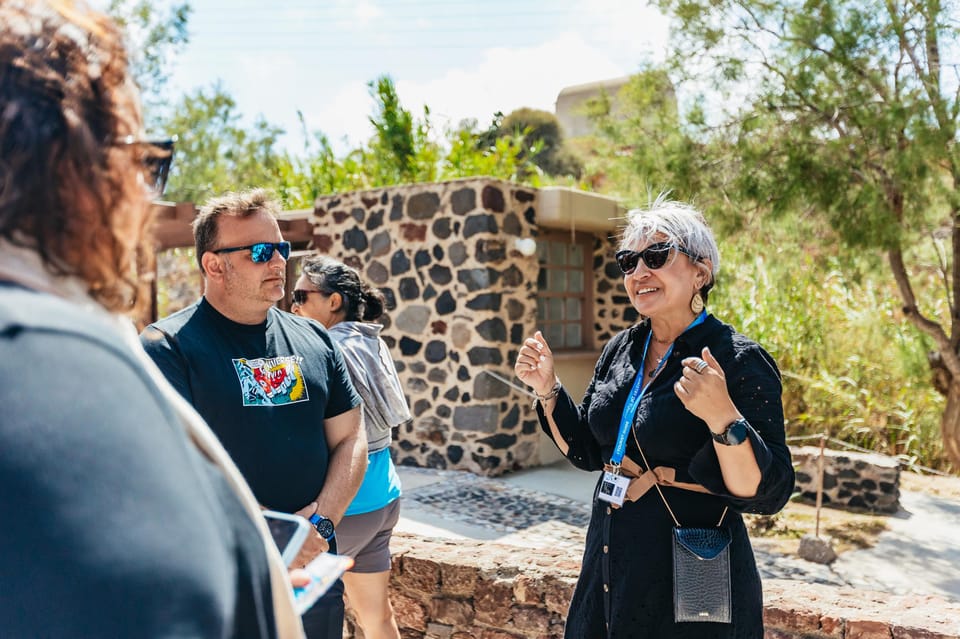
Akrotiri works best when someone helps you read it. That’s the value of starting right at the entrance with a licensed guide, grabbing your tickets, and walking in with a plan instead of staring at stone and hoping it makes sense.
Your meeting point is right at Akrotiri, across from the cashier. The format is a private guided walking tour in English, so you’re not stuck listening to a group shuffle through at someone else’s speed. And yes, the tour includes skip-the-ticket-line access, which is handy on busy days when time on Santorini feels precious.
If you want a smoother visit, bring a camera (that’s all they ask for), and plan to arrive with a little breathing room. You’ll be standing and walking in and around archaeological paths, so it helps to be ready to move.
You can also read our reviews of more tours and experiences in Santorini.



70 Minutes at Akrotiri: Why This Tour’s Length Works
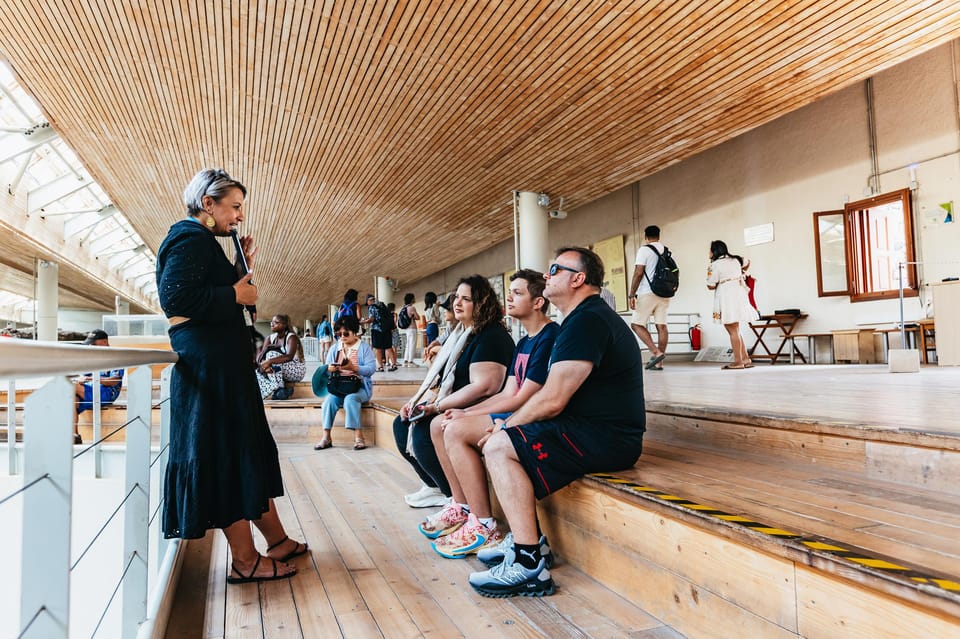
The tour is listed at 70 minutes (with a 75-minute duration window on the activity info). That’s a sweet spot for Akrotiri because the site is big enough that you can’t truly “take it in” without focus, but not so long that your attention fades or you feel rushed.
This is also the kind of visit where pace matters. In real life, heat and walking are a thing on Santorini. A private guide can slow down when you need it, linger where you care, and move on when you’re just trying to cover the essentials. One family-style tip from the experience format: Georgia is used to guiding different ages, including kids, and she’s willing to answer questions instead of brushing them off.
You’re wheelchair accessible, which is a major plus if mobility is limited. Still, remember: access at archaeological sites can vary by path and terrain. It’s best to go in expecting a walk with some uneven footing, even when the tour is accessible.
The Paved Streets and Squares: The City Layout Clicks
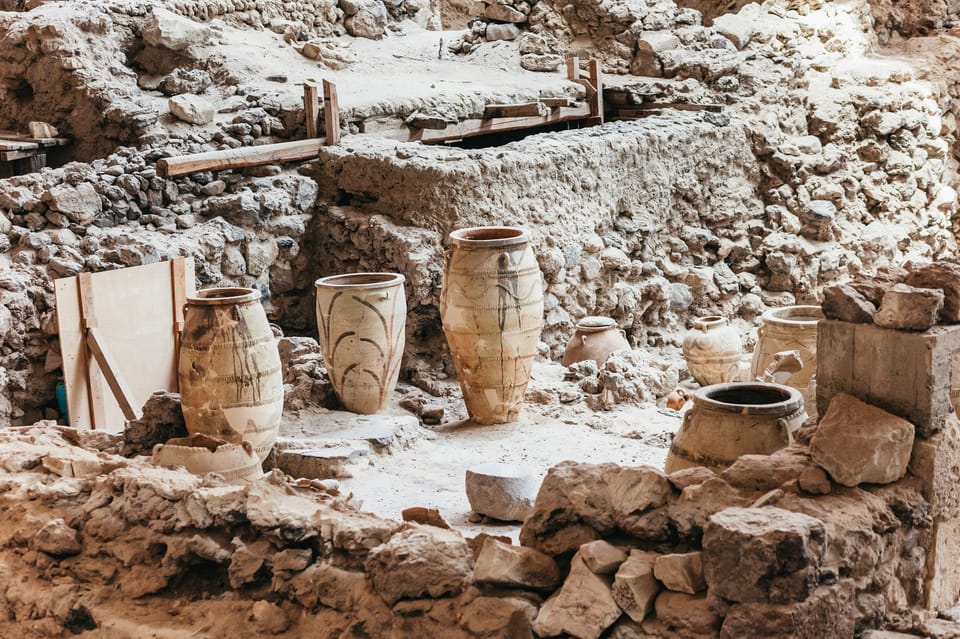
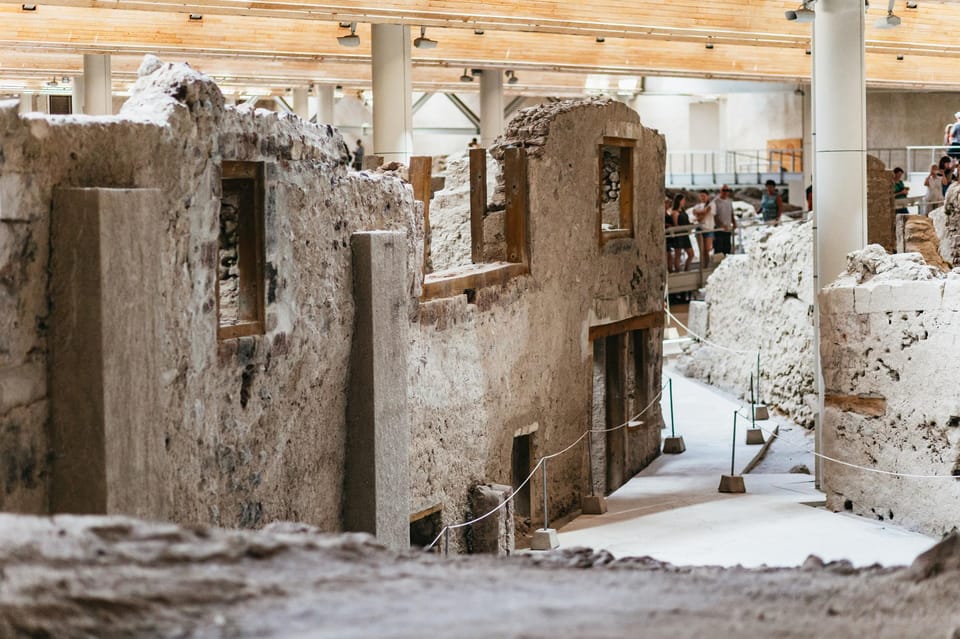
Akrotiri is famous for being buried and preserved after a major eruption, and you feel that in how intact the “streetscape” can be. On this tour, you don’t just look at ruins—you follow the logic of the settlement.
A guided visit helps you understand the paved streets and squares as more than pretty layout lines. They’re clues to how people moved, met, and organized daily life. When you’re standing on those paths, the guide can point out how the space likely functioned and how the built areas relate to each other.
This is one of the most satisfying parts of the experience: you get the sensation of a real town. Not a museum display. Not a pile of stones. A place that once felt busy and practical.
Multi-Story Buildings: Kitchens, Toilets, and Everyday Life
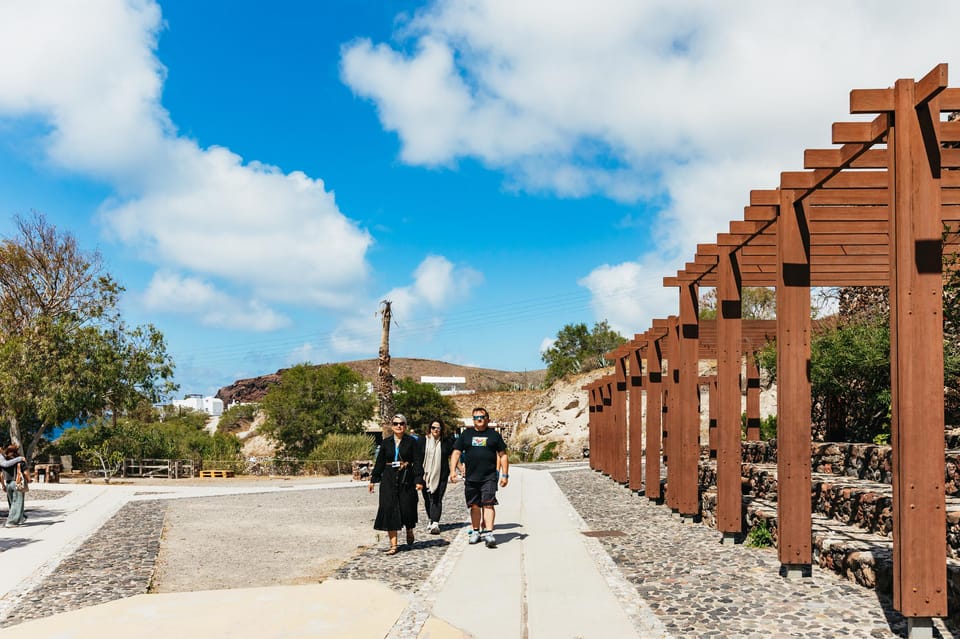
Akrotiri isn’t only about big walls and dramatic views. It’s about how ordinary needs were handled. That’s why I’d treat the “interiors” portion as the heart of the tour.
You’ll walk through remains of higher-building complexes, including areas that reflect multi-story design (the tour notes mention about 2–3 stories). Your guide shows how rooms may have worked and what kinds of spaces were present—like kitchens and toilet facilities. Those aren’t abstract details. They let you picture life in a Bronze Age city that was surprisingly organized.
One person’s wow moment on this kind of visit is often the same theme: urban planning. The tour format explicitly includes the drainage system, too. Seeing that kind of infrastructure at a prehistoric site is a jolt. It’s also the difference between “cool ruins” and a visit that makes you think: how did people coordinate work, water, and daily routine?
Built for Function: Spotting the Drainage System
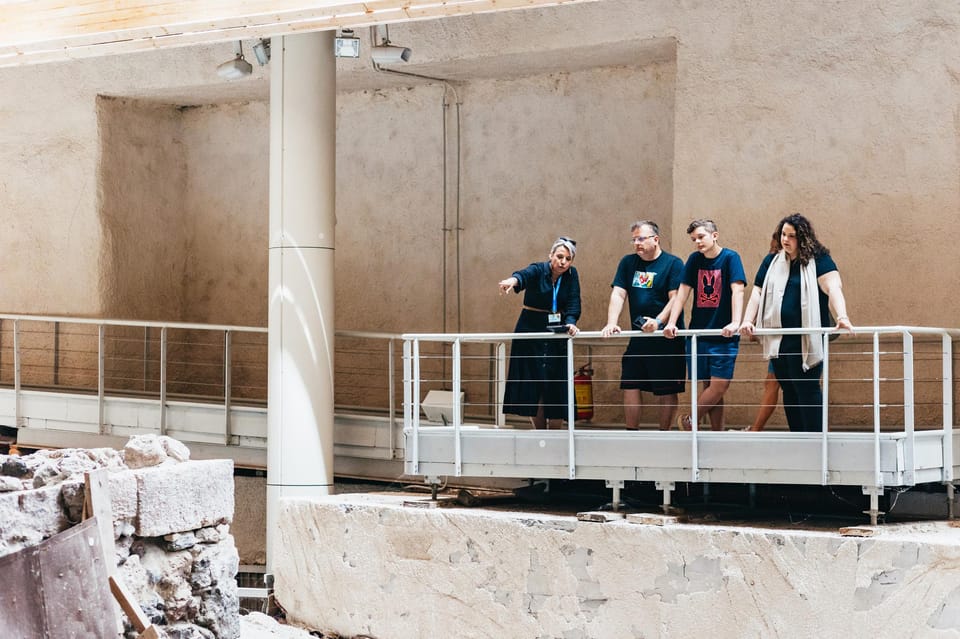
The drainage system is a standout teaching point here, and it’s not just trivia. It changes how you see everything else.
When you understand that runoff and waste management were already part of the planning, you read the surrounding streets and built structures differently. You start connecting the dots between where buildings stood, where movement happened, and how the city handled water. That’s the kind of “thinking like a researcher” skill a guide can help you practice in a single visit.
If you’ve ever walked through ruins and felt stuck in tourist-mode, this is how the guide pulls you out of that. You start noticing patterns—because someone trained to interpret them is pointing them out.






Wall Paintings, Explained with Tablet Photos
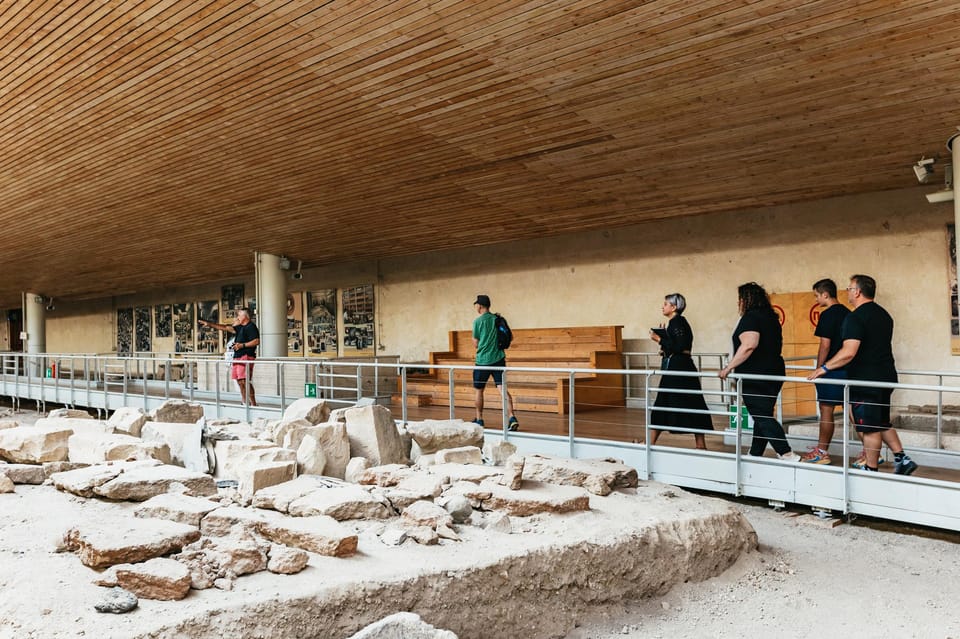
A lot of Akrotiri’s charm comes from what survived—but also from what didn’t. Many of the original painted surfaces are no longer intact where you can see them in place.
That’s why the guide’s tablet photos matter so much. Georgia uses images to show the original wall-painting scenes that were excavated and preserved elsewhere. That helps you understand the atmosphere the buildings once had. Even if the colors aren’t standing in front of you today, the story becomes visual.
It also helps with one common visitor problem: placards can feel vague. With the photos added, you’re comparing the excavated evidence to what the painted walls likely looked like as a living interior. You’re not just reading labels—you’re building a mental picture.
How the Tour Connects Akrotiri to Atlantis Theories
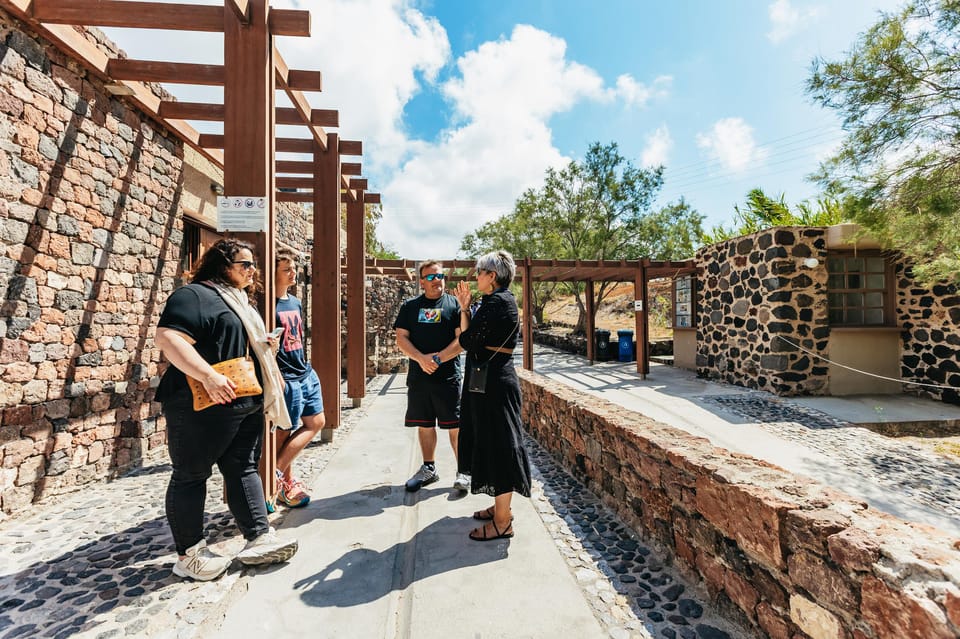
If you’ve heard the Atlantis story before, this tour gives you a structured way to talk about it. You’ll hear about theories that connect Akrotiri with the lost city myth.
Now, it’s important to stay grounded here. This is about theories, not a definitive smoking gun. Still, even framed as speculation, the discussion is useful because it forces you to think about evidence: what researchers notice, what they argue over, and how people connect archaeology with mythology.
For me, that makes the tour feel more honest and more fun. You’re not being sold a single storyline. You’re learning how ideas form—based on what’s actually found.
Why a Private Licensed Guide Makes Akrotiri Feel 10x Clearer
Akrotiri can be stunning even without help. But the reason people keep recommending a guide is simple: the site is layered. You’re walking in a preserved snapshot, but you’re also standing amid partial evidence.
A licensed guide bridges the gap between what you can physically see and what it likely meant. That includes:
- how society was organized
- how people lived their daily lives
- how buildings may have been used
- how excavation findings connect to what’s missing now
You also get a guided question-and-answer rhythm. Georgia encourages discussion and is willing to answer questions instead of sticking to a script. In practice, that means you can stop at a wall, building plan, or infrastructure detail and ask what it is, why it matters, or how scholars interpret it.
This also pairs well with a visit to other Santorini history stops. One useful planning note: some history-minded visitors do well seeing the prehistoric context first, such as museum time in Fira, so the Akrotiri walk has more background on day one.
Price and Value: What $198 Really Buys You
The price shown is $198 per group up to 1, and it includes a private tour with your guide. That’s not a bargain price in the way a mass-audio tour can be. But for Santorini’s busiest sights, you’re paying for three things you can’t easily buy with self-guided time:
1) Interpretation in real time
You get on-the-spot explanations of streets, squares, room purposes, and the drainage system.
2) Context for missing pieces
Georgia uses photos of wall paintings so you understand what you can’t see intact.
3) Private pacing
You’re not negotiating with a group’s pace, and you can spend extra time where your brain wants it.
Then there’s the extra cost to budget: the entrance fee is €20 per person and is not included. Also, transfers aren’t included, so if you’re far from Akrotiri, transportation may add to your plan.
When does this feel like a good deal? If you value understanding over check-the-box sightseeing. If you’re a couple, a small family, or anyone who likes asking questions, a private guide can turn the price into a meaningful trade: money for clarity.
Timing Tips: Getting the Most from a 70-Minute Walk
This tour’s biggest “timing lever” is when you go. One experience detail that came up: an early morning private slot (an 8:30am start) can mean more space at the site, with long quiet stretches.
Even if you don’t hit that exact time, here’s what to do:
- Choose the earliest slot you can manage if you dislike crowds.
- Treat the visit as a walking priority on a day when your legs and attention are fresh.
- Keep your camera ready, since the guide’s explanations are often tied to what you’re standing near.
Also, plan around the fact that opening hours can change. Your exact tour time is confirmed by email by the activity provider, so don’t assume your schedule until you get that message.
Who This Akrotiri Tour Fits Best (and Who Might Skip)
This private licensed tour is a strong match if you want to:
- understand how the Bronze Age city functioned, not just photograph it
- see kitchens, toilet facilities, streets, squares, and drainage in context
- hear how wall paintings connect to excavated evidence
- explore Atlantis-related theories as ideas, not folklore marketing
- travel with kids or mixed ages and need room for questions
It may be less of a fit if you:
- have limited mobility and you know archaeological paths can be slow for you
- prefer a totally self-paced visit with no structured walking stops
- only want the broadest overview and don’t care about interpretation details
But for most people, the “private + guide + 70 minutes” formula is the right amount of effort. It’s enough time to learn the site’s logic without turning it into a long slog.
Should You Book the Akrotiri Experience With a Licensed Tour Guide?
If Akrotiri is on your Santorini to-do list, I’d seriously consider booking this style of tour. The price only feels high if you assume you’ll get the same understanding on your own. You won’t. The guide’s explanations—especially about everyday life, drainage, and wall paintings shown via tablet photos—are what turn ruins into a believable snapshot of a real town.
Book it if you like asking questions, if you want the city layout to make sense, or if you want your visit to feel guided without being rushed. Skip it only if you truly prefer wandering without structure and you’re comfortable interpreting what you see with minimal help.
Either way, put Akrotiri high on your list. Few places let you walk among a prehistoric city that’s still readable centuries later.
FAQ
How long is the Akrotiri guided tour?
The guided walking tour lasts about 70 minutes, with the activity showing a 75-minute duration window.
Where do I meet the guide?
Meet your guide at the entrance of the Akrotiri archaeological site, across from the cashier.
Is the entrance fee included?
No. The entrance fee is €20 per person and is not included.
Does the tour include skip-the-ticket line?
Yes, skip-the-ticket line is included.
What language is the tour guide?
The live tour guide is English.
Is this a private tour?
Yes. It’s a private group tour.
Is the tour wheelchair accessible?
Yes, the tour is wheelchair accessible.
What should I bring?
Bring a camera.
Are food and drinks allowed during the tour?
Food and drinks are not allowed.
What is the cancellation policy?
Free cancellation is available up to 24 hours in advance for a full refund.