REVIEW · CRETE
Rethymno: Olive Oil Tasting with Cretan Food Pairing
Book on GetYourGuide →Operated by Oliving in Crete · Bookable on GetYourGuide
Mosquito season or not, this olive tasting hits. I love the hands-on way you taste four olive oils, then compare them side by side, and I love the Cretan food pairing that teaches what works and what doesn’t. One drawback to plan for: the outdoor setting can mean serious mosquitoes if you skip insect repellent.
You’ll spend your time under the olive trees in a monumental grove that’s been around for centuries—plus a slow walk through peaceful spots like the holy Gethsemane Garden. The guide keeps the story practical: how you taste, what you should look for, and how olive oil fits into daily Cretan cooking and culture.
Logistics are straightforward once you find the meeting point. You meet your guide in front of the Valide Cooking Activities Building in Rethymno, and the group is kept small (up to 8), with English/French/Greek guidance—ideal if you want calm, personal attention instead of a crowd.
In This Review
- Key Things to Know Before You Go
- Olive Oil in a 2,000-Year Grove: The Setting That Makes It Click
- Getting There: Meeting Point at Valide Cooking Activities Building (And Why It Matters)
- The Walk Through the Grove: More Than Pretty Photos
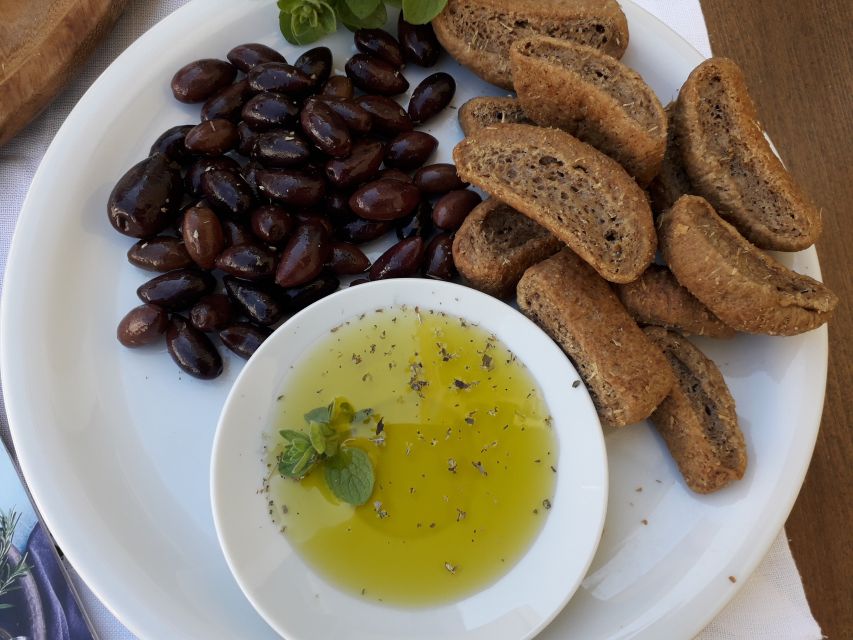
- The Tasting Table: How the Four Olive Oils Teach You to Notice Differences
- Food Pairing With Cretan Plates: The Lesson Hiding in Plain Sight
- Harvest, Extraction, and High-Quality Olive Oil: What You Should Expect to Learn
- Drinks and Courses: Why the Included Menu Feels Like Part of the Lesson
- Group Size and Guide Style: Why Small Feels Better Here
- Price and Value: Is $107 Worth It?
- Practical Tips That Make the Experience Easier
- Who This Olive Oil Tasting Is Perfect For
- Should You Book This Olive Oil Tasting With Cretan Food Pairing?
- FAQ
- How long is the olive oil tasting experience?
- How many olive oils will I taste?
- What food and drinks are included?
- Where do I meet the guide?
- Is transportation included?
- What languages is the tour guide available in?
- Is the group small?
- Is the activity wheelchair accessible?
Key Things to Know Before You Go
- Four olive oils, tasted in order, so you can actually learn the differences rather than just sample blindly
- Food pairing that teaches by contrast, showing how one oil can taste amazing with one bite and wrong with another
- A 2,000-year-old grove setting, including a walk through areas like the holy Gethsemane Garden
- Harvest and extraction explained, with practical tips on choosing and using quality olive oil
- Family-style hospitality in the shade, and you might even spot friendly animals like sheep, goats, or kittens
- Bring insect repellent, because mosquitoes can turn a relaxing tasting into an itchy sprint
Olive Oil in a 2,000-Year Grove: The Setting That Makes It Click
There’s tasting, and then there’s tasting that happens under olive trees that have been producing for longer than most countries have existed. This experience leans hard into the setting, and that matters because olive oil is sensory before it’s scientific.
You’re in an olive grove described as monumental and around 2,000 years old, with the vibe of a quiet family property rather than a staged show. The guide leads you around the grounds first, and that gives you context before the tasting table. It’s a simple trick: get your senses in the right place, then start sampling.
One more practical benefit: the experience is mostly outdoors in shaded areas. You’re not stuck in a hot room, and you get that “slow down” feeling that makes people remember the food and flavors later.
You can also read our reviews of more tours and experiences in Crete.


Getting There: Meeting Point at Valide Cooking Activities Building (And Why It Matters)
The whole day is built around one key detail: where you meet. You start by meeting your guide in front of the Valide Cooking Activities Building, then you’ll drive directly to the olive oil grove.
Parking is nearby: there’s a free parking area at the football stadium, opposite the Valide building. If you’re coming by taxi, you’re usually fine—but if you’re trying to wing it without navigation, you might lose time at the start. I’d treat it like a timed museum ticket: arrive a bit early, confirm the exact entrance area, and let the guide handle the rest.
Also, the tour doesn’t include requested transfers. If you’re staying outside Rethymno or you want to avoid juggling rides, plan your return transportation ahead of time. The activity ends back at the same meeting point.
The Walk Through the Grove: More Than Pretty Photos
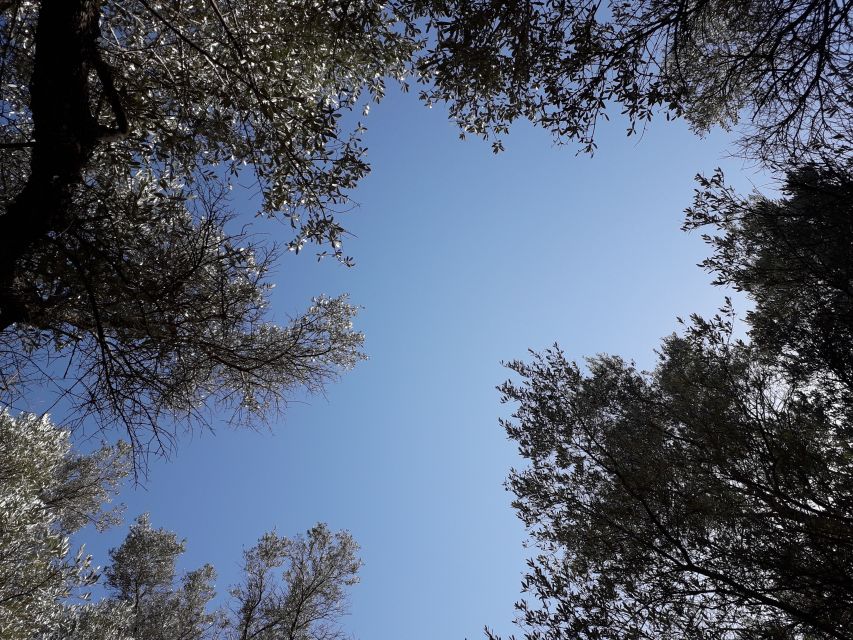
Before you sit down to taste, you walk. That matters more than it sounds.
You’ll stroll around calm olive groves and learn about olive oil’s role in Cretan life across generations. The walk includes areas such as the holy Gethsemane Garden, which adds a sense of place and story without turning the event into a lecture hall.
This is also where the tone sets. The group is small, so the guide can point out details, answer questions, and keep things moving at a comfortable pace. You’re not sprinting between stops; you’re learning while you’re walking, so the tasting feels like the next step—not a random sit-down activity.
Depending on the season and the farm setup, you might see animals around the property. One of the charm points people mention is that the grove can have sheep and goats, and even friendly kittens. That kind of lived-in atmosphere is part of the value: it feels like you’re visiting a working landscape, not just a photo spot.
The Tasting Table: How the Four Olive Oils Teach You to Notice Differences
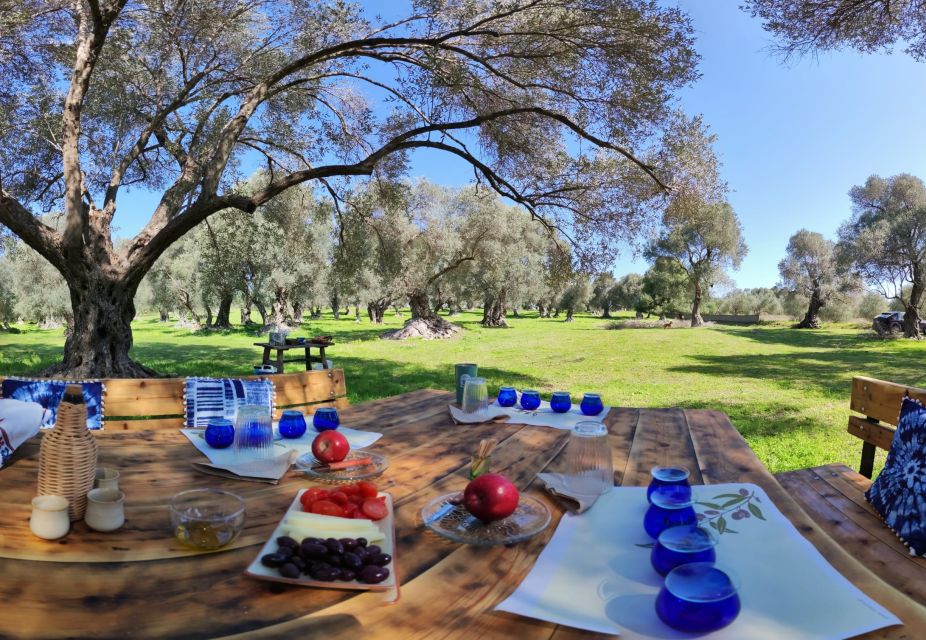
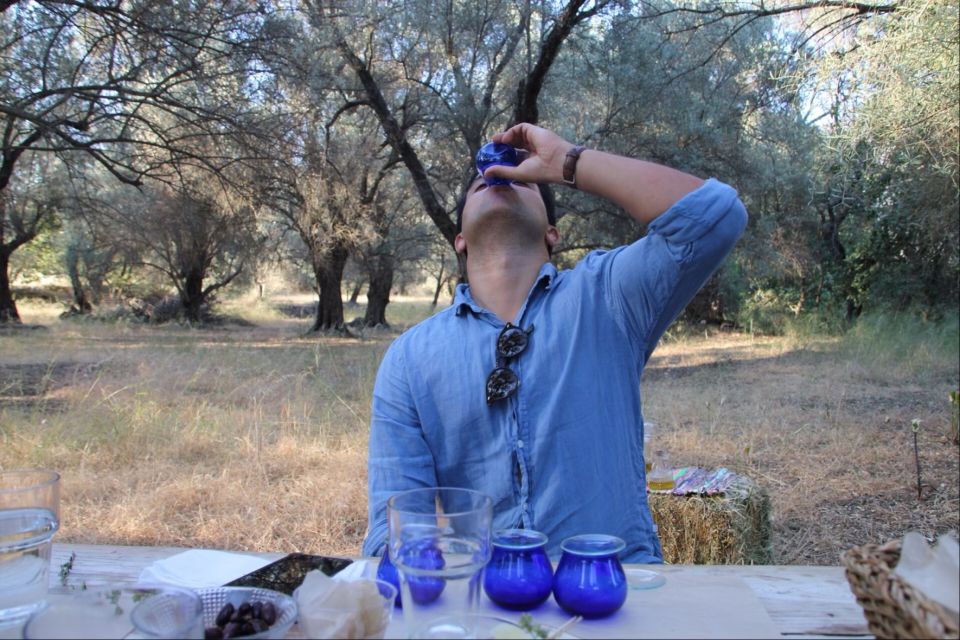
This is the heart of the experience. You sit down at a tasting table in the shade and taste four different olive oils. The guide explains how to taste them, not just how to swallow them.
They also walk you through what to look for when choosing olive oil, and how olive oil changes with use—so by the time you’re done, you’re not only “familiar with olive oil,” you’re more likely to buy a better bottle and use it in ways that make sense.
Here’s what the tasting format does for you:
- Tasting multiple oils in a row helps your palate adjust fast.
- Comparing them side by side makes flavor notes easier to catch.
- Learning how to preserve and handle olive oil means you’ll understand why quality in a bottle doesn’t always survive being stored badly.
What you get from a structured tasting like this is confidence. Instead of grabbing the label that looks pretty, you’ll know what questions to ask and what qualities matter for flavor and cooking.
Food Pairing With Cretan Plates: The Lesson Hiding in Plain Sight
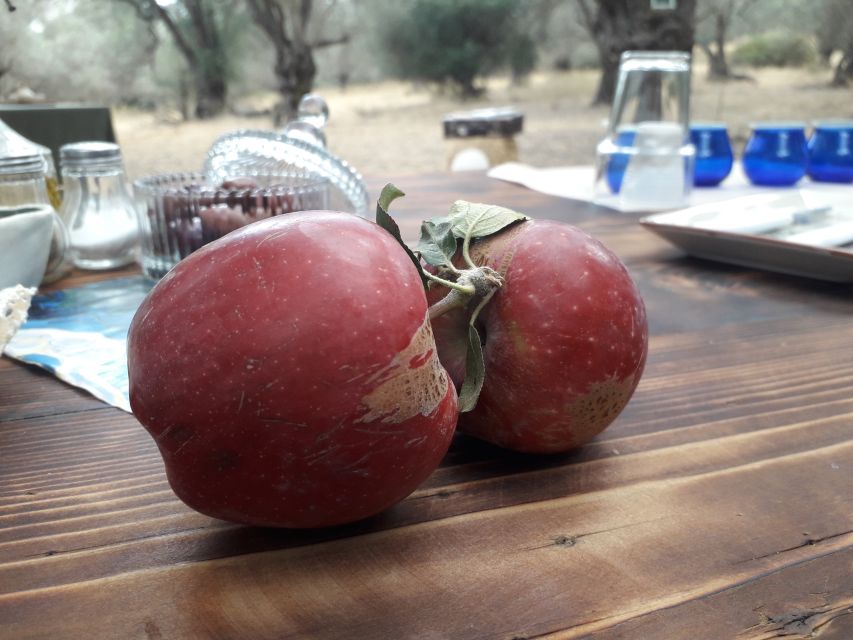
The tasting isn’t the only meal component. You’ll also do food pairing with more olive oils during the experience, and that’s where the training really sticks.
Olive oil isn’t one flavor. It behaves differently depending on the oil’s character and what’s on your plate. This tour turns that into a practical lesson: you taste oils alone, then you see how the same oil can taste wonderful with some bites and not so great with others.
You’ll get a 4-course degustation menu built around pairing. It’s designed for learning, but it also stays fun because the food is the delivery system for the flavors you just practiced identifying.
Vegetarian diners are supported as well—some groups note vegetarian options were offered—so it’s a good fit if you prefer to avoid meat while still wanting the full pairing menu.
And yes, the “why” behind pairing is exactly what you’d use back home. Once you’ve felt how oils interact with food, you start thinking like a cook: match oil to dish, don’t just pour whatever is closest.




Harvest, Extraction, and High-Quality Olive Oil: What You Should Expect to Learn
One of the best parts of the experience is that it doesn’t stop at flavor. You get explanations about harvesting and extraction and what makes high-quality olive oil in Crete.
This gives you useful context for shopping. When you know how olives are harvested and how extraction works, you’re more likely to understand why olive oil tastes the way it does and why some bottles hold flavor longer than others.
A balanced note: if you’re hunting for a highly technical, step-by-step milling explanation, you might find the focus leans more toward tasting, pairing, and practical guidance than a full behind-the-scenes production walkthrough. Still, the tour covers the basics you need to make smarter choices and cook with confidence.
Drinks and Courses: Why the Included Menu Feels Like Part of the Lesson
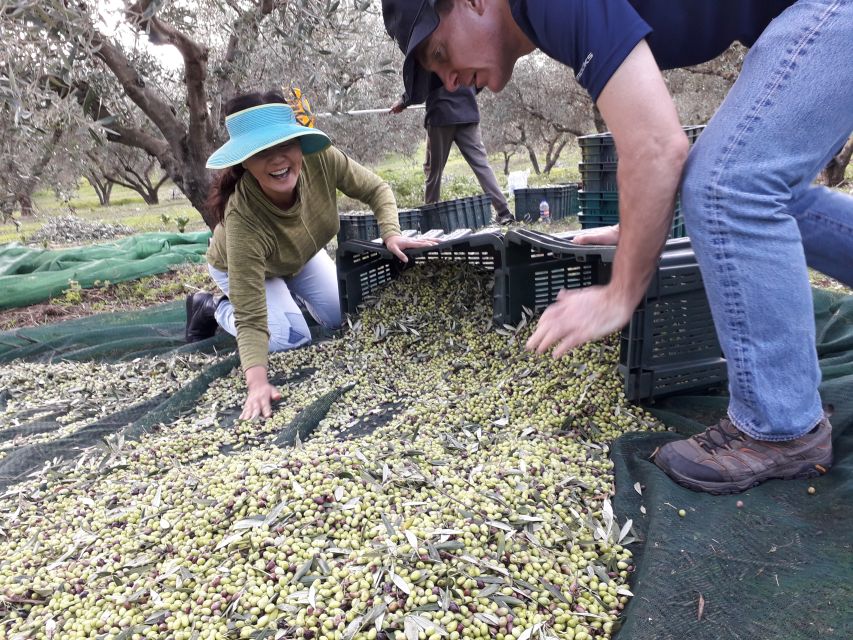
Included with the tour are water, soft drinks, and local spirits, plus the 4-course degustation menu pairing with different olive oils.
That combination helps in two ways. First, you’re not stuck managing thirst or ordering extra food on the spot. Second, the drinks and courses keep the event paced like a meal, not like a classroom.
A 3-hour format also means you get enough time to taste, eat, and ask questions, without feeling trapped for a whole evening. It’s a sweet spot for most people who want something meaningful without losing the rest of the day.
Group Size and Guide Style: Why Small Feels Better Here
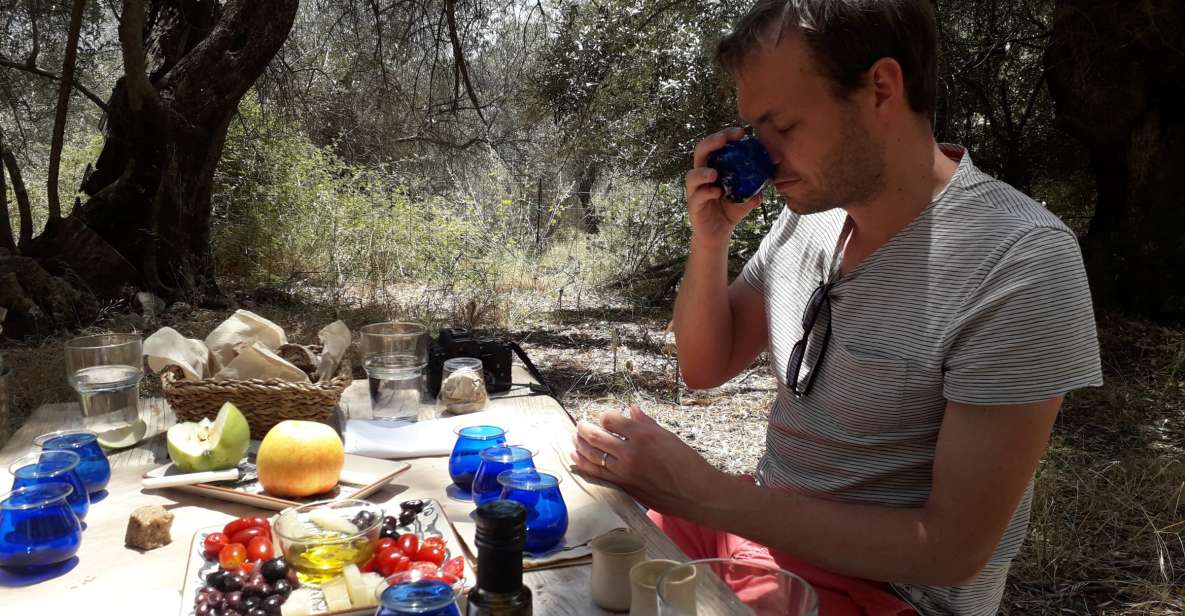
The group is limited to 8 participants, with a live guide available in English, French, and Greek. A small group matters for this kind of tasting event because it’s interactive—you want to hear guidance clearly, and you want room to ask about what you’re noticing.
People who attend often mention the host by name, Aspassia, who’s described as warm, friendly, and informative. That kind of hosting makes the difference between tasting as a performance and tasting as a conversation.
If you’re the type who likes to ask questions while you eat, this setup is perfect. You get time to connect the flavors to the story the guide is sharing.
Price and Value: Is $107 Worth It?
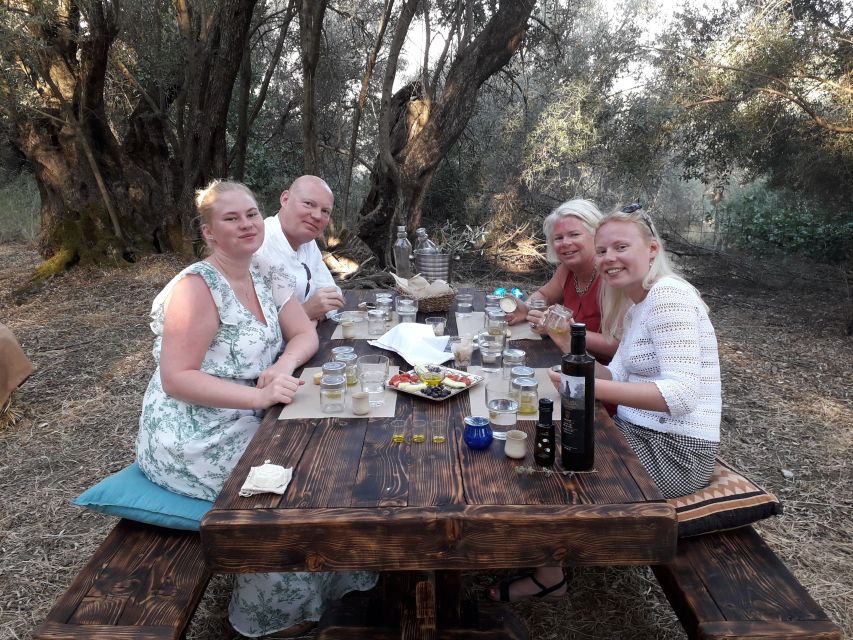
At $107 per person for about 3 hours, the price isn’t low—but the inclusion list is what makes it feel fair.
You’re getting:
- Four olive oils tasted in a guided session
- A 4-course degustation menu paired with olive oils
- Water, soft drinks, and local spirits
- A guided walk around a historic grove setting (around a 2,000-year property context)
- Tips on how to taste, preserve, choose, cook, and fry olive oil
If you tried to recreate this yourself in Rethymno, you’d pay for transportation, a guided tasting (if you find one), and then you’d still need the paired meal component. Here, the pairing is built into the experience, so you’re not just buying food—you’re buying lessons you can use.
If your travel budget is tight, this may be a splurge. But if you love food, olive oil, or cooking in a hands-on way, it’s the kind of activity that tends to feel like a highlight because it gives you real takeaways.
Practical Tips That Make the Experience Easier
These small things can make a big difference outdoors.
Wear comfortable shoes. You’ll be walking around the grove before you sit down. Bring a sun hat and a jacket for comfort—outdoor shade can feel cooler than you expect.
Most importantly: bring insect repellent. Mosquitoes were a repeated issue for people who attended, especially in the mid-October window. If you ignore that advice, the tasting can become a game of swatting.
If you’re staying outside Rethymno or without a car, plan transport early. The tour includes a drive from the meeting point to the grove, but it doesn’t include requested transfers. Taxis are doable; your main goal is to arrive on time at Valide so the rest of the timing stays smooth.
Who This Olive Oil Tasting Is Perfect For
This experience is ideal if you:
- Want a food-focused activity that teaches you how to think about flavor
- Love olive oil and want a practical way to buy better bottles
- Prefer small-group, calmer tours in a real working grove
- Enjoy pairing food and drink rather than just touring sights
It’s also a good choice for people who want something different from the usual “see old town, take photos, repeat” routine. This is a lived-in craft story with actual taste practice.
Should You Book This Olive Oil Tasting With Cretan Food Pairing?
Yes, I’d book it if you want a guided, hands-on olive oil experience that blends history, tasting skills, and real Cretan food pairing in a quiet grove setting. The value comes from the structure: four tastings, then meals that test what you learned.
I’d hesitate only if you’re extremely sensitive to mosquitoes and you’re unwilling to bring repellent, or if you want a very technical factory-style extraction walkthrough. In most cases, the combination of learning + tasting + included meal makes it feel worth the $107 for a 3-hour outing.
FAQ
How long is the olive oil tasting experience?
The experience lasts about 3 hours. Starting times vary, so it’s best to check availability for the schedule.
How many olive oils will I taste?
You’ll taste four different olive oils during the tasting session.
What food and drinks are included?
You get a 4-course degustation menu with olive oil pairings, plus water, soft drinks, and local spirits.
Where do I meet the guide?
Meet your guide in front of the Valide Cooking Activities Building. After that, you’ll drive directly to the olive oil grove, and the tour ends back at the same meeting point.
Is transportation included?
No. Requested transfers are not included, so you’ll want to arrange your own ride to the meeting point.
What languages is the tour guide available in?
The live guide is available in English, French, and Greek.
Is the group small?
Yes. It’s a small group with a limit of 8 participants.
Is the activity wheelchair accessible?
Yes, the activity is wheelchair accessible.