REVIEW · MOOREA
Polynesian culinary experience
Book on Viator →Operated by Food&CookLab Tahiti-Moorea · Bookable on Viator
Smell the pineapple. Then cook your way through Polynesian food and culture in Moorea’s Paopao Valley with Audrey and Stevenson. I especially love the hands-on teaching in a real working food space, and the way you learn what’s local and why—plant by plant, sauce by sauce. One thing to consider: this experience is in an outdoor, valley setting, so plan for sun and heat, and note there’s no air-conditioned vehicle included.
This is a 3 hours 30 minutes, private culinary class in professional workshop spaces next to a production laboratory, surrounded by gardens. You’ll work, taste, and then sit down to lunch together—coffee or tea and snacks are included, and you leave with recipes to keep the flavors going at home.
In This Review
- Key Highlights at a Glance
- Paopao Valley Turns a Class Into a Real Place
- Food&CookLab Moorea: Where Audrey and Stevenson Teach by Doing
- What You Actually Cook: Poisson Cru, Tuna, and Banana-Leaf Techniques
- Garden Learning: Plant Identification and Local-Season Thinking
- Lunch: The Farm-to-Table Meal You Share Together
- Value Check: Is $99 Worth It in Moorea?
- Logistics That Matter: Start Time, Location, and Private Time
- Who Should Book This (and Who Might Skip It)
- Should You Book This Polynesian Culinary Experience?
- FAQ
- What time does the Polynesian culinary experience start in Moorea?
- How long is the experience?
- Where do I meet for the tour?
- Is this a private activity or a group tour?
- What’s included in the $99 per-person price?
- Are alcoholic beverages included?
- Does the experience include an air-conditioned vehicle?
- Are recipes provided?
- What dishes might we prepare during the class?
- What is the cancellation policy?
- Are service animals allowed?
Key Highlights at a Glance
- Paopao Valley setting and pineapple fields make the food lesson feel grounded and real
- Audrey and Stevenson guide you through both cooking and cultural context
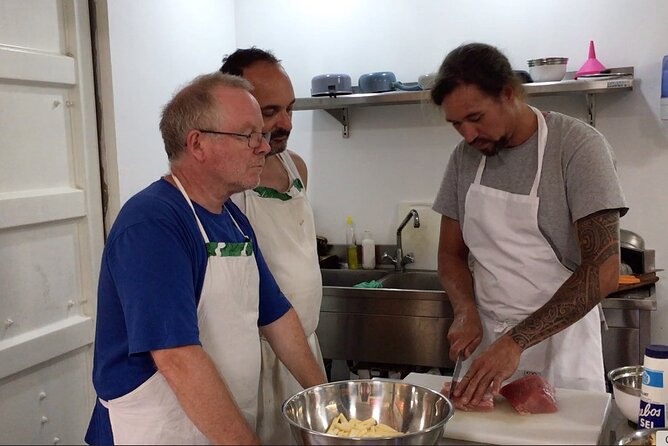
- Hands-on dishes you help prepare, from poisson cru to banana-leaf cooking
- Garden time to identify plants and understand what’s local and seasonal
- Lunch is part of the class, and you eat what you make
Paopao Valley Turns a Class Into a Real Place
If you’ve ever felt like cooking classes can be “kitchen only,” this one fixes that. You’re in Moorea’s Paopao Valley, and everything about the setup points back to where the ingredients come from—pineapple fields, garden rows, and the sense that the land is doing the heavy lifting.
The location matters because it changes the way you learn. When you see plants growing nearby, it’s easier to understand why Polynesian cooking uses certain methods and certain textures. In the class space, you’re not just watching instructions—you’re connecting food to daily life and to the land it comes from.
And the views help too. One of the most common reactions in the feedback is how the setting feels dramatic and beautiful—people mention the surrounding Moorea peaks and the tropical garden environment. Even if you’re not a “views person,” the setting nudges you into the right mindset: slow down, pay attention, and taste what local ingredients actually taste like.
You can also read our reviews of more tours and experiences in Moorea.

Food&CookLab Moorea: Where Audrey and Stevenson Teach by Doing
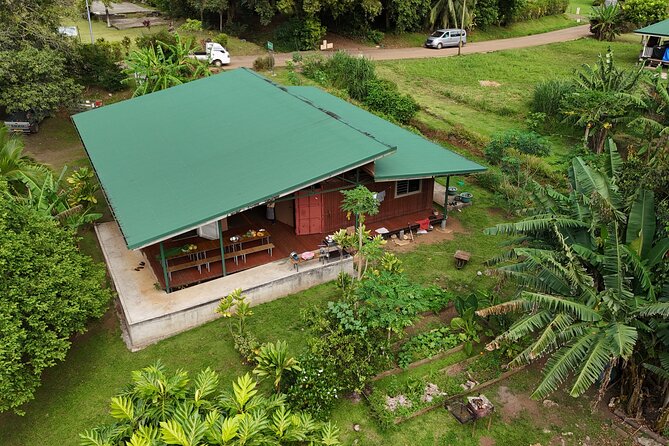
The experience takes place in professional spaces meant for workshops and culinary training, right alongside a production laboratory. That matters. You get a structured lesson, not a casual demo, but it still feels personal.
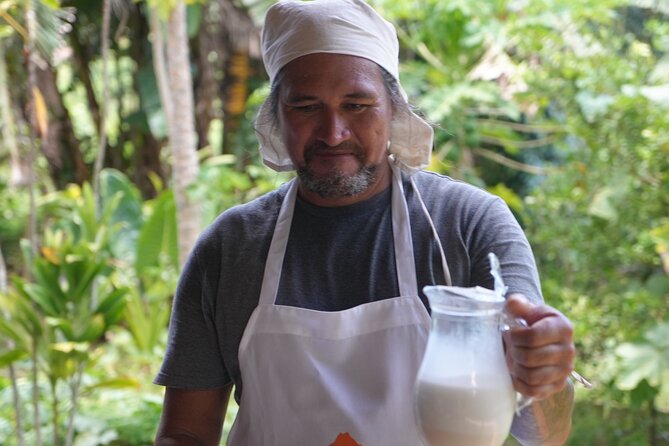
You’ll be hosted and taught by Audrey and Stevenson, who focus on more than just recipes. They talk about Polynesian culture from history to life today, including the changes Polynesian society is going through. You’ll also learn how local products are used and cooked, and what makes traditional methods different from what you might try at home.
What I like about their approach is the balance: culture isn’t treated like a side note, and cooking isn’t treated like a shortcut. You learn the “why” behind ingredients and techniques—then you get to do the work yourself.
In a few accounts, guests mention helpers and a team dynamic during prep, like having an extra set of hands (including someone named Mauri). That kind of support helps when you’re learning skills like knife work for fish prep or leaf wrapping.
What You Actually Cook: Poisson Cru, Tuna, and Banana-Leaf Techniques
This class is hands-on in the best way: you help prepare multiple dishes, not just one highlight.
Here are several of the dishes and skills people consistently describe:
- Poisson cru / passion crue preparation, including carving tuna
- Coconut bread made inside a leaf
- Coconut chips
- Grilled or BBQ tuna with local sauces, including homemade glazed versions
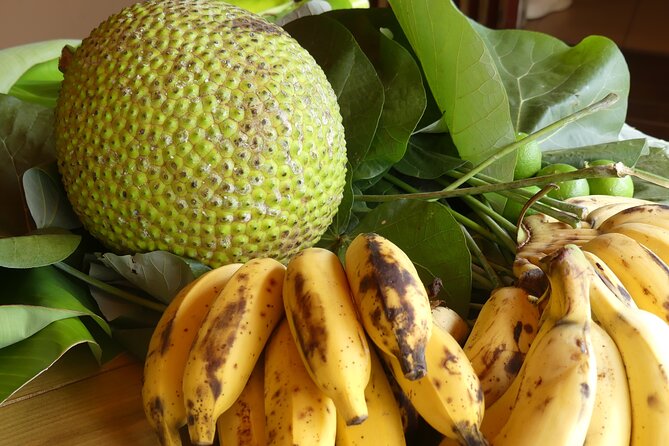
- Roasted breadfruit
- A pumpkin-style tapioca dessert wrapped in banana leaf
Expect a rhythm. You’ll do active prep work, then taste and adjust, then move to the next dish. Guests repeatedly say it’s fun, fast-paced without feeling rushed, and genuinely educational. You’ll also learn traditional cooking methods as they’re practiced locally, not just as theory.
One practical takeaway: you learn how Polynesians use what’s available. That includes using leaves for wrapping (for aroma and technique), building flavor through sauces made at the time, and working with ingredients that may not be common where you live.
A small consideration: with multiple dishes in 3 hours 30 minutes, you may not come away with deep mastery of every single step. But that’s also the point. You get a wide sampler of skills you can try again later using the recipes you’re provided.
Garden Learning: Plant Identification and Local-Season Thinking
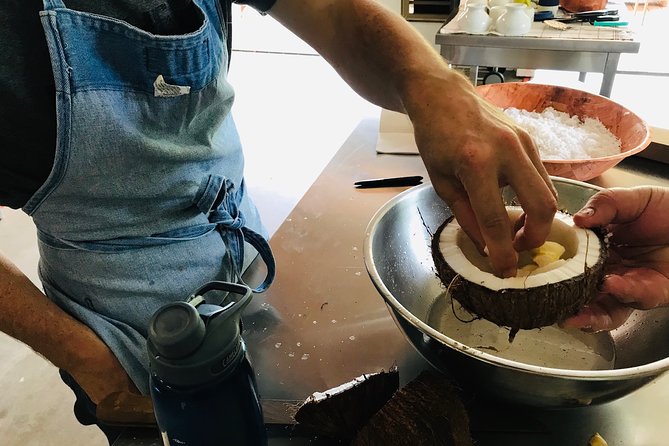
A big part of this experience happens in and around the garden area. You’re not just tasting—you’re learning what you’re tasting.
In the feedback, guests highlight that they learned how to identify different plants in the gardens. That connects directly to the culinary side. When you can recognize plants (and understand which ones are native and which may be imported), you start cooking with intention instead of imitation.
You also get the idea of seasonal thinking. Multiple accounts mention learning what’s native, seasonal, and imported. That’s useful at home, because it changes how you plan meals. Instead of hunting for an exact ingredient you saw once on a menu, you learn what the ingredient role is—then you can swap with what’s available where you live.
And because you’re surrounded by growing gardens, the lesson feels grounded. It’s hard to fake that connection, and it shows in how many people describe this as their best meal on Moorea.
Lunch: The Farm-to-Table Meal You Share Together
After all the prep, you sit down and enjoy lunch as a group. This is not a “stand and snack” situation. The meal is presented as the payoff: you made it, so you get to actually taste it.
Guests repeatedly say the food is fresh, and that the lunch is the best meal they had during their stay. People also mention conversation with Audrey and Stevenson—lively, friendly, and relaxed. It’s part of the value here. Eating isn’t separate from learning; it’s the final course of the lesson.
Some accounts even mention leftover food to take home. That’s the kind of bonus that turns lunch into a second meal the same day or later that evening—useful if you don’t want to hunt for dinner plans after a long travel day.
One other nice detail: coffee and/or tea and snacks are included. So even if you’re hungry before you arrive, you’re covered.





Value Check: Is $99 Worth It in Moorea?
At $99 per person for about 3 hours 30 minutes, this is not a budget activity. But it can still feel like strong value—mostly because you’re getting more than a meal.
Here’s what you’re paying for:
- A structured, hands-on cooking workshop
- Cultural context (history, food life today, and changes in Polynesian society)
- Multiple dishes prepared by you
- Lunch, plus coffee/tea and snacks
- Recipes to take home
- Professional facilities and a full teaching team
What’s not included is also clear: alcoholic beverages are not included, and there’s no air-conditioned vehicle as part of the package. So if you’re expecting a chauffeured, air-cooled experience, you’ll want to set that expectation.
When I look at value in places like Moorea, I ask a simple question: do you leave with something you can use again? With this class, you do. The recipes plus the skill set—like leaf wrapping and tuna prep—make it easier to recreate the experience at home, which stretches the value far beyond the lunchtime meal.
Logistics That Matter: Start Time, Location, and Private Time
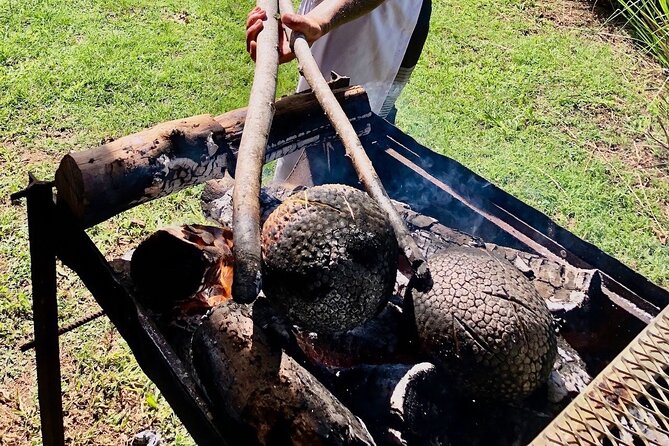
The start time is 9:00 am, and the activity runs about 3 hours 30 minutes. It ends back at the meeting point, so you’re not stuck figuring out where to go next.
You’ll meet at F5MG+32W, Moorea-Maiao, French Polynesia. The tour uses a mobile ticket, and confirmation comes at booking.
One practical perk: this is described as a private tour/activity, meaning only your group participates. That usually translates to better pacing and more attention during hands-on steps—especially helpful if someone in your group wants extra time with a particular technique.
As mentioned earlier, there’s no air-conditioned vehicle included. If you’re heat-sensitive, plan for sun and take it easy with hydration.
Who Should Book This (and Who Might Skip It)
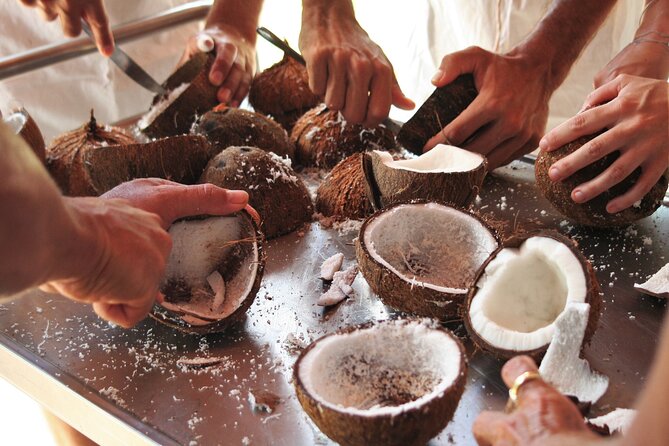
This is a great match if you:
- Want Tahitian/Polynesian food skills, not just a meal
- Like learning culture through everyday things like agriculture and cooking methods
- Enjoy hands-on activities—knife skills for fish prep and leaf wrapping are real parts of the experience
- Want a memorable “food anchor” for your Moorea trip (many people say it’s their highlight)
It may be less ideal if you:
- Only want a passive activity with minimal time in the kitchen
- Are looking for a beach-only day with no structured prep work
- Expect alcohol to be included
One encouraging note from feedback: someone mentioned dietary accommodation for a vegetarian guest. You should still ask during booking what’s possible for your specific needs, but it suggests the team thinks about more than one diet.
Should You Book This Polynesian Culinary Experience?
If you’re the type who remembers travel by what you ate and what you learned, I’d book it. The setting in Paopao Valley helps you connect food to place, and the class format gives you real skills you can repeat at home with the provided recipes.
Before you go, do two simple things:
- Ask about your dietary needs when booking, so the menu can be adjusted if needed.
- Treat it like a morning plan, not an afterthought. Starting at 9:00 am means you’ll feel the benefits sooner—and lunch becomes a true reward.
If you want Moorea in one memorable bite—plus the story behind it—this is one of the best ways to spend a half-day.
FAQ
What time does the Polynesian culinary experience start in Moorea?
It starts at 9:00 am.
How long is the experience?
The duration is approximately 3 hours 30 minutes.
Where do I meet for the tour?
The meeting point is listed as F5MG+32W, Moorea-Maiao, French Polynesia.
Is this a private activity or a group tour?
It’s a private tour/activity, so only your group participates.
What’s included in the $99 per-person price?
Coffee and/or tea, lunch, snacks, and all fees and taxes are included.
Are alcoholic beverages included?
No, alcoholic beverages are not included.
Does the experience include an air-conditioned vehicle?
No. An air-conditioned vehicle is not included.
Are recipes provided?
Yes. Guests mention receiving recipe information, which you can try at home.
What dishes might we prepare during the class?
Based on what guests report, you may prepare items like poisson cru (passion crue), coconut bread wrapped in a leaf, coconut chips, grilled or BBQ tuna with local sauces, roasted breadfruit, and a pumpkin-style tapioca dessert wrapped in banana leaf.
What is the cancellation policy?
You can cancel for a full refund if you cancel at least 24 hours before the experience’s start time. If you cancel less than 24 hours before, the amount paid is not refunded.
Are service animals allowed?
Yes, service animals are allowed.