REVIEW · PICO ISLAND
Pico Island: Whale Watching Experience from Lajes
Book on GetYourGuide →Operated by Futurismo Azores Whale Watching · Bookable on GetYourGuide
A whale trip from Lajes do Pico is pure Atlantic magic. I love the fact you’re guided by marine biologists who explain what you’re seeing and how to keep a respectful distance, and I also love the practical, fast zodiac-style boat approach that gets you from sighting to sighting without long dead time. One heads-up: the experience depends on weather and sea conditions, and the water can get rough enough to make this a poor match for some bodies and ages.
You meet at Futurismo Whale Watching™ in Lajes do Pico, get a short safety briefing, and then head out to look for whales, dolphins, and other sea life in the wild. In the best cases, you’ll get the kind of close, face-to-face viewing that feels unreal—while still being handled like nature comes first.
In This Review
- Key things that make this whale-watch special
- Whale watching from Lajes do Pico: why the Atlantic here matters
- Meeting at Futurismo and your 15-minute safety warm-up
- What you do before the first sighting: briefing, rules, and calm confidence
- The cruise itself: moving fast across basalt-coast scenery
- Wildlife spotting: how sightings usually happen on this route
- Species you might see, plus a quick note on season
- Guides on board: the names you may hear and why it matters
- Boat comfort and safety: what’s included, what to bring
- Who should book, and who should probably skip it
- Price and value: how $68 stacks up for what you actually get
- Tips to boost your odds and enjoy every minute
- Should you book Futurismo’s Pico whale-watching trip?
- FAQ
- How long is the whale watching tour from Lajes do Pico?
- Where do I meet the tour?
- Is there parking near the meeting point?
- What’s included in the ticket price?
- What should I bring for the trip?
- What’s not allowed on the tour?
- What languages are offered?
- Who is this tour not suitable for?
- What happens if the weather and sea conditions are poor?
- Can I cancel and get a refund?
Key things that make this whale-watch special
- Marine biologists on board who teach you species ID and respectful behavior
- Focused searching away from crowds, aiming for calmer, less disturbed encounters
- Fast zodiac-style cruising that often means less waiting between sightings
- Spotter-informed navigation, so the skipper can head where wildlife activity is reported
- Clear rules and distance-first ethics, including leaving animals alone if they react
- Gear provided when needed, including life jacket plus raincoat and pants if conditions call for it
Whale watching from Lajes do Pico: why the Atlantic here matters
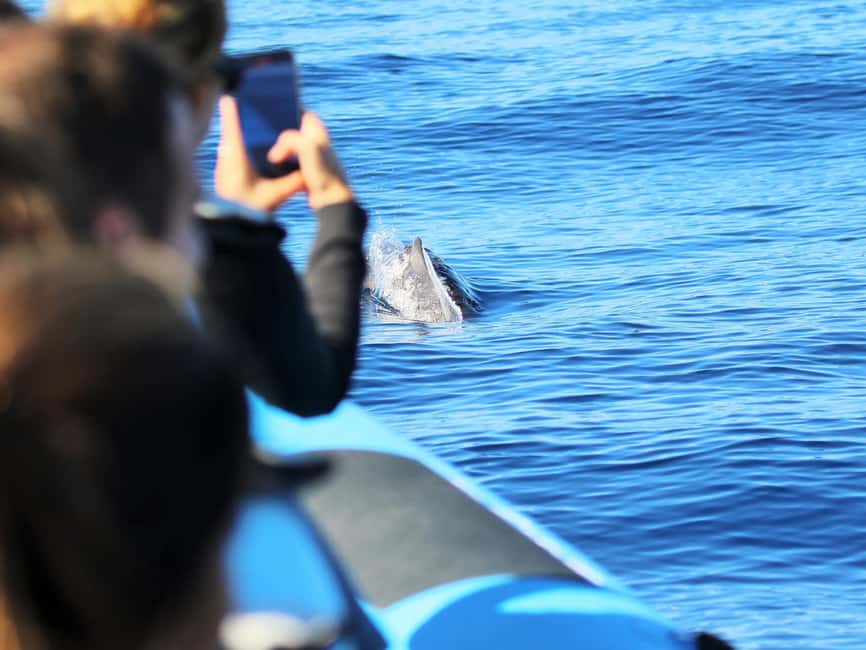
Pico Island sits out in the middle of the Atlantic, and that’s the whole point. This is one of the places where many whale and dolphin species either live year-round or pass through on migration routes, so you’re not just hoping for luck—you’re in a real corridor of marine life.
What makes this trip feel different is the emphasis on understanding the ocean, not just scanning for blows. Before you even pull away, you’re set up with a briefing on likely species and the basics of responsible viewing, and that changes how you watch. Instead of looking randomly, you start to connect behavior to what a whale or dolphin is doing in the water.
You can also read our reviews of more tours and experiences in Pico Island.

Meeting at Futurismo and your 15-minute safety warm-up
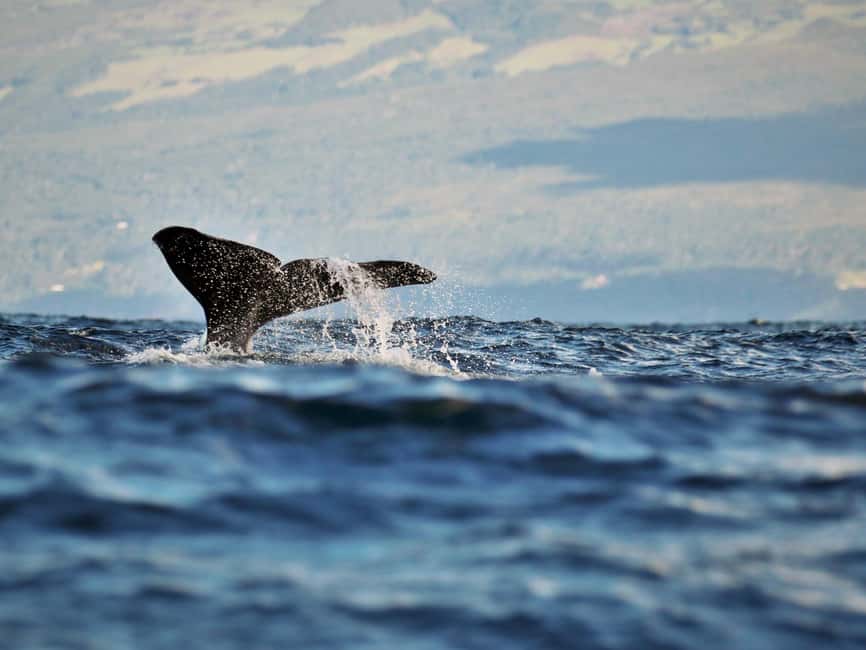
You start at Futurismo Whale Watching™ in Lajes do Pico, and you’ll need to check in at the ticket counter before the tour begins. There’s free parking, and it’s about a 5- to 10-minute walk from the shop, which is handy if you’re driving yourself.
Right after check-in, you’ll go into a short safety briefing. The tour runs about 3 hours total, with roughly 2.75 hours on the water, so you’re not spending the whole day in transit and waiting around. The safety talk is also your first clue about how they run the operation: they’re practical, and they set expectations for the sea conditions you’ll face.
What you do before the first sighting: briefing, rules, and calm confidence
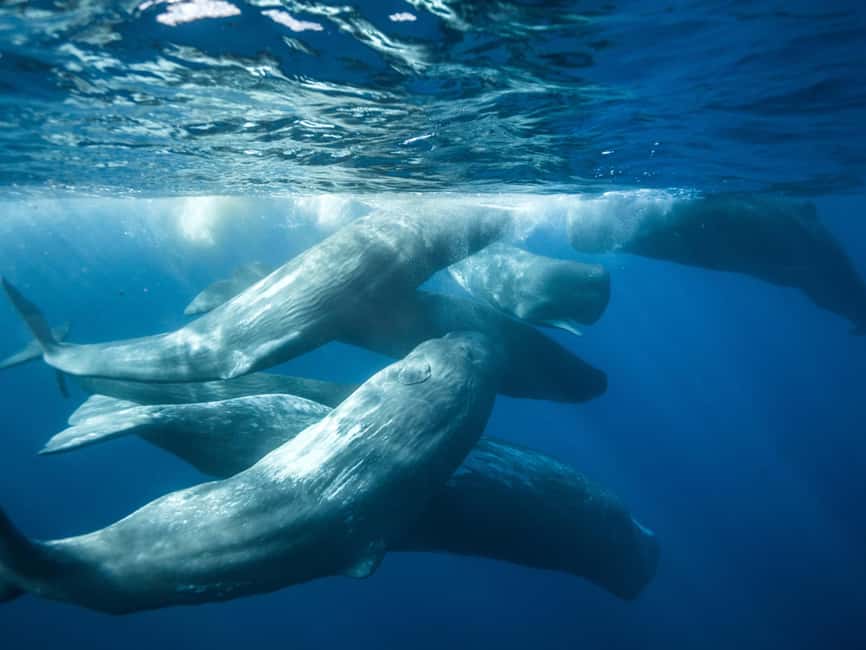
On the boat, the marine biologists guide the briefing in Portuguese and English, and the tone is clear: you’re there to observe wildlife in the animals’ world. You’ll learn about the kinds of whales and dolphins that occur in the Azores, plus how to behave so you don’t stress animals or change their normal routine.
A detail I really appreciate is the focus on how they approach sightings. The operation is described as distance-first and safety-minded, with an eye toward not disturbing sea mammals. More than one guide is praised for explaining how to be mindful of animal needs, and that shows up in the way the team handles encounters.
If you’re lucky with your timing, you’ll also get a quick pre-trip intro about species and viewing rules, which helps you recognize what’s happening faster once you’re on the water. When you can identify what you’re seeing early, the whole trip feels longer, even though it’s only a few hours.
The cruise itself: moving fast across basalt-coast scenery
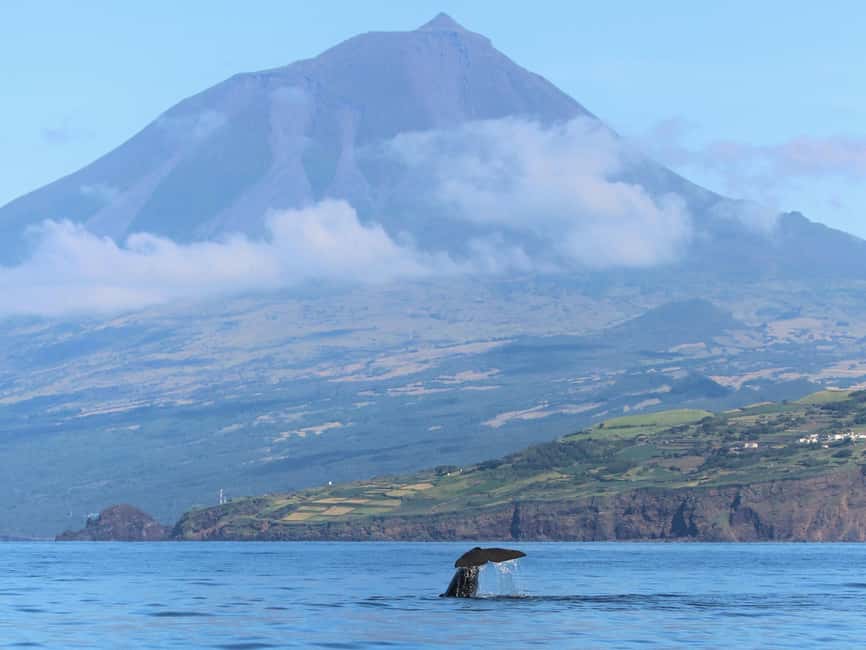
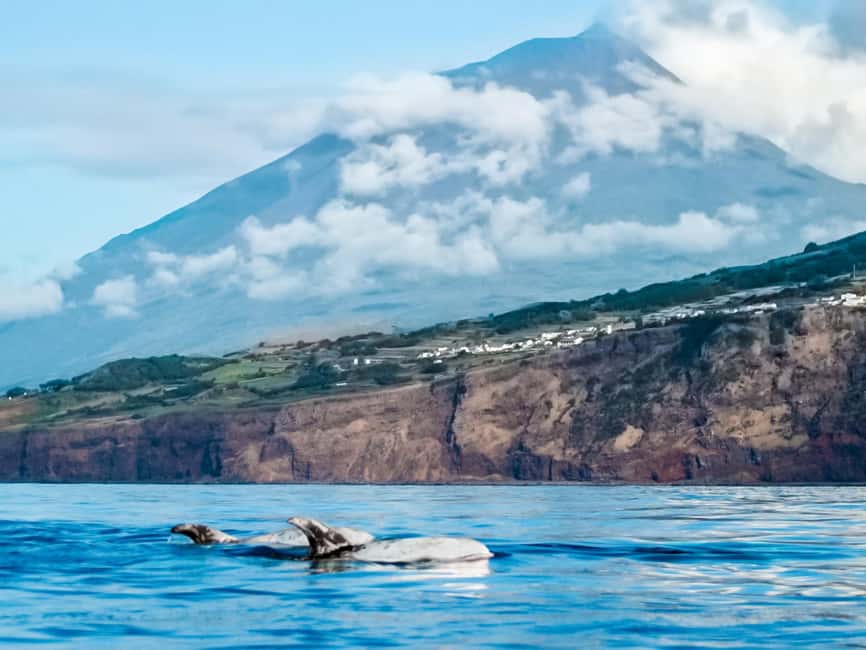
Once you’re out, expect the scenery to do its job. You’ll pass along Pico’s coast, and it’s all basaltic rock and dramatic ocean edges—the kind of backdrop that makes you want to keep looking up and out between sightings.
Then there’s the reality of the Atlantic: a rough sea can show up, and that’s part of the deal. The trip includes life jackets, and if conditions require it, they provide a raincoat and pants. You’ll want a windbreaker and comfortable clothes, because spray and wind are part of the fun and part of the challenge.
The boat used for this trip is described as a fast zodiac-style craft. That matters, because it affects how often you get movement time versus waiting time. In a few accounts, the team is credited with moving quickly from animal to animal, with basically no long downtime.
Wildlife spotting: how sightings usually happen on this route
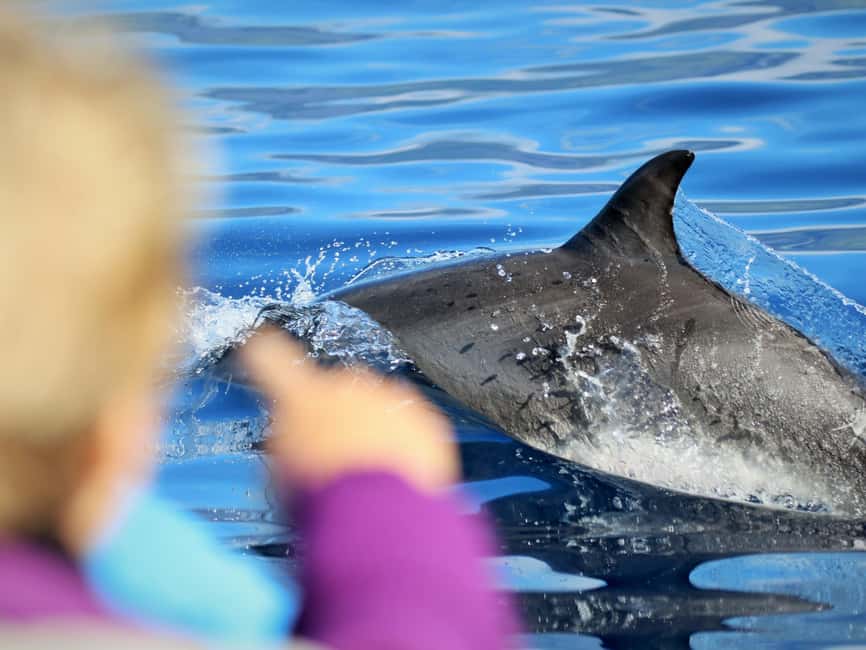
This is a guided search, not a free-for-all. You’ll navigate to viewing areas where whales and dolphins are known to appear, and you’re specifically guided toward spots that are away from heavy crowds.
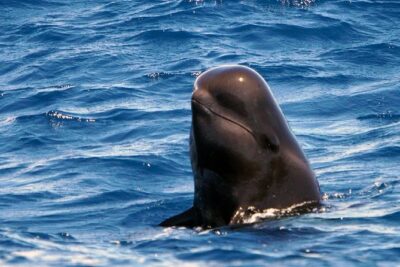
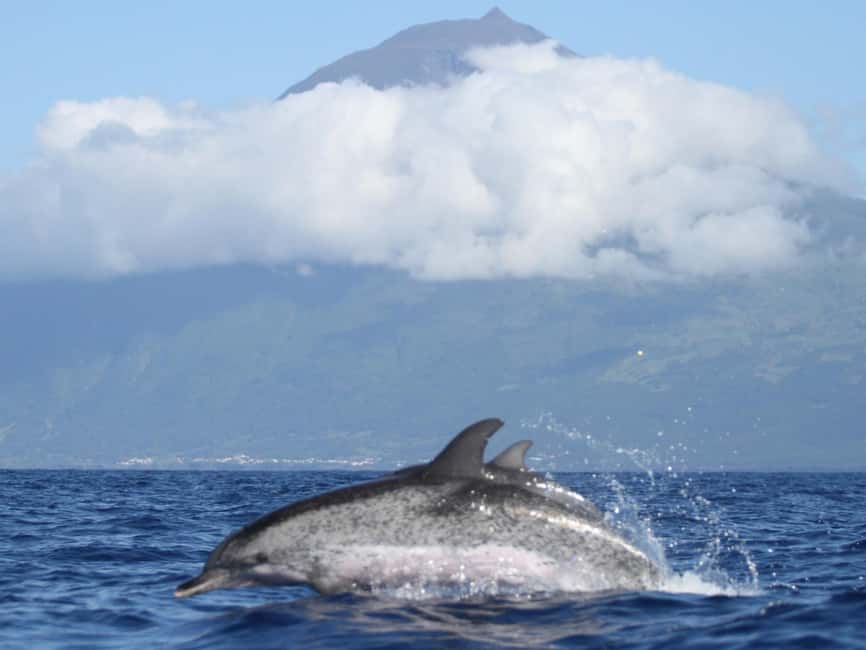
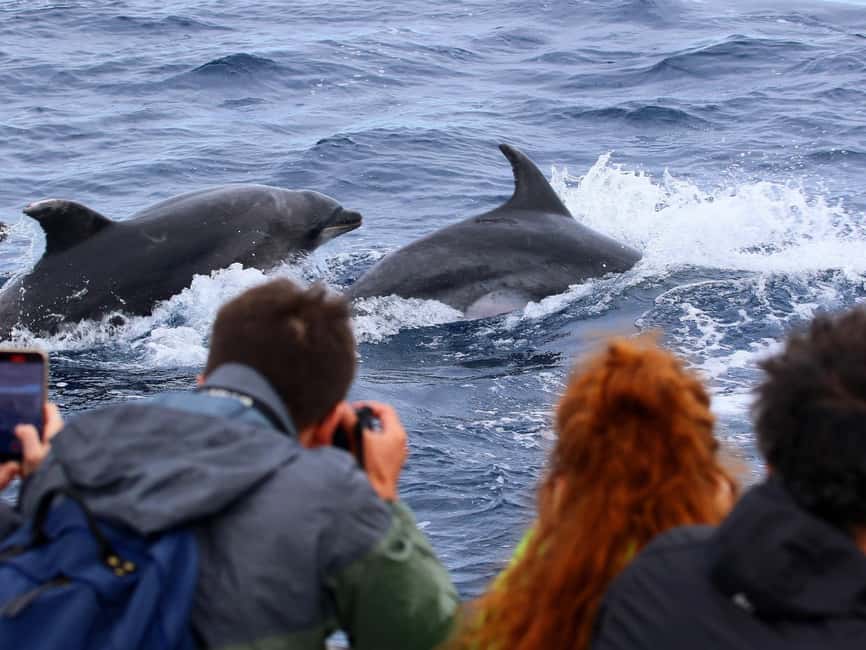
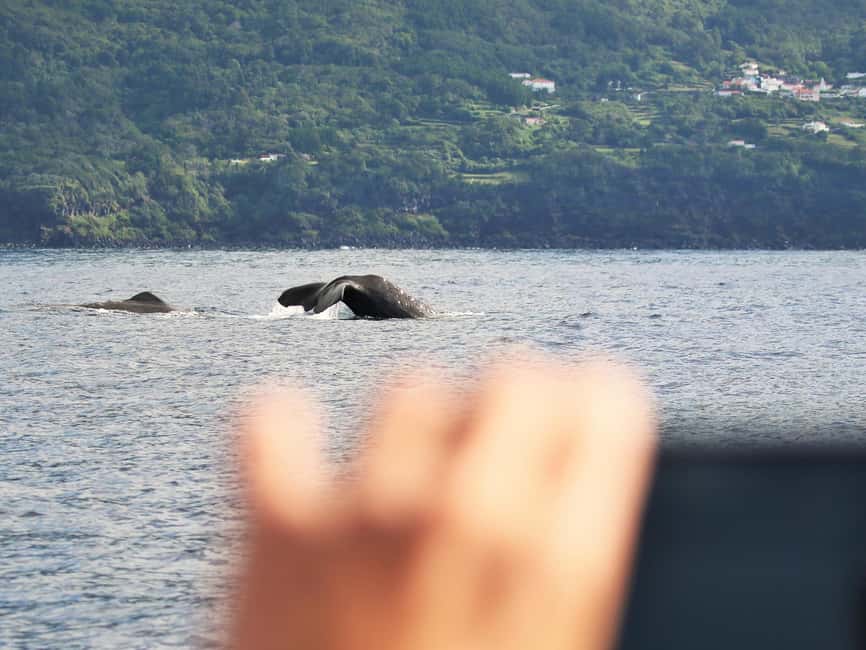
That approach shows up in the kinds of sightings people report. Depending on the day and season, you might see sperm whales, pilot whales, beak whales, bottlenose dolphins, Atlantic spotted dolphins, common dolphins, and other cetaceans. You may also spot sea turtles and even smaller surprises like flying fish and Portuguese man o’ war.
One theme across the best moments is the feeling of being at the right place at the right time, with the right kind of patience. The guides are described as adjusting behavior based on what the animals seem to tolerate—so you’re not trying to force a closer encounter. If the animals don’t want the boat nearby, the team pulls back and lets them settle.


Species you might see, plus a quick note on season
The Azores are famous for a wide range of whales and dolphins, and this tour operates in that reality. You’re told that whales live in the deep ocean and may pass by during migration, which helps explain why sightings can be sudden and why timing matters.
The season note that stands out: blue whales are mentioned as something you’re more likely to see in spring, while one set of experiences in September specifically reports no blue whales. So if you’re chasing a particular whale species, consider your month carefully, and be ready to celebrate whatever shows up instead.
Guides on board: the names you may hear and why it matters
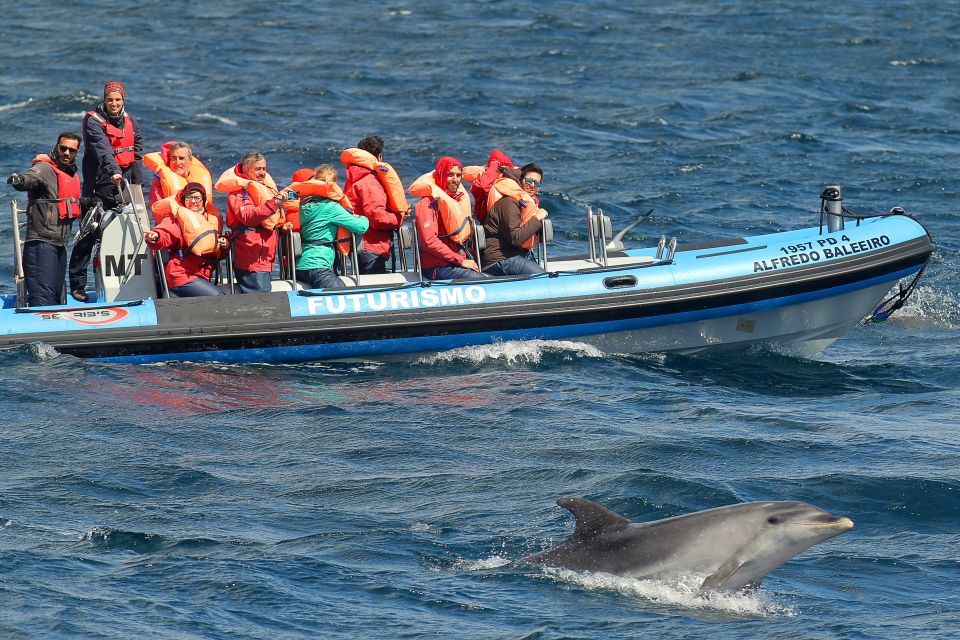
The tour is run by marine biologists, and the guiding style is repeatedly praised for being energetic, clear, and respectful. Some experiences specifically highlight guides such as Nadja and Lynn, and both are praised for sharing lots of information and running the viewing with animal wellbeing as the first priority.
In practice, good guidance changes the trip fast. You’ll hear what different animals do—how they move, what behavior can signal they’re feeding or traveling—and that helps you notice things you’d otherwise miss. It also helps you understand why the team doesn’t chase animals like it’s a theme park.
If you’re someone who likes learning while you’re looking, this is a strong fit. You’ll come back with more than photos—you’ll have a mental map of what you saw and why it was worth the wait.
Boat comfort and safety: what’s included, what to bring
Included with the trip:
- Boat trip
- Life jacket
- Marine biologist guides
- Pre-tour briefing
- Raincoat and pants if necessary
You’ll still want to bring:
- Comfortable shoes
- A windbreaker
- Comfortable clothes
- A face mask or protective covering
Not allowed during the experience:
- High-heeled shoes
- Pets
- Drones
- Alcoholic drinks in the vehicle
This isn’t just about rules—it’s about how the day stays smooth and safe. Proper footwear matters on a moving boat. No drones keeps wildlife viewing calm and keeps the focus where it belongs: on the animals, not on equipment.
Who should book, and who should probably skip it
This is a great whale watching choice if you’re:
- Comfortable being out on the water for a few hours
- Interested in marine life facts, not just spotting
- Motivated by respectful wildlife viewing and distance-first ethics
It’s not suitable for:
- Children under 8 years
- Pregnant women
- People with back problems
- Wheelchair users
Also, because sea conditions can change quickly, if you know rough water is a problem for you, take that seriously. The tour itself doesn’t sell “easy mode.” It gives you gear, a briefing, and an expert team—but it can’t control the Atlantic.
Price and value: how $68 stacks up for what you actually get
At $68 per person, this trip isn’t a bargain fare. It’s also not a luxury-only splurge. It lands in the mid-range category where you pay for real-world benefits: marine biologists on board, guided searching, and a fast boat that’s set up for wildlife viewing.
Here’s what you’re getting for the money:
- Expert-led viewing, including species education and respectful behavior guidance
- Time on the water, roughly 2.75 hours, so you’re not sacrificing the main event
- Safety and comfort basics, including life jackets and weather gear if needed
- An operational style aimed at animal wellbeing, which many accounts describe as a priority
If you’ve ever done cheap whale watching elsewhere, you know the usual tradeoff: less expertise, more “drive around until something happens,” and closer-than-smart approaches. This trip is repeatedly described in the opposite direction—fast and efficient, but with distance and animal comfort taken seriously.
If you care about doing this the right way, $68 can feel very fair.
Tips to boost your odds and enjoy every minute
1) Dress for wind and spray
Bring a windbreaker and wear comfortable clothes. Rain gear may be provided, but you’ll feel better if you’re ready for damp, cold, and choppy water.
2) Treat the briefing like part of the trip
Listen closely to the rules and species info. The faster you recognize what you’re looking at, the more your eyes “lock in” once whales and dolphins appear.
3) Be patient, not demanding
The best encounters are often the ones where you stop trying to control the scene. If the team adjusts distance based on animal behavior, you’ll get a better viewing moment in the long run.
4) Expect surprises beyond whales
Turtles, birds, flying fish, and Portuguese man o’ war are all mentioned in sightings. Keeping your attention broad makes the trip feel richer, even if your first whale doesn’t show immediately.
5) Plan around weather realities
The tour can be canceled or rescheduled if conditions aren’t suitable. Build flexibility into your day so you’re not stuck rescheduling everything at the last minute.
Should you book Futurismo’s Pico whale-watching trip?
Yes, you should book this tour if you want a guided whale-watch that takes marine life seriously and is run by marine biologists, not just a crew hoping for the best. It’s also a strong pick if you like action with purpose—an operation that moves quickly between sightings while still prioritizing animal wellbeing.
You might think twice if you fall into the “rough water is a no” category, or if the trip doesn’t match your needs (age limits, pregnancy, back problems, wheelchair access). And if you’re traveling in a month when a specific species is less common—like blue whales in September—set expectations broadly and let the ocean surprise you.
FAQ
How long is the whale watching tour from Lajes do Pico?
The total duration is about 3 hours, including a short safety briefing and roughly 2.75 hours on the boat for the cruise and whale watching.
Where do I meet the tour?
Meet your guide at Futurismo Whale Watching™ in Lajes do Pico. Check in at the ticket counter before the tour begins.
Is there parking near the meeting point?
Yes. There is a free parking lot a 5- to 10-minute walk from the shop.
What’s included in the ticket price?
The tour includes the boat trip, life jacket, marine biologist guides, a pre-tour briefing, and raincoat and pants if necessary.
What should I bring for the trip?
Bring comfortable shoes, a windbreaker, comfortable clothes, and a face mask or protective covering.
What’s not allowed on the tour?
High-heeled shoes, pets, drones, and alcoholic drinks in the vehicle are not allowed.
What languages are offered?
The live tour guide works in Portuguese and English.
Who is this tour not suitable for?
It’s not suitable for children under 8 years, pregnant women, people with back problems, or wheelchair users.
What happens if the weather and sea conditions are poor?
The activity depends on weather and sea conditions and may be canceled or rescheduled if conditions are not suitable.
Can I cancel and get a refund?
Yes. Free cancellation is offered up to 24 hours in advance for a full refund.