REVIEW · TENERIFE
PADI Scuba Diving Courses in Tenerife: All Specialities Until Divemaster
Book on Viator →Operated by Marcin Andrzej Glowacki · Bookable on Viator
Tenerife makes scuba skills feel instantly doable. This PADI course bundle lets you move through specialties with a clear credential path, taught with the help of Marcin Andrzej Glowacki. It’s set up around Tenerife’s west coast beaches and keeps the group size to a maximum of 20.
I love how PADI credentials work in the real world, because after finishing your course you receive a PADI license that’s recognizable wherever you choose to scuba later. I also like that you’ll get multiple water sessions with marine life sightings as part of the training. One thing to consider: food and drinks are not included, and pickup from the South Tenerife area costs an additional 2 euros per person.
In This Review
- Key Takeaways Before You Go
- Tenerife’s West Coast PADI Specialties: What You’re Really Signing Up For
- The PADI Path, From Open Water to Specialty Training (and Toward Divemaster)
- A 3-Day Rhythm: How the Schedule Typically Feels
- Underwater Lessons and Marine Life: Why Tenerife Works for Training
- Instructors, Safety Style, and the Small-Group Advantage
- Price, Inclusions, and What You’ll Need to Budget
- Your Practical Checklist: What to Bring and How to Prepare
- Who This Suits Best (and Who Should Think Twice)
- Should You Book This Tenerife PADI Specialties Course?
- FAQ
- What is the minimum age for this PADI course experience?
- How long is the experience and when does it start?
- What does the price include?
- Is pickup included?
- How deep can I train with Open Water and Advanced Open Water?
- Is free cancellation available?
Key Takeaways Before You Go
- PADI licensing: you finish with a PADI license tied to your completed training track
- West coast setting: courses run along Tenerife’s west coast beaches for consistent, practical sessions
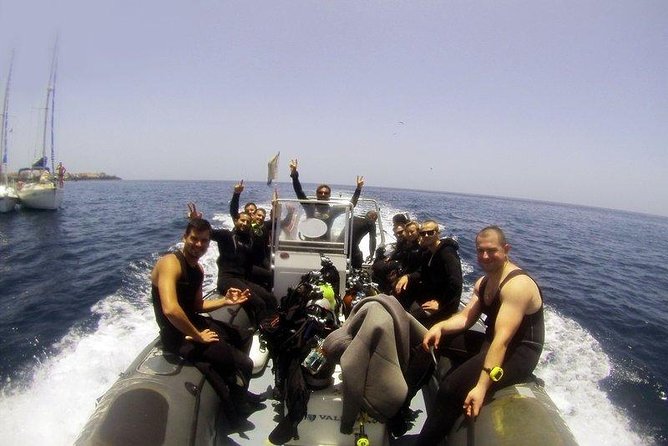
- Small group size: capped at 20 travelers, so you’re not lost in a crowd
- Real training depth options: Open Water supports up to 18 meters, and Advanced supports up to 30 meters
- What you pay for vs. what you don’t: instruction and transport are included, but meals and photos cost extra
Tenerife’s West Coast PADI Specialties: What You’re Really Signing Up For
This isn’t a one-off try-it session. You’re signing up for PADI course training designed to take you from early certification steps through a run of specialties, with the end goal of progressing toward the Divemaster side of the ladder (depending on where you start).
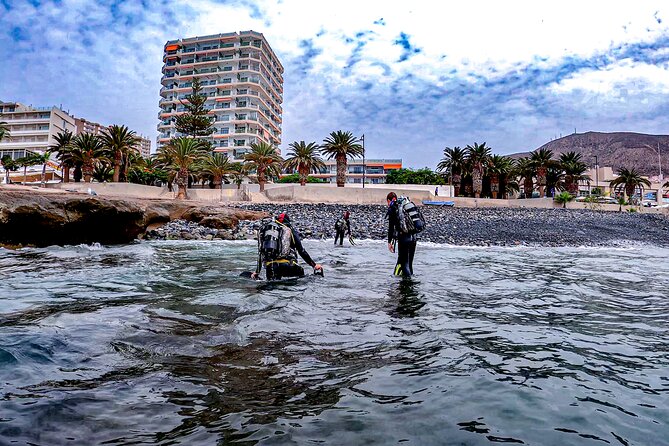
Tenerife is a smart place for this kind of training because you’re working on the island’s west coast beaches as your training base. That matters because good learning needs repetition: consistent locations, predictable logistics, and time in the water with instruction that can correct your technique on the spot.
You’ll start the day at 9:00 am and the school provides transport by air-conditioned minivan. For me, that combo is practical: you’re not wasting half your morning trying to figure out where to meet, and you’re not showing up sweaty and stressed.
You can also read our reviews of more tours and experiences in Tenerife.
The PADI Path, From Open Water to Specialty Training (and Toward Divemaster)
PADI is built around a straightforward upgrade path. If you’re brand new, the first step is Open Water Diver, typically lasting 2–3 days and allowing training to a maximum of 18 meters. Once you have that license, you can move to Advanced Open Water Diver, usually 2–3 days, with training to a maximum of 30 meters.
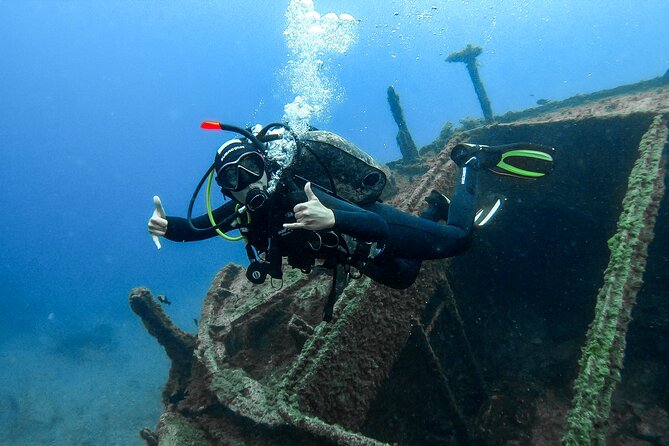
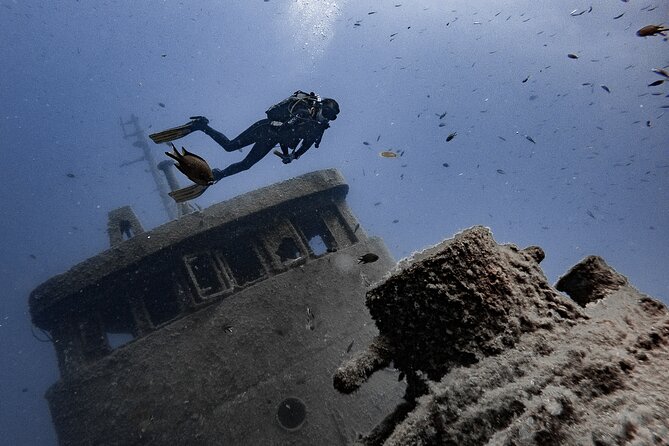
If you’re already certified and your goal is to improve skills (or build toward leadership), this is where the “specialties” part matters. The course options listed include special programs such as Deep Diver, Wreck Diver, DPV diver, and Rescue Diver (and others). The key idea is that you don’t just collect certifications—you practice focused skills designed for specific underwater situations.
Because this experience is described as covering “all specialties until Divemaster,” the real value for you is flexibility. Depending on your current level, you’ll likely spend the 3 days working through the next logical set of training items rather than bouncing randomly between unrelated experiences.
A 3-Day Rhythm: How the Schedule Typically Feels
With an approximate 3-day duration, your days are built around course progression and repeated underwater practice. The school runs courses of PADI, and the training takes place along Tenerife’s west coast beaches. Translation: you’re not hopping between distant ports and far-flung activities. You’re based on the coast and you keep working on the next step.
Here’s the kind of day flow you should expect, based on what’s provided:
- You meet at 9:00 am, then get transported in the air-conditioned minivan.
- You spend the day on course instruction plus multiple open-water training sessions.
- You finish the day with the course’s next milestones toward your certification track.
What makes this rhythm work is that you learn, apply, get feedback, then apply again. That’s how skills stick, especially when you’re calibrating buoyancy and comfort underwater.
Potential drawback: since the plan is tied to water conditions and course flow, the exact pacing can vary. If you’re the type who needs rigid time blocks down to the minute, you might feel a little less control than on a fixed museum itinerary.
Underwater Lessons and Marine Life: Why Tenerife Works for Training
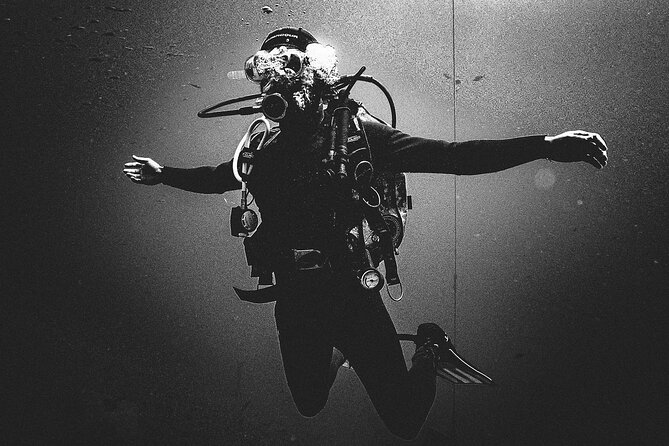
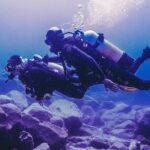
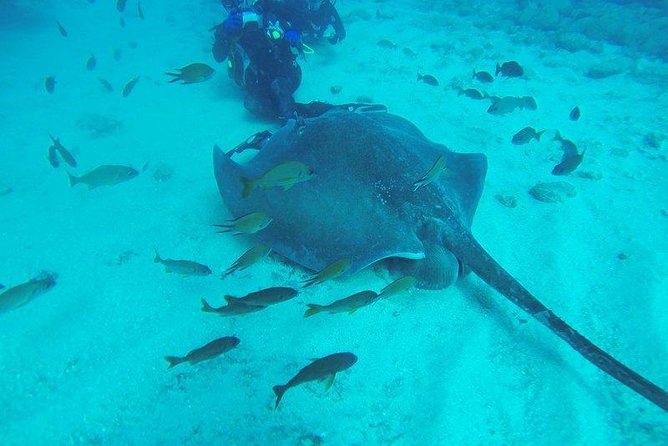
Tenerife is known for unusual underwater scenery and marine life sightings, and that’s not just marketing fluff in this context. When a course is set up to include multiple water sessions, Tenerife’s marine life becomes part of the learning environment: you’re practicing skills in a place where there’s actual life to observe.
That matters for motivation and technique. I find that when you have something interesting to watch, you also tend to slow down and pay attention to your breathing, buoyancy, and body position. You’re not just performing tasks—you’re using your training while moving through a real underwater world.
The training is offered for all ability levels, including first-time students and certified divers working ahead. If you’re new, expect the focus to be on learning comfort and control. If you’re experienced, the specialty structure is meant to sharpen technique and decision-making for specific scenarios, like deeper limits, wreck environments, or equipment-assisted movement (as listed by the DPV diver option).
Instructors, Safety Style, and the Small-Group Advantage
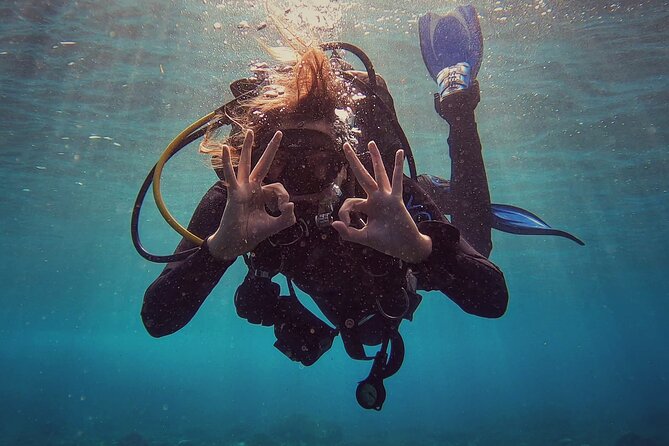
This experience includes a professional guide and you’re capped at a maximum of 20 travelers. For courses, small group size is more than a feel-good detail. It usually means more time for your questions, more chances to correct technique, and less waiting around while others catch up.
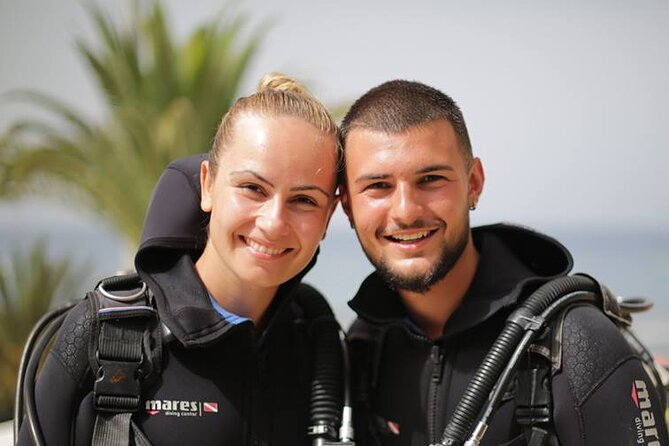
The provider is listed as Marcin Andrzej Glowacki, and while the information doesn’t spell out a full roster of instructor names, the consistent theme in the provided feedback is friendly, professional staff. That’s exactly what you want for a course where you’re learning new skills and building confidence.
One practical tip: bring a calm mindset. Scuba training rewards steady focus, not rushing. If you go in thinking like a student—watch, practice, ask—your progress will feel faster.

Price, Inclusions, and What You’ll Need to Budget
The price is listed at $223.55 per person for about 3 days. What you get for that money is a clear mix:
- Professional guide
- Transport by air-conditioned minivan
Not included:
- Food and drinks
- Souvenir photos (available to purchase)
- Pickup in the South of Tenerife (extra 2 euros per person)
So the value question becomes simple: does the included instruction plus transport justify meals and extras on top? For many people, yes—because meals can be solved cheaply on your own schedule, while the instruction and transport are the hard part of the logistics.
My advice: treat this as a training package plus day-by-day personal spending. Plan to cover lunch and drinks yourself, and if you like photos, assume there’ll be an optional purchase at the end.
Also, if you’re staying in or near the South Tenerife area, factor in the 2 euros per person pickup add-on. It’s small, but it’s still a real cost that can matter if you’re traveling as a group.
Your Practical Checklist: What to Bring and How to Prepare
The info you have includes a few constraints and reminders that should shape your prep:
- Minimum age is 10 years
- You should have moderate physical fitness
- You’ll be near public transportation
- You’ll use a mobile ticket
- You’ll receive confirmation at booking time
Before you go, I’d focus on two things.
First, make sure you’re comfortable with moderate physical activity. Even if you’re not a fitness athlete, you want to be able to handle getting to and from the water and staying steady for a full day of instruction.
Second, pack like it’s a beach-and-training day. Since meals aren’t included, keep your own hydration and snack strategy in mind so you don’t feel wiped out mid-course.
If you’re prone to motion discomfort, consider planning ahead too, since the schedule includes minivan transport and day-long movement, but the data doesn’t mention any specific issue—so this is just good general planning.
Who This Suits Best (and Who Should Think Twice)
This course experience fits best if you want a structured PADI path and you like the idea of progressing through specialties instead of doing random short activities.
You’ll likely be a great match if:
- You want early certification (Open Water up to 18 meters) or advancement (Advanced up to 30 meters)
- You’re interested in specific specialty skills like Deep Diver, Wreck Diver, DPV diver, or Rescue Diver
- You prefer a small group size (max 20) with guided instruction
You might want to think twice if:
- You’re traveling with strict budget limits and don’t want to pay for meals and optional photos
- You need pickup from the South Tenerife area and don’t want to deal with the additional cost
- You dislike any schedule variability tied to course flow and weather-related conditions (not detailed here, but water training always has some natural flexibility)
Should You Book This Tenerife PADI Specialties Course?
Book it if you want a real training track with PADI structure, not just a scenic experience. The price includes the most valuable parts—professional guidance and air-conditioned transport—so you can spend your energy on learning and getting comfortable underwater in Tenerife’s west-coast setting.
Skip it (or look for a different option) if you’re only after a casual taste of scuba and you don’t want to commit to a multi-day course rhythm. Also, if meals and optional photo purchases will feel like too many extras, budget that in up front.
If you want a practical way to improve skills and build certifications with a recognized brand, this is a solid choice for Tenerife.
FAQ
What is the minimum age for this PADI course experience?
The minimum age is 10 years.
How long is the experience and when does it start?
The duration is about 3 days, and the start time is 9:00 am.
What does the price include?
The price includes a professional guide and transport by air-conditioned minivan.
Is pickup included?
Pickup is offered, but pickup in the South of Tenerife costs an additional 2 euros per person.
How deep can I train with Open Water and Advanced Open Water?
Open Water Diver training allows dives up to 18 meters, and Advanced Open Water Diver allows training up to 30 meters.
Is free cancellation available?
Yes. You can cancel for a full refund up to 24 hours in advance of the experience start time.